“The Cloth Tells Us When It Is Thirsty”
A Conversation with Saloni Agrawal, the Woman Bridging Bagru’s Block Printing Heritage and the Modern World
By Ruhani Agarwal

The first thing Saloni Agrawal tells me is that she almost didn’t do it.
“There were days,” she says, “where I sat in front of a spreadsheet, completely unable to forecast anything, because the monsoon had delayed a dye batch by two weeks. My MBA brain was screaming. And my heart was completely at peace.”
That paradox — the business strategist at war with the artist — is the founding tension of SA Fab, a handblock print label quietly building something rare out of Bagru, Rajasthan: a fashion business that refuses to rush.
I first heard of Saloni through a mutual contact in the sustainable fashion space. When I finally got her on a call, she was in the middle of reviewing a new block carving with an artisan partner. She asked if I could give her five minutes. Twenty minutes later, she came back, slightly breathless and entirely unapologetic. “Sorry — we found a motif in an old temple that we want to try to recreate. You know how it is.”
I didn’t, entirely. But that’s why I wanted to talk to her.
Ruhani: You have an MBA. Most people with that background go in the opposite direction of handcraft. What happened?
Saloni: (laughs) Everyone asks me that. And honestly, the honest answer is that I think I went and got the MBA because I already knew, somewhere inside, that I wanted to do something in craft and fashion — and I was scared. I thought, let me go get the “serious” degree first. Give myself a cushion.
But when I actually came back to Bagru — this is where I grew up — and I stood in a workshop and watched a printer lay a block on cotton and lift it, and the pattern was just… there… I stopped being scared. Something in me said: this is it.
Ruhani: But it wasn’t smooth sailing after that moment.
Saloni: Not even slightly. The beginning was honestly a little chaotic. I was trying to apply supply chain thinking to a process that has its own internal logic. You can’t rush indigo. You can’t batch-process a natural dye the way you’d run a manufacturing line. The materials have opinions.
And the artisans — who are masters, genuinely — had been conditioned over years to prioritise speed over quality, because that’s what most buyers demanded. So I came in wanting this obsessive, slow, perfect quality, and there was a real adjustment period. On both sides.
Ruhani: Was there a moment things shifted?
Saloni: Yes. Very specific moment.
I was sitting with Ramesh Ji — he’s a master block print artisan, one of our first partners, he’s been doing this for decades — and I was frustrated. We were talking about how long it was taking to get the right depth of indigo on a particular batch. I was going through the numbers in my head, thinking about timelines, about orders.
And he handed me a cup of chai and said, very quietly: “Saloni ji, the dye will be ready when it is ready. The cloth tells us when it is thirsty. You cannot rush a story.”
I just sat with that for a moment. And I realised he wasn’t talking about the dye at all. He was talking about the whole philosophy of what we were building. He was my teacher in that moment, not my employee. That completely changed how I understood my role.
Ruhani: That’s a beautiful reframe. How did it change what SA Fab became?
Saloni: I stopped trying to make the craft fit the business. I started making the business fit the craft.
Get Ruhani Agarwal’s stories in your inbox
Join Medium for free to get updates from this writer.
That meant being honest with customers about timelines. It meant choosing pre-washed, premium cotton — 60/60 — that’s soft from the first wear and won’t shrink, even if it cost more. It meant committing to artisan families as genuine partners, not vendors. We now work with over 200 artisan families. That’s not a marketing number to me — those are relationships.
And it meant being transparent about the slow, deliberate nature of what we do. Every piece takes time. That’s not a flaw. That’s the entire point.
Ruhani: Tell me about the couple matching collection — I’ve heard it has an interesting origin.
Saloni: (laughing) Oh, that story. Yes. So one afternoon, one of our artisan partners — I won’t name him, he’d be embarrassed — he looked at a particularly beautiful print we’d just finished and said something like, “If a husband and wife wore this same print, the happiness of it would double.”
He was joking. Sort of. But I couldn’t stop thinking about it.
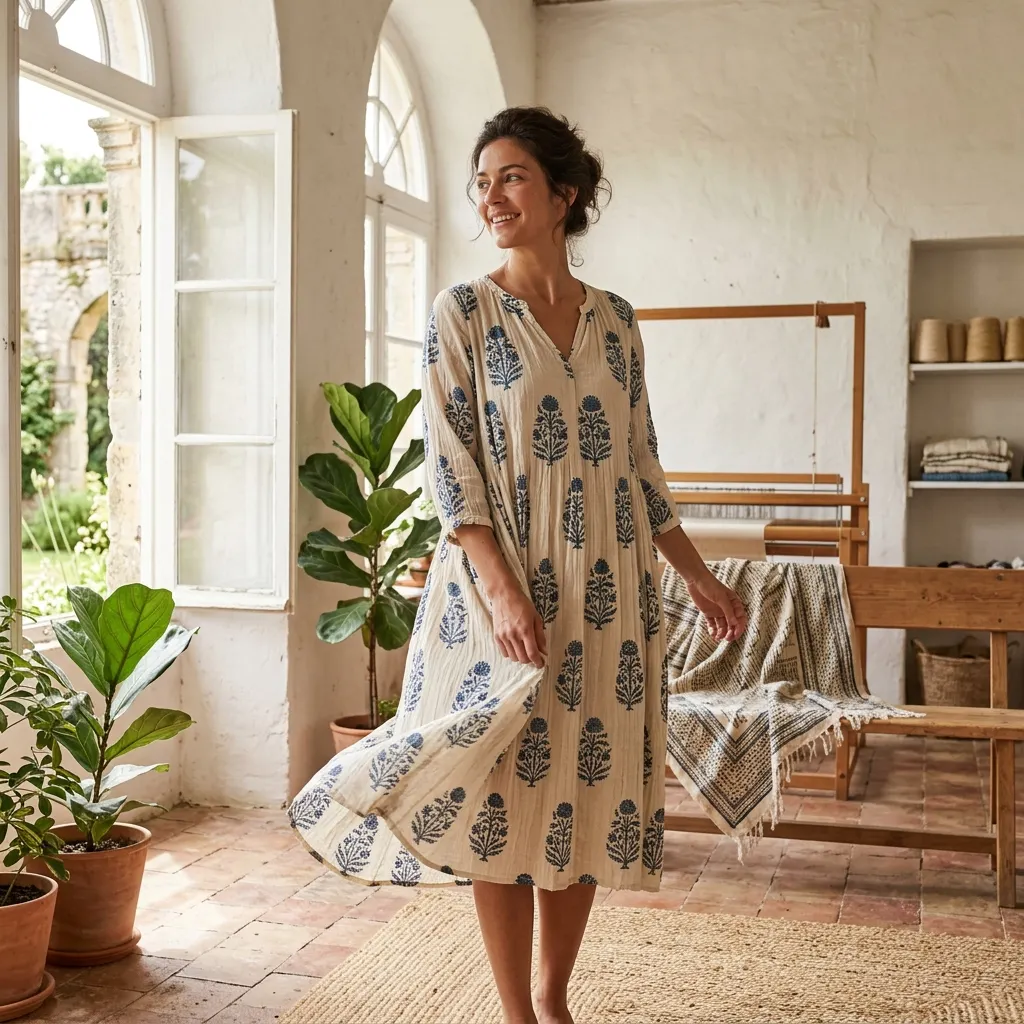
There’s something in Indian textile tradition about wearing fabric that carries meaning together — matching borders in a saree, coordinated colours at a wedding. The idea of two people consciously choosing the same handprinted cloth, from the same artisan’s hands — it felt like something genuinely new that was also very old.
That’s how our Partners in Joy collection was born. And it became our most beloved product line almost immediately. People connect with the idea of shared wearing. It’s intimate, without being costume-y.
Ruhani: SA Fab ships globally now. What surprises you about international buyers?
Saloni: How much they know.
When I started, I assumed we’d have to do a lot of explaining — what block printing is, why it’s different, why the slight variation in pattern from piece to piece is a feature, not a defect. But so many buyers from Europe, from the US, from Japan — they already understand. They’re already looking for this. They’re tired of synthetic uniformity.
What they want is authenticity. They want to know there was a human hand involved. They ask questions about the artisans, about the dyes, about the community. That gives me so much hope.
Ruhani: What’s the hardest thing about what you do that people don’t see?
Saloni: The in-between.
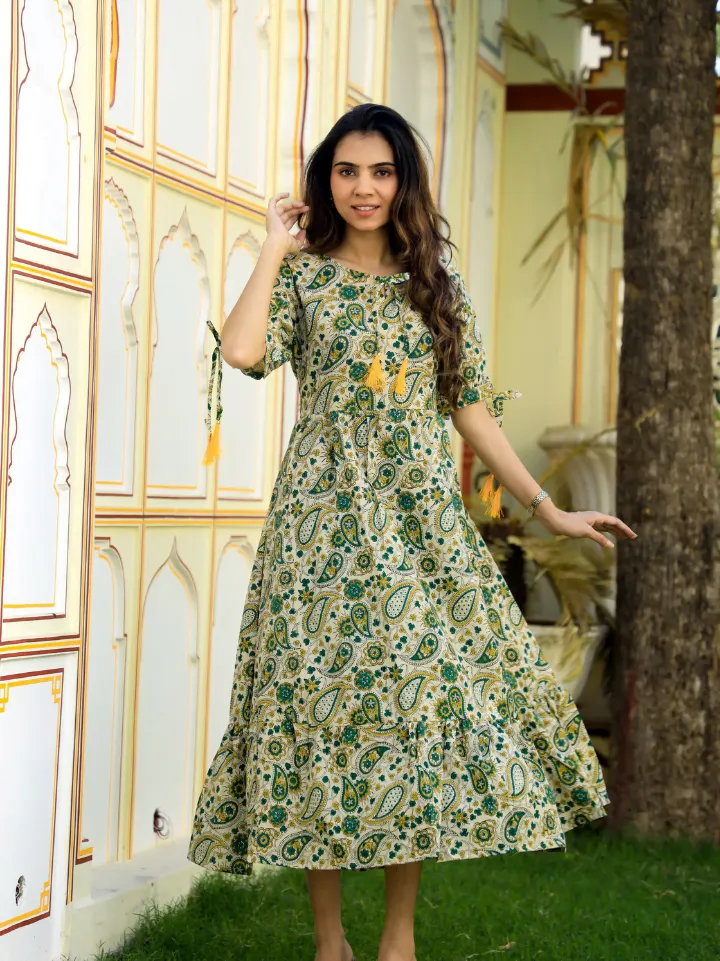
People see a finished saree or a beautiful block-printed kurta and it looks effortless. What they don’t see is the conversation that happened at 9 PM with an artisan about why a motif wasn’t aligning. The batch of fabric that had to be redone because the dye shade was slightly off. The monsoon that shifted the whole production calendar by three weeks.
There’s so much invisible labour — both mine and the artisans’. And I think the reason it stays invisible is that we’re so used to products that hide their making. That’s something I genuinely want to change. I want people to understand that the slight imperfection in a hand-printed cloth is not an error. It is the signature of the human being who made it.
Ruhani: What does the next chapter look like for SA Fab?
Saloni: More artisan families. More block designs — we’re already at 500+ and I feel like we’ve barely started. More honest storytelling about the craft.
And I want to keep building the community. Our customers are not just buyers to us — they’re part of something. When someone chooses a handprinted piece over a fast fashion alternative, they’re making a statement about what they value. I want SA Fab to be the brand that makes that choice feel beautiful, not sacrificial.
The cloth, as Ramesh Ji would say, is still telling us when it’s thirsty.
Saloni Agrawal is the founder of SA Fab, a handblock print label based in Bagru, Rajasthan. SA Fab works with 200+ artisan families and ships handblock printed fabric, clothing, and home furnishings across India and internationally.
If this piece resonated with you, you might also enjoy my earlier writing on why Indian textile craftsmanship still matters today and why global buyers are choosing hand block printed cotton from India.
— Ruhani Agarwal writes about Indian handcrafted fashion, block printing traditions, and the people keeping slow textile culture alive.