Mark Carney’s vision for Canada’s energy future is misguided


On September 2nd, the United Nations Environment Programme released a new report concluding that the global community has failed to meet the target set in the Paris Agreement to hold global average temperatures under the 1.5°C above pre-industrial levels. The world will likely cross that threshold in the next few years, pushing climate risks and impacts to new and terrifying heights, causing faster sea-level rise, a higher likelihood of ecosystem collapse, more extreme heat and wildfires, and profound damage to sea ice, glaciers, and permafrost. The effects will threaten human health, food security and water supplies, and push the world ever closer to irreversible tipping points that could irreparably damage the fragile web of complex planetary systems that underpin the habitability of our planet and the stability of complex human civilization.
As I read the apocalyptic predictions, I couldn’t help but think about Prime Minister Mark Carney.
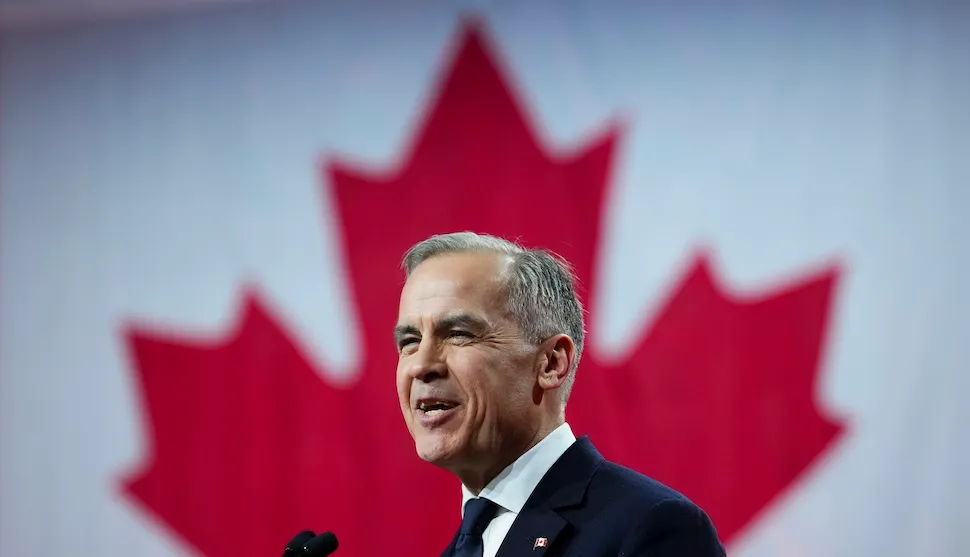
On July 1st, Canada’s 159th birthday, Prime Minister Carney released a long-form video address on his official YouTube channel titled “Forward Guidance: Canada’s Energy Future”. In the slickly produced video, Mr. Carney traces the central importance of energy in Canadian economic and political history and lays out his vision for the next phase of Canada’s federal energy policy as a centrepiece for a national project to build a strong, united country. It is an intelligent, nuanced address, with a compelling vision. It demonstrates a deep understanding of the key policy and technical challenges slowing the energy transition. And yet, my core takeaway from the video was Prime Minister Carney’s insistence that to meet the challenges of the current moment, Canada must abandon the climate policies of Justin Trudeau’s government and further expand the extraction and export of fossil fuel energy. Not because it shocked me — I have been paying attention — but because the way that Mr. Carney framed the issue is representative of a continual, widespread, infuriating failure among our country’s decision-makers to understand the stakes of global climate change.
Since Canada Day, I haven’t been able to stop thinking about this video. It was fresh in my mind on July 2nd, when the Prime Minister and the Premier of Alberta jointly announced the federal government’s intention to expedite the permitting and construction of a new pipeline to carry a million barrels a day of crude oil from Alberta’s tar sands to British Columbia’s south coast, to service Asian export markets. It was in the back of my mind as I walked home from work in mid-July, wearing an N95 mask to guard my lungs against the ash and toxic wildfire smoke that had blanketed Toronto, gazing uneasily up at the hazy orange sky and the dimmed sun.
The video has continued to burble back to the top of my consciousness as I read about the massive wildfires devastating western Europe, the deadly heat wave setting temperature records in east Asia, and the First Nations communities chased from their homes by the worst wildfire season in Ontario’s history. It frames my existential dread about the impending collapse of the Atlantic meridional overturning circulation (AMOC), or the accelerating collapse of the Thwaites Glacier, or the potentially irrevocable collapse of the world’s coral reef systems. Collapse, collapse, collapse. And I thought about it again, reading the United Nations Environment Programme report.
There is a distinct existential dread, to which I’m sure many in my age cohort can relate, in watching your future go up in flames while your government insists that we need to throw more fuel on the fire, and that in fact you are a utopian radical for suggesting otherwise.
To be sure, there is much that Prime Minister Carney gets right in his address. Confusingly, he rightly notes that we are in the midst of a global climate crisis that is burning our forests and threatening our children’s futures. He rightly identifies electrification as the path to affordability, competitiveness, and sustainability, and notes that in the long run, the energy transition will be a source of great stability. I am encouraged by his emphasis on the National Electricity Strategy, with an objective of doubling Canada’s electricity infrastructure capacity, and the Nuclear Energy Strategy, to expand Canada’s nuclear energy infrastructure and export our home-grown expertise abroad. These are two developments that I (and many energy policy experts that are much smarter than I am) welcome.
He also rightly points out that the global geopolitical and economic system is volatile right now. The global system of trade on which we’ve long relied as a country is being dramatically restructured. The senile, kleptocratic fascist in the White House has singlehandedly dismantled the decades-long global consensus that favoured free trade for mutually beneficial, positive-sum transactions. Canada’s overreliance on the United States as a trading partner has become a source of deep vulnerability. At the same time, regional military conflicts have sharply increased gas and food prices around the world. Two dying empires, perhaps casting around for a foreign policy victory to salve the festering wounds of their domestic decay, have launched foreign wars of aggression in key shipping routes, constraining the global supply of fuel and fertilizer and inflating the price of basic necessities.
But alongside the ambitious and forward-looking strategies for electrification and the sober assessment of the volatile geopolitical landscape, there are a number of deeply troubling flaws to be found in the Prime Minister’s argument.
For starters, Mr. Carney makes a rather large logical jump from the eminently reasonable assertion that the geopolitical and economic climate of 2026 is turbulent, to the less convincing prescription that Canada needs to therefore expand the extraction and export of fossil fuel energy. There is ample opportunity for Canada to grow economically, expand exports, and strengthen its economic resilience while contributing positively to energy transition and staking a role in the green economy of the future. Canada is well-positioned to become a leader and a catalyst for global decarbonization and sustainability.
I was also frustrated and disappointed to hear the Prime Minister employ the same doublespeak about “responsibly produced” fossil fuels that has by now become familiar from oil and gas industry strategic communications and Progressive Conservative party campaign advertisements. Mr. Carney spoke about how Canada’s conventional energy (fossil fuels) will be extracted in “sustainable ways”, with a “clear focus on lowering emissions over time”, and touted Canada’s “low-carbon” liquefied natural gas resources. But no amount of half-truths and focus group-tested euphemisms can change the fact that the Prime Minister is talking about extracting and burning more fossil fuels, building infrastructure to lock in patterns of fossil fuel-dependent production and consumption, and thereby accelerating global climate collapse.
Perhaps most galling is the assertion that Canada “can’t afford to restrain the growth of an important part of our energy mix, oil and gas, to meet a short-term goal.” In Mr. Carney’s framing, the reduction of Canadian fossil fuel emissions to net-zero by 2050 is merely a short-term goal, a kind of utopian fantasy that needs to be set aside in favour of more sober, pragmatic considerations, and maybe we can return to it later, when things calm down a bit. In reality, net-zero means aligning our patterns of production and consumption with what is required to sustain a liveable planet for the long-term. The truly short-sighted course of action is to expand the extraction and export of fossil fuels in a world that is fighting hard to decarbonize and teetering on the brink of total ecological collapse. The truly naïve, delusional view is to assert confidently that the iron-clad laws of thermodynamics can be bent and ignored for a few more decades of profit, while the anthropogenic structures of economics and politics are immutable and must be adhered to rigidly.
But the most crucial flaw, in my opinion, is the Prime Minister’s deeply troubling and misguided argument that the climate policies of the Trudeau government must be abandoned, and Canada’s greenhouse gas emissions must increase in order to restore affordability, security, and stability. What has truly stuck with me since Canada Day is the overwhelming sense that the Prime Minister just does not get it.
While Prime Minister Trudeau’s climate policies were “well-intentioned and well-suited for the time”, Mr. Carney says, “the certainties of the world of 2015 are long gone.” Canada now finds itself, for the first time in a long time, in a hostile neighbourhood and a geopolitically unstable world, Mr. Carney says, and maintaining the Trudeau-era climate policy (as inadequate as it was) would be too expensive for Canadians and would let down our geopolitical partners. Meeting this moment, the Prime Minister insists, will require expanding fossil fuel extraction and increasing Canada’s emissions of greenhouse gases.
The Prime Minister’s address constructs a dichotomous rhetorical framework: on one side, Canada can take aggressive action to mitigate climate change, and on the other, Canada can pursue a policy that restores affordability, security, and stability. It’s a clever rhetorical trick. Everyone, in every political party and at every point on the political spectrum, wants affordability, security, and stability. Indeed, it might be considered government’s most fundamental responsibility to provide an affordable, secure, stable lifestyle for its citizens. By placing affordability, security, and stability on one side, and climate action on the other, believing in the science of climate change and the consequent imperative for aggressive mitigatory action is framed as a kind of luxury belief. We can’t possibly act to preserve a stable climate right now, Mr. Carney suggests, because we need to focus on affordability, security, and stability. Climate change is framed as a “later problem” — something we can worry about when the price of groceries comes down, or when the conflicts in Ukraine and Iran are resolved, or when the United States elects a more sane president, or perhaps when our own political environment is less polarized.
This framing is precisely the issue: Mr. Carney (and to be fair, almost the entire Canadian political class and most of the Canadian electorate) fundamentally misunderstands the stakes of global climate change. In Mr. Carney’s estimation, the global economic and political upheavals of the past few years justify an expansion of fossil fuel extraction to restore affordability, security, and stability. But contrary to the Prime Minister’s suggested course of action, expanding fossil fuel extraction cannot achieve these objectives in the long term. In fact, the suggestion that it can betrays a fundamental misunderstanding of the stakes of global climate change.
Firstly, Prime Minister Carney argues that continuing to implement the climate policy of the Trudeau era would have been too expensive for Canadians who are already struggling with affordability. What the Prime Minister misses is that the greatest threat to long-term affordability is global climate collapse. Indeed, we can expect the collapse of the global climate to cripple the economic basis of our prosperity, raising the cost of living and vastly increasing financial risks for Canadians.
At the micro-economic level, climate change inflates the cost of living for all Canadians. Accelerating greenhouse gas emissions destabilize the weather patterns we rely on to feed ourselves, causing persistent drought, unseasonal heatwaves, and unpredictable flood patterns, disrupting crop yields and driving up the price of agricultural staples. If you have been to a grocery store lately, then you are already witnessing the beginnings of this disruption. In 2025, two-thirds of all agricultural land in Canada was experiencing moderate to extreme drought, over 8.3 million hectares burned from wildfire activity, and rainfall activity was well below normal levels. Prices for imports including coffee, tea, cocoa, strawberries, oranges, squash, carrots, cabbage, and potatoes have all seen significant increases due to weather-related challenges in other parts of the world. Destabilizing climate patterns also result in more frequent, more devastating, and less predictable fires, floods, and storms, driving up the cost of home insurance across Canada, or compelling insurers to withdraw coverage entirely in vulnerable regions, increasing the costs of homeownership. These impacts, of course, harm the lowest income Canadians the most, exacerbating economic inequality and putting middle class prosperity out of reach for more and more Canadians. They are just the beginning of the costs that ordinary Canadians will face in a world of climate collapse.
At the macro-economic level, accelerating climate collapse is an economic drag, slowing growth across sectors, straining government budgets, harming productivity, and eroding competitiveness. More frequent and more destructive storms wreak havoc on our physical infrastructure — ports, roads, electricity grids, stormwater management infrastructure, water treatment plants, etc. — limiting productivity by decreasing the economy’s supply capacity. When the assets are public, many billions of public dollars are required for repairs and hardening investments, straining government budgets and putting pressure on fiscal stability. The Canadian Climate Institute has projected that, over the next 75 years, Canadian governments will have to pay roughly $15.1 billion per year on average to maintain, renew, and reactively repair infrastructure damaged by climate change. Heat stress, an increasingly ubiquitous risk in our warming climate, limits labour productivity, particularly for crucial outdoor industries like agriculture and construction. These productivity and output repercussions compound over the long-term, persistently reducing productivity. In totality, the Canadian Climate Institute has estimated that by 2050, the economic costs of climate change will reduce Canadian GDP by $78 to $101 billion annually. These macro-economic trends are predicted to reduce per capita income by $1900 to $2300 per year by 2050. Expanding fossil fuel extraction and locking in carbon-intensive patterns of production and consumption will accelerate climate change and further inflate the costs and financial risks of global climate collapse. Preserving an affordable future for Canadians requires aggressive action to mitigate climate collapse.
Nor am I convinced that expanding the extraction and export of fossil fuels will make us more secure. What is security, if not the defence of our political and economic freedom and way of life? In so many ways, catastrophic climate collapse constrains our freedom and threatens our way of life, by eroding the ecological stability forming the basis of our existence. Expanding the extraction and burning of fossil fuels only sharpens those threats and accelerates collapse. I would argue that a holistic understanding of national security needs to account for global climate collapse, and take seriously the idea that aggressive mitigation of climate change bolsters our security.
But even if we accept the traditional definition of security — in terms of militaries, conflict, and foreign threats — any honest analysis has to conclude that climate chaos is one of the most urgent and critical threats to global security, undermining peace and stability, intensifying conflict, and fueling radicalism, particularly in the areas of the world that are most vulnerable to the effects of a warming climate.
Get Luca Dannetta’s stories in your inbox
Join Medium for free to get updates from this writer.
Climate-driven conflict is not a new phenomenon. The empirical literature on armed conflict shows that high temperatures, poor rainfall, droughts, and floods are associated with an intensification of violence. Catastrophic climatic conditions can particularly breed conflict in regions heavily dependent on agriculture and in combination with other relevant factors such as low levels of economic development and political marginalization. Way back in 2011, Christian Parenti’s Tropic of Chaos showed how the changing climate and associated extreme weather events were compounding existing political and cultural crises, leading to a new geography of violence defined by ecological collapse. Reporting from war-torn frontiers across the Earth’s mid-latitudes, Parenti demonstrated how “policies that create poverty and violence are now colliding with the new realities of climate change, and together these three forces are creating socially destructive forms of adaptation.”[1]
Climate collapse can be described as a “threat multiplier”, meaning it doesn’t necessarily directly cause violence, but it strongly influences the various factors that can precipitate violence, exacerbates social relations that make violence more likely, and makes existing violence worse. This may lead to violent conflicts over resources; drought, unpredictable precipitation patterns, and extreme weather events associated with climate change can decrease available water resources, destroy crops, and shrink arable land, intensifying competition between groups and provoking civil conflict.
We are already starting to see the first hints of this pattern, as extreme weather, particularly hotter and drier conditions in areas heavily dependent on local agriculture, constrains resources and heightens internecine conflict. Many have pointed to climate change as a key factor in, for example, the Sudanese civil conflicts of the early 21st century — the rapid desertification of the Sahel region in the latter decades of the 20th century eroded the available stock of arable land and natural resources, shrinking pasture and grazing corridors, and intensifying conflict between predominantly ethno-African agriculturalists and predominantly Arab pastoralists. In the face of ever-shrinking resources, traditional communal land tenure systems broke down, and civil conflict turned violent. This convergence of political, ethnic, and ecological factors has prompted some to refer to the Sudanese civil war as “the first climate change conflict.” In 2007, then-Secretary General of the United Nations Ban Ki-moon commented that, at its roots, “the Darfur conflict began as an ecological crisis, arising at least in part from climate change.” The United Nations has cited climate change as a factor intensifying internecine conflict in Mali, Somalia, and Iraq, among others.
Climate chaos can also breed, fuel, and empower organized crime and violent extremism. The collapse of Lake Chad, for example, has contributed to a surge in organized crime and terrorism in west Africa. For centuries, Lake Chad has supported agricultural production, fishing, and livestock production for millions of people in Chad, Cameroon, Niger, and Nigeria, acting as a keystone resource in regional economies. But severe drought, exacerbated by climate change, has dramatically depleted the size of the lake and its resources — the surface area has shrunk from ~26,000 km2 in the 1960s to less than 2,000 km2 today. The consequent collapse in resource availability — collapsing yields of fish, soil infertility, desertification, weaker livestock production — has increased poverty and economic desperation, which has in turn been exploited by organized criminal enterprises and violent extremist groups like Boko Haram to recruit young people to engage in the trafficking of drugs and weapons. The United Nations Interregional Crime and Justice Research Institute (UNICRI) identified environmental degradation and limited access to dwindling natural resources as among the drivers of violent extremism across the region, particularly in Chad. As resources dwindle, organized violence becomes relatively more economically rational as a means of securing the necessities of life. We can expect trends like this to proliferate and accelerate as the global climate system deteriorates further.
At home, climate chaos is undermining Canada’s ability to respond effectively to these threats. High-ranking officials in the Canadian Armed Forces have been warning Parliament for years that the increased demands of responding to natural disasters at home, associated with our destabilizing climate, could strain the military’s human, material, and financial resources, compromising the military’s ability to respond to threats abroad. The Arctic, a key frontier of Canadian national security, is warming nearly four times faster than the global average, reshaping our strategic environment by increasing maritime activity and enhancing foreign interest, particularly Russian, in shipping opportunities and resource exploitation. At the same time, thawing permafrost and eroding coastlines threaten military infrastructure in the Far North, eroding Canada’s readiness to respond to Arctic threats.
Accelerating climate change is making the world more dangerous, increasing the likelihood of violent conflict over dwindling resources, and undermining our ability to respond to threats. The effects, for now, are being felt most acutely in the areas of the world that are being hit hardest by climate change, and especially in states with weak governmental institutions and pre-existing inter-ethnic tensions. Sudan and the Lake Chad Basin, for example, are particularly vulnerable, as regions with a low level of economic diversification, where many lives are dependent on a stable climate for agriculture-based livelihoods, and weak governmental institutions and existing patterns of internecine conflict make violence more likely. In other words, it is not a coincidence that the first “climate change conflicts” are arising where they are. But as the planet warms further and global systems of climate regulation collapse, stable supplies of natural resources will be threatened everywhere, compounding existing ethnic and geopolitical tensions and increasing the likelihood of violent competition between groups and states seeking to secure their own livelihoods. This increased likelihood of violent conflict is a major threat to global security. Pouring more fuel on the fire will not make us more secure.
Lastly, the Prime Minister argues, it is necessary to abandon the Trudeau government’s climate policy and expand the extraction and export of fossil fuels to restore stability. This is the hardest claim to address, because the Prime Minister does not define stability. According to the Prime Minister, the “certainties of the world of 2015 are long gone,” we now live in a hostile neighbourhood and a geopolitically unstable world, and it is imperative to establish stability amidst the chaos. He is not wrong. But the leap from this clear-eyed observation of the shifting geopolitical landscape to the assertion that aggressive climate policy must yield to unrestrained fossil fuel extraction strikes me as a bizarre non sequitur. Will expanding the extraction and export of fossil fuels convince Donald Trump that international trade is mutually beneficial and international alliances between liberal democracies make us all more secure? Will it undo the decade-long annexation of the Republican Party by nihilistic fascists and corrupt kleptocrats? Will it somehow stem the growing global tide of far-right authoritarianism? No, it will not and it cannot. The factors making our world less geopolitically stable have nothing to do with the construction of a new oil pipeline to Canada’s Pacific Coast, or the elimination of Canada’s consumer carbon price, or the cancellation of the zero-emissions vehicle sales mandate.
One idea that could support the Prime Minister’s argument is that expanding fossil fuel extraction and export infrastructure could help our European and Asian partners reduce their dependence on fossil fuels purchased from authoritarian regimes like Russia, Saudi Arabia, Qatar, and Iran, who use the profits to fund war, terror, and repression. Reducing dependence on these regimes for energy resources could help strengthen our liberal democratic partners, bolstering the liberal international order (to the extent that it still exists) and thus contributing to global geopolitical stability. The Prime Minister hints at this argument when he says that maintaining the Trudeau government’s climate policy “would have let down our partners who need new sources of energy,” but does not articulate a clear case or engage in any sustained examination of the actual market conditions that might support an enhanced export strategy.
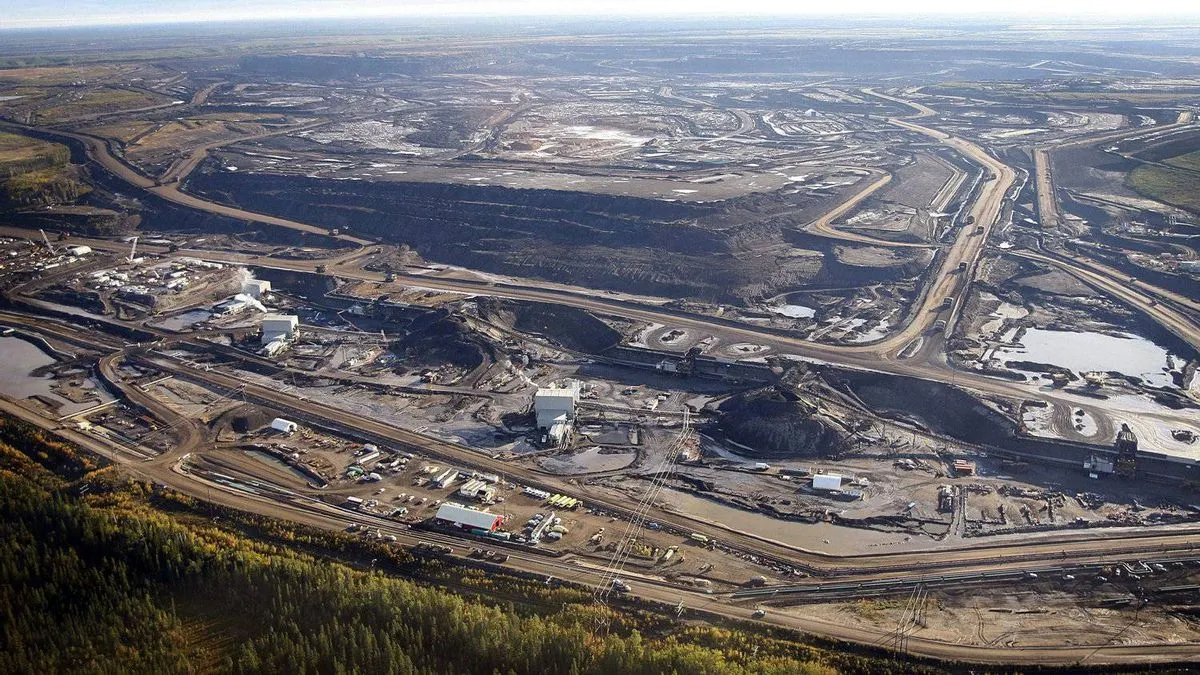
It is far from clear that long-term prices and demand will support investment in new extraction and export infrastructure. Every short-term price spike elicits a flurry of arguments to expand extraction and build new pipelines, but the short-term chaos of the crisis in the Strait of Hormuz does not necessarily signal long-term profitability. This is particularly true of the resources in Canada’s oil sands, which require a more complicated, energy-intensive, and capital-intensive process to extract and refine, and require sustained high prices and strong long-term demand to break even. Current high prices in oil and liquefied natural gas markets, driven primarily by the market shock of the conflict in Iran, may be obscuring long-term structural demand risks, including global oversupply and the increasingly competitive economics of renewable energy. The European Union is trying desperately to reduce its consumption of oil and natural gas and Asian export markets are developing alternatives to liquefied natural gas (and have access to closer, lower-cost alternatives anyway). Given the timelines for expanding production capacity, and the predicted forthcoming global oversupply, it remains an open question whether there would be any market to profitably supply in the long term, regardless of the potential geopolitical benefits of doing so.
More importantly, there are other ways that Canada can support our friends in developing new sources of energy and decoupling from dangerous petrostates, ones that do not involve extracting and burning more fossil fuels. Indeed, we have already shown those pathways exist. For example, Canada recently signed a Letter of Intent with the European Investment Bank signalling a commitment to closer cooperation on securing supply chains for the key minerals and metals that power clean energy and innovation, as well as security and defence. The Federal Government also signed a joint declaration of intent with Germany to accelerate the development of supply chains for hydrogen, which can displace fossil fuels in hard-to-abate sectors of the economy. Canada could also employ our considerable expertise, skilled workforce, and developed uranium supply chain to support development of new nuclear energy, as the federal government is currently attempting to do in Poland, to displace fossil fuel consumption in Europe’s electricity sector.
Initiatives like this can be expanded, expedited, and intensified to support our partners overseas in transitioning away from fossil fuels, enhancing their security by reducing their reliance on fossil fuels purchased from unpredictable authoritarian regimes, while also reducing global emissions. More engagement with fast-growing Asian markets will be particularly important. Arguably, this course of action would be more beneficial for long-term security and stability, by reducing exposure to notoriously volatile prices for fossil fuel resources that seem to be disproportionately controlled by deeply erratic, unpredictable, and illiberal regimes.
By contrast, extracting and burning more fossil fuels will accelerate global climate collapse, which as I have argued above, will further inflate the cost of the necessities of life and increase the likelihood of violent conflict over dwindling resources, with disastrous effects for stability, no matter how we define it. How stable will our domestic political and economic order be in a world of flooded coasts, burning forests, and collapsing harvests? How stable will the global geopolitical order be when resource shortages devolve into violent regional conflicts between desperate nations fighting to secure their own survival? I believe we should think about stability in these terms. Preserving and reinforcing a status quo that has put us on the path to global ecological collapse and mass death is not an inherently “stabilizing” political objective, and particularly not in the long-term. True stability would require, in the near term, major investments in adaptation to support life in a warming world, and in the medium to long term, putting the world on a pathway to net-zero greenhouse gas emissions and general sustainability — i.e., living within the ecological limits of our biosphere.
Instead, what Mr. Carney proposes is to expedite anthropogenic climate change by expanding the pumping and burning of fossil fuels. This will accelerate the inflation of costs of the necessities of life, further inflame the tensions and competitions fuelling conflict across the globe, and further stress the fragile, already-strained fibres that hold together our domestic and global political and economic order. What Mr. Carney gets wrong about the future is that rapid and aggressive action to both mitigate the climate crisis (drastically reducing emissions of planet-warming gases) and to adapt to a world of climate crisis (hardening our infrastructure, preparing for extreme heat, shifting agricultural practices, etc.) is in fact the pre-requisite condition for long-term affordability, security, and stability. By contrast, building new fossil fuel extraction infrastructure locks in patterns of fossil-fuel-dependent production and consumption, literally pouring more fuel on the fire and making our world less affordable, less secure, and less stable.
The Prime Minister and I share concerns about affordability, security, and stability. But I disagree that expanding fossil fuel extraction will help us achieve these aims. In fact, I think it’s clear that accelerating the export and burning of fossil fuels will accelerate global climate collapse, contributing to widespread economic devastation, more frequent and more intense armed conflicts over dwindling natural resources, and more political and economic chaos, both domestically and internationally.
For what it’s worth, I do believe that the Prime Minister is aware of the forthcoming consequences of catastrophic climate collapse and the existential imperative to radically alter the trajectory of global energy consumption. In his 2021 book Values: Building a Better World for All, Mr. Carney demonstrates an acute understanding of the climate crisis as a systemic market failure, rooted at least in part in an ethos of market fundamentalism that prioritizes short-term financial returns over long-term stability. In the past, he has communicated an understanding that climate change is an existential threat that requires major intervention. So why has the Prime Minister changed his tune? Why, as others have asked, has the former United Nations Special Envoy on Climate Action and Finance pivoted to become a cheerleader for the expansion of Canadian fossil fuel extraction, in the age of climate collapse?
Perhaps Mr. Carney believes that there is still some wiggle room in our carbon budget, that we can still squeeze in a few more decades of petro-profits before we finally get serious about this whole climate change thing. The Prime Minister would be woefully mistaken. As the United Nations Environment Programme report shows, the global carbon budget is effectively exhausted; on current trends, by 2030 we will have blown past the level of greenhouse gas emissions required to hold the global average temperature within 1.5 °C above pre-industrial levels, the level at which the United Nations has warned we can expect increasingly frequent and dangerous heatwaves, droughts, wildfires, and floods, and may trigger critical climate tipping points, such as the breakdown of major ocean circulation systems or abrupt thawing of boreal permafrost. We are out of time.
Perhaps, as some (like the National Observer’s Max Fawcett) have suggested, the Prime Minister is calling Alberta Premier Danielle Smith’s bluff — taking the political credit of opening the door to a new west coast pipeline in full awareness that the oil and gas industry is far too risk-averse to undertake the investments that would be required to supply an additional 1-million barrels per day for export. A risky bet, when the stakes are a livable future.
Perhaps Mr. Carney’s pivot requires a more sustained examination of the influence of fossil capital interests in shaping the federal government’s approach to energy policy, and how the interests of fossil fuel corporations and their shareholders are consistently transmuted into a vision of “the national interest.”
I think what is most likely is that the Prime Minister is once again sacrificing meaningful climate action to prioritize other political and policy goals because it is politically expedient to do so in the near term. At this political moment, unleashing unmitigated fossil fuel extraction could appear to serve the Prime Minister’s objectives of catalyzing private investment and diversifying Canada’s trade relationships. The Prime Minister is also likely hoping that embracing a new pipeline to the west coast may be a first step toward mending fences between the Liberal Party of Canada and the Province of Alberta, particularly in light of ongoing separatist agitation. In the video, Mr. Carney argues that forging ahead with the Trudeau government’s climate policy “would have been too divisive for our country,” and would have posed “an open opportunity for those people who wish to pull Canada apart, both at home and from abroad.”
As I have argued elsewhere, in the context of Mr. Carney’s decision to scrap the consumer carbon price, principled political leaders do not abandon crucial public policy initiatives when the political winds shift, and effective climate policy requires leaders that are willing and able to articulate the long-term benefits of climate action. I believe the Prime Minister is capitulating to pressure from a faction of the Canadian political spectrum, and both domestic and international financial interests, that would exploit any policy challenge as an excuse to expand fossil fuel extraction. This faction, to be frank, are poorly informed, myopic, and selfish, and if we allow them to dictate Canada’s energy policy, even when supposedly climate-conscious liberals lead the federal government, then we are truly lost. Canada needs political leaders that will act boldly in the service of our collective social responsibility, acknowledge the existential nature of the climate crisis, and tackle it head on.
Meaningful, aggressive climate action can no longer be subordinated to short-term political and policy challenges. The 1.5°C threshold will be breached; the fight now is to limit the warming as much as possible, and every fraction of a degree matters. As the United Nations Environment Programme noted in their report, “Avoiding every additional fraction of a degree of global warming and reducing the time in overshoot decreases risks and damages and increases the chances of bringing temperatures back down.” The challenges that Prime Minister Carney has identified are real, and they warrant serious policy responses, but the greatest long-term threat to affordability, security, and stability is the collapse of the global climate system. Expanding the extraction and burning of fossil fuels will only exacerbate that threat; it will not bring down the cost of living, it will not make us more secure, and it will not foster a politically and economically stable future.
Notes
[1] Christian Parenti, Tropic of Chaos: Climate Change and the New Geography of Violence. (New York: Nation Books, 2011), 181.