All Roads Lead To UBI

By: Lutchi Gayot

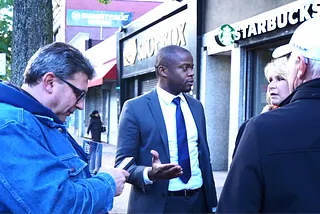
It’s become clear to Americans on both sides of the political aisle that neither our government nor our economy is prepared for this pandemic. The fact that millions of Americans immediately filed for unemployment within weeks of being out of work reflects the threat of economic insecurity in our country. A majority of American workers are living paycheck to paycheck and can’t afford to live without an income for any amount of time. What happens if we automate jobs away and people are barely able to get by as they look for a new job? This is one of the main reasons why I’m running for Congress in NY-09. My name is Lutchi Gayot. I’m not a politician, I’m a small business owner who sees that the interests of our people and our leaders are not aligned. I was forced to close storefronts due to this pandemic, and I see first hand that the priority of our leaders in power is not to better the lives of the people they represent but to better their own lives, and increase their chances of reelection. I’m running for Congress on bold, pragmatic, forward-thinking ideas that I believe can guide our country into a better future and better the lives of the people in Brooklyn.
To help people cope with temporary unemployment, Universal Basic Income has become a popular proposal among Republicans and Democrats alike. Andrew Yang started the conversation by championing the idea in his 2020 presidential campaign. Now that the policy has bipartisan support from notable congressmen like AOC and Mitt Romney, people are taking a second look at Yang’s proposals. However, this proposal is not new. Martin Luther King along with a group of 1,000 of the world’s top economists in the 60s, and during 1970 a similar bill passed the House.

Congress recently passed a bill providing Americans with money to combat rises in unemployment. The bill provides people with a one time check of $1,200. I’ve been advocating since the beginning of my campaign for all Americans to receive $1,000 every month, and I think that the current bill doesn’t go far enough. I support recurring checks of $2,000 a month to all American citizens over 18 for the duration of the pandemic, and once the virus is contained I believe we have to permanently implement a plan to give Americans $1,000 every month.
Most small businesses have taken a hit and are being forced to close down and lay off employees. A Universal Basic Income won’t bring our country back to the way it was before the virus, but it will help the businesses struggling to stay open while traffic is low. Once the economy opens, if we’re giving people $1,000 a month, those people are going to spend it right back into their local stores. Maybe they’ll use the money to paint that room in their house they always wanted to paint, or they’ll use it to hire a landscaper, they can go and buy healthier food for their family, or maybe spend it on an extra night out at that restaurant they’ve always been meaning to try. The list can go on, but the main point here is that money put into the hands of the American people will be spent not on stocks or yachts but at local stores, restaurants, and small businesses.
We need to rethink our economy for the next generation; as we now see the internet and automation dominating the marketplace. We need a system in place that will provide Americans with a ground to stand on to guarantee the opportunity of upward mobility, and achieve the American dream. Rather than putting people on welfare and trapping them in a system where they have a maximum amount of money they can make before they’re taken off and stripped of their benefits, we want to give all Americans a base of $1,000 a month to foster growth. Rather than lowering the ceiling, my plan raises the floor.
Before the Coronavirus pandemic, the country’s leading economists were predicting that over the next 10 years a third of all American jobs would be lost due to automation. While robot trucks seem like something out of a sci-fi movie, they’re currently being piloted and even put on the roads by some of the leading motor vehicle and shipping companies right now. Trucking is the most common job in 29 states, and robot trucks don’t just affect the truck drivers but also the millions of Americans who work at truck stops and diners that rely on truckers getting out and having a meal. Retail is the most common job in America and online retail is now dominating the market, especially when we’re social distancing. Mainstreet stores like Sears, Modells, ToysRus and Macy’s are closing and putting more Americans out of work while the Amazon warehouses popping up in more cities around the country are filled with mostly robots. Cashiers, call center reps and food service workers are among the list of the most common jobs in America. Self-serve kiosks popping up in CVS, Target and many other retail stores. McDonald’s has already stated that they will start bringing self-serve kiosks to all their locations, and it won’t be long until other restaurant chains follow. Call center workers are also at risk of losing their jobs to an automated voice and Google just recently developed new technology where the computerized voice is almost indistinguishable from a human voice. It won’t be long until other companies use this technology as well.

So yes, automation is coming, and it’s putting millions of Americans out of work. So why is UBI the best way to combat this problem?
One of the primary arguments against UBI is that we should retrain displaced workers so they can get jobs in fields where new careers are abundant (e.g. technology). However, government retraining programs work 0–15% of the time at best. Retraining programs are slightly more effective if people can seek them out on their own, and UBI would allow many to do this without worrying about how they’ll pay their rent in the meantime. Retraining is ineffective and not a viable option for the government to rely on when we’re trying to find tens of millions of new jobs for Americans.
Get Lutchi Gayot’s stories in your inbox
Join Medium for free to get updates from this writer.
So won’t there be new jobs created in other fields of work? Yes, but the jobs being created are not enough to outweigh the jobs being lost to automation and these new careers will not be accessible to the average unskilled laborer who’s most at risk of losing their current job to automation. The new jobs being created in places like technology are not the kind of jobs a middle-aged trucker or retail worker is likely to get.
We’ve already seen what’s happened in the manufacturing sector where around 5 million jobs in the Midwest were automated away between 2000 and 2010, and it’s projected that 20 million manufacturing jobs will be lost by 2030. So what happened to these people who lost their jobs? Half of them filed for unemployment and half of those people filed for disability. Right now it’s pretty bad. People are temporarily out of work but at least they know that in a few months they’ll be getting back to work and receiving a paycheck again. Imagine if a third of all Americans were permanently put out of work. There would be fewer customers spending money in local businesses, fewer entrepreneurs starting businesses, cheaper school budgets being passed, life expectancy drops, we’ll see increased suicide rates, and increased incarcerations as people become more desperate. People would resort to eating cheaper and more unhealthy foods. Our stock market would tank when investors see that a third of all American workers don’t have a penny to spend on anything but essential goods. Unions will organize to protect their careers from being automated, and civil unrest will become inevitable.
This is why people in Silicon Valley who are developing technology that puts people’s jobs at risk support a UBI. Elon Musk, Richard Branson, Ta-Nehisi Coates, and many other forward thinkers have thrown their support behind a UBI.
Giving $1,000 to every American citizen over the age of 18 every month may sound like a gimmick that’s too expensive to execute. However, the truth is that not only can our country afford this, but a UBI in practice would end up paying for itself and more. Basic income is an economic floor for our people to stand on. Once implemented it removes the need for certain punitive cash assistance social programs. UBI would be opt-in, allowing welfare recipients to remain on their current programs if they wish. If they do decide to give up their current benefits in exchange for UBI, they will never get less for making more, while in many welfare programs there’s a maximum amount of money you can earn until you get kicked off. Most people will switch because $1,000 a month is more than almost every welfare program provides. UBI will be paid for by reduced costs in the government in other more abstract ways as well. We will spend less money on homelessness, healthcare, crime, and bureaucracy, allowing us to remove the source of many of these problems with only a single policy. These streamlined budgets will begin to cover the overall cost of a UBI. A Value Added Tax (VAT) is how we fill the gap.

The companies primarily responsible for the oncoming wave of automation are tech startups based in Silicon Valley, (Facebook, Google, Uber, Amazon, etc.) These companies are automating away millions of jobs, making billions in profit and paying nothing in taxes. If we tax these corporations at just half the rate of Europe’s VAT, it would allow the American people to capture a sliver of the profits from every robot truck mile, digital advertisement and all the other tasks being given to machines. A Value Added Tax averaging at about 10%, focused more heavily on luxury commodities and lowered for necessities, creates a path forward for fair and doable wealth distribution in America as well as a way for the public to reap the benefits of automation and technology. Since a VAT is a point of sale tax, it is impossible to not pay it, unlike a wealth tax. Any inflation that may be speculated to occur from UBI or a VAT will be canceled out by savings. Businesses won’t need to raise prices because the money they’re losing to the tax will be made up with savings from automated jobs and increased revenue from people having more money.
So yes, we can easily pay for a UBI, but why is a UBI the best way to address this problem.
UBI doesn’t just address the problem of automation. It’s money that people can spend however they wish. UBI will lower crime rates as those who commit crimes out of desperation will be given money to keep themselves afloat, which will also incentivize them to stay out of jail because they won’t receive it if they’re in jail. Some people will invest the money into primary health care, and early detection of a health problem allows for better and cheaper treatment. UBI would force landlords to lower rent since tenants will feel more confident in moving locations if they feel that their rent is too high. UBI will help some families save for college, and it could help some college graduates pay off their remaining debt. UBI is the only plan that takes into account stay at home parents and starts paying them for their work. With UBI more school budgets will be passed and more parents will feel confident in spending more time at home with their kids. Kids see better results in school when the conditions at home are improved. More people will start to volunteer in their communities and make donations to charity. People will be confident in pursuing their passions and starting businesses. Since UBI encourages people to start businesses and also boosts small businesses in local communities more jobs will be created as well.
The Coronavirus pandemic is only accelerating the automation of jobs. Companies are starting to invest money into robots that perform human tasks because of the stay at home orders and social distancing guidelines. The 73 million American jobs at risk of being automated are going away sooner rather than later. Not only will a UBI solve a wide array of problems in our country, but it will also make our people happier and more prepared for the problems that lie ahead. Currently, the popular solution is to implement UBI for the duration of the pandemic and to discontinue it once we are reopened. It’s better than nothing but permanently giving Americans $1,000 every month is needed to keep people afloat and to revitalize the economy after the virus is contained. If something like this were to happen again people would already be getting checks from the permanent UBI.

What I want to do in Brooklyn as well as in the whole country is to improve people’s lives. A Universal Basic Income isn’t the solution to all problems. While it helps with a wide array of issues we see today, it’s not the end of the fight. UBI is our first step into the future. It allows us as a country to grow. To build off of good ideas that are centered around helping human beings. I believe UBI is a good idea not just because it’s the most progressive idea to help people cope with the rising threat of automation, not just because it gives people the ability to grow and succeed, not just because it can help people and their unique problems as they go on with their lives, but because implementing UBI is symbolic of where our country is headed. Making this idea a reality is the first step in moving our country forward. It would be the first step for our government to start representing our people and passing policies centered around us. The American people run our country, and yet our government and our leaders in power have failed to take this into account. What a UBI will do is show those who feel left out and forgotten by our leaders that we care for them and that we are not willing to watch them fall through the cracks. A Universal Basic Income that provides all American citizens with $1,000 a month is the first step in moving America forward. (New York’s Election Day is June 23rd with early voting starting on June 13th. Please click here to request an absentee ballot from the NYC Board of Elections website. The entire process takes about a minute.)
Check out some of my democracy reform plans on my website