Kerr Village
Then, Now, and Tomorrow


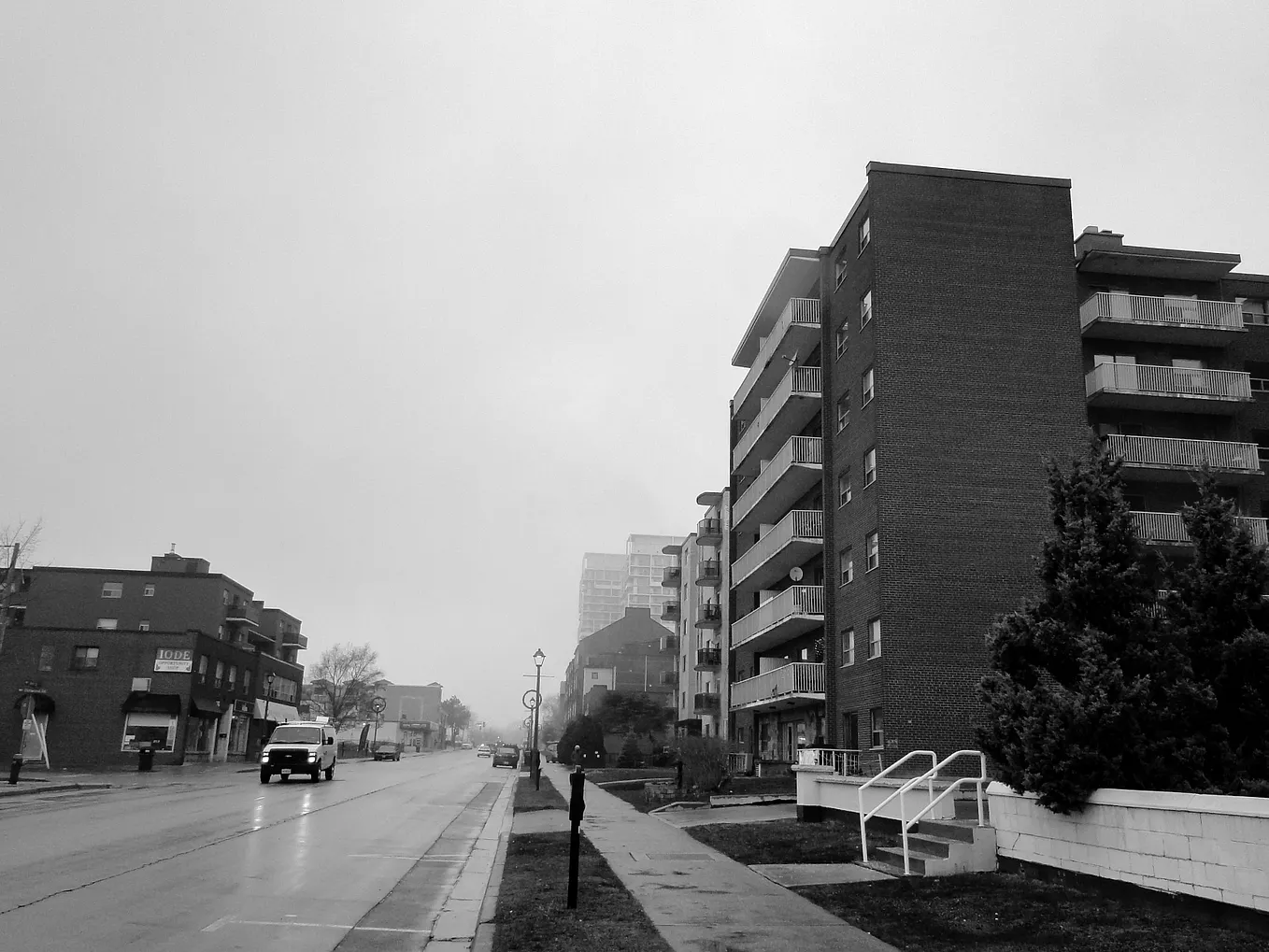
When I was growing up in Oakville, Kerr Street had a reputation amongst my peers of being the run-down, poor side of town. This reputation was garnered through the presence of unseemly types wandering the area, the kind that evoked vivid scenes of a kidnapping in the young, anxiety-ridden mind of a child. Once, a rough man on a bicycle crashed into my mother’s car, on her side, as she was trying to park next to the halal meat butchery. Not to mention, the first girl to break my heart lived on Kerr Street.
Of course, the questionable fears and opinions I held of the area were innocent consequences of being a child. My perspective on the area, reflecting that it is the area in which I now reside, have changed considerably. But then again, so has Kerr Street.

The initial foundations of the modern Kerr Village are as old as the town of Oakville itself. Established in 1850, it was named for Robert E. Kerr, the man who was charged with the very planning of this town. According to the Oakville Historical Society, much of the area was then farmland, toiled by Ukrainian refugee women who lived in tents they pitched on the properties.

Architectural remnants of this time can be found in the indigenous shale stone houses that stand on the Rain Condos property. Believed to be the last of their kind in all Ontario, there was a considerable protest to their planned destruction to accommodate the new condo development. Luckily for the history buffs, the property management decided to take on the responsibility of relocating and restoring these monuments to history.
Alas, besides these buildings there is little left in the Village to remind us of time past. Commercial development began around the early fifties, as local families began to sell off their land. Most residential buildings were demolished throughout the fifties and sixties. Thus, despite the considerable age of this area, it does not share the historical aesthetic of Downtown.

Instead, the facade of Kerr Village is uniquely its own. Trendy shops and eateries line the main street, exuding an independent spirit. There are stories to be found here, stories that like that of Maro Al Chamaa, owner of the eponymous Maro’s Bistro. A Lebanese immigrant, he struggled to find success in the early days of the restaurant serving up traditional fare. That is, until he decided to carve a path all his own, breaking from tradition and serving whatever the hell he wanted to. Hungry customers then came in droves, wanting to sample the clever, irreverent takes on Middle Eastern cuisine.
Get Mumin Mian’s stories in your inbox
Join Medium for free to get updates from this writer.
At its heart, then, the culture of Kerr Village really revolves around the food, and the people that make it. You won’t find dimly lit, exorbitantly priced institutions of culinary excellence here. Instead, the restaurants in the Village reflect the vibe of the people that live here- independent, down-to-earth, and born from struggle.


Unfortunately, the shadow of the pandemic looms over Kerr Village as it does the rest of the world. A dubious future lies ahead for the businesses and the residents that occupy its streets. Take a walk down Kerr, and you’ll see many a restaurant forced to shutter its windows and permanently close due to losses incurred by the pandemic.

Some establishments chose to try a different, defiant route- Zucchini’s Cucina for one, who publicly stated they would not be screening guests for vaccination status. They attracted a whirlwind of attention from media outlets, as well as the social media sphere, for their actions. A cult of support emerged around the business, and it became a local champion for the anti-vax movement. Business was booming- sold-out dinner services, fully-booked private events, and attention from all directions. However, at the time of writing, Zucchini’s has had their liqour license revoked by the Town of Oakville for violating the Reopening Act of Ontario.
This calls into question the ethics and scope of the lockdowns and restrictions. Obviously, there needs to be measures to protect public health. But what about public welfare? The residents of Kerr Village, like the residents of the world at large, are simply trying to survive in uncertain times. For some, the threat of homelessness is a missed cheque away.
In spite of the pandemic, though, Kerr Village still stands. The villagers struggle, yes, but the villagers also find a way, as they always have. From its early days as farmland worked by refugees, to the rise of its unique, informal dining culture, Kerr Village remains a special part of Oakville, set apart through its vibrant aesthetic and no-nonsense residents. There is hope for it yet.