How to Validate a Mobile App Idea Before Investing

Here’s an uncomfortable truth about app ideas: almost every one of them sounds brilliant to the person who had it. Friends nod, family cheers, and the budget conversation starts before a single stranger has been asked whether they’d actually use the thing.
That’s how good money chases weak ideas. Not because founders are careless, but because excitement is loud and evidence is quiet.
So this guide is about collecting evidence, cheaply and early. If you’re holding one of the many mobile app ideas for startups going around right now, or you run an established business and want to add a new app, these steps will help you decide whether to build, change direction or walk away. It’s written for founders and decision-makers in Hyderabad and across India, so the examples lean toward local conditions.
One honest note before we start. Validation reduces risk. It doesn’t remove it, and nobody can promise your idea will work.
What Validation Actually Means
Validation isn’t a survey, and it isn’t asking your friends what they think. It’s finding out, before you spend serious money, whether a specific group of people has a problem painful enough that they’ll change their habits, and maybe pay, to fix it.
Compliments don’t count. Time, effort, sign-ups and money do. That’s the whole point of testing mobile app ideas for startups before anyone writes a line of code.
Run Your Idea Through These Five Questions First
Before you test anything, a quick filter. Most mobile app ideas for startups that survive tend to pass five checks.

Is the problem real and recurring, or a once-a-year annoyance? Is the user specific, like “small clinic owners in tier-2 cities” instead of “everyone”? Can you say how it earns, whether through subscriptions, commissions, fees or savings that justify a price? Does it truly need an app, with frequent use, notifications, the camera, location or offline mode? And can you picture where your first hundred users spend their time?
If an idea fails two or three of these, park it. You’ll have saved yourself weeks.
7 Ways to Validate Mobile App Ideas for Startups
You don’t need all seven. Two or three done properly will tell you more than any gut feeling.

1. Talk to ten real users. Not friends, not colleagues. People who match your target customer. Ask how they deal with the problem today, what annoys them most and what they’ve already paid for or tried. Don’t pitch your idea. The hard part is staying quiet and letting them talk. When several people describe the same frustration in their own words, take note.
2. Study the competition, especially the bad reviews. Open the Play Store and the App Store and download the top few apps in your space. Then read the one-star and two-star reviews. That’s where users say what’s broken. A crowded market isn’t a bad sign by itself, since it shows people care. What matters is the gap nobody has filled well.
3. Run the service by hand first. Before building anything, deliver the result manually. If your idea is an appointment app for clinics, take bookings over WhatsApp and a spreadsheet for a few weeks. It feels unglamorous, but it’s one of the cheapest ways to test mobile app ideas for startups, and it shows whether people come back. If they do, you’ve found something. If they don’t, you’ve just saved yourself a build.
4. Put up a simple landing page. One page, a clear promise, a few mock screens and a button like “Join the waiting list.” Share it in relevant WhatsApp groups, on LinkedIn, or with a small ad budget. Watch sign-ups, not likes. A like costs nothing. A phone number or email address costs a little trust.
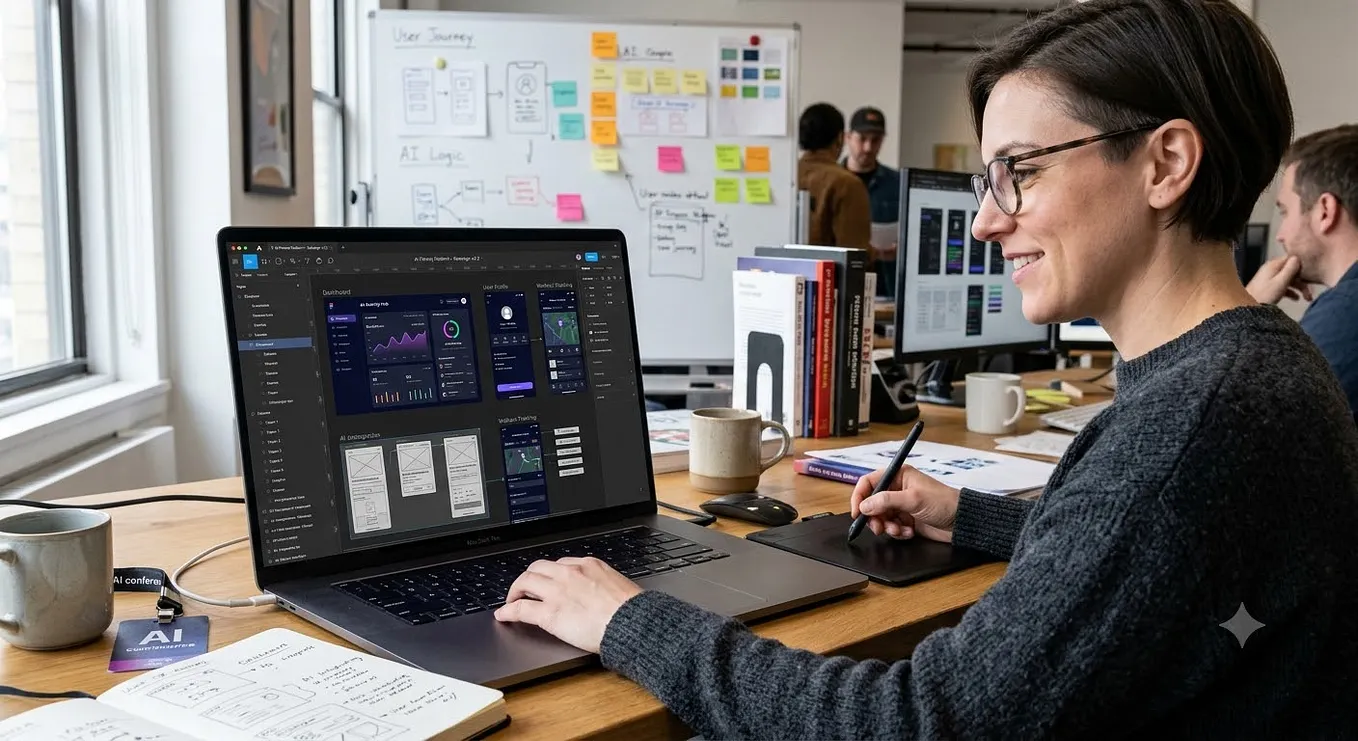
5. Test a clickable prototype. A prototype looks and feels like the app but has no real code behind it, and tools like Figma make one fairly quick to build. It’s worth doing whether you’re planning one platform or both Android and iOS apps. Sit with five or six people and watch them use it without explaining anything. Notice where they hesitate or give up. Fixing a screen in a design takes minutes. Fixing it in a finished app takes days.

6. Try to pre-sell or run a pilot. This is the toughest test and the most honest one. Ask a few potential customers to commit: a paid pilot, a deposit, a signed letter of intent. For B2B ideas, even a business owner agreeing to a trial with their team is a strong signal. Not everyone will say yes, and that’s useful information too.
7. Ship a small MVP and watch what people do. An MVP, or minimum viable product, is the simplest working version that solves the core problem. Release it to a small group and look at the numbers that matter: how many download it, how many return after a week, and where they drop off. Behaviour tells you far more than opinions.
How to Read What You Find
When you test mobile app ideas for startups, strong signals look like this: strangers keep coming back, people ask when they can start using it, someone offers to pay or pilot it, and several users describe the same pain without being prompted.
Weak signals look different. Polite praise. “Send me the link when it’s ready” with no follow-up. Interest from friends only. Lots of visits but no sign-ups.
If the signals are mixed, narrow the idea rather than abandoning it. A smaller audience or a single feature often turns a lukewarm response into a clear one. And if the signals are weak across several tests, that’s not failure. That’s money and months you didn’t lose.
From a Validated Idea to a First Version
When an idea survives testing, resist the urge to build everything at once. Write the problem and the user in two sentences. Pick the smallest set of features that solves the core problem. That’s your version one.
Get Manasasurusuri’s stories in your inbox
Join Medium for free to get updates from this writer.
Then choose how to build. Native development gives the deepest performance. Cross-platform frameworks like Flutter or React Native let you cover Android and iOS apps from one largely shared codebase, which often suits a startup on a tight budget. Ionic can work well for form-driven and internal apps, and wearables suit quick, glanceable jobs like reminders. In India, many startups begin with Android because of its market share, then add iOS.
If your idea depends on unusual workflows, integrations or data handling, custom mobile app development usually gives you the control you need. If you’re still testing demand, a lighter template or no-code tool can be a cheaper first step before you commit to custom mobile app development.

The Mobile App Development Process, in Brief
You don’t need every technical detail, but the shape is worth knowing. The mobile app development process typically runs from discovery (the problem and the user) to planning (what goes into version one), design (wireframes and a prototype you can test), development (in short cycles you can review), testing (on real devices, including older budget phones), launch (Google Play and the App Store, with time for review) and ongoing support. For custom mobile app development, the discovery stage usually matters most.
Throughout the mobile app development process, keep scope tight, attend the demos, give feedback quickly and set aside money for maintenance. Android and iOS update regularly, and an app nobody looks after slowly stops working properly.
Thinking About a Website for Your Business?
An app is only one piece of the picture. For many businesses, a website or web application plays a big part in how customers find them and how work gets done.
At Abilio IT Solutions, businesses can look at website and web application options built around their own needs. A good place to start is that short list of goals, users and must-have features.
You can read more about their services at Abilio IT Solutions.
Validating Mobile App Ideas for Startups for Indian Users
Whichever idea you test, a few local realities apply. Many people use budget phones with limited storage, so keep the app light and quick. Connectivity wobbles, so plan for weak signals and offline moments. UPI and OTP are everyday expectations. WhatsApp is already where lots of customers talk to businesses, so think about how your app can sit alongside it.
Language matters too. Telugu, Hindi and Urdu next to English make an app feel friendlier in Hyderabad and beyond. And if you collect personal data, talk to a legal advisor about India’s data protection law, the DPDP Act. Fintech and health ideas in particular may carry extra regulation.
Mistakes Founders Make While Validating
Asking only people who’ll say yes. Treating likes as demand. Building every feature before launching anything. Ignoring how the app will earn. Rushing through the mobile app development process. Choosing a custom mobile app development partner on price alone, then paying again in rework. Skipping tests of Android and iOS apps on older, cheaper phones. Launching with no plan for finding the first hundred users. These trip up people working on mobile app ideas for startups of every kind, and nearly all of them are decisions made too late.
Does Location Matter? Hyderabad and India
A bit. A team that builds for Indian users every day understands the mix of devices, payment habits, regional languages and patchy connectivity. Hyderabad’s large developer community also has experience with native, Ionic and cross-platform work. Sitting in the same room can speed up early decisions, too.
But strong projects run remotely all the time, so weigh location next to experience, communication and trust.
Frequently Asked Questions?…
How do I validate a mobile app idea before investing? Start with conversations with real target users, study competitors’ reviews, then test demand with a landing page, a prototype or a manual version of the service. Only build an MVP once the signals are strong.
How much should I spend on validation? Far less than a full build. Interviews, a landing page and a prototype can be done with a small budget, mostly time. Spend more only as evidence grows.
How many people do I need to talk to? There’s no magic number, but around ten conversations with the right people often shows clear patterns. If answers are all over the place, your audience may be too broad.
Which mobile app ideas for startups are easiest to validate? Ideas with a clear user and a repeatable problem, like booking, ordering or tracking tools, are easier to test by hand before you build anything.
Do mobile app ideas for startups need a prototype before development? It’s strongly recommended. A prototype shows you confusing screens and missing steps while changes are still cheap.
Should I build Android and iOS apps at once? Not necessarily. Android and iOS apps can come in stages, and many Indian startups start with Android because of its market share, then add iOS or use a cross-platform approach to cover both from one codebase.
Do I need custom mobile app development or can I use a template? Templates and no-code tools can help you test an idea quickly. Custom development makes sense when you need unique workflows, integrations, performance or control over your data.
What does the mobile app development process cost? It depends on platforms, features, design, back-end needs, integrations and support. Anyone quoting a firm number before discovery is guessing. A focused first version keeps costs manageable.
The Conclusion…
The right idea isn’t the cleverest one. It’s the one where a real problem, a specific customer and a believable way to earn all line up, and where you can prove it cheaply before committing. Use these steps to test your mobile app ideas for startups, read the signals honestly, and build a small first version only when the evidence says go.
Whether you’re leaning toward Android, iOS, Ionic, wearable or cross-platform development, the best next step is a straight conversation about your idea, your users and your goals.
Get in touch with Abilio IT Solutions to talk through your idea and plan a first version worth building, before you commit to anything.