What early Christianity has in common with human evolution


How Paul’s letters reveal a network of ideas, not a single origin
When we think about the origins of Christianity, it’s natural to imagine something simple: a founder, a message, and a group of followers faithfully preserving that original teaching.
But the earliest evidence we have — especially the letters of Paul — points to something far more dynamic.
In fact, the development of early Christianity looks less like the transmission of a fixed system and more like evolution in a network: multiple communities experimenting, adapting, and interacting until, over time, a recognizable form emerges.
If that sounds familiar, it should. The process bears a striking resemblance to how modern humans spread out of Africa, diversified, and then shared traits across populations.
Not one Christianity, but many
Paul’s letters, written between about 50 and 65 CE, are the earliest surviving Christian documents. They don’t describe a unified movement. Instead, they reveal a patchwork of communities, each with its own emphases and tensions.
Consider just a few examples:
- In Galatians, Paul argues fiercely that non-Jews should not be required to follow the Jewish law.
- In 1 Corinthians, he struggles to regulate chaotic worship practices.
- In 1 Thessalonians, he reassures believers who expected the world to end very soon.
At the same time, other early voices — such as the communities behind the Gospel of Matthew or the letter of James — place much stronger emphasis on continuity with Jewish law.
What we see is not a single “original Christianity,” but multiple early forms developing in parallel.
Christianity as a network, not a tree
It is tempting to imagine a clean branching tree:
Jesus → Apostles → Church
But the historical reality looks more like a network with constant cross-connections. Paul writes letters and expects them to be shared between communities. Missionaries travel. Leaders debate. Ideas circulate. Instead of neat divergence, we find something closer to what biologists call horizontal transfer — the exchange of traits across groups.
In this environment:
- Beliefs are not simply inherited
- They are tested, adapted, and recombined
Variation: the early “mutations” of belief
Across early Christian communities, several key “variables” evolve:
Get Martin Dove’s stories in your inbox
Join Medium for free to get updates from this writer.
1. The role of Jewish law
- Some groups insist on Torah observance
- Paul argues it is no longer required for Gentiles
2. The nature of Jesus
- Early formulations: Messiah and risen Lord
- Paul: exalted, possibly pre-existent
- John: explicitly divine (“the Word was God”)
3. The end of the world
- Earliest Christians expect it imminently
- Later texts begin to adjust to delay
4. Church structure
- Early: informal and charismatic
- Later: increasingly organised and hierarchical
Each of these develops at different speeds and in different places. There is no single coordinated evolution — only local adaptations within a shared tradition.
Selection: why some ideas spread
In biology, traits survive if they are well adapted to their environment. In early Christianity, something similar happens — but with an important twist: adaptation is social, intellectual, and cultural. Certain ideas proved especially successful:
- Including Gentiles without requiring circumcision
→ Enabled rapid expansion beyond Jewish communities - Affirming a high status for Jesus while maintaining monotheism
→ Created a distinctive theological identity - Developing structured leadership
→ Stabilised communities over time
These were not inevitable outcomes. They were solutions that worked — and so they spread.
Convergence: the emergence of orthodoxy
By the late first and early second centuries, a recognizable pattern begins to form. This emerging “proto-orthodox” Christianity combines elements from different streams:
- From Jewish roots: scripture, ethical monotheism
- From Paul: Gentile inclusion, reduced emphasis on the Law
- From Johannine traditions: high Christology
- From later developments: institutional structure
What we now call “orthodox Christianity” is not identical to any one early community. It is a synthesis, a convergence point in a network of evolving ideas.
The evidence is in the texts
We can actually see this process unfolding in specific passages:
- 1 Corinthians 15:3–5 preserves an early shared creed, suggesting a common core across communities
- Galatians 2–3 captures a live dispute over identity and practice
- Philippians 2:6–11 hints at an early, high view of Christ
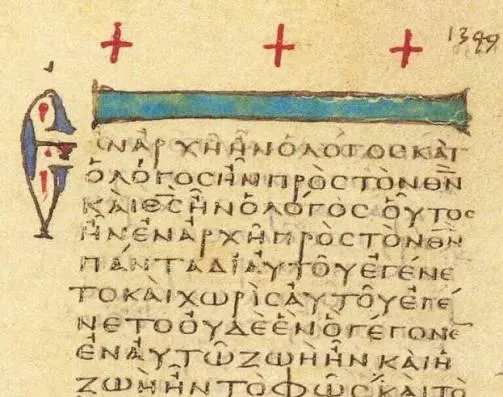
- John 1:1 represents a later, fully developed theological claim
- 1 Timothy 3 reflects a stage where leadership structures are becoming formalised
These are not static doctrines. They are snapshots in an ongoing process.
A surprising parallel: science
If this all sounds familiar, it’s because something similar happens in science. Scientific knowledge does not emerge fully formed. Instead:
- Different researchers propose competing models
- Ideas are debated, tested, and refined
- Over time, a consensus emerges
Quantum mechanics, for example, was not discovered in a single stroke — it developed through multiple formulations that were eventually unified. Early Christianity shows the same pattern:
- multiple starting points
- ongoing interaction
- gradual convergence
The Challenge to Fundamentalism
This evolutionary model poses an interesting challenge. Many modern religious perspectives assume that:
- There was a single, clear, original Christianity
- Later developments represent deviations from it
But the historical evidence suggests otherwise. From the beginning, Christianity appears as:
- Diverse
- Argumentative
- Creative
What we later call “orthodoxy” is not the starting point — it is the end product of centuries of interaction and refinement. In that sense, fundamentalism may mistake a stabilised outcome for an original state.
A Different Way to Think About Tradition
None of this diminishes the significance of early Christian belief. If anything, it makes it more interesting.
Rather than a fragile message passed down unchanged, we see a robust, living tradition:
- Flexible enough to adapt
- Structured enough to endure
- Shared enough to remain recognisably coherent
Like human cultures — or even biological systems — it evolves, but it does not lose its identity.
Conclusion
The earliest Christian writings, especially Paul’s letters, invite us to rethink origins. Instead of imagining a single, fixed beginning, we find a network of communities sharing a core message, experimenting with its meaning, and gradually converging on forms that could survive and spread.
In other words, Christianity did not simply begin. It emerged.
And in that emergence, it looks remarkably like one of the most fundamental processes we know: evolution itself.