What Years of Teaching Taught Me About How Students Learn

After more than seven years of teaching mathematics, I thought I would have all the answers.
Instead, I found better questions.
When I began teaching, I believed my job was simple: explain mathematics clearly, solve enough examples, assign practice questions, and students would naturally improve.
It sounded logical.
After all, mathematics is a logical subject.
But teaching has a way of challenging your assumptions.
Over the years, I have worked with students preparing for IB, IGCSE, Cambridge O Level, A-Level, AP Calculus, SAT, ACT, STEP, TMUA, MAT, Olympiads, and university mathematics. I’ve taught students who dreamed of studying at Oxford and Cambridge, students who feared mathematics more than any other subject, and students who believed they simply “weren’t math people.”
Despite their different backgrounds, one realization kept appearing.
Students don’t all struggle because mathematics is difficult.
More often, they struggle because learning is far more human than we sometimes imagine.
Teaching has taught me as much about people as it has about mathematics.
Here are a few lessons that have stayed with me.
Every Student Learns Differently
One of the biggest mistakes educators can make is assuming there is a single “best” way to teach.
There isn’t.
Some students need visual explanations.
Some need algebraic reasoning.
Some learn by asking dozens of questions.
Others quietly think through an idea before speaking.
Some want to know why a method works before they use it.
Others are comfortable learning the procedure first and understanding the theory later.
For years, I tried to perfect my explanations.
Eventually, I realized something more important.
Good teaching isn’t about giving the same explanation to everyone.
It’s about finding the explanation that makes sense to that particular student.
Confidence Changes Everything
I’ve taught students who could solve incredibly difficult problems but hesitated every time they picked up a pen.
I’ve also taught students with average mathematical backgrounds who steadily became top performers.
The difference wasn’t always ability.
It was confidence.
Students who believe improvement is possible keep trying when questions become difficult.
Students who believe they’re “bad at math” often give up before they’ve really started.
Confidence isn’t something students either have or don’t have.
It’s something that grows through small successes, patient guidance, and consistent encouragement.
Sometimes a single conversation changes how a student sees themselves.
And once that happens, everything else becomes easier.
Memorization Only Takes You So Far
Many students succeed in mathematics by recognizing patterns.
“If the question looks like this, I use this formula.”
Initially, that works.
Then examinations change.
Questions become unfamiliar.
Suddenly, memorized procedures aren’t enough.
This is where understanding becomes powerful.
Students who know why something works can adapt when the question changes.
Students who only remember steps often feel lost.
Over time, I’ve become convinced that understanding isn’t slower than memorization.
It’s simply a better long-term investment.
Mistakes Are Remarkably Honest Teachers
One thing teaching has taught me is that mistakes reveal far more than perfect answers ever can.
A wrong answer isn’t just wrong.
It’s information.
It tells you what a student understands.
It tells you what they’re assuming.
It tells you where the misunderstanding began.
Sometimes an algebra mistake in Grade 12 actually started with fractions learned years earlier.
Once you begin looking at mistakes this way, they stop being failures.
They become conversations.
And those conversations often produce the greatest breakthroughs.
Students Need Time to Think
Modern education often rewards speed.
Who finishes first?
Who answers fastest?
Who solves the most questions?
Yet some of the deepest mathematical thinkers I’ve taught have never been the quickest.
They pause.
They reflect.
They test different ideas before committing to one.
That slower process often leads to much deeper understanding.
Teaching has reminded me that thinking isn’t something to rush.
Learning mathematics isn’t a race.
Curiosity Is More Powerful Than Motivation
Students often ask me how they can stay motivated.
Get MathematicsElevateAcademy’s stories in your inbox
Join Medium for free to get updates from this writer.
The truth is that motivation comes and goes.
Curiosity lasts much longer.
When students become genuinely interested in a question —
“Why does dividing by zero make no sense?”
“Who invented calculus?”
“Why does probability sometimes feel so counterintuitive?”
— they stop studying only for examinations.
They start exploring because they want to know.
That shift changes everything.
Great Teaching Isn’t About Talking More
Early in my career, I believed that good teaching meant giving better explanations.
Today, I spend far more time asking questions.
Questions encourage students to think for themselves.
Questions uncover misconceptions.
Questions develop independence.
Instead of asking,
“Do you understand?”
I now prefer asking,
“Can you explain why this works?”
The answers are often far more revealing.
Examinations Don’t Measure Everything
I’ve watched brilliant students underperform because of anxiety.
I’ve seen average students outperform expectations because they stayed calm under pressure.
Examinations matter.
But they don’t measure curiosity.
They don’t measure resilience.
They don’t measure creativity.
And they certainly don’t determine a student’s potential.
As teachers, we should prepare students for examinations.
But we should also prepare them for learning beyond examinations.
Teaching Is Also Learning
Perhaps the greatest surprise of my career is this:
The longer I teach, the less I feel like I’ve finished learning.
Every student asks a question I’ve never heard before.
Every year reveals a misconception I hadn’t anticipated.
Every conversation changes my perspective slightly.
Teaching mathematics isn’t about becoming the person with all the answers.
It’s about becoming someone who keeps learning alongside their students.
What’s Next
Over the past several years, one question has appeared again and again.
“Do you have recorded courses that we can study at our own pace?”
Until now, my answer has usually been no.
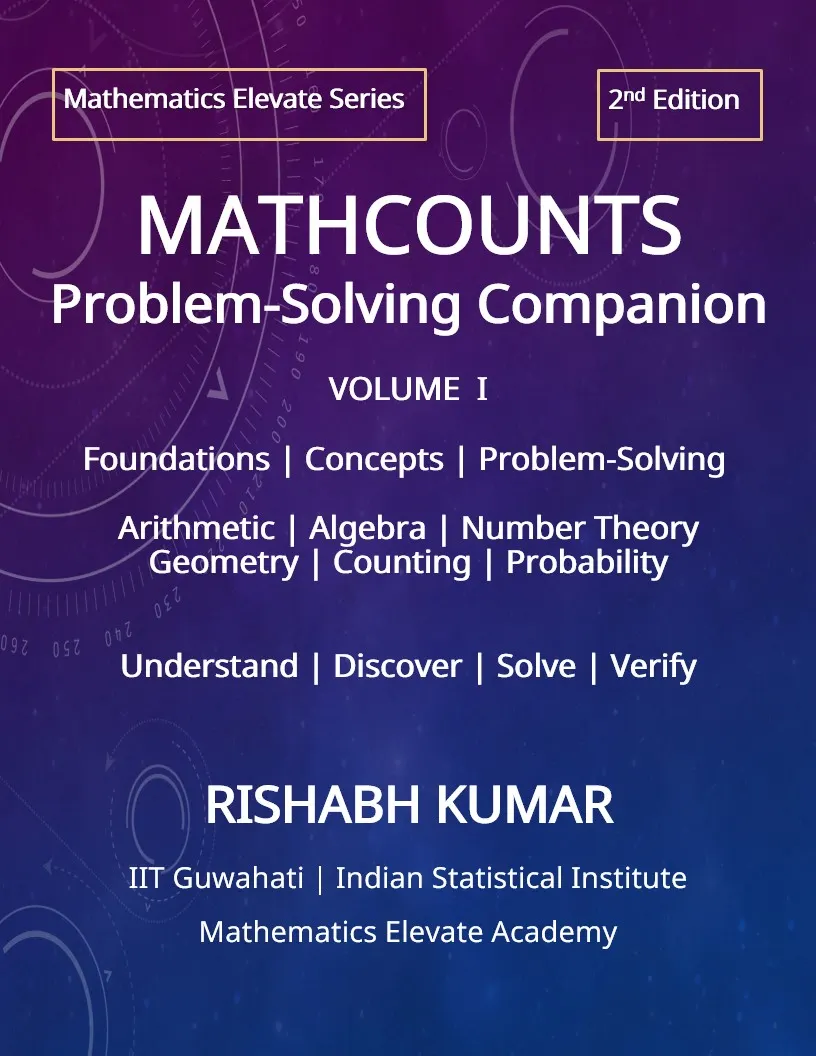
Most of my time has been dedicated to one-to-one mentoring, live classes, writing books, and developing learning resources.
But that is changing.
I’m excited to share that I have been working on a comprehensive library of premium recorded mathematics courses, built around the same teaching philosophy that has guided every lesson I’ve taught.
These won’t simply be collections of recorded lectures.
They are being designed as complete learning experiences, with a focus on:
- Conceptual understanding before memorization.
- Clear, step-by-step explanations.
- Common mistakes and misconceptions.
- Exam-focused strategies.
- Downloadable notes and worksheets.
- Carefully structured practice problems.
- Learning paths that students can follow at their own pace.
The first courses will cover international curricula, including IB, IGCSE, Cambridge O Level, A-Level, AP Calculus, AP Statistics, SAT, ACT, STEP, MAT, and TMUA, with many more planned for the future.
My goal is simple:
To make the kind of mathematics education students experience in personalized mentoring available to learners around the world.
Final Thoughts
If teaching has taught me one thing above all else, it’s this:
Students are capable of far more than they often believe.
When mathematics is taught with patience, curiosity, and genuine understanding, something remarkable happens.
Students stop asking,
“Am I good at math?”
They begin asking,
“How can I solve this?”
That small change in mindset can transform not only examination results, but also confidence, independence, and a lifelong relationship with learning.
Perhaps that’s the real purpose of education.
Not simply to complete a syllabus.
Not merely to prepare students for the next exam.
But to help them discover that they are capable of learning difficult things.
And once a student truly believes that, mathematics becomes much more than a subject.
It becomes a way of thinking that stays with them long after the classroom is gone.