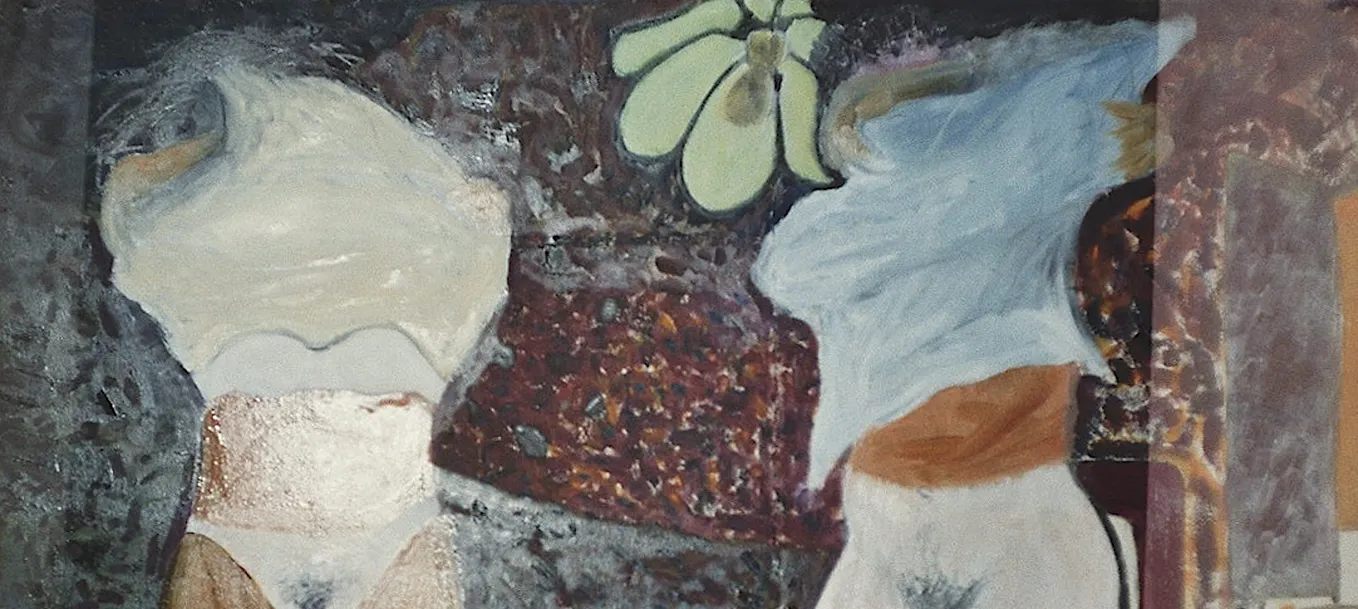
Some French scenes which I Write Like thinks Ian Fleming wrote.


As the sun went down it was good to push off naked into soft cool water. Light danced across the surface of the pool into my eyes and the rush and weight of water equalised the heavy static of a day mixing it in the world of men. I turned on my back and looked up towards the house behind the trees, skinny sentinels. The house sat in the middle of what might have been the convulsions of earth after a quake, or the remains of a fortification. Broken masonry, half-raised walls — centrifugal force dispersing the past into the present. The blank north side of the house faced the busy A9 Autoroute two fields away. In the fields grew dirty oats run through with dock, crisp and brown by now at high summer.
The water had drawn me right from the beginning. On the map it showed as a dammed stream. On the ground the stream ran dry and the narrow end of the dam had been chopped up into fishponds but the remaining pool was deep and wide, more like a small lake. In the fishponds ducks swam and at evening time unseen fish rose to snatch at gnats. Between the fishponds and the house was a place for people to sit out, crudely made from concrete with rough timbers set in. Over the timbers on rust spotted metal brackets ran thin beams under milky opalescenct suck me and see shades of corrugated plastic. Not smartness but careless grandeur of scale with wide margins for holiday makers in slack costumes to push along between the fang like half-smoked stones of the giant barbi pit to the clumsy shouldered ramp up to the camping ground.
Walking back to my tent after my swim I remembered my arrival some days before. A lady standing in an archway watering flowers up high on a shelf. She wore blue jeans and dark glasses and when she turned her head at the noise I made, her wide mouth curled back towards where her unseen eyes must be,
“… hello — can I help you?”
“… I was looking for the camping ground”
“… just follow the track round, you’ll find it through the next field”
“… madame G — -?”
“… oui — et vous êtes….?”
I gave her my name
Madame G got down from the archway and stood arms loosely hung with the watering can and a little fork. One of those Dutch faces where something happens under the jaw and the nose and mouth get pushed up and out, as though rootling a little. She took off her glasses a.. nd I saw that her eyes though kind were a little dulled,
“… my husband is around somewhere. He would love to say speak english, we are very quiet at the moment and he gets rusty”
At that she turned fluidly and climbed back into the blind archway and bent once more to her plants. I opened up space by turning my view across the tight scented grasses to land crumbling down to the lake, the gingery earth giving way to cool beige where water began to sip the land. Two hollowed blonde trunks dipped half their bodies into the lake, one a third bigger than the other, the smaller hardly more than a skiff or float. I slipped off my sandals and wandered into the silky mud of the water’s edge, staring down at my feet as they plunged into nothing and fleet brown shadows of fish ran out to the deep. Next to this wild boatyard, a telegraph pole, minus its wires, struck up at an angle of forty five degrees from a rockery of giant concrete corners and hairy, grass sprouting, earth. This was the diving board. I began to get a sense of improvisation, of undercapitalised charms: France.
*
In the world seen from my angle you meet lots of people who have arrived where they are by mostly sex related zig-zags and who surround themselves with insoluble problems as a way of making their lives last longer. They have tacked awkwardly against the wind for a long, long time. Often they have cats or dogs and sometimes both as their chief interlocutors.
I had a woman like this up in the hills north of Beziers. She was out of the rag trade and the kind of woman who as a girl used to climb trees. She was very ordinary and very, very nice to bed. I would wind up into the hills every ten days or so. Each time I arrived and pushed the flimsy wrought iron gate open she’d start in with bad news about a friend: a threatened brain tumour, writing off a hire car, lost in Russia with a trailer load of goods, alcoholic fits on the first day of a new job. I hadn’t realised what a jungle she lived in and how little light shone there. She looked at me with… was it fear or distrust? We had no conversation. She was exceptionally good with her large, man-like hands but couldn’t face telling the truth to people.
She had made over the years a terraced garden which necessarily had been a struggle: the bad soil, the menacing neighbour, the pitch of the slope and so on. I wasn’t able to help much: I remodelled the compost heap, moved a tenant on for her, humped a huge dresser, went up a ladder and cleaned a glass lampshade. I would sit staring into space next to her chair on the sun terrace as we struggled with the silence between us. I found it strange to be forced to conduct the verbal side of our encounter in language so thin, or which my ear was too crude to read. She began one day on her cats and how they were eating up the rows of beans she’d sown. I made a remark about ancient Egypt. She went on to how she’d taken apart the cat flap to fix it, not remembering which bits to press, it had been so long. I murmured sympathetically and thought of how she’d said she felt a bit rusty the first time we’d made love properly and how I’d thought she was just fine.
“… and the pump?”
I prompted a comment about another of the cast of household objects whose maintenance formed much of our narrative, our mis-en-scene. Haltingly, stumblingly sitting there in the slow sinking sun I began to try to master this tongue, this meagre skin with all its metaphoric implications unaccentuated, masked and fumbled. Briefly I tried to think that this might be a greater gift to me than the several warmths of her girlishly preserved brown body.
One morning she had stood in a greenish gown that fell open against the tan and her face was lifted up and tilted a little so that her chin pointed and her silver grey hair fell in two waves from her brow and her eyes shone out questingly. And I thought how long ago it had been that I’d seen another like that with her deep unsophisticated intelligence and her stoned gaze. And the other had been seventeen and the girl whose bush I feared, who’d caused me to shrink and who’d hissed… don’t stroke me like a cat. And now I thought myself master of all that and thought I could read through the tight, protected layers of this woman’s zigs and zags to the core of her sexuality. But I was wrong.
*
A cobbled path five feet wide divides one wall of small houses from the other. The little houses are holiday lets given over to a Christmas fair. The houses go up two storeys and then there is the blue sky and broken edges of a wall and an archway looking out and down to the village of St Pierre des Champs. The sun shone on stone steps in the car park and it is a warm place to sit. A man bellows inside one of the houses and comes out into the alley wearing a night shirt. A woman says he is ill.
Stall holders begin to arrive in surprisingly shiny cars and take their paintings, jewellery and craft work into rooms in the houses and set up to sell as best they can. A team starts to decorate the passageway between the houses. Tinsel is stuffed here and there, often with difficulty. The she of the team is neat, pinch featured, glossy black hair precise steps in brown crocodile bootees. The he has his shirt hanging out at the back, clumsy boots and that black curly hair at the neck that makes you think of love.
In the morning after I’d set out my stall I walked a little way and did a sketch of an unfinished new house. After the sunshine and a smoke on the steps and looking at the big Walloon painter with the blonde pigtails on the next stall along I became one of those men dozing in a car, head twisted back a bit against the seat. I could hear the soft chuffing of cars as they slid in next to me. I tried to look alive, not ill or dead. When I woke I looked around the car park and thought how, in my lifetime, fuel filler caps have evolved to become little panel doors.
After lunch the folk all got tipsy, customers stumbled up and down the little alley from the painted pebbles to the macrame owls to the dull paintings of water falling around rocks on polished wood. The man still bellowed and pretended to shoot people with a gun, even children. The music slumped into American kristmas krooning. I couldn’t stand it any longer and left early. The sketch of the unfinished house turned into the first half way decent painting for years.
*
An impeccably placed and spaced queue of Porsches came by and gave us the benefit of their rear ends, cavalcade is perhaps a better word, for each scarved head wanted a crown, on their way to an owners club rendezvous at some belvedere. An english artist going blind had asked me to come help her husband clear mess from a flood. There was a quick imagined life on this small green shelf which threw up its river and stuff from upstream every so often. The house fronted a dangerous bend above the river that runs thru Lagrasse, two low storeys at the front and four at the back and a muddy track down to the glories of the garden and its theatrical space reclaimed from brambles that staged every few years Noyes Fludde, pyramided bamboos tucked into the scraggy trees like side props.
Waiting for her I watched a Mercedes 600 SLY slip past, the driver wavering on the bend crossing her lean figure back from a dog walk, dressed half in fluorescent orange not to be mistaken by hunters for a deer, which with her elegant arm gestures and beautifully poised head she might have been. At the end of my labour, invited to the house, the Mercedes 600 SLY slipped back from wherever he’d been.
We went down to the plot. Butcher-like, the husband had stripped off all the distracting mess of possibility and put on the plate for me the project of finding lost garden chairs. To seize back control I put into the ground stakes to mark the diameter of a conical pile of stalky, earthy debris. The stake nearest to the work face was obliterated straight away in wielding the three pronged grapnel that was given me as the tool for the job. Stepping back with a jerk I cracked the owner’s mastiff in the face — after this robust start, he dogged me.
In a job like this you have to adjust the positive and negatives, it cannot just be brute labour, you must act out sorting and classifying debris. And yet at the same time you must not be too picky about where your prongs descend, all in non-stopping little bites, slow and easy and all day long. The husband watched me heaving on a half buried trunk. I was irritated and restless, surprised the trunk would not budge. I hated the hold-up just at the time the owner was there in his good tweed coat and mug of tea clutched close in the cold. Though he was benevolent efficient and intelligent beneath his irascible pose, it still put me in a jam to be found huffing against an obstacle.We were one phrase away from contact.
“… spanish windlass?”
A lever when every thing looks wet and rotten is difficult. I switched to where I’d glimpsed amputated chunks in a grove of birch and there I found me like an hart a white chair. Action in time unfolded quick, got my lever over a kangaroo tail u shape and worked along the trunk but something gripped it tense until at the end it showed itself as a bright green tube squashy like pasta bent like a knee round where I’d tripped — the alien in the undergrowth, a forgotten garden hose used as piffling drainage from the greenhouse.
Get matthew hilton’s stories in your inbox
Join Medium for free to get updates from this writer.
*
In the Post Office at Rennes le Chateau where the lunatics get their allowance there is a small black woman tilted up on her trainers and talking American to the counter clerk. The lunatic asylum is set back from the main street and seems to be above it, though really that’s just the high wall. It is both an absence and a presence. The Post Office opens at from eight thirty to ten thirty every weekday but really it doesn’t open until about ten to nine.
This is France. I ask someone the way somewhere and the man says it’s closed and I say yes — that’s a good time to travel, lunchtime, since the roads are empty. He pretends to think I’m mad to work all the time and attacks my few words of French,
“… there is no trouble here, just the newspapers”
Something took hold of me. I listened to the black woman. She needed help. I stepped forward — her luggage was lost, she wanted a phone. She’d driven twelve miles to the Post Office, her portable didn’t work. I passed her mine. She was grey from strain with a sagging round body in bright blue clothes. She had no good feature that I could see apart from her pleasantness. While she spoke slowly and clearly to the baggage people I wrote my phone number on the envelope of a letter so that she could quote it to the airport. All at once she was offering me coins for the call and I found myself saying,
“… no, but you could do me the favour of sitting for a portrait”.
She got straight away girlish and giggly — pleased, flattered but unable. I smarmed, with a half bow,
“… always pleased to be able to offer technical assistance to the you ess aye”
She actually said:
“… oh I do love you British”.
She was already in the hire car, hunched almost invisible behind the tinted glass when I realised she had the letter in the envelope I’d written on. She said,
“… they may phone you, just say I’Il be home all day waiting”
For the next forty eight hours, whatever I was doing I would get calls about her bags. Whether I was plunging out in the car to catch half-day closing or picking up a hitch hiker from Brasil who’d come down from Versailles, or whether I was driving the endless tyre wiping bends in the hills with madmen in Mercedes up my bum who I teased by daring them to pass in dangerous places, or whether I was trying to find the secret warm springs or whether I was driving one hundred miles to get cigarettes on a jour de fête, I’d get the calls from Air France and I’d try to explain that I didn’t know the person in question, nor would I go and search but it was their business and her business but not my business, even when it got down to a call from the taxi driver they finally sent. And they all called me Mr Carmichael.
On the way back with the cigarettes I pulled in at my favourite lay-by where the valley flattens and spreads out round the vineyards and the hills fringe round in a big circle. A car pulled in and a man got out, middle aged with a yellow short sleeved sports shirt. Behind glass, a woman. He asked me the way to somewhere fifty miles away and I told him to get on the motorway. He looked unhappy at that so I got my tattered map out and showed him how it was really complicated going by the hills. As I unfolded the map the tatters blew in the wind and he said it was well used,
“… don’t you like to travel with a map?
As they drove off I wished them bon nuit and the woman gave me a slow smile. A little further down the road I came up behind a pick up advertised as the most powerful of its class. It was going unusually slowly and I was able to overtake it, glancing across as I did so at the smart but uncomfortable looking man driving it. He looked as though he’d hired it. And then I got a panicky call from a new friend so I pulled in again and the man in the pick-up stopped right up by my side and asked for directions, but I think actually he wanted to see whether I was young enough to proposition. I gave him his road and went back to the call, about how she and her husband were going in to therapy and I heard by the echo on the line my boy scout voice: clipped, platitudinous, smug.
*
If you are conscious of signs and signifiers, how do you dress? I have a suit bought to be smart that has seen one annual staff shindig, one stuffy Richmond wedding and now a queer little wizened Englishman’s cremation in Carcassonne where (used to the quasi religious pretensions of the English style) it is quite a shock tho a good one, to find this nondescript sixties pavilion tucked into the corner of an industrial estate, between the railway line and a car breakers yard. For people who want to get it over and done with. Ample parking is the only thing that marks it out.
You never know with these events what the form will be so I eat first at the supermarket. Weirdly eyed by muslims at the Geant cafe, smoking teenage girls. The toilet full of sick, in the mirror I notice filth down the front of my puffa jacket. I eat an internal organ sausage with the sweetish taste of shit, dropping a fork at the beautiful red underarm at the table over by the window, trying out a paper napkin.
I get late for the crem, I open the front of the puffa to hide the stains, flustered. There is a crowd of people in the ante room, the flaring unslept face and scruffy clothes of the son’s wife and Annette, the widow I’d only known before in shorts today draped down to the ankles in cloth. Painter dandy Felix resolutely in his everyday clothes (is this a political stance?). A man with moustache and sad wise face joined me smoking outside. We remembered each other from the bonfire only a few weeks before when through the flames the late Derek’s voice rose in some plaint. Up came painter Mary with a black PVC s’owester. She brushed my cheeks with it. Her John mocked my tie as I’d hoped someone would.
“… we all move up one”
Taken as a whole the funeral went well. Powerful but subdued. People thinking it was just right. The grand daughter, a young woman with those funny splayed legs, crying. Two old buffers and the son in black T shirt reading an e mail from the first wife. There was a mad nuisance outrider, neither fully in life nor yet dead, hovering in a ten year old suit and a khaki puffa jacket, a beret roughly plopped on baldness, one of those broken men with neat pressed shabbiness at Remembrance Day. That was me.
The widow stopped on her way to the cars,
“… thank you for coming, I’m afraid there wont be time have a look at his library”
I mumbled something about a betise. I stammered a condolence to the son and asked if he would be there for Christmas. Touting for business. Unacceptable? We shall see. But difficult to move off now back to the car. Funerals, hastily thrown together with a minimum of fuss often need a man with a spare car. I did score, not a ticket to the house for the tea but a ride with a jolly German master carpenter hitting his late thirties. For twenty five kilometers of N113 then a jumpy lane round the back of a trading estate the carpenter laid out something about his early days in France and we agreed on how it is more difficult to speak bad French with people of what do you call it these days? Limited intelligence? Narrow culture?
*
I’m trying to establish myself so think I’ll go straight in to the lavatory, calling for a grande crème as I go by the counter but the words don’t come out. Coming out of the lavatory I have a guy playing the fruit machine on my left, the table would be too near. I go forward a pace diagonally to the rear of a woman alone, but there the draught comes from the door. I retreat where I don’t want to be, near the corner. I am in a bar in Narbonne called Le Cigale. A contemporary fountain flows down steps in the centre of a roundabout, lights change, small packs of cars come past. In the bar the men stand like trees and la patronne with long hair down her back streams around them in slippers. The radio is playing hits from long ago. In one corner is a hatchway dedicated to betting on horses and a roughly framed sign Pas de sous, pas de jeu — pas de jeu, pas de sous. Which I translate as “no money? You can’t play Don’t play, you’ll get no money”
At the table between mine and the hatchway two men sit across racing papers making their selections. One of them is in his late sixties and wears a long dark coat with a neat woollen hat. He has grey bags under his eyes and his skin is olive. Second one is younger with a bulging occiput under black locks and RAPPER written across the shoulders of his blue orange and white jacket.
It is the first days of the year and the sun is beginning to make a crafty appearance over rooftops across the roundabout and striking carelessly through the side door on my blind side. This is my my third visit and the coffee is an exceptionally generous and strong mug. I am thinking about the elusiveness of historical characters, how finally it is no more difficult to imagine, say, Lawrence of Arabia as a living and breathing contemporary than it is to remember myself being alive yesterday. I think about the discovery of the ice bound bodies of the Franklin expedition, their nineteenth century lips. I think about the fact that death cannot be memorised. It occurs to me to ask when I am asleep which me is my brain?
I listen to a Moroccan being voluble with the two men at the racing table using the mediterranean periphrasis linguæ franca: the salt tongues of all kinds from Marseille, Sète, Tangier, La Franqui, storm blows ashore, three masts, masters of black….
He backs into my table and crowds me,
“… sssshh”
“… you today me tomorrow”
“… you are Lawrence of Arabia, I remember”
“… no, I am his brother”
“… I remember yesterday”
“… you want to speak to my friend?
“… you don’t remember your death”
Voluble u a boui ball bubble my table? my table? agit AGITATION eh? agitate, Agadir earthquake: off, (Voiceover — GET OFF)
“… huh?”
I burst out of the place slowly.
*
The lunch was pleasant, slices of yesterdays pizza and a raw red cold soup. The table was outside though the spring weather in that part of France is full of nasty suprises. We talked idly, discursively in a mixture of French and English, running riffs on bouillibaisse and baiser, teasing the Frenchwoman about her people a little and allowing the younger man who was there to have his say.
The younger man was Australian. He was a partner in the wine enterprise which the Englishman had begun, with its cave down the road in the village that curved round a corner of the etang and from which we had driven half an hour before along the road that swerved and curled and flung itself out over causeways and linked the islands of scrubby, knobbly hills that looked out over the Mediterranean south of Bages.
Everything was quality: the stainless steel equipment from Italy, the way the grapes were picked by hand, the care and timing with which the Australian (who slept above) would come down six times in the night and push down the grape skins into the fermenting wine.
At lunch they told me about someone with a house who might need a gardien.
“… Mike and Suzy, he’s a sculptor makes sort of fun papier mache things… they live at the Moulin Selina….”
“… I saw Mike at his mother’s funeral in Norfolk recently. His mother was a second mother to me…”
A black and white photograph is produced showing an averagely pretty but undernourished young woman, probably in her late teens but wearing clothes of a withdrawn english elegance. On the reverse of the funeral card was herself in colour with white hair so many years later. We discovered mutual aquaintances, took our bearings from the Jimi Hendrix last show at the Isle of White and generally got on. The winemakers girlfriend was small and giggly, telling stories against herself of how she could not keep in line with the rest at the Thursday yoga. I felt bouyed up and hopeful. I even managed to pitch the drypoint course I was going to run in a rented space.
“… oh but that’s just near Mike’s place”
I took myself off and did some shopping, drove home the long way and felt I’d had a day out. I slept well and woke up the next morning all decision: poke about see if I could find the Moulin Selina.
*
Newly colonised the hillside is bare. The villas, their fences and the few small trees left over from clearing, mark what had recently been wild. Some of the trees, look closer, are pine: sharp upright bright green needles and tan cylindrical cones, straight trunks. The other trees grey craggy trunks and small mulberry like leaves. I had come over to be interviewed as a house sitter for three weeks in June while the household drove their camper van round Spain.
Outside their big metal gate I turned my eyes over the scene. Each villa, be it ever so gaily painted had a brooding defensive air. Single or two storey with barred and shuttered windows angled any old how, their compounds distancing them like territorial males. Rolled out flat the hillside would have been a desert with every half-acre or so a hump in the shade of which squatted madmen, they’re eyes fixed on the invisible lines that marked the boundary with the neighbouring lunatics.
Most of the owners wore glasses. Without glasses neighbour’s faces at the fence become blurs unreadable, shootable blurs. The compound space is full of paranoia, no terrestrial logic except the marking of ownership. In this atmosphere of paranoia and fear the owners’ relationship with objects becomes personal through attention to faults.
When I’d first met them Laurent was sprawling in a lounger, his big feet sticking up over the end and his mouth turned down. Hazel was pecking round the compound with her spray and their adolescent in his stripy shorts was twirling with the dogs, for they had bought a second in anticipation of the death of the boxer bitch.
“… could be anyday”
Laurent had been born in Paris. His father had been a guillotine installer for the printing trade, a tall doleful man with a sardonic moustache and the fund of goodwill that comes with being seventy-four and in tolerable health with a bright and elegant wife. They accepted their retirement to the inward looking southern village with equanimity. They accepted also the mesalliances of their children and celebrated Laurent’s child by the older woman Hazel or ehzell as they called her.
Hazel had been raised hard Protestant on a farm by the rocky greens and whites of Northern Ireland’s coast. She had wanted to get away and, like many ugly active girls she had got into the RAF and become a loadmaster. She had married a flyer, a navigator who had gone into civil aviation. For some years, they had been high wage expats in Bahrein. She had coached Arab businessmen through arcane European banking qualifications. She had a complete set of Thomas Hardy. The couple had bought a holiday cottage in the small Corbières village to which Laurent’s parents had retired. She had been there when her husband had a heart attack a week before he was due to retire. She got the call at three in the morning. She was wide-awake since the dog had howled.
Although she was not much of a drinker she began to go to the bar run by Laurent’s sister and her husband. At that time, Laurent was an electrician establishing his own business in the area. It was not easy to break in to the local scene and soon his back began to trouble him. He spent more time in the bar being jolly with his sister. He spent even more time there with Hazel when she came in after a day spent teaching English. She was energetic and clever. They petted her dog and Laurent looked at her with sad dull eyes not unlike the boxer who lay between them salivating. Hazel was ten years older than he was but as people said, it did not really show. They would roar out when they could into the hills on his motorbike. They visited places of interest and on the way back to her small cottage, Hazel would hug his broad back with her wiry arms. One night she took off all her clothes and they made love on her bed without disturbing the covers. Laurent smiled, he could not remember being treated so well. They married very soon after that and Hazel quickly became pregnant for the first time in her life. She was forty-four.
Laurent’s parents bought them half a hectare of garrigue, the spiky undergrowth scrub of that part of southern France. They had a villa built. Their child, a beautiful blonde boy was born. Then Laurent made it clear he could not make a go of his business. There were too many times, he said, that he found himself as an electrician in positions his back would not support. He went away for a year to re-train as a draughtsman. The government establishment was in the north. He and his fellow students lived in accommodation blocks. While the other people on his course got to know each other in the bar, he lay in his dark room considering his life.
He was thirty-five, a man of few words. An obsessive, his passion was marine archaeology. Although he could no longer dive because of his back he had decorated the publications of the local club with exquisite drawings of shells.
Hazel, in rapid lumpy French in an accent easily mistaken for Scottish talked constantly. Talked and ordered — everything around her was to control. She was still a loadmaster. Minor adversaries, animate and inanimate surrounded her. She collected dog shit weekly and liquidated ants nests while she did so. The garden? Groups of grey stones surrounding a plant or two, orange pots containing earth and pebbles. Everything very dusty and dry. The trees casting black pools across the beaten brown grass except where it was uncut and stuck up stiffly enough to lighten the shadows. In one of these pools showing its teeth lay the younger dog and the boy standing swinging a stick and looking at me with eyes half closed against the sun. Hazel greeted me and bustled me into the house to show me how everything worked,
“… this is the washing machine”
She knelt down by the door and I stooped staring at the porthole. She brought her hand up to the catch,
“… you see, there’s a knack to it”
I couldn’t quite see so she guided my hand round the back of the catch so I could feel the little plastic tongue going in and out as she squeezed the handle,
“… now you try”
I managed to open and shut the washing machine door two or three times, reflecting that this level of shoddy goods gave people the satisfaction of, knowing its little ways.
With the dogs it was different. They too have their little ways but in their case difficulties are not quite the same as with the washing machine or the outdoor electric grill that has to face a certain way if it is not to spit. The black dog in the shadow is a long legged hunter type with a lean jaw. With a dog, a fit dog, I always wonder how it could work for me. I am walking along the road with my arm stretched out forward. In my hand is an ugly plastic device for reeling dogs in and out. The dog pulls strongly from the front. He worried at a football I held. I was impressed by the strength in his neck and shoulders. I cannot reconcile his appearance with the strength of traction in his pull — enough to pull dead prey I suppose. When I look at the second dog, an old deaf boxer bitch, I feel nothing but pity and shame for that man-made snout, those dreary eyes, the poor rump with its docked stub. What can it mean to speak to these animals? Gradually I work towards finding a self that is kindly but firm (it is perhaps discoveries like this that make people think they like dogs).
I move in. In the shower I wash away an insect, a bug. But the next day I find it not washed down but dry and sticking its legs one after another up the plastic wall of the shower tray. It seemed crazy to wash it down and so I bent double beneath the spray and gave it a finger to climb out on. No words escaped me but I felt like speaking to it.
With machines it is different. If a machine is broken do we want to help it? It feels like enemy agents of a higher power — devotees of Sods Law perhaps — if we sat by it quietly long enough would it come to life or so affect us as to seem to? The insect in the shower had a short agenda: move away from running water. I knew this and therefore had the choice to aid or frustrate it without thinking of the consequences. Thus I could be unconditionally helpful or otherwise. And to aid life unconditionally is love according to some. So as I knelt beneath the pouring shower and if my words could have been heard through the water coursing over my face they might have been Buddhist. But I cannot deceive myself the insect is grateful even if it turned round and beat its head three times in my direction.