Who Was Rumi? A Persian Poet for Our Time
If today we say the name Rumi in different parts of the world, we will receive different answers.
In Iran and Afghanistan, he is first and foremost a great Persian poet, studied in schools and quoted as a classical author.
In Turkey, he is the spiritual master from whom the tradition of the whirling dervishes was born.
In the West, he is often known as a universal mystical voice, sometimes detached from his historical and cultural roots.
So who was Rumi, really?
A Brief Portrait
Jalāl ad-Dīn Rūmī was born in 1207 in the region of today’s Afghanistan. His mother tongue was Persian, and almost all of his works were written in Persian. Because of the Mongol invasions, his family undertook a long journey westward, eventually settling in Konya, in present-day Turkey, which at the time was part of the broader Persian cultural world.
Rumi was initially a respected jurist, theologian, and teacher. His life followed an orderly path, grounded in knowledge and religious law. Everything changed with his encounter with Shams of Tabriz, a wandering dervish — an enigmatic and incendiary figure. From that meeting came a radical transformation: the scholar became a poet, the teacher became a lover, and knowledge turned into lived experience.
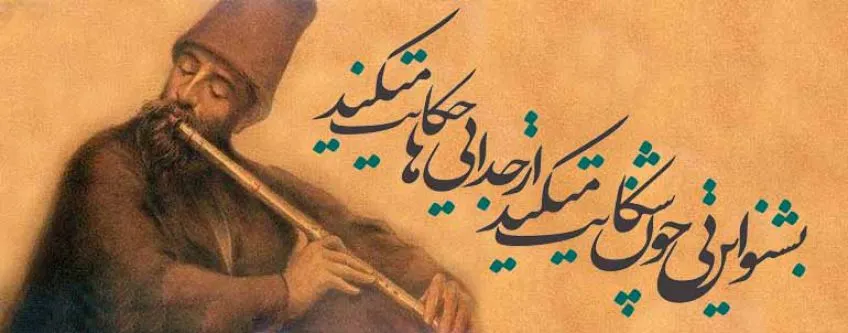
The Song of the Ney(Flute): The Beginning of the Masnavi
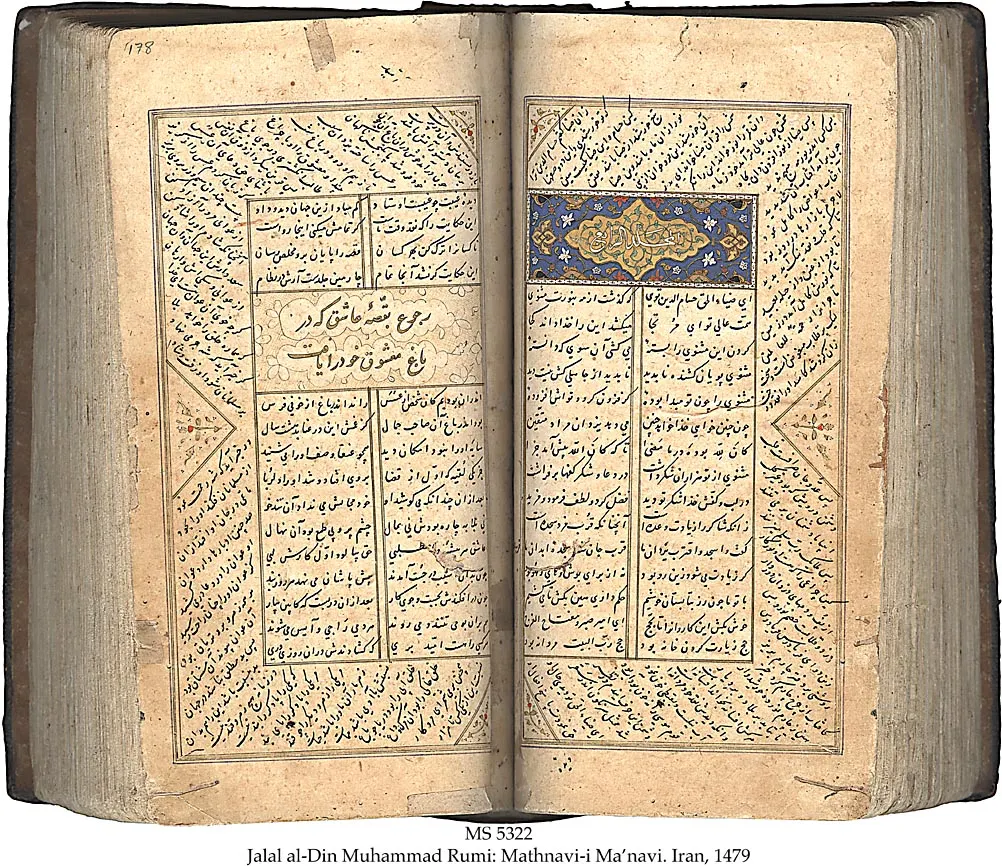
Rumi’s most important work is the Masnavi, a vast spiritual poem considered one of the foundational texts of Sufism. It opens with one of the most famous metaphors in the history of poetry:
“Listen to the reed flute, how it tells its tale,
complaining of separation.”
The flute (ney) has been cut from the reed bed; its sound is born from the pain of separation.
For Rumi, the human being is like that flute: our restlessness and longing are not mistakes, but signs of an original separation. Pain, when listened to deeply, can turn into music.
Get mehdi limoochi’s stories in your inbox
Join Medium for free to get updates from this writer.
This image still speaks powerfully today. Rumi does not invite us to escape suffering, but to recognize it as a call.
Rumi and Saint Francis: A Possible Bridge
For an Italian — or more broadly Western — reader, a helpful comparison may be Saint Francis of Assisi.
Like Francis, Rumi:
- speaks in a language that is simple yet radical
- places love at the center of everything
- dissolves boundaries between religion, poetry, and everyday life
Neither builds a closed theoretical system, but rather offers a path.
Both turn life itself into a testimony.
They do not convince through authority, but attract through light.
The Whirling Dervishes and Rumi’s Legacy
After Rumi’s death, his disciples gave form to a spiritual order: the Mevlevi Order, known for the practice of the whirling dervishes. The whirling is not a dance in the theatrical sense, but a moving meditation: the body turns, the ego dissolves, and the heart orients itself toward the One.
This tradition helped make Rumi famous throughout the world, but it is important to remember that before the dance there is poetry, and before poetry there is the encounter with the Divine, from which everything takes form.
Why Rumi Still Speaks to Us
Rumi does not belong to a single nation or to a closed religion.
He speaks to anyone who has felt a longing that is hard to name.
To those who seek meaning, beauty, and transformation.
Perhaps this is why, after eight centuries, his words continue to travel.
And like the flute of the Masnavi, they continue to sing.