Stop Guessing. Start Converting: How to Build Personas That Actually Work
Most B2B personas aren’t broken. They’re just built on the wrong things.

You’ve seen the slide.
There’s a name. A job title. A few bullet points about goals, challenges, maybe a made-up quote like “I want to drive innovation while optimising ROI.”
And that’s the persona.
Neat. Tidy. But totally unhelpful when it comes to actually converting buyers.
Here’s the truth:
Most B2B personas aren’t wrong because of what’s on the page.
They’re wrong because of what’s missing.
The real issue: It sounds good, but it doesn’t convert
If you’re in marketing, you’ve probably been here:
- Your campaigns are getting clicks, but no one’s moving
- Sales says, “These people don’t look right”
- Assets are being downloaded, but the follow-up leads nowhere
- Personas exist, but they don’t shape anything you actually build
It’s not a creative problem.
It’s not a performance issue.
It’s not even really a persona problem.
It’s a relevance problem.
What most personas get wrong
Let’s start with the obvious:
Most B2B personas are built in a vacuum.
Marketing pulls together some surface-level data, adds a few behavioural generalisations, and creates a slide that looks good in a deck.
But here’s what usually happens:
1/ They’re built for content, not conversion
2/ They’re focused on demographics, not decisions
3/ They’re shaped by internal assumptions, not external friction
4/ They’re built once — and never touched again
5/ They don’t help sales, product, or anyone else in the revenue engine
And worst of all: they reflect what the company wants to say, not what the buyer needs to hear.
So even if you’ve nailed tone, nailed visuals, and ticked every best-practice box — you still end up with a profile that sounds good but moves nothing.
What a working persona looks like
Let’s get one thing straight: a persona isn’t a profile.
It’s a working model of buyer behaviour.
Not a set of assumptions, but a hypothesis you test, sharpen, and evolve as you learn more.
The personas I build with teams don’t live in PDFs. They live in pipeline.
They show up in campaign decisions. They shape sales outreach.
They get reviewed after deals close. Or stall.
A useful persona is:
- Built around real trigger events
- Rooted in friction, urgency, and internal politics
- Designed to surface objections and decision gaps
- Connected to messaging that drives action
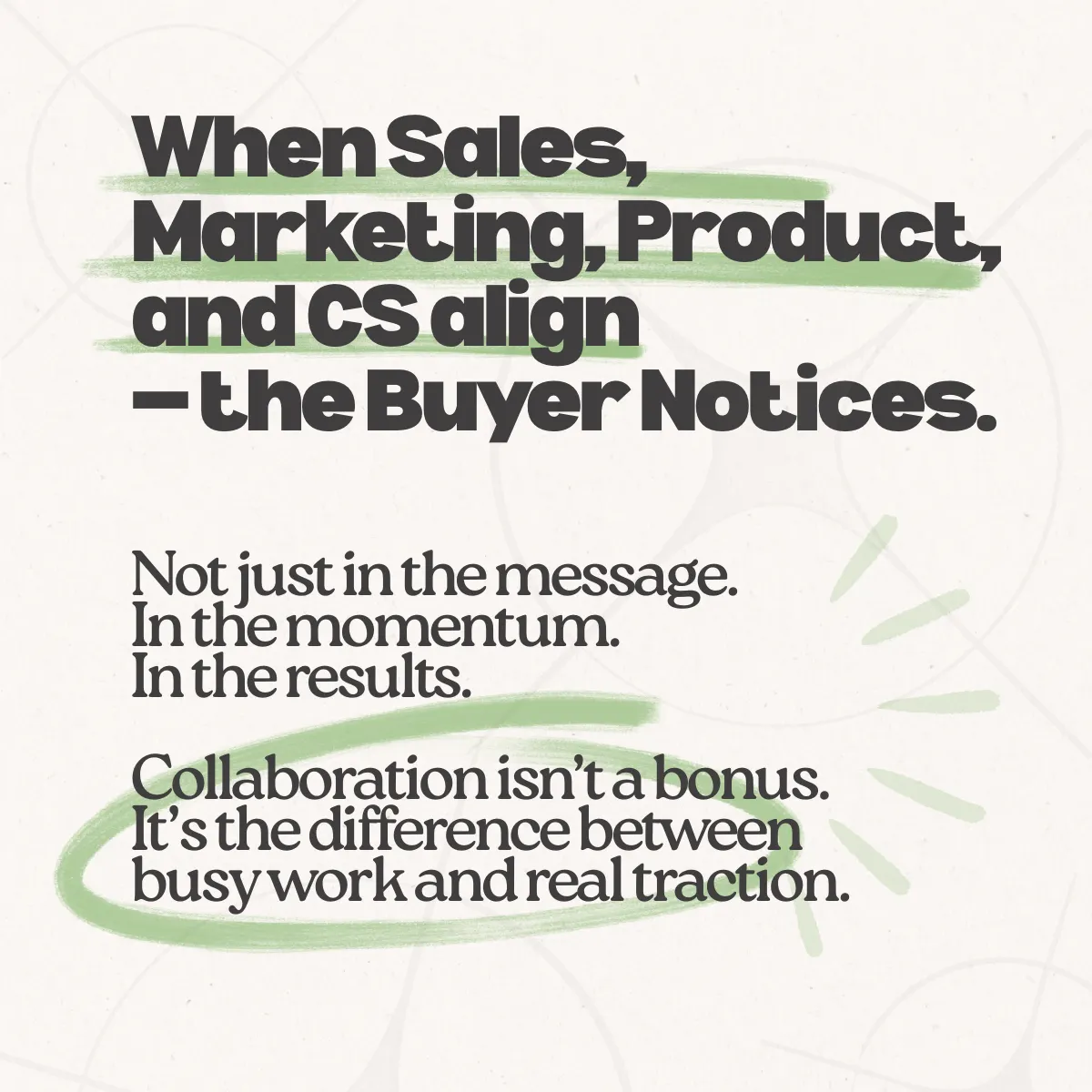
- Understood and used by marketing, sales, product, and CS
It’s not just a marketing asset.
It’s a lens for go-to-market decisions.
Step 1: Start with friction, not fluff
Too many personas are based on what someone “cares about.”
But that doesn’t move deals.
What moves people is pressure. Friction. Internal tension.
Ask sharper questions like:
- What’s changed that’s making this person act now?
- What happens if they do nothing?
- What are they worried about — financially, politically, professionally?
- What internal conversations are they having about this decision?
- What story do they need to tell themselves (or their boss) to move forward?
Example: One enterprise campaign I worked on was targeting CFOs. The original messaging focused on “increasing financial visibility.” But when we interviewed sales, the real friction wasn’t visibility — it was the fear of another system rollout failure. That became the core message. Conversions improved immediately.
Step 2: Build it with your revenue team
Personas shouldn’t be a solo marketing effort.
Run a workshop. Get in a room with:
- Sales — for objections, language, and who actually closes
- CS — for post-sale pain points and unmet expectations
- Product — for roadmap context and feature conversations
- Marketing — to shape content and messaging across the funnel
Work backwards from real deals.
Get Mel Dawes’s stories in your inbox
Join Medium for free to get updates from this writer.
Pick five wins, five losses.
Ask: what did these buyers have in common? What did we miss?
You’ll surface patterns no doc or dashboard can show you.
Example: In one session, CS flagged that the best customers were all trying to centralise operations after rapid team growth. That never came up in lead gen, but once we built messaging around it, average deal size jumped.
Step 3: Profile for timing, not just traits
Job titles don’t buy.
People in moments of friction do.
So instead of starting with “Head of Procurement,” start with:
- Someone who’s missed targets for the second quarter in a row
- Someone reporting to a new boss who’s shaking things up
- Someone whose tool just failed during a key client delivery
- Someone trying to cut costs after a budget review
You’re not just mapping roles.
You’re mapping vulnerability.
Those are the moments that matter.
Example: A cybersecurity platform saw better results when targeting “newly hired CISOs” rather than just “Heads of Security.” The urgency came from wanting to make an early impact.
Step 4: Build messaging that answers real decisions
Once you know the trigger and the friction, don’t just write content.
Ask:
- What decision is this person trying to make?
- What proof would make them feel confident to move forward?
- What happens if they don’t decide?
- Who else is involved? What do they need to believe?
Then build content and campaigns that:
- Speak to internal conversations
- Answer unspoken objections
- Reflect their timing and stage
- Use language they actually use
Example: For a data company, we shifted from “Why Our Solution Is Faster” to “What to Do When Your Data Stack Starts Holding You Back.” That messaging landed because it matched where the buyer actually was.
Step 5: Test, evolve, and pressure-check everything
If your persona isn’t being challenged, it’s probably wrong.
Create a monthly feedback loop across teams. Ask:
- What messaging is landing in sales calls?
- What objections are we not answering well?
- What kind of leads are converting?
- What patterns are CS seeing post-sale?
Keep the persona close to the revenue.
Track:
- ICP fit → Are we reaching the right people?
- Friction match → Are we addressing real problems?
- Message resonance → Are they moving forward?
If something feels off, dig. Re-test. Update.
Example: One team used call data to track the first 5 minutes of every sales call. When a particular objection started showing up more, they rewrote top-funnel content to address it. Win rates improved within weeks.
Red Flags I Watch For
If you hear any of these… stop:
- “We made one just for a whitepaper.”
- “It’s based on what we think they care about.”
- “We did a few interviews and called it done.”
- “It’s in Notion, but no one uses it.”
- “It’s the same one we show to investors.”
Personas built like that don’t help anyone.
They just slow you down.
Final Thought
You don’t need ten personas.
You don’t need a clever name and a stock photo.
You need two or three working profiles, based on real friction, used across your team, and updated regularly.
Because when your persona is rooted in truth:
- Content becomes more than noise
- Campaigns actually move people
- Sales gets the right kind of leads
- And your entire funnel sharpens
Stop guessing.
Start profiling with purpose.