Mario Boyanov: “Somewhere Between Storm and Sunshine”


At first glance, Mario Boyanov is easy to read.
He is not the kind of person who tries to stand out, and maybe that is why people notice him anyway. There is a quiet consistency in the way he moves through things. There is nothing dramatic, nothing forced about his personality. He does not fill the space with himself. If anything, he leaves a place for other people in it.
He does not lean on habits or routines to define him, but there are patterns. When something good happens, he calls his mother. When the day ends, it does not end with noise. In fact, it settles. He prays.
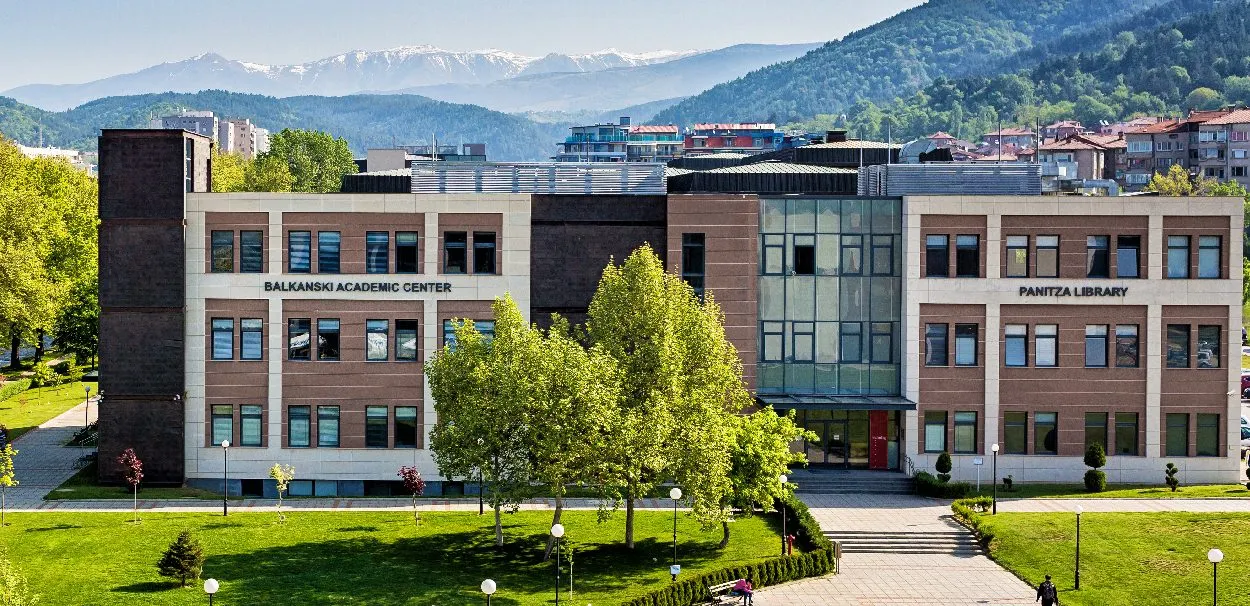
Mario Boyanov is a student at the American University in Bulgaria and the president of the AUBG Olympics Club. He is also the kind of person people rely on without needing to ask why, and someone who is constantly looking for ways to do good and show up for others, even when it goes unnoticed.
With people, he does not rush. He listens first, holds back just enough, and speaks when it feels necessary. Loyalty, for him, shows in presence — in the way he gives attention and does not disappear when things become inconvenient, even as he knows when to step away. Even the way he describes himself carries a kind of tension — emotional, but guided by logic when it matters. Organized and messy. Present and distant. Steady and still figuring things out. On the surface, everything seems balanced and controlled, but that version of Mario — the one built from habits, answers, and first impressions — is only part of the story.
“From the moment I met him, I knew he is someone you can rely on,” says Ivan, his roommate, who met him unexpectedly during a summer in the United States. What started as coincidence quickly turned into a friendship. They travelled together, then returned to the American University in Bulgaria, and now share one apartment.
Because reliability, in Mario’s case, is not a simple trait, but something he proves, often quietly.

Ivan remembers a moment when he needed to travel to his hometown unexpectedly. Mario had several reasons to stay. Still, Mario left everything, drove his roommate across the country, and came back the same day. “It’s not about big things,” Ivan says. “Even small acts like that, that is how he builds trust.”
But living with someone also means seeing what cannot be shown on the surface.
“He overthinks everything,” Ivan says. “Even things that might never happen.” It’s not obvious at first. Mario does not let it be. But behind decisions that look quick and certain, there is a constant process of questioning, adjusting, replaying possibilities.
And sometimes, that pressure becomes visible.
The charity football match, Mario’s own idea, took place on March 21 at the Hristo Botev Stadium in Blagoevgrad, bringing together students and the local community to support children with Down syndrome under the message “All Under One Sun.” It had been on his mind long before it became real. For him, it was never just about organizing an event, but about turning intention into something visible — something that could bring people together, challenge the way they see others, and make them care.

A week before the match, the uncertainty became harder to ignore. Despite months of preparation, ticket sales were low, and it was unclear how many people would actually show up.
That is when Mario said it, without trying to soften it:
“Why are we even doing this? Is there a point?”
He did not stay in that question for long. He rarely does.
Because once something becomes his responsibility, stepping away is no longer an option.
“You have their belief,” Mario said. “How do you disappoint them?”
Behind the event itself was something less visible — the pressure of meeting expectations, of carrying an idea that had already become larger than him, and knowing others were now counting on it.
Yoana, Mario’s partner, sees a different version of him.
“Something I have noticed since day one is how gentle and nice he is to everyone,” she said. “He would always open the door for you, even if he does not know you, he would always greet a professor or the canteen ladies.”
Get Radina Minkova’s stories in your inbox
Join Medium for free to get updates from this writer.
At the same time, she points to what stays underneath.
“The fear of failure and the sense of responsibility and duty are things that sometimes overtake him,” she said. “But they have never been stronger than him.”
There was one moment when that showed more clearly.
“He was asking himself if he has started something bigger than his capabilities and if all the efforts will be worth it… I felt him somewhat crushed.”
Still, she does not see that as weakness.
For Yoana, the success of the event was never just about numbers. What mattered more was that people believed in the idea and made it their own. That, she says, is what made it meaningful.
When she tries to describe Mario, she struggles to reduce him to something simple. She compares him to the weather — constantly shifting, moving through different emotions and moods within a single day. At the same time, she sees something else in him as well.
“On the other hand, I see him as the sunny weather and the rainbow after the rain…” she said.

Then she adds, almost as a separate thought:
“One day, I just want him to stop for a second, to turn around and say to himself: ‘damn it, I’m proud of myself!’”
For most people, that’s where the story would end — with the event, with the result, with something that can be measured. But that is not really where Mario stays.
He does not talk about himself in those terms. There is no clear version of who he is trying to become, no final image he is working toward. When asked, he doesn’t try to shape the answer or make it sound bigger than it is.
“I don’t really think about that,” he said.

There is a short pause before he answers.
“I am happy with who I am right now.”
It is not the kind of answer that tries to explain everything. If anything, it leaves space.
What defines Mario is not one outlining moment, but the pattern of decisions he keeps making, quietly and consistently, over time. Not the event. Not the role. Not even the result.
It shows up in smaller, quieter ways — the decisions no one notices, the things he takes on without saying it out loud, the expectations he carries because someone has to. People rely on him, often without thinking about it. And he rarely gives them a reason not to.
He does not talk about it much and he does not need to.
“I just want to do things right,” he said.
And then he keeps going.
He is Mario Boyanov — a guy whose heart beats to help others.
###
Radina Minkova is a student at the American University in Bulgaria double majoring in Business Administration and Journalism and Mass Communication. As a current student with two years remaining, she connects to this story through her own experiences and the concerns it raises about her future.