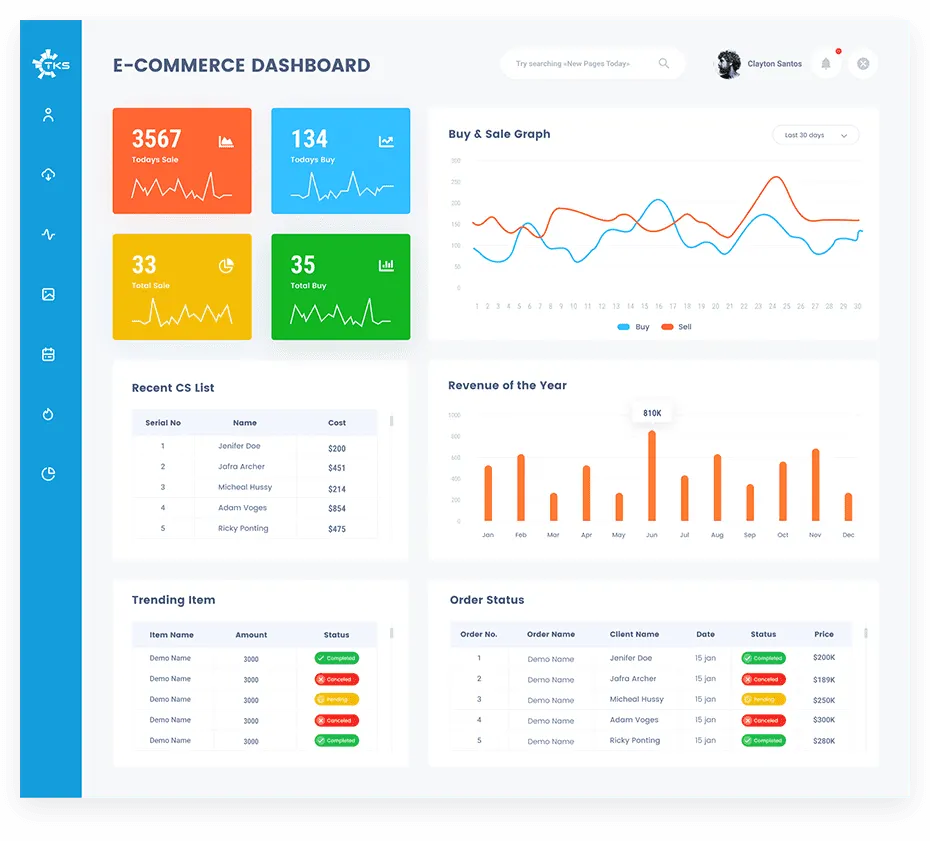
What is Financial Analytics, and Why is it Important?

Financial analytics has emerged as a cornerstone of modern business strategy, providing invaluable insights into an organization’s financial health, market trends, and potential risks and opportunities. In this article, we’ll delve into the fundamentals of financial analytics, its significance, types, applications, technological advancements, benefits, challenges, and future trends.

Introduction to Financial Analytics
Financial analytics refers to the process of leveraging data analysis and statistical techniques to interpret historical financial data, identify trends, and make informed decisions. It encompasses a range of methodologies and tools aimed at extracting actionable insights from vast volumes of financial information.
Understanding the Basics
What Constitutes Financial Analytics?
Financial analytics involves the collection, processing, and analysis of financial data from various sources, including balance sheets, income statements, cash flow statements, and market data. By applying statistical models and algorithms, analysts can uncover patterns, correlations, and anomalies within the data, enabling organizations to optimize their financial performance.
The Importance of Data in Financial Analytics
Data serves as the lifeblood of financial analytics, driving informed decision-making and strategic planning. High-quality, reliable data is essential for accurate analysis and forecasting, providing businesses with a competitive edge in today’s dynamic marketplace.
Types of Financial Analytics
Financial analytics can be broadly categorized into three main types:
Descriptive Analytics
Descriptive analytics involves the examination of historical financial data to understand past performance and trends. By summarizing and visualizing key metrics, such as revenue, expenses, and profitability, organizations can gain insights into their financial status and identify areas for improvement.
Predictive Analytics
Predictive analytics utilizes statistical techniques and machine learning algorithms to forecast future financial outcomes based on historical data patterns. By analyzing past trends and external factors, such as market conditions and consumer behavior, organizations can anticipate potential opportunities and risks, enabling proactive decision-making.
Prescriptive Analytics
Prescriptive analytics goes beyond predicting future events to recommend optimal actions and strategies. By simulating different scenarios and evaluating their potential impact, organizations can make informed decisions to achieve their financial objectives and maximize value creation.
Learn about Effective Finance Data Analysis Case Study: https://www.scatterpie.io/data-analytics-case-studies/finance-analytics-dashboards/
Applications of Financial Analytics
Financial analytics finds applications across various domains, including:
Risk Management
Financial institutions use analytics to assess credit risk, detect fraudulent activities, and optimize investment portfolios, enhancing overall risk management practices.
Investment Decisions
Investors leverage financial analytics to evaluate investment opportunities, assess asset performance, and allocate resources effectively, maximizing returns and minimizing risks.
Performance Evaluation
Businesses utilize analytics to measure financial performance, track key performance indicators (KPIs), and identify areas for cost optimization and revenue enhancement.
The Role of Technology
Advancements in technology have revolutionized the field of financial analytics, enabling more sophisticated analysis and decision-making processes.
Big Data and Financial Analytics
The proliferation of big data has expanded the scope of financial analytics, allowing organizations to analyze large datasets in real time and uncover actionable insights that were previously inaccessible.
Artificial Intelligence in Financial Analytics
Get Mprakash’s stories in your inbox
Join Medium for free to get updates from this writer.
Artificial intelligence (AI) and machine learning algorithms are increasingly being deployed in financial analytics to automate repetitive tasks, detect patterns, and generate predictive models, improving accuracy and efficiency.
Benefits of Financial Analytics
Financial analytics offers several key benefits, including:
Enhanced Decision Making
By providing timely and accurate insights, financial analytics empowers organizations to make informed decisions that drive business growth and profitability.
Improved Efficiency
Automation and optimization of financial processes through analytics result in cost savings, resource allocation efficiencies, and streamlined operations.
Risk Mitigation
By identifying potential risks and vulnerabilities, financial analytics enables organizations to implement proactive risk management strategies and safeguard against financial losses.
Challenges in Implementing Financial Analytics
Despite its numerous benefits, financial analytics faces several challenges, including:
Data Quality and Integrity
Ensuring the accuracy, completeness, and reliability of financial data poses a significant challenge, requiring robust data governance and quality control measures.
Privacy and Security Concerns
The proliferation of sensitive financial data raises concerns about data privacy, security breaches, and regulatory compliance, necessitating stringent security protocols and regulatory frameworks.
Future Trends in Financial Analytics
Looking ahead, several trends are poised to shape the future of financial analytics, including:
Integration with Blockchain Technology
Blockchain technology offers the potential to revolutionize financial analytics by providing secure, transparent, and immutable transaction records, enhancing trust and transparency in financial transactions.
Expansion of Machine Learning Algorithms
Advancements in machine learning algorithms, such as deep learning and reinforcement learning, will enable more sophisticated analysis of financial data, leading to more accurate predictions and actionable insights.
Conclusion
In conclusion, financial analytics plays a pivotal role in driving strategic decision-making, mitigating risks, and optimizing financial performance across industries. By harnessing the power of data and technology, organizations can gain a competitive edge in today’s fast-paced and increasingly complex business environment.
FAQs
What skills are required for a career in financial analytics?
A career in financial analytics typically requires proficiency in data analysis, statistical modeling, programming languages (such as Python or R), and domain knowledge in finance and accounting.
How can small businesses benefit from financial analytics?
Small businesses can leverage financial analytics to gain insights into their cash flow, identify cost-saving opportunities, and make informed decisions to drive growth and profitability.
Is financial analytics only relevant for large corporations?
No, financial analytics are relevant for businesses of all sizes. Small and medium-sized enterprises (SMEs) can benefit from analytics to improve financial management, optimize operations, and achieve their business objectives.
What role does data visualization play in financial analytics?
Data visualization tools, such as charts, graphs, and dashboards, enable analysts to communicate complex financial information effectively, facilitating better decision-making and strategic planning.
How can organizations overcome challenges in implementing financial analytics?
Organizations can overcome challenges in implementing financial analytics by investing in data quality management, cybersecurity measures, employee training, and collaboration between finance and IT departments.