The Man Who Works Like Rivers Flow

Forty-five minutes from my Bangalore apartment (when the traffic gods are merciful) there’s a farm that feels like finding a jazz club in a strip mall that serves the best music you’ve heard all year.
It’s not manicured. It’s raw. Big trees, an artificial lake with ducks, a chicken coop, dogs running around with the swagger of property owners. The kind of place that money can’t manufacture and cities are devouring with cranes and gated communities promising “farmhouse living” to people who’ve never seen actual farms.
Which makes Lester’s farm feel less like a weekend getaway and more like a wildlife sanctuary for an endangered species: genuine peace.
And then there’s Lester himself.
When I first heard about Lester (an American who owns a farm outside Bangalore) I pictured an expat executive from Intel or Microsoft with a manicured estate. Swimming pool, gazebo, the works.
I was spectacularly wrong.

Most days, I find Lester in perpetual motion. A one-man construction crew with a soundtrack.
One afternoon, he’s perched atop a bamboo pole like an agricultural acrobat, wrestling with the roof of a stilted cottage. The next visit, he’s knee-deep in a trench, sculpting channels for rainwater with focused intensity. His uniform never varies: old trousers, a faded vest, and his ancient phone dangling from his neck, pumping out reggae that syncs perfectly with his hammer strikes.
I’ll position myself in his general vicinity. Close enough to feel useful, far enough to avoid actual responsibility. Usually with a book I’m pretending to read while watching this live demonstration of what humans looked like before cubicles were invented.
The only time Lester pauses his relentless productivity is to roll a joint with ritualistic precision, take a few contemplative drags, and then dive back into whatever architectural miracle he’s manifesting.
What strikes me most isn’t the work itself.
It’s the complete absence of everything that normally drives work.
No boss breathing down his neck. No deadlines creating artificial urgency. No monthly targets to chase like carrots dangling from corporate sticks.
Lester works the way rivers flow. Not because someone told them to, but because that’s simply what rivers do.
I’m watching a living, breathing karma yogi in action. Working without the slightest interest in what the work might deliver by way of personal advancement, recognition, or profit. He tends the land because somewhere in his DNA, that’s what his hands were designed for.
Pure action without the contamination of expectation.
Through scattered conversations, I piece together his story.
Upstate New York childhood. Environmental Studies at University of Vermont. A state he adores for two reasons: Bernie Sanders and the fact that advertising billboards are banned. “They can’t monetize our view of the sky, bruh!”
The land he tends so devotedly isn’t legally his. A detail that would send most people scrambling for property lawyers. Lester treats it with casual acceptance. He’s the temporary custodian, though “temporary” in his universe could mean decades.
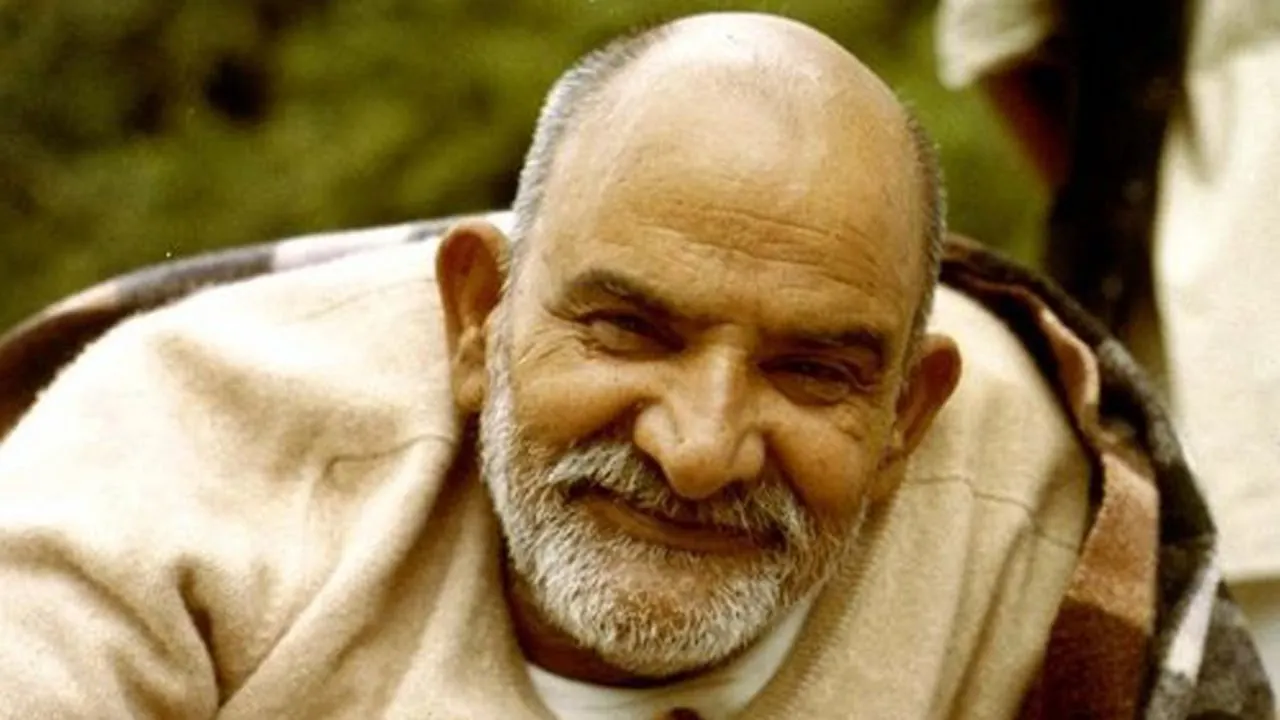
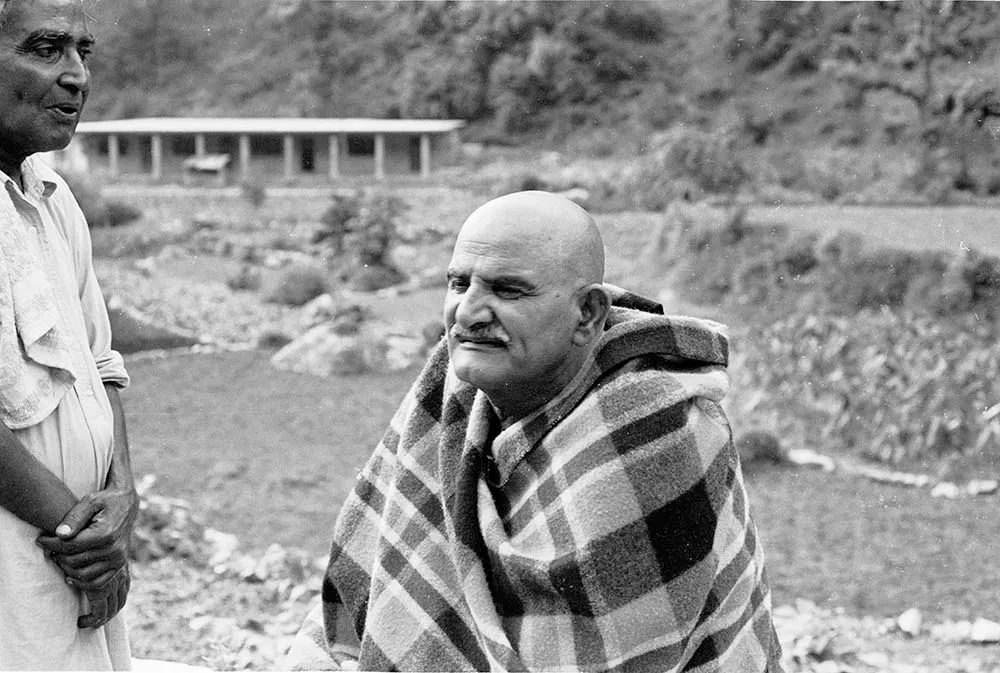
The whole setup came through his guru. An Aghori Baba whose photo hangs from the banyan tree like a guardian spirit. According to Lester, their last meeting yielded two gifts. First, a cryptic warning to stay away from the Baba’s temple during 2012–13. A place now wiped off the map after the great Himalayan floods of 2013.
Get Savage Pilgrim’s stories in your inbox
Join Medium for free to get updates from this writer.
The second gift was a ring. Simple metal, nothing fancy, but apparently loaded with metaphysical significance.
Around 2011, Lester found himself adrift between countries, confused about where to plant roots. He ping-ponged between relatives across multiple American states. Nothing felt like home.
So he came back to India, still wearing the ring, still searching for a sign.
Then, standing on this patch of earth, the ring simply fell off his finger.
Just dropped.
Like his cosmic lease had suddenly been activated.
The landowner (a wealthy Bangalorean with property scattered across the city) inexplicably agreed to let Lester transform five acres into his personal Eden.
In a city where every square foot is being converted into luxury something-or-other, this feels like witnessing an endangered species in its natural habitat.
God bless that man’s soul for resisting developers who are probably waving checks that could buy a small island.
What Lester has figured out (or what has been revealed to him through that falling ring, who knows) is something most of us spend our lives chasing:
How to work without wanting anything from the work.
Not enlightenment. Not recognition. Not even the satisfaction of a job well done.
Just… work. Because that’s what hands do when they remember what they’re for.
I watch him hammer bamboo poles into submission while reggae provides the rhythm section, and I think about my own relationship with work. The endless negotiations. The scorekeeping. The quiet resentment when effort doesn’t yield the expected return.
Lester seems to have bypassed that entire operating system.
He builds because building is what’s needed. He tends because tending is required. He creates because creation is happening through him, not by him.
The Bhagavad Gita calls this karma yoga. The yoga of action. Work without attachment to results.
Lester probably hasn’t read the Gita. But he might be living it better than most people who’ve memorized every verse.
For the first time in months, sitting on his farm watching him work, I can feel my shoulders descend from their permanent position somewhere near my ears.
Maybe this is what peace looks like.
Not dramatic. Not mystical.
Just someone working the way rivers flow.
This is from “Savage Pilgrim,” my memoir about eight years wandering through India’s spiritual underground. Book publishes Sept 2026