When I Held a Rescue Beagle for the First Time

This is not the kind of article I usually write. It feels far more personal, vulnerable, and emotionally exposed than anything I typically share publicly. But after spending time volunteering with the Beagle Freedom Project to rescue former laboratory beagles, I realized that some experiences change you so deeply that staying silent no longer feels right.
So this is not a polished think piece. It’s simply my experience. And maybe, if you read this, you’ll understand these dogs differently too.
Meeting the Beagles

After years of legal battles, advocacy campaigns, protests, negotiations, and pressure from activists, organizations, and public figures, one of the major breeding and testing facilities in the United States agreed to release hundreds of beagles into rescue care.
I signed up to volunteer with the rescue operation.
I did not have extensive experience with dogs; most of my rescue background had been with cats and farm animals, but something about this felt important enough to step far outside my comfort zone.
When the vans arrived, volunteers carefully carried the beagles into the holding facility where veterinarians and rescue teams prepared them for transport to sanctuaries and adoption organizations.
I still remember the first beagle I held.
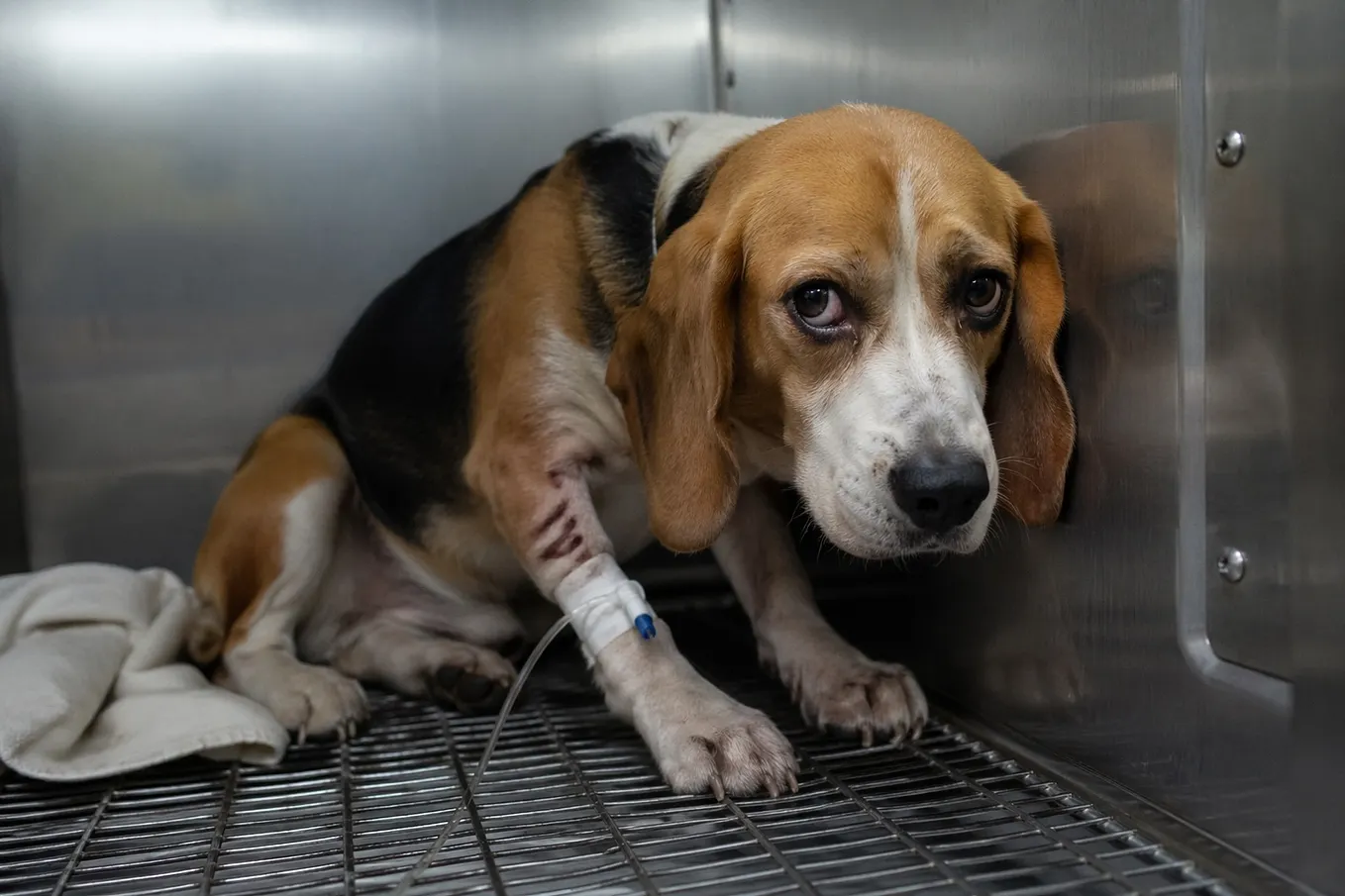
He was trembling so intensely that I could feel it through my arms before I even fully looked at him. His body was light and fragile, but completely tense at the same time, as if every muscle had learned to stay prepared for fear.
And then I looked into his eyes. It is difficult to describe what I saw there without sounding overly emotional, but the truth is that I have never forgotten that moment. There was innocence in his eyes, but also confusion. Gentleness, but also caution. Fear, but also this quiet willingness to trust despite everything.
It was overwhelming because none of it felt unfamiliar. The emotions in his face were not foreign or animalistic in the way people often imagine. They were deeply recognizable. Human, almost. The expression of someone who had experienced distress for so long that safety itself felt uncertain.
Carrying him did not feel like carrying a dog. It felt like holding a frightened child who had not yet learned whether the world was safe.
I remember instinctively speaking to him in the same soft tone people use with babies. Slowly. Reassuringly. Not because I planned to, but because every instinct in me wanted to protect him from feeling afraid for even one more second. And what struck me most was how deeply emotionally aware these dogs were. They noticed tone, energy, gentleness, and patience.
Some of them flinched at sudden movement. Some froze completely when touched. Others slowly leaned into affection after realizing they would not be hurt. You could almost see them trying to understand whether this new experience with humans was real.
That moment changed the way I see animals forever. Not because I suddenly believed they could feel emotion. But because I realized how profoundly they feel it.
Every beagle had a different personality.
The puppies were more curious. Some still had visible hopefulness in their expressions. They wanted to explore despite their fear.
The older dogs were different: many froze completely when approached. Some would not lift their heads. Some avoided eye contact entirely. Their bodies stayed tense even when they were finally safe.
The senior dogs affected me the most. Many of them had spent years in breeding or laboratory environments. Some were elderly mothers used repeatedly for breeding. Their fear felt deeply ingrained, not temporary fear, but the kind that settles into the nervous system after years of surviving.
One senior female beagle arrived shivering and emotionally shut down. I wrapped her gently in a blanket and held her against my chest for hours. I spoke softly to her the entire time. I wanted her to experience something different: a calm voice, a gentle touch, patience, love, warmth, care without expectation. At first, her body remained rigid. Then slowly, very slowly, she began to relax. I will never forget the moment she finally fell asleep in my arms. That tiny shift in trust felt enormous.
The Moment That Broke Me
There was one senior male beagle I still think about constantly. He barely moved for hours. He sat completely frozen, staring downward, too frightened even to look around the room. Every time someone approached him, his body tightened further. It was painfully clear that human touch had never meant comfort to him; only restraint, control, and fear.
I sat beside him for a long time without touching him much. I did not want to overwhelm him further. I remember wondering what he must have experienced over the years to become so deeply afraid of simple human proximity.
He would not eat.
He would not drink.
He would not lift his head.
I remember trying not to cry in front of him because I did not want him to absorb even more distress from the humans around him.
More than anything, I hoped that the rest of his life would finally be peaceful. That someone patient and loving would eventually show him that safety exists, too. I truly hope that for him.
A Small Gesture I’ll Never Forget
Later, another senior female beagle was resting in a crate after her veterinary check while waiting for transport.
She was breathing heavily, visibly anxious. I sat beside her for several minutes, gently stroking her head and speaking softly to her. Before leaving, I kissed her forehead and told her she was safe now.
Hours later, when I returned to say goodbye before she left for the sanctuary, she recognized me immediately.
Her tail started wagging.
Her entire body changed.
She became excited the moment she saw me.
That moment stayed with me because it reminded me how profoundly animals respond to kindness, especially after deprivation.
Sometimes people underestimate how meaningful small acts of care can be. But for these dogs, even basic gentleness seemed entirely new.
Why These Dogs End Up in Laboratories
Before volunteering at the rescue, I already knew that beagles are one of the most commonly used dog breeds in laboratory research. But knowing something intellectually and standing in front of hundreds of rescued beagles are two completely different experiences.
What struck me most was realizing that many of the qualities that make beagles so lovable are also the reasons they are so often used in testing facilities.
They are gentle.
Trusting.
Emotionally sensitive.
Cooperative.
They naturally seek connection with humans.
Get Natalia Golunga’s stories in your inbox
Join Medium for free to get updates from this writer.
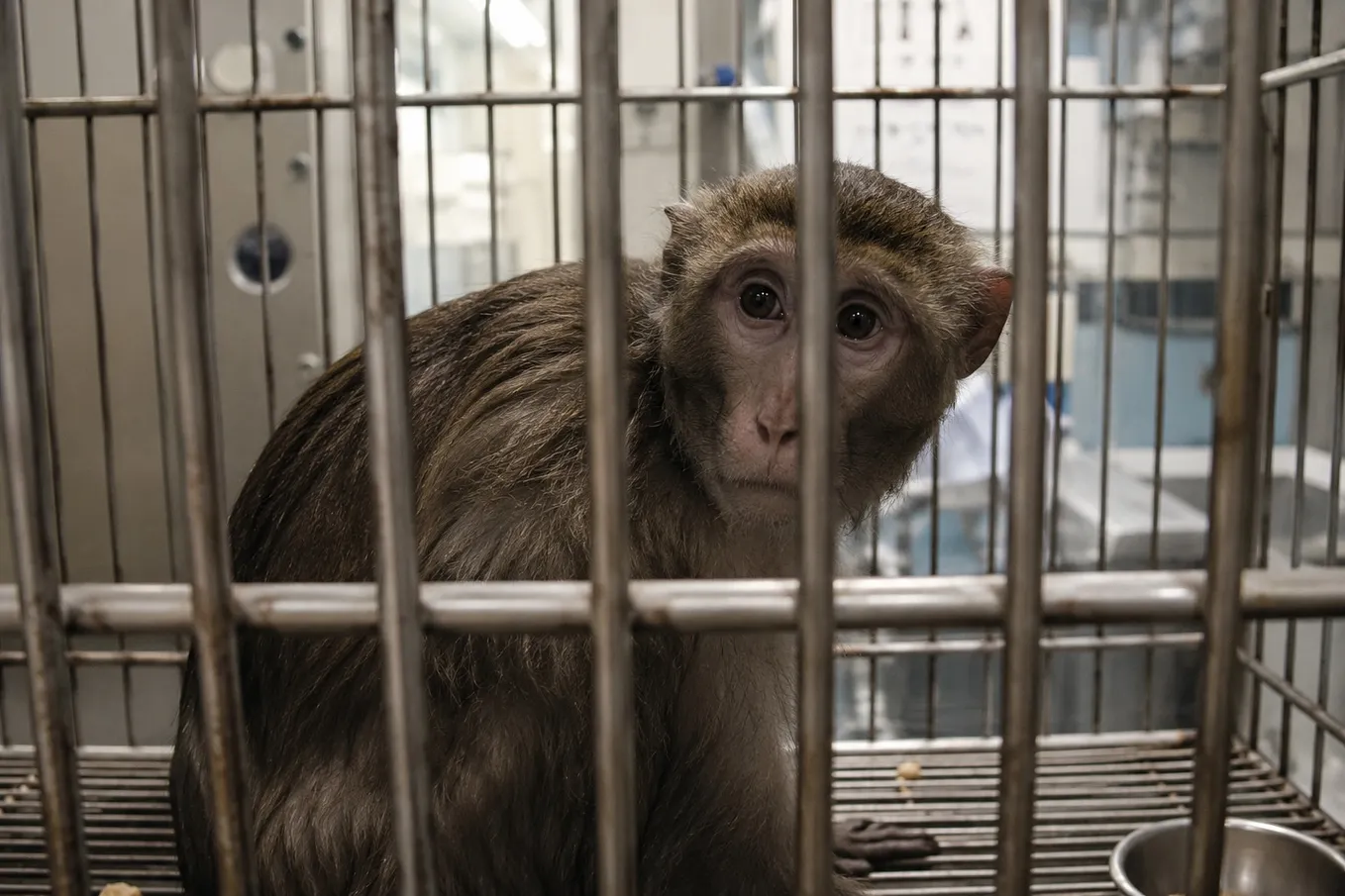
And somehow, those beautiful qualities have been turned into vulnerability. Many of these dogs spend years inside controlled laboratory environments undergoing toxicity testing, pharmaceutical experiments, biomedical research, or medical device studies. Some experience repeated injections, invasive procedures, long-term confinement, or force-feeding. Some never experience a normal home, a couch, a walk outside, or the simple comfort of being loved by a family.
As I held these dogs, I kept thinking about how unnatural that reality is.
There was nothing “experimental” about the way a frightened senior beagle leaned into warmth after trembling for hours. Nothing abstract about a dog slowly relaxing after hearing a soft voice. Nothing impersonal about watching an animal desperately try to understand whether a human being is finally safe.
What also stayed with me is how outdated this system increasingly feels. Today, there are scientists, researchers, technologists, and organizations working on alternatives that do not rely on animal suffering: AI-driven toxicology models, organ-on-chip systems, in-vitro methods, and other human-relevant technologies that may ultimately predict human outcomes more effectively than animal models.
And I hope those alternatives continue to grow.
Because after meeting these dogs, it becomes impossible not to ask a deeper question:
If we already recognize their emotional capacity, their intelligence, their fear, their ability to suffer and trust, then how much longer should they carry the burden of our scientific progress?
What Changed in Me
Before this experience, I intellectually opposed animal testing.
After holding these dogs in my arms, it became something much more personal.
What affected me most was not only the suffering they had endured, but their extraordinary capacity to trust again despite it.
Even after fear.
Even after trauma.
Even after years without gentleness.
They still responded to kindness.
A soft voice mattered to them.
Patience mattered to them.
Safety mattered to them.
Love mattered to them.
That realization broke something open in me.
I think many people imagine laboratory animals as abstract subjects connected to science, industry, regulation, or research pipelines. The language itself creates emotional distance: “test subjects,” “specimens,” “research models.”
But spending hours beside these dogs made everything feel profoundly real in a way I will never forget.
When you feel their bodies shaking from fear;
When a senior beagle freezes because he has learned that human touch might hurt him;
When an exhausted dog slowly falls asleep in your arms because she finally feels safe enough to rest — something changes inside you.
Not because you suddenly realize these animals are emotionally complex. I already believed that. What changes is the depth at which you feel it.
You stop understanding animal suffering only intellectually or ethically. You begin to feel it physically, emotionally, instinctively.
You notice every small reaction:
the hesitation before accepting touch,
the fear in their posture,
the relief when they realize they are safe,
the way kindness slowly softens their nervous system.
And the experience stays with you.
These dogs are not abstract victims in a distant conversation about science or policy. They are individuals. They have personalities, preferences, fears, and the capacity to form trust. They can be traumatized. They can heal. They can learn to feel safe again.
I genuinely wish more people could experience what I experienced during that rescue — not because I want them to feel heartbreak, but because I believe direct experience creates a kind of understanding that statistics alone never can. It is easy to emotionally disconnect from suffering when it exists only in statistics, scientific language, or distant headlines. It is much harder to disconnect when you are holding the victim in your arms.
Reading about animal testing is one thing. Looking into the eyes of a dog who has lived through it is something else entirely.
That experience only strengthened my belief that the future of science must move toward animal-free alternatives that are both more ethical and more human-relevant. Progress should never require us to stop recognizing vulnerability when it is directly in front of us.
These beagles are not equipment. They are not disposable tools for innovation. They are living, feeling individuals who, like all of us, want safety, comfort, and the chance to live free from harm.
And I hope one day we build a world that gives them exactly that.