Why I Would Buy Property in Oman in 2026


This isn’t just another generic country guide filled with buzzwords. Instead, I share a deeper look with my take — what actually resonates with me — about Oman as a destination for real estate investment.
Everyone has their viewpoint when it comes to market timing. In my opinion, 2025–2026 presents a great window to buy property in Oman for foreign investors and expats. At the very least, it’s worth researching or visiting the country to form your opinion.
I’ve outlined the main points/benefits of buying property in Oman that I find most compelling to me (each of which I will explain in detail):
- Oman’s stable politics and wise governance
- Safe and welcoming country to live and invest
- Rising star on the tourist global map
- Oman 2040 Vision and why it matters
- Favourable market and first-mover advantage
Plus, prices for real estate in Oman, areas to consider, and my recommendations.
In case you’re unfamiliar with Oman

Oman, officially the Sultanate of Oman, is a classic Arab monarchy where the Sultan has absolute power (it’s not a dictatorship, as some Western journalists often wrongly portray).
Oman, roughly the size of Italy, is almost four times larger than the UAE but has half the population, of 5.38 million people. Despite its vast land size, Oman’s lower population ensures a quieter, less congested environment—a rarity in the Gulf region. It is the southernmost country on the Arabian Peninsula before reaching the Arabian Sea.
Oman shares borders with the UAE (a 75-minute flight from Muscat to Dubai), Saudi Arabia, and Yemen. Muscat, the capital and largest city, is a historic port city.
Oman’s currency, the Omani Rial (OMR), is the 3rd strongest globally that is pegged to the U.S. dollar.
Oman’s Stable Politics and Wise Governance
Studying international relations in the past taught me to evaluate countries within their regional contexts.
Comparing Oman with its neighbour Yemen — a country sharing similar cultural and historical roots but drastically different modern outcomes — provides a clear picture.
You’ve likely heard about Yemen in the news over the last decade — a failed state plagued by civil wars and poverty, one of the most insecure places on Earth. Oman, in contrast, exemplifies stability, progress, and wise governance — a country that has not been involved in any wars or conflicts since 1970.
Pure Facts and Numbers:
- HDI (Human Development Index): Yemen scores 0.424, while Oman reaches 0.819 — imagine a world where Mali borders Romania.
- GDP per capita: Oman’s is 44 times higher than Yemen’s and comparable to Portugal’s.
- Global relations: Oman has strong ties with the West and is one of only 20 countries with a Free Trade Agreement with the US. Meanwhile, Yemen remains isolated, with limited diplomatic ties
Interesting fact: In 2010, the UN recognised Oman as the world’s leader in improving its HDI over 40 years, even surpassing China’s progress.
How did Oman achieve such a transformation?
The answer lies in visionary leadership. Sultan Qaboos bin Said (ruled 1970–2020) reinvested Oman’s growing oil wealth into developing the nation. He abolished slavery, extended voting rights, and introduced reforms for women — all while maintaining diplomatic neutrality — the crème de la crème of state politics.
Safe and Welcoming Country to Live and Invest

Many history journals I came across credited Oman’s neutrality with giving it the name “Switzerland of the Middle East.”
It’s one of the safest countries in the Middle East, with a Terrorism Index of 0 — the only Middle Eastern country, alongside Qatar, ranked last.
Numerous expat reviews and surveys I read highlight the friendliness and warmth of the locals. Surveys, such as the 2024 Expat Insider survey, back this up, ranking Oman 12th overall — two spots above the UAE.
From what I've heard from locals, over 100 nationalities are represented in Oman. As one Bahraini expat said:
“Oman is love. Their national pride, welcoming nature, and humble ambition are the best parts about them.”
Rising Star on the Tourist Global Map
Visiting Oman feels like experiencing authentic Arabia, with a fine mix of almost everything — diverse nature, historical sites, and modern infrastructure (more on this in the next section).
Starting with architecture: the preservation of cultural heritage truly catches the eye. You won’t find skyscrapers or flashy modern designs; instead, traditional Arabic styles dominate.

I admire the architectural details — arabesque windows, domes, delicate balconies — and the dominance of traditional Arabic white hues.
Get Daniel Fomin | Neighbours’s stories in your inbox
Join Medium for free to get updates from this writer.
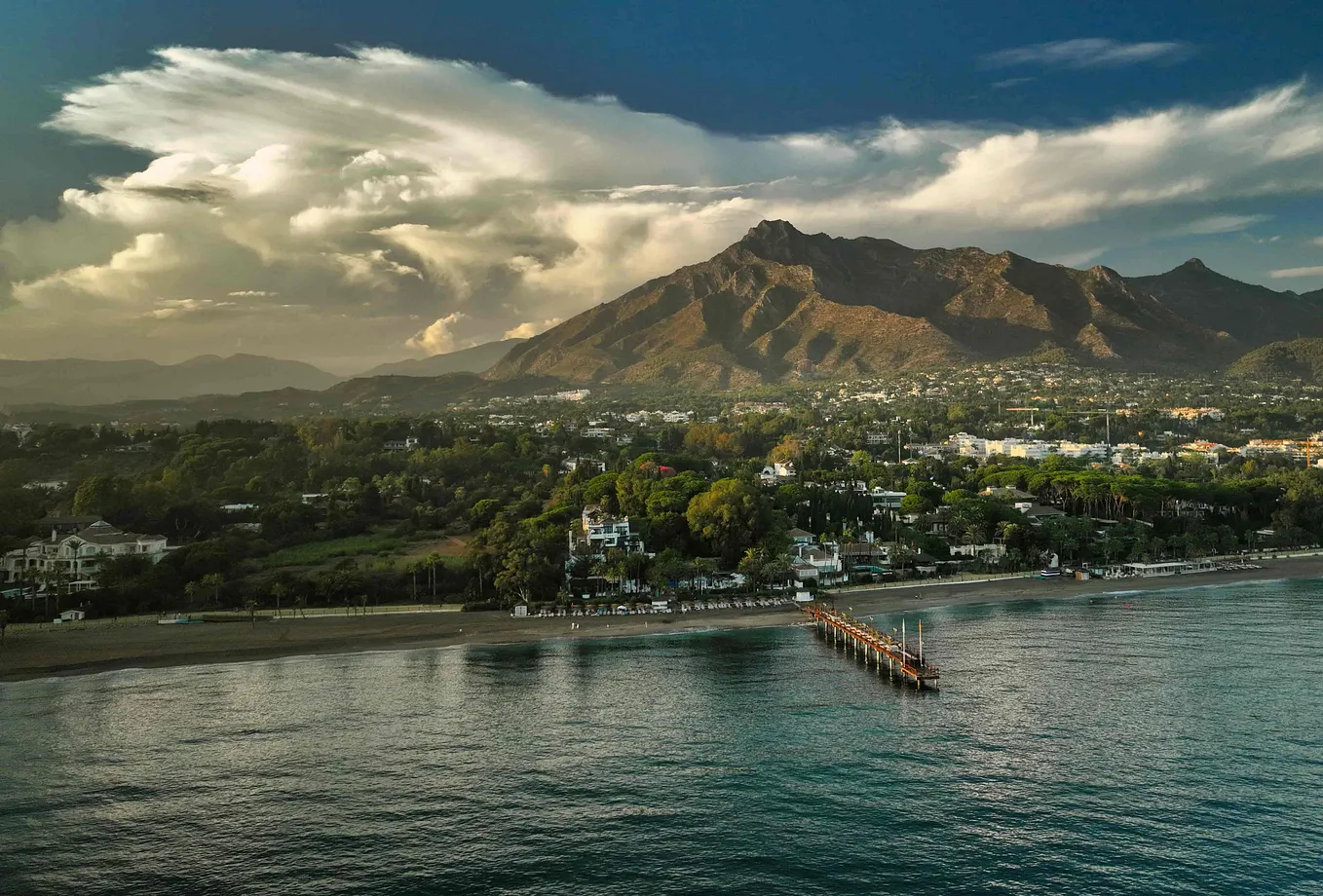
Oman’s natural diversity is remarkable — springs, waterfalls, soft white-sand beaches, mountains, and canyons. Once again, I’ve seen Oman compared to Switzerland.


Tourist numbers are rising, with over 3 million visitors in 2023 — a 41% increase since 2022. Popularity is growing, and the government is making the right moves — signing agreements with neighbours to establish new cruise routes and announcing $3 billion in investments for tourism projects over the next five years.
Oman 2040 Vision and Why It Matters
What I truly admire about Gulf countries is their ability to plan decades ahead — and actually deliver. Their achievements contrast starkly with the empty promises common in Western politics. Maybe you heard of Saudi Vision 2030 and the ‘We the UAE 2031’ initiative.
Oman has its own ambitious national development plan: Oman Vision 2040. Outlined in a detailed 52-page document, it clearly lays out plan reasoning, approaches, and targets.

I must credit how specific it is — each goal comes with measurable targets, and every objective is accompanied by actionable steps.
Good to know: Oman aims to attract at least 11.7 million international and domestic tourists by 2040, supported by over $51 billion in investments.
If I had to summarize it in one sentence: “Using today’s oil wealth, Oman aims to establish a top-tier country with a sustainable, diversified economy that includes participation from all societal levels.”
Vision 2040 emphasises attracting “high-quality foreign direct investments”, so foreign real estate investors are particularly welcomed, benefiting from incentives such as no personal income tax, a 25-year corporate tax exemption, and lifetime residency for families through property ownership.
Unlike some markets that rely heavily on foreign investment, Oman takes a balanced approach.
Foreign investments are part of its growth strategy, not its foundation. The government is laying the groundwork, committing multi-billion-dollar investment funds to strategic sectors like tourism and housing.
Favourable Market and First-Mover Advantage
When a country is pro-growth and on the rise, its real estate market naturally draws attention. Surprisingly, Oman isn’t a heavily promoted or “hype” destination, perhaps overshadowed by close Dubai and the UAE.
For foreign investors, this creates an ideal scenario — a so-called first-mover advantage: the opportunity to establish a stronger position before competition intensifies. I’m confident this shift is inevitable.
Can foreigners buy and own property in Oman? Foreigners can acquire freehold ownership in Oman, but only within designated areas, such as Integrated Tourism Complexes (ITCs) or large-scale luxury residential projects, often luxury resorts.
Which areas to consider and what are the prices for real estate in Oman?
One of the key advantages of Oman’s real estate market is its affordability. Oman ranks 3rd in the Residential Real Estate Investment Attractiveness Index by Housearch, surpassing both Qatar and the UAE.
As always, location is crucial. I’d recommend looking at coastal areas, Muscat and its surroundings. Consider properties suitable for short-term rentals, particularly those offering luxury amenities and property management services, as luxury tourism continues to grow in the region.
Price overview:
In Muscat’s high-end neighbourhoods like Al Khuwayr, Ghubrah, and Bousher, average prices range from 800–1,000 Omani Rials per square meter (approx. 2,080–2,600 USD).
Tip: look at the National Airport of Muscat, to the right- you have above mentioned neighbourhoods, to the left — less developed and cheaper neighbourhoods.
In Sohar and Salalah — two key coastal cities — prices per square meter range from 1,300–1,800 USD.
My recommendation:
Look at master-plan communities — large-scale developments with integrated infrastructure. Unlike standalone properties that depend on external developments, these projects are safer for first-time investors. A good example is AIDA project I covered in another article.
I’ve reviewed several master-plan projects, and even with conservative estimates, they show potential annual returns of around 13% — a standout figure.
Interested in investing in Oman? Let’s connect to review the best master-plan projects and property options for you.
At Neighbours, we assist clients in building and diversifying their global real estate portfolios, with an emphasis on luxury branded residences and serviced properties in rapidly growing markets.
Own a hotel room, an apart-hotel unit, or a residence with full hotel service and professional rental management.
📌 Browse our property portfolio: website link
Read our other insightful articles: