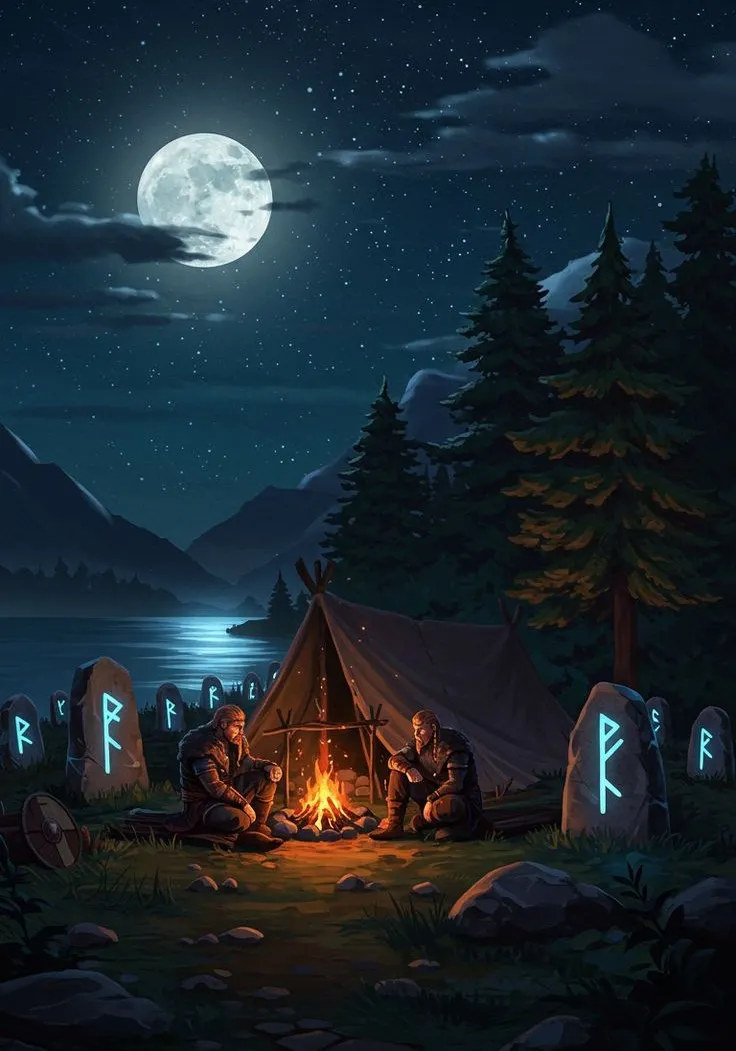
Leonidas vs. Hardrada: The Clash That Never Happened
Two warrior kings defined an age. Comparing them in combat misses the point.


History loves a good “what if.” What if Napoleon had air support at Waterloo? What if the Romans had machine guns? And, perhaps most endearingly, what if two legendary warriors from completely different eras and cultures faced each other in single combat?
One of the most enduring of these hypothetical clashes pits Leonidas I of Sparta, the hero of Thermopylae, against Harald Hardrada, the last great Viking king who fell at Stamford Bridge. It’s a tantalizing thought experiment: the disciplined, shield-wall perfection of the Spartan hoplite versus the ferocious, individualistic fury of the Viking berserker.
A quick search online will yield countless videos, forum threads, and blog posts dedicated to gaming out this exact scenario. They analyze armor thickness, weapon reach, tactical advantages, and physical conditioning. Who would win? The answer usually depends on who is writing the post.
But to ask “who would win in a fight” is to miss the entire point of these two men’s lives. It reduces them from complex historical figures, shaped by unique and demanding cultures, into two-dimensional video game characters.
Get Luke Sharp’s stories in your inbox
Join Medium for free to get updates from this writer.
The Spartan and the Viking
Leonidas was not just a man with a spear and a bronze shield. He was the product of the agoge, a brutal, state-run education system designed to break the individual will and replace it with absolute loyalty to the collective. His strength was not his own; it was the strength of the phalanx, the disciplined unit where every man’s shield protected the man to his left. At Thermopylae, he didn’t die trying to win a fight. He died to fulfill a law, sacrificing himself as a ritual act of leadership to buy time for Greece.
Harald Hardrada, separated from Leonidas by fifteen centuries and thousands of miles, was a product of a vastly different world. The Viking North was a decentralized, chaotic landscape where power was not inherited but seized through personal charisma, military force, and the accumulation of wealth. Hardrada spent his life in exile and war, serving as a mercenary commander in the Byzantine Empire before returning to claim the throne of Norway. His strength was individual, built on personal reputation, tactical brilliance, and the ability to inspire loyalty through success and gold.
Incompatible Arenas
To compare them in combat is meaningless because they were warriors built for incompatible arenas. Leonidas was a master of defensive warfare in restricted terrain. Hardrada was a master of amphibious raiding and open-field command.
The true value in comparing them lies not in a fictional duel, but in understanding the worlds that forged them. They were the supreme expressions of their respective warrior cultures, living archetypes of two distinct philosophies of power, honor, and sacrifice.
The Warrior Ideal
This is just a glimpse into the profound cultural and philosophical differences between these two legendary kings. To explore their lives, their deaths, and the warrior codes that guided them, read the full article, Harald Hardrada vs King Leonidas: Two Kings, Two Worlds, on Odin’s Shore.