Belonging Without Erasure: Inherited vs Chosen Identity


It has taken me a little longer than I planned to articulate some of these thoughts, but here I am, finally getting around to it!
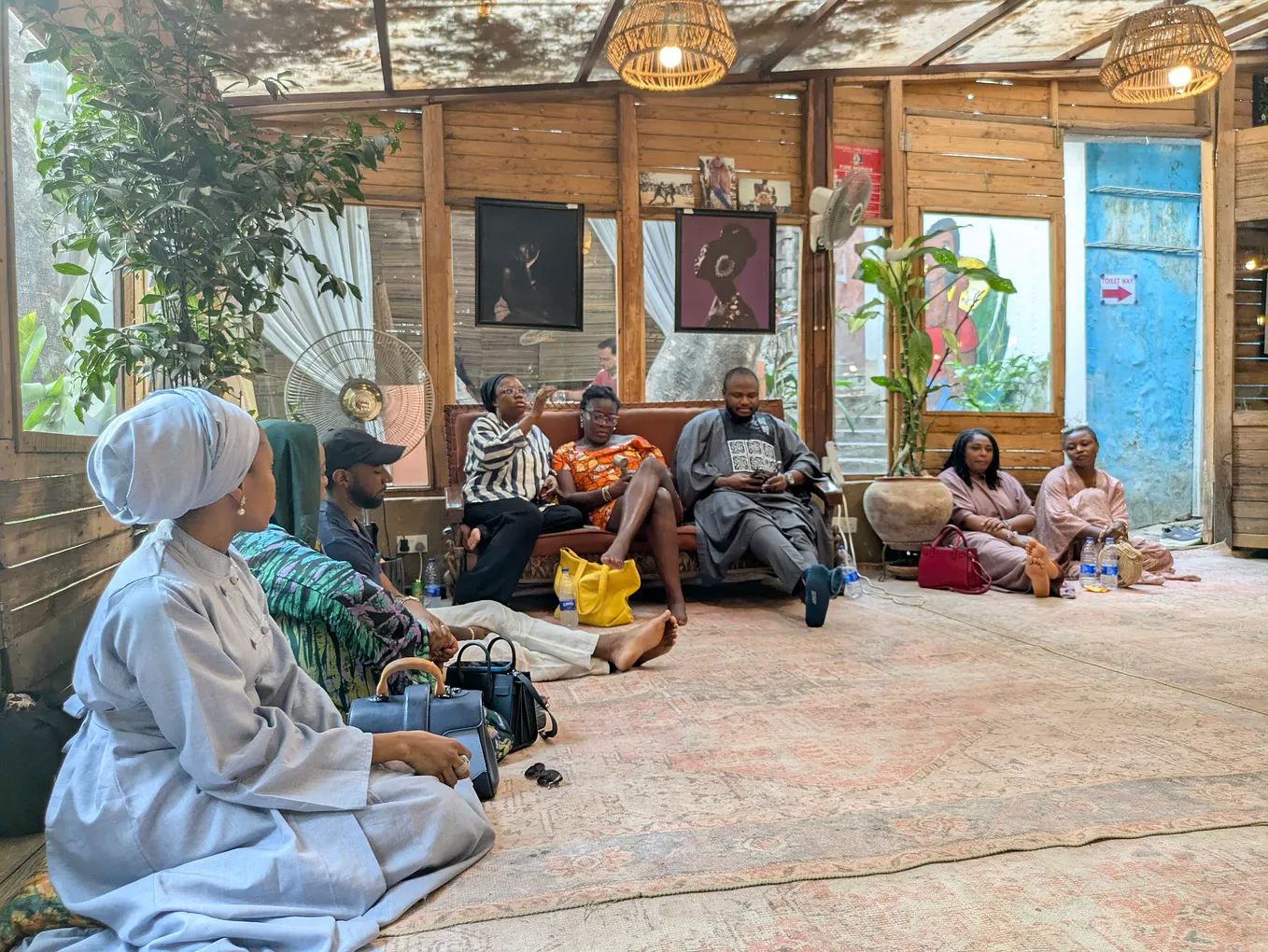
In 2025, I curated and hosted the first edition of Vabę (pronounced as vah-Beh), an intimate gathering to promote cross-cultural cohesion through immersive experiences and conversations.
At Vabę 1.0, the question was simple: how do you belong without losing identity?
The thrust of the conversation was the balance between celebrating cultural diversity and community without promoting erasure. I felt this was especially important because in Nigeria, we often conflate unity with uniformity, and there is a tendency to forego personal identity in favour of shared identity (religious, cultural, or ethnic). I have coined this as finding the balance between chosen vs inherited identity.
Get Angela Umoru-David’s stories in your inbox
Join Medium for free to get updates from this writer.
Alongside my brilliant panellists, Buchi Onyegbule, Benny Atsua, Hauwa Saleh Abubakar, and 15-odd people in my network, we collectively explored this subject one December evening in Abuja, Nigeria. While the points raised are applicable in other discourses on identity, this one is contextualised solely within a cultural/ethnic discussion.

As the atmosphere swelled with the newfound camaraderie, a few interesting points became clear:
- Shared identity is communicable and becomes an unbreakable bond as long as we remain in environments that continuously reinforce it. For example, if I am Ebira and I am surrounded solely by Ebira people who uphold the traditional values and customs of my ethnicity, that forms a core part of my identity and leaves me susceptible to extremist views. A conscious and consistent effort to engage with other cultures and ethnic groups will help me see the manifold expressions of humanity instead of mirrors that only reflect what I believe.
- Shared identity is often a crutch we rely on for meaning and our understanding of ourselves. A threat to that identity could trigger a fight-or-flight response that often translates into vitriol, resentment or even violence when someone dares to define themselves outside group norms. On the other hand, many people, especially younger folks, have grown disillusioned with the monolith of shared identity that Nigeria presents to them. In the end, they reject the concept of communal identity altogether because the version they witness is intolerant of difference. Does this mean we should shun inherited identity and solely focus on chosen identity? I don’t think so. Instead, think of this as your call to find balance.

- Another point I have been mulling over is the capacity of identity to evolve. I am not entirely who I was 5 years ago — and surely not 10 years ago — because knowledge is incremental. While it has not altered the core of who I am, some of my ideas, opinions, and perhaps beliefs have shifted. Now, let’s zoom out to the macro level. We now see a public sphere that never shuts down and where individuals are constantly being shaped by the global village, with tonnes of information and influences flowing through the social media superhighway. A simple litmus test for the remarkable shifts in most people’s identities (real and perceived) is a scroll through their X timelines. If you go back 10 years, you’d probably find someone markedly different from the person you see today. But how aware are we of the changes we undergo, and how much grace do we extend to others when their beliefs evolve?
- But there is a downside to being so interconnected, and that is the erosion of unique shared identities. Once upon a time, communal identity was one of the things that made you distinct from someone else. However, today we are all being exposed to the same thing on social media and as some people distance themselves from cultural identities they find restrictive, a new yearning emerges — the desire for something else to anchor you and to belong somewhere. Shortly after Vabę 1.0 a friend shared an Instagram video that beautifully expounded the idea of identity becoming a luxury. Brands understand that many people are disenchanted by their inherited identities, and so they offer substitutes, allowing individuals to ‘shop’ for one. In the process, certain lifestyles and aesthetics replace what should have been cultural grounding, thereby creating more room for harmful appropriation, and deeper discontent, as more and more people ‘float’ through the world. The post ends with resounding words of wisdom to be grounded in your own identity so no one can hijack it or sell someone else’s to you.
- Other discussion points were on the institutional gaps and roles, as well as healing for those who have been ‘othered’ for a myriad of reasons. There is a level of government accountability and restorative justice that we have not yet experienced in Nigeria, and it is the reason that old wounds continue to fester. One of the participants, a Kenyan, remarked quite simply that one surprising thing about her experience in Nigeria is the near-obsession with ethnicity, and my response was that it is rooted in unaddressed trauma. For example, I have shared my grandmother’s experience as a woman from an ethnic minority living through the Biafran War, and how I often feel like I am in limbo — not seeing myself as Northern Nigerian because the representation of that is vastly different from how I see myself, and yet being told repeatedly that I am Northern. So, for people like me, how does the state help us heal? One way may be the removal of ‘state of origin’ from official documents because of the bias that it creates so we can move forward with a Nigeria-first identity.
In conclusion, we must all find a balance between our inherited vs chosen identity. Find your tribe, but also understand that cultural identity has a place in tethering you to a shared sense of purpose and belonging. Our institutions must also embrace the layered forms of cultural identity and re-imagine our collective identity in a way that makes room for individuality.
What are your thoughts?