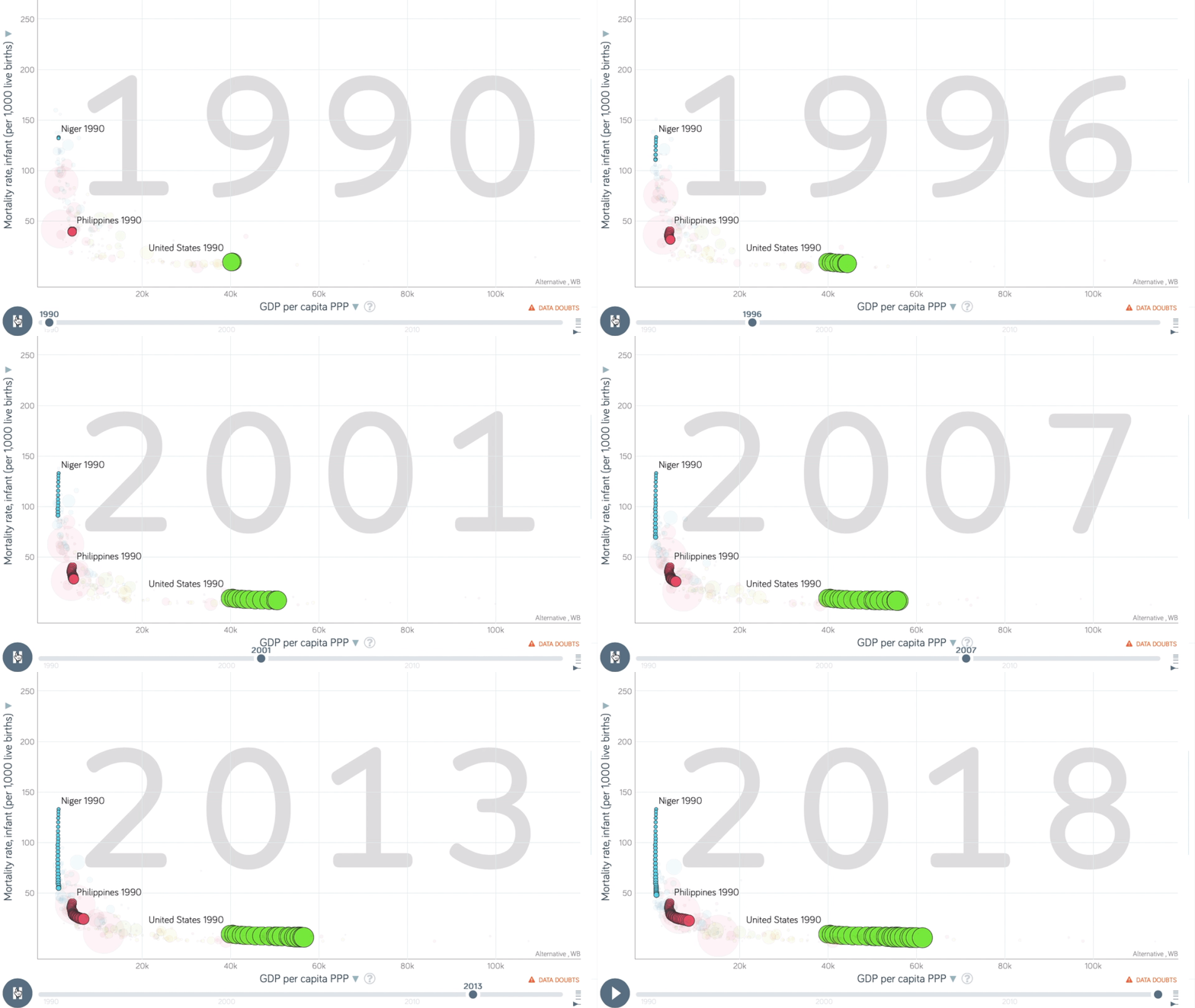
Capitalism, neoliberalism, and economic globalization

What are the major strengths and weaknesses of capitalism?
Capitalism is viewed as an economic system in which private individuals own and control property in compliance with their interests, and demand and supply openly determine market rates in such a way as to meet the best interests of society.
Many of the most advanced economies in the world are capitalist at their core. There are clearly many advantages to capitalism as modern capitalism can be traced back to the 17th century.
Here, we will focus on the main advantages of capitalism. The advantages of capitalism includes:
Pros:
- Consumer choice

Individuals are free to choose what to consume which leads to higher levels of innovation. This is because the typical individual will buy the best item that they can afford. To produce the best possible goods or services, it is through the availability of choice that competition is developing in the private sector.
- Efficiency

In a capitalist based society, firms undergo incentives to be efficient and produce goods that are in demand. It enables a company to reduce costs because they know what is needed, with a specific quality and inventory in mind. Such opportunities build incentives to reduce expenses and avoid waste. However, other state-owned firms often appear to be inefficient.
Example: They are less motivated to get rid of surplus employees and less incentive to seek out more innovative workplace methods.
- Innovation

Capitalism has a system where businessmen and companies are competing to build and produce profitable products. Competition forces companies to think about the future and innovate. Therefore, they will invest in innovative goods that could be popular with consumers and will not be inefficient. This can lead to product development and greater choice of goods.
- Economic growth

With firms and individuals having incentives to be innovative and to work hard, this generates an environment of innovation and economic growth. It aims to raise actual GDP and boost living standards. Private firms can make more efficient use of economic resources than the public sector, which means that profits can go back to the system to help everyone through each cycle. This increased income allows a greater quality of living; in principle, everyone can benefit from this increased wealth.
- No better alternatives

Winston Churchill, a British statesman, mentioned that democracy is the worst form of government except for all the others that have been tried. This statement could also apply to capitalism. Basically, when governments attempt to control the economy. We end up with problems such as: corruption, lack of incentives, and poor information.
HOWEVER…..
Capitalism has also numerous issues that are opposed by socialists and other objectively-minded economists. As the rich grow richer and the poor become poorer, the inequalities and unfavorable consequences created by capitalism became more noticeable during the Industrial Revolution.
Here, we will focus on the main disadvantages of capitalism. The disadvantages of capitalism includes:
Cons:
- Social benefits are ignored
A free market will ignore externalities because true capitalism does not take into account age, wisdom, experience, or health. This leads to an inefficient allocation of resources. This is because even supporters of capitalism admit that government provision of certain public good and public services are essential to maximize the potential of a capitalist society. In order to remain active in the economy, it expects people to stay competitive. If you do not have any contribution that is in demand, then there is theoretically no place for you to exist.
Get Paula Pineda’s stories in your inbox
Join Medium for free to get updates from this writer.
Capitalist economies will take this advantage to the extreme, providing fewer goods with positive externalities. This means that less emphasis would be placed on education, public transport, infrastructure and healthcare needs. Every organization and worker would always be above anyone else looking for themselves.
- Propaganda

Capitalism is everywhere. There will always be someone telling you to buy something, especially on every billboard and TV programs. If this is done by governments in dictatorships, it is called propaganda. But when companies do it, it is called advertising. These two are both forms of brainwashing.
- Inequality

One of the founding principles of capitalism is that it gives every individual the right to pass on their wealth to the next generation. In order to make money, first you have to take it from someone else. This can be done through selling things or any other ways. However, this also means that the rich cannot exist without the poor. It causes the rich to get richer, while the poor to get poorer. It allows money to possess as much influence as innovation, leadership, or oversight. If you have enough, you can buy whatever you need to maintain your power. There is never going to be equality under capitalism any way you look at it.
- Starvation

If some individuals are privileged enough to have an abundance of resources in society, there are others that do not have enough. In Third World countries, many people are starving because they cannot afford to feed themselves, while many in Western countries are fattening themselves with surplus food and wasting the majority of it. There is enough food in the world to sustain the entire population of the world.
- Undemocratic

In a democracy, every citizen has a single vote. But in a capitalist society, they only have a little say from the actions of the government since greater forces on government than ideology or public opinion are the wealthy. Governments will listen to big business and banks as they are funding their election campaigns. They will listen to major newspaper barons since they know how to control and influence public opinion.
To what extent are neoliberalism and economic globalization linked?
Neoliberalism is the embodiment of an outdated, selfish economic model. It was conceived by the ancient imperial powers and embraced by economically powerful countries. Rich countries may preserve their economic advantage given the state of global trade and finance systems by pressuring developing countries to follow neo-liberal policies even if they do not do so themselves. Understandably, that process has been identified by many critics as economic colonialism.
The main goal of neoliberal economic globalization is to eliminate all barriers to trade, and to privatize all available resources and services. In this situation, public life in this scenario will be at the mercy of volatile market forces and the few will benefit from the profits extracted. The main failures of these policies are now common knowledge. Many countries are now openly defying the foreign corporate rule that the international financial institutions had forced upon them. Such countries are slowly replacing economic ideologies based on competitiveness and self-interest with policies based on cooperation and resource sharing.
It is a difficult challenge to change well-established political and economic structures. However the pressure for justice is bubbling up from the public. Indeed, change is crucial if the global public is to manage the necessities of life and ensure that all people have access to them as their human rights.
What are the chief drivers of economic globalization?
The media and almost every book on globalization and international business are speaking about different drivers of globalization which can be categorized into five separate groups:
a. Technological drivers
During the last decades, costs of transportation and of communication decreased strongly. Technology has influenced and formed the foundations for modern globalization. Innovations in transportation technology have revolutionized the industry. In the late 1970s and 1980s, the most important advances were commercial jet aircraft and the principle of containerisation. In the field of microprocessors and telecommunications, inventions have enabled high-efficiency computing and low-cost communication. The internet’s rapid growth is the new technological driver of global e-business and e-commerce development.
b. Political drivers
There is no political or structural void underlying economic processes. Political decisions are conclusive factors in the way society deals with the impacts of globalization, particularly how society wants to address the effects of globalization on the market.
Political decisions are to reduce or even eliminate barriers to the trade in goods , services, labor and capital. Whether or not economically driven cross-border activities actually take place at the end of the day depends on the policy frameworks in place. It is this framework that determines whether cross-border practices are facilitated, made harder or even totally prohibited.
c. Market drivers
Opportunities for growth are restricted as domestic markets become more and more competitive. Most companies address this issue in global expansion. The steady convergence of consumer expectations is one aspect of globalisation. When consumers are increasingly seeking similar goods and services in different parts of the world, opportunities for scale emerge through the promotion of more or less standardized deals. How consumer needs, tastes, and preferences differ significantly from product to product and depend on factors such as the significance of cultural variables, the disposable income, and the degree of homogeneity of the circumstances in which the product is consumed or used. This refers both to consumers and to manufacturing goods and services.Common consumer needs and the opportunity to use global marketing platforms and to some extent transfer marketing are also incentives to select internationalization.
d. Cost drivers
The globalization of consumer demands and the scale and standardization incentives that it brings will fundamentally alter the economies of many sectors. Scale and scope economies, experience effects and the utilization of differences in factor costs for product growth, manufacturing and sourcing in different parts of the world will assume greater significance as determinants of global strate. Sourcing productivity and costs vary from country to country and this reality may benefit global firms. Nowadays, many cost drivers to globalization are the
e. Competitive drivers
Industry characteristics also affect an industry’s globalization potential. For instance, the export or import volume of total industrial sales, the diversity of competitors in terms of their national origin, the degree to which total industry sales globalized their operations and generated interdependence between their business strategies in different parts of the world. When the industry’s underlying characteristics change, competitors will respond to improve their competitive edge and retain it. Global intercompany competition is growing with the global market and companies are forced to “play” globally. This driver is also supported by strong interdependencies among countries and high-level two-way trades and FDI actions.
References:
23 Advantages and Disadvantages of Capitalism. (2019, August 05). Retrieved August 01, 2020, from https://futureofworking.com/6-advantages-and-disadvantages-of-capitalism/
Industry Globalization Drivers. (n.d.). Retrieved August 01, 2020, from https://2012books.lardbucket.org/books/global-strategy/s04-04-industry-globalization-drivers.html
Neoliberalism and economic globalization. (n.d.). Retrieved August 01, 2020, from https://www.sharing.org/information-centre/articles/neoliberalism-and-economic-globalization
Petersen, T. (2020, March 18). What are the Drivers Behind Economic Globalization? — GED-Project. Retrieved August 01, 2020, from https://ged-project.de/globalization/what-are-the-drivers-behind-economic-globalization/