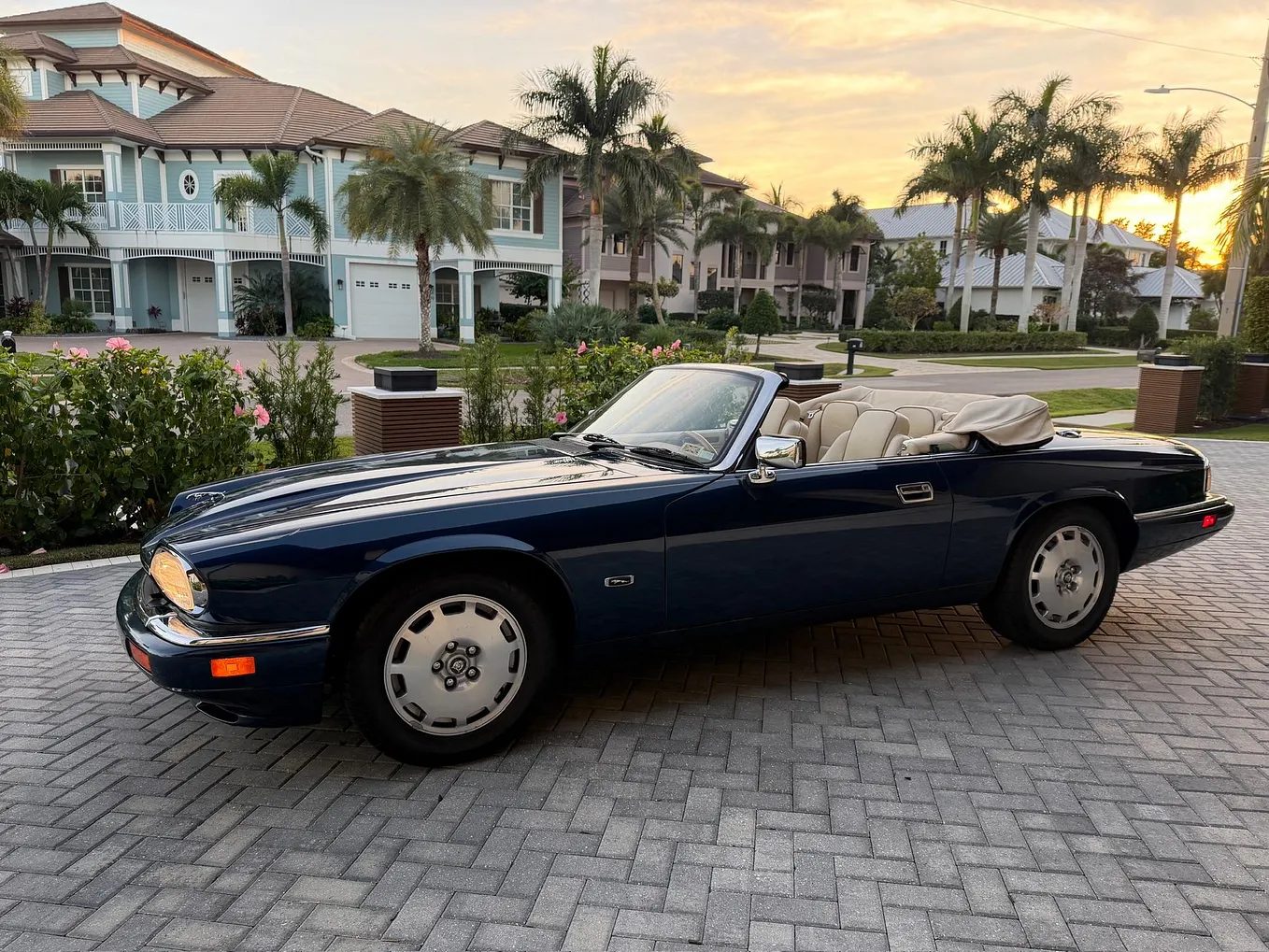
Auto seduction: the GT
It’s the ultimate ride for two.

Most people buy cars because they need them — they’re practical, utilitarian tools for accomplishing necessary everyday tasks. At the same time, though, almost no one buys a car with no regard for anything but practicality. Even the most casual buyer who can possibly afford it will choose something they like the looks of reasonably well, and something of which they can say, “I like how it drives,” vague as that may be. And something that feels and looks good inside. Subjective aesthetic considerations do tend to factor into the car purchases of the average shopper of modest or better means. (Those living in poverty, of course, have a different and far more restrictive reality to cope with.)
So, for most people, a car is a mix of practical and aesthetic, of utilitarian and recreational. Where each car owner is on the spectrum will of course vary for each owner. Some drivers, though, have the luxury of owning a car that is farther over on the aesthetic and recreational side of the spectrum than the practical and utilitarian side — and those drivers have the interest necessary to invest resources in such a machine.
What is a GT car? The classic Gran Turismo recipe
Such a machine is the GT — or the Gran Turismo in Italian, which is where the abbreviation comes from. Gran Turismo means “grand touring.” The GT is a touring car, which differs from both a pure sports car and a pure luxury car in that it combines attributes of both to produce a vehicle ideal for two people for longer road trips. The word “ideal” suggests a lack of compromise, and that is indeed what the GT strives for — a lack of compromise with the imperatives of everyday practicality. Every sort of vehicle, however, whether it’s a car or a plane or a boat, is a collection of compromises. The GT is no exception; but its particular set of compromises, if fully realized, is what makes it special and desirable.
A proper GT car is fast, like a sports car — in fact, faster than many pure sports cars, which can be intended more for spry handling for shorter distances than outright speed. But, while it may not have the handling prowess of the pure sports car at the limits of safety on a twisty mountain road, a good GT will handle second-best. A GT is not a family hauler; it’s better suited for a couple making a romantic getaway to the country — or along the Riviera — with a soft leather duffel tossed in the generally-minuscule back seat (if it even has a back seat). Without the imperative to accommodate four adults and their luggage, the GT can be smaller than a family sedan — and usually is, which helps it both handle well and get up to speed — though GTs are usually larger than pure sports cars. They’re usually convertibles for that open-air experience or, if not, coupes — from the French verb couper — “to cut” — as the style is more compact and usually lower to the ground than a sedan.
Performance Without Punishment: Grand Touring vs. Pure Sports Cars
Where the GT beats the pure sports car, even if it isn’t faster, is in comfort. Intended for maximum driving pleasure over distance, the type has to provide a luxurious as well as stimulating driving experience. It can’t be boring, but it can’t be harsh either. A pure sports car can get away with a stiff ride and a noisy cabin in the name of pure short-term fun. A GT cannot. Since it is not intended to equal the razor-sharp handling of the pure sports car, its suspension can be tuned more toward a comfortable ride — though here we tend to find sophisticated — and expensive — do-it-all suspension set-ups that offer a satisfying mix of handling and ride comfort. That is becoming more and more common in everyday cars now, as cars in general are just excellent, but it was once the much more exclusive province of the GT. And a great GT doesn’t need the computer-controlled electronic adjustable damper systems of today’s cars to dial in that perfect balance of comfort and confidence. It left the factory that way.
At the same time, however, an obsession with at-the limits performance on a test track — primarily for marketing purposes — has given us a lot of expensive, beautiful cars that would have made wonderful GTs but for their suspension, steering, and wheel set-ups tuned so far toward the performance end that the ride quality and comfort so essential to the GT’s mission were lost in the mix. The true, well-executed GT has become a rare beast.
Inside the Grand Tourer: Sumptuous Cabins and Engine Symphonies
The cabin of the true GT needs to be somewhere between elegant and sumptuous, with no compromises on materials quality, fit and finish, beauty, and noise isolation — with one exception, and this is where the GT differs from the pure luxury car: a GT owner wants to hear the engine, because the engine in a GT is traditionally the centerpiece of the car. Without the imperative to handle like a Lotus Elise or some other track weapon, GTs can carry big V8s or V12s up front that sound absolutely glorious and propel the car down the highway effortlessly but not entirely unobtrusively; a GT driver wants to hear the burble or snarl of the engine when the pedal goes down — not to the extent that it’s obnoxious or fatiguing, and the GT’s engine needs to purr in the background when the occupants want to relax, but it needs to get the blood stirring powering out of a turn or picking up speed on the straights. Again — it can be subtle. But it has to be there, and it can’t be faked (piped-in through the speakers).
Get Philllip Frank Reid’s stories in your inbox
Join Medium for free to get updates from this writer.
Now, we have viable pure electric powerplants that can deliver almost all of the classic GT experience — all except for that sound. So, again, the classic GT formula is now a rare beast and will only get more so.

Achingly Beautiful: Why Design and Style Speak to the Soul
There is one last essential ingredient of a proper GT, and it’s the one you most notice when you get to that seaside resort or mountain hideaway or perfect picnic spot with your right-seat occupant of choice (or left seat, depending on where in the world you drive) — looks. Style. The body and the cabin. What you look over when you get out and shut the door and start to walk away. What people you’ve never met wave and nod at. What you go out to the driveway and sit in for a few minutes even if you’re not going anywhere. A proper GT must be a beautiful car — preferably, achingly so. It should be designed and finished to inspire lust and joy. The best designs cost more to execute; it’s expensive to put complex curves in sheet metal while achieving aerodynamic targets and satisfying safety regulations. Add in the materials and creature comforts of a first-class cabin, the power of a performance engine, and the chassis and suspension necessary for an engaging yet luxurious ride, and you have a package that, new, will cost considerably more than most of the vehicles that do better on the Costco run.

But for perfect road trips with someone you love, why not a car you love, too? If you can swing it, of course, and even those of us fortunate enough to have the means may not have room for such a special indulgence. But if you do, there are still some great roads out there. Here in the U.S., they all have pretty modest speed limits on them, so no need to go crazy on the power. And, along those roads, there’s a lot to see, a lot to do, and just basically a lot of cool places to park a beautiful car while you kick back.
Reserved For Your Soul
And for that, the GT is the way to do it. We make so many concessions to practicality, because we have to — and we benefit from those concessions. Today’s cars try to be all things to all people all the time, and to a remarkable extent, the best of them largely succeed. But the GT reminds us that, however useful it may be, a Swiss Army Knife can never be a katana. The compact crossover offers everday utility. The GT speaks to the soul. It ropes off a little part of the owner’s life and says Practical and Sensible Not Admitted. It’s a safe way to rebel a bit against the imperatives of quotidian life. And the soul needs that. We need sex, and fun, and pointless walks on beautiful days, and chocolate cake, and harmless escape. The GT is all of that on wheels.
And maybe the best part? They don’t have to be expensive. The most desirable classic-recipe GTs are 20+ years old. But a lot of them have been loved and pampered all their lives; find one of those, and you’ve found something special for not much money as cars go. Especially now, with the average price of an average new car in the U.S. around $50,000.
I got my dreamy GT a year ago. I paid $21,000 for her in excellent condition — like new, to anyone but a car show judge. I put about $8,000 into her for stuff she needed; she’s 21 years old. She stickered new for $80,895, which today would be around $130,000. She had 49,000 miles when I bought her; she now has about 54,500.

I always look forward to my next drive, but every time I take her for a real drive — which is what I always try to do when I take her out — I fall in love with how it feels all over again, because I never remember quite how good it is — even if it’s only been a few days. She’s perfect for a twenty-minute decompress just out of town, or for an all-day road trip. That’s a GT.
Jaguar and the GT
There is one automaker who has consistently nailed the GT recipe, from the 1970s to the 2010s — Jaguar.
Every ingredient is there. From the XJ-S (1975–96), to the XK8 (which I own — 1996–2006), XKR (supercharged, 1998–2006), and the XK/XKR second-gen (2007–2014). A Jaguar GT offers a modern car with a strong “classic” vibe. Beautiful GTs don’t go out of style. They don’t look dated. They look lovely, no matter what age they are. A world-class GT is something you can keep indefinitely, even pass on, and it will still turn heads way, way down the road. Including yours.
Treat yourself.