Would I buy it again?

How owning — and letting go of — a great sports car taught me something more important than you might think
I owned an ’06 AP2 S2000 in New Formula Red from April 2015 to April 2021. I bought it with 60,060 miles on it and sold it with 80,600 miles, for $22,250. They’ve only gotten more expensive since then.

I bought it from the local Chevrolet dealer, assuming someone had traded it for a Corvette. It had a clean CARFAX and VIN check but no physical service records.
CARFAX and other vehicle-history services are important but by no means foolproof. Not everything is reported to them.
VIN checks are essential — more than one. They’re easy to do.
Service records are extremely valuable, but almost never available from a dealer, unless that dealer serviced the car.
Regardless of what records and information you can access, a pre-purchase inspection by a disinterested shop is a must. (I go into all this nuts-and-bolts stuff in “How Not To Buy Your Attainable Dreamboat.”)
I had it PPI’d at my Honda dealership with whom I had a longstanding positive service relationship. It was that PPI that told me whether to buy it or not — and whether the price was appropriate for the condition.

Honda S2000 true ownership costs
The car was not exactly cheap to own. It cost me $10,226.93 over 71 months. I had no regrets, but my wife and I, who’d long owned Hondas, began using “it’s a Honda — what could go wrong?” as a joke. I think it’s important to realize that, regardless of marque or quality of design and build, high-strung sports cars with any age on them are likely to cost more to own than “regular” cars.
Convertibles are also likely to be costlier, so I’d make sure you really wanted a convertible before buying one over a coupe. I had to put a new soft top on my car right away for $1,905.43. (I did it right — acrylic top installed by a very good shop and those shops don’t give away their labor.) The initial to-do list at the Honda dealer was $737.37, which was perfectly reasonable. There was a big dried-out area of the passenger seat bottom leather where someone had sat in it with a wet butt and didn’t dry it properly. Replacing that leather was $448.75. But that was a weird one.
The drive-by-wire AP2 valve guide issue
The big shock was the next summer, when a Check Engine light ultimately revealed excessive wear in the exhaust valve guides resulting in loss of compression. An independent specialist took the head off and replaced all the valve guides with upgraded ones, and while in there, upgraded the timing chain tensioner, the valve springs and retainers (but not with excessively stiff springs), cleaned everything up and re-installed the head. All-in, $2,710.87. Turns out, problems with the exhaust valves due to incorrect valve clearance settings were popping up more and more on the drive-by-wire AP2s (2006–2009).That was unfortunate timing for me; everyone considering one now who does their homework will know all about it.
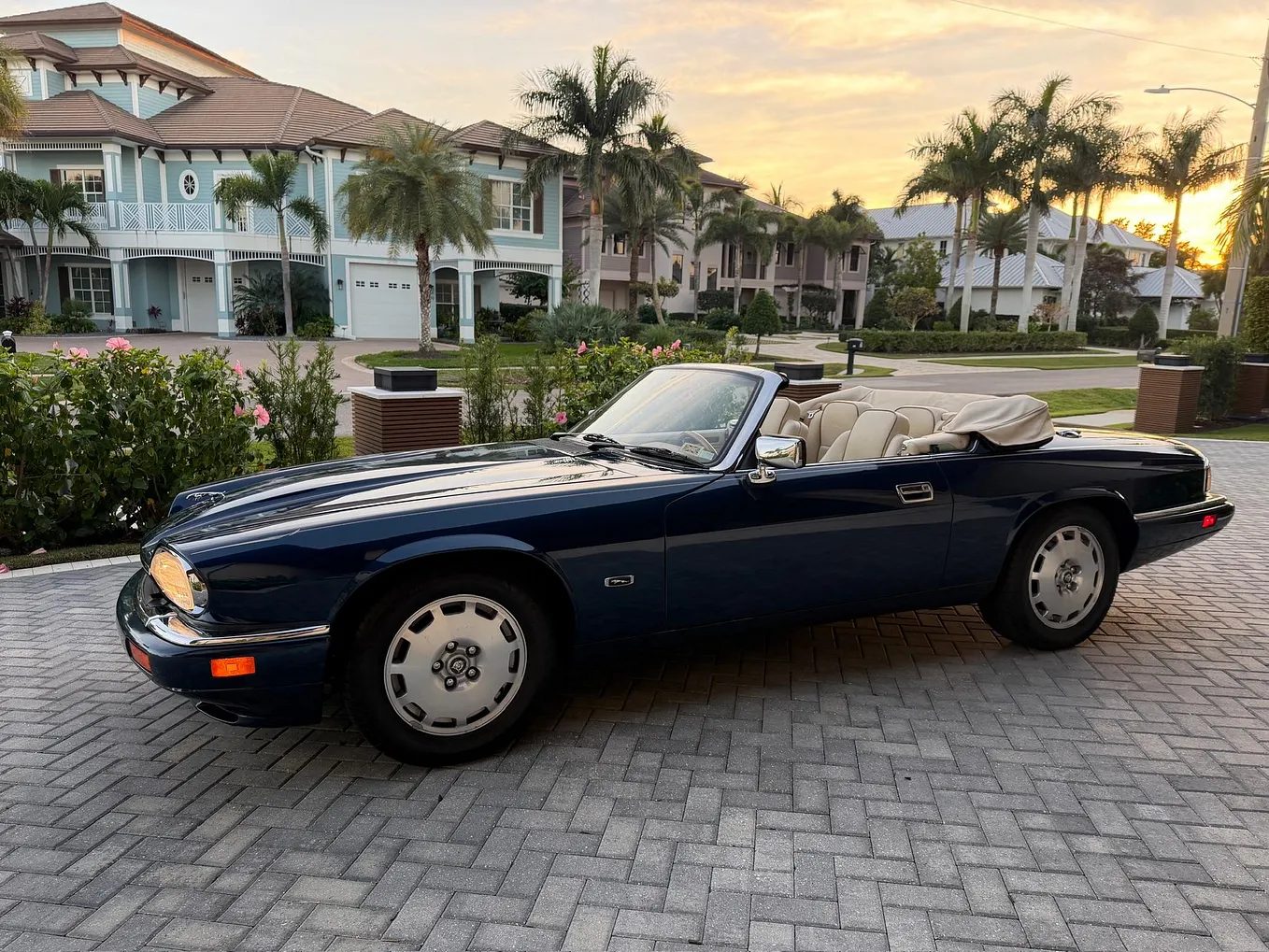
The only other big expenses during six years of ownership were a new set of Michelin Pilot Sport tires, and a new driver’s airbag module, which cost $1,285.97. But random and expensive failures of electronic components like that can happen on any modern car with any age. Some of them can be rebuilt for far less than replacement cost; it cost me $100.00 to have a seat control module on my Jaguar XK8 rebuilt last year. But airbag stuff is tightly regulated and options are more limited.
The rest was maintenance rather than repair of unexpected failures.
My only real disappointment with the car was that it had a tendency to randomly pop out of 2nd gear on deceleration. I “solved” this by using Amsoil MTF transmission fluid; there was nothing the shop could find wrong with the gearbox. No metal in the fluid. Earlier S2000s had presented with this issue (though not necessarily on 2nd gear); there was a TSB on it and there were some frustrated owners out there. Given that the 6-speed manual on the S2000 is widely touted as the best in the world, this sucked. Because it was all that, for sure. Even though I found a workable and inexpensive solution, I still always drove hoping it wouldn’t do it. I had to change the MTF once a year to keep it at bay.

The car was gorgeous and, for a driver’s car, nearly cosmetically perfect. I slightly curbed one wheel once and promptly had it repaired. Previous owners had had both bumper covers re-sprayed, but that’s not uncommon with these, as they collect rock chips with gusto, and, if the rear bumper cover had been slightly damaged (pushed in) in a parking lot or something, leaving no evidence of damage underneath, I didn’t care. I’d had that happen to me twice on another vehicle.
Get Philllip Frank Reid’s stories in your inbox
Join Medium for free to get updates from this writer.
So. Why did I sell it? For a lot of people, the answer would be “because I’d had it for six years.” But we keep cars. I sold it for two primary reasons. First, my wife had just gotten a new job that would require some commuting, and neither of us wanted her to use the S2000 for that. She had turned in her 2012 Acura TSX, which she loved, and we bought the S2000 with the money we could have used to get her another Acura, so I thought it was time she got to have another one. And I knew the value of the car was high enough to make that happen easily. Second, I’d come to realize that the car really didn’t match the reality of my normal driving environment enough for me to take full advantage of what it could do, and that meant the compromises inherent in its capabilities were emphasized relative to the car’s impressive strengths. I live on the coast, with flat roads and few curves. The curves we have are a piece of cake for a car like that. The only way to really get a sense of what it can do around here is on a cloverleaf. For one minute.
Meanwhile, it’s pretty loud, and it’s pretty stiff. Not at all ridiculous with either noise or ride, but not exactly luxurious either. And, as noted, it was not an inexpensive car to own.
I was starting to think more and more about a GT. (See “Auto seduction: the GT” in this series.)
As a third reason — a distant third — I wouldn’t have to worry about the gearbox anymore. That never sat quite right with me. Now, I would just have the attitude of, I’ll have it rebuilt if I need to. But then, it intimidated me.
I was sad to see the car load up on the carrier, but I say, if you’re not sad to see an awesome car go, you probably kept it too long. (Same applies to other things.)

But do I miss it?
No. I still love looking at pictures of it and remembering the great drives we had in it. I loved learning all about it and that includes learning how to get through a serious issue like the valve/head thing without going crazy (though I wish I’d had my anxiety under control back then as I do now, but I wish that for a lot of reasons). Of course it made me a better driver. It would make anyone a better driver. And it would make anyone appreciate driving more.
Sports car vs grand-tourer
But I was right to move on from a “pure” sports car like that to a GT.
So, would I ever buy another one?
Not unless I lived in the mountains, or at least had a second home there, and I currently have no intention of making either of those things happen. If I drove in the mountains a lot, I would want a car like the S2000. Or a Boxster. Or a Miata. I didn’t think I’d be able to appreciate my sister’s NC Miata after owning an S2000 for a while, but I was wrong. They really are as good as people say they are, and perfect for enjoying a sports roadster under “normal” driving conditions.
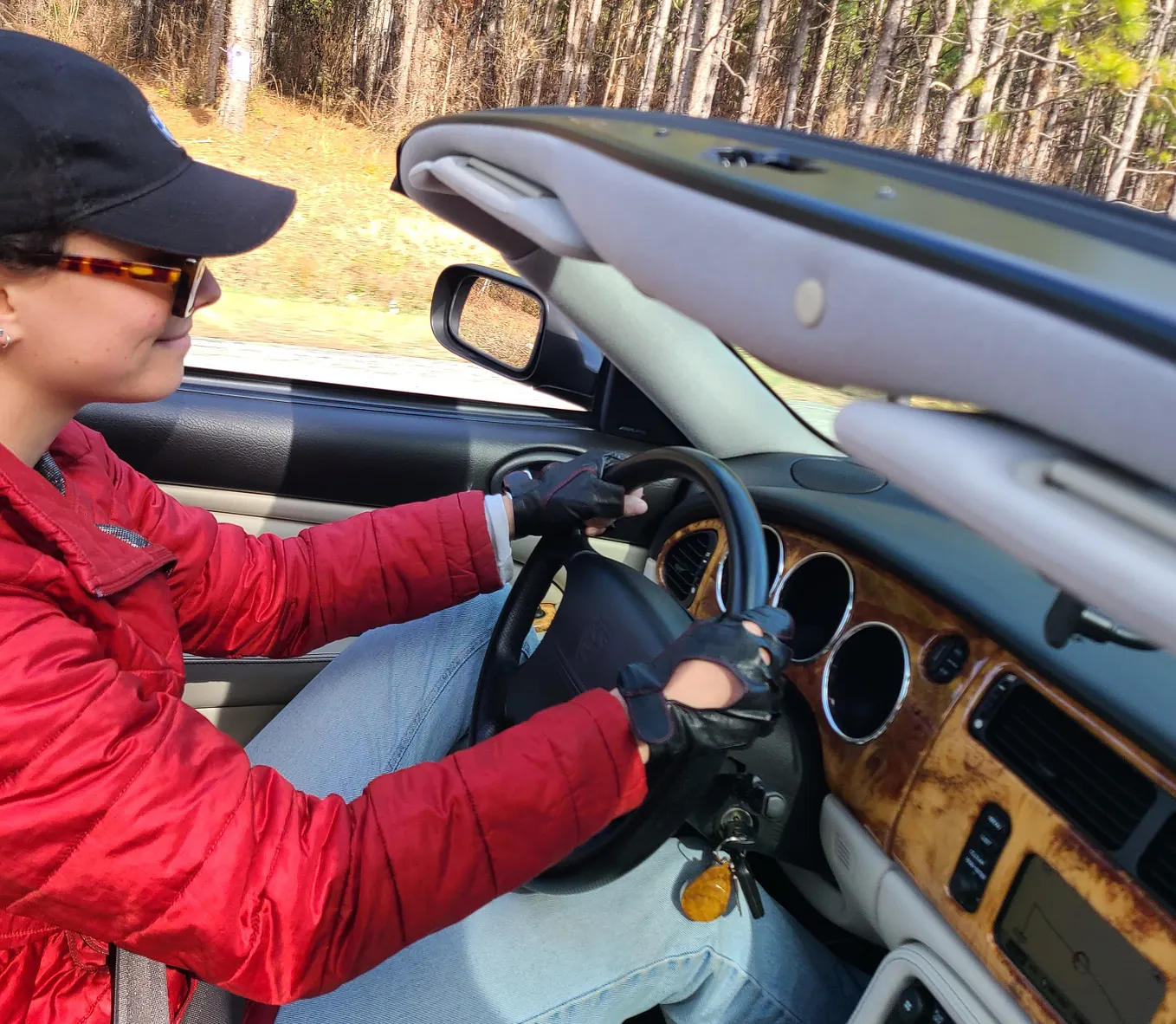
But I’ve driven my Jaguar XK8 Convertible in the mountains, and it was lovely. My S2000 once led a sport bike down Mt. Mitchell, taking curves fast enough that the bike’s crash guards were throwing sparks from hitting the asphalt. That was fun. So was Tail of the Dragon.


But it feels like a “been there, done that” sort of thing. The XK8 won’t do that, and that’s fine. I wouldn’t take it to Tail of the Dragon, and that’s fine. What the Jaguar will do is handle the mountain curves just fine, at safe speeds, held in 2nd and 3rd by the “J-gate” shifter. And it’s also quiet — almost luxury-sedan quiet with the top up — rides with a perfect balance of comfort and poise, and the V8 engine/exhaust notes are so nice.

Loving the S2000 and still being fine letting it go and (eventually) getting something different helped teach me something I really needed to learn: that change is ok. That you don’t know, at any given time, what you’re going to want for the rest of your life, and that’s ok. And acknowledging that, openly, is liberating. It really helps to enjoy the present. Growing up, I was firmly convinced that the good life was about figuring out what you wanted, getting all that, and then holding on to it for life. There is no room for change in that, and change is at the core of reality. So, the S2000 experience, it’s fair to say, taught me something important about reality. When I was young, if I’d read the sentence I just wrote, I’d immediately assume that it was about disappointment — about how, once again, reality was there to piss all over your dreams, to disillusion and jade you and make life at least a little shittier if not a lot shittier. But, I had a lot to learn. And being lucky enough to own that car — and let it go — helped me do that.