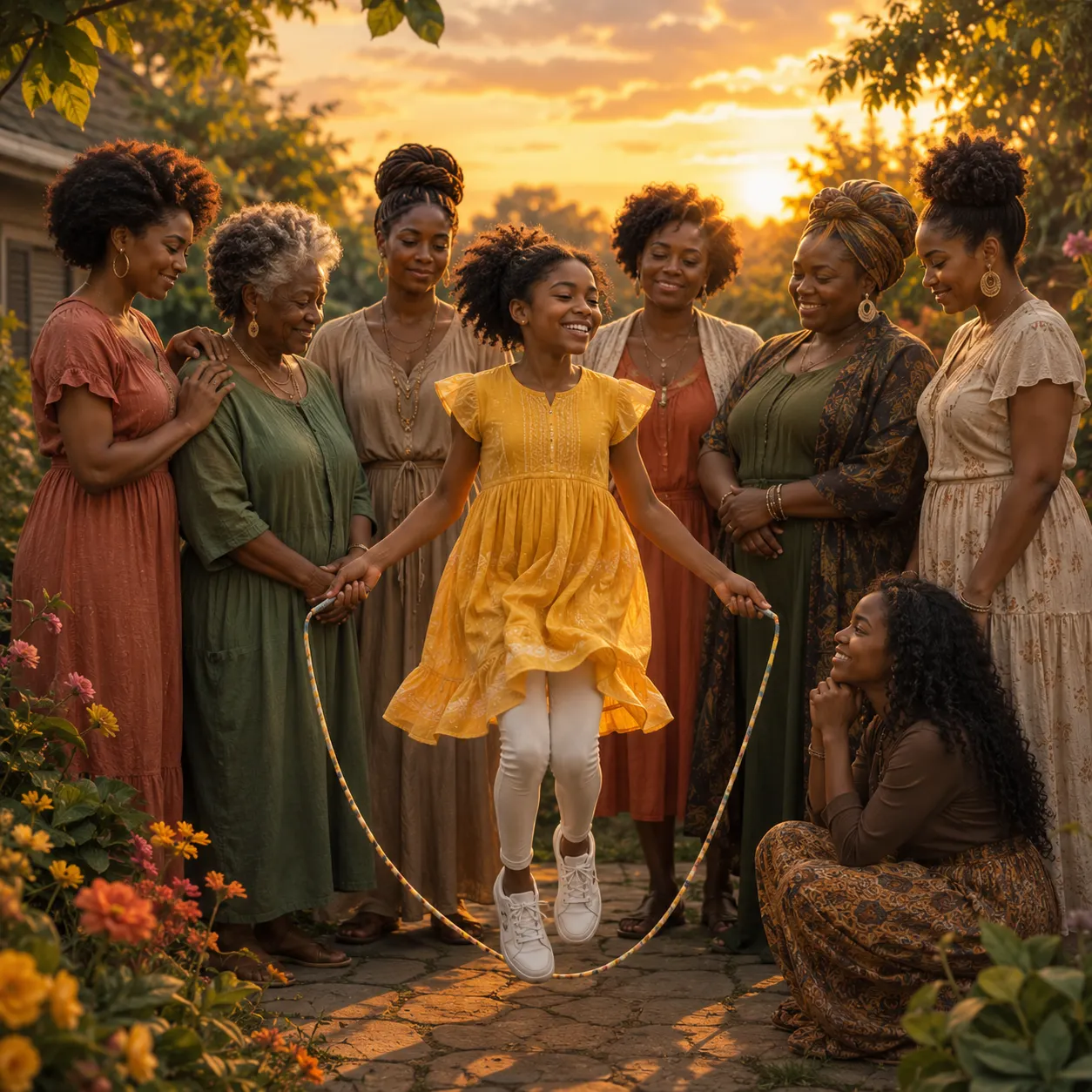
When My Daughter Read A Doll’s House
A reflection on literature, motherhood, and generational expectations.

One afternoon I walked into my daughter’s room while she was in the middle of her college English class. The course was being taught virtually, and from where I stood in the doorway I could hear students discussing a woman who had walked out of her own life. I didn’t yet realize that the conversation I was overhearing would become a quiet meditation on the expectations placed on women across generations.
The class was talking about A Doll’s House.
My daughter was listening carefully, occasionally adding a comment of her own. When the class ended, she continued talking about the discussion, describing Nora’s decision with the thoughtful curiosity of a young adult trying to understand a complicated character.
At one point she said, almost matter-of-factly, “Why wouldn’t she leave?”
She explained that she understood Nora’s desire to find out who she really was — or who she might have been if she had not spent her life living within someone else’s expectations.
But like me, she could not fully reconcile Nora leaving her children.
That tension stayed with both of us long after the conversation ended.
I listened in silence, more moved by my daughter’s easy acceptance of Nora’s journey than by the performance itself.
For generations of women, Nora’s departure was not obvious at all. It was scandalous. Dangerous. Even unthinkable.
When A Doll’s House premiered in 1879, audiences across Europe were outraged. Some theaters even demanded that the ending be rewritten so Nora would stay. The idea that a woman might walk away from the carefully constructed role of dutiful wife and mother in order to discover herself threatened the social order that many believed held families — and society itself — together.
Standing in my daughter’s doorway, I realized that the world she was inheriting was not quite the same one that raised me.
My daughter was analyzing Nora’s decision as literature. I was hearing something else entirely: the echo of generations of women who had quietly accepted lives shaped by expectation rather than freedom.
Growing up in the South, I learned early that womanhood came with a set of unwritten instructions. Those lessons were not taught in classrooms but passed down quietly in kitchens, church pews, and family conversations.
You were expected to be strong.
You were expected to endure.
And above all, you were expected to hold the family together, no matter what parts of yourself had to be folded away in the process.
Get Deborah D. Jenkins, DMin.’s stories in your inbox
Join Medium for free to get updates from this writer.
Strength, in the communities I knew, was both a virtue and a burden.
Black women in particular have long been praised for our resilience. We are celebrated as the ones who carry families, communities, and sometimes entire movements on our backs. But the praise often hides a quieter truth: that strength has frequently meant learning how to survive circumstances that should never have been ours to bear.
For generations, Black women have often had far less room than Nora to walk away from anything. Survival itself demanded that we stay, endure, and build lives within constraints that left little space for personal discovery.
Listening to my daughter wrestle with Nora’s decision, I wondered what it means for a new generation of young women to encounter that story from a different starting point.
For my daughter, the question was not whether Nora had the right to seek herself. In many ways she understood that instinct immediately. Her struggle was with the cost of Nora’s freedom — particularly the children left behind.
That difference in perspective says something profound about the slow, uneven progress of social change.
Each generation inherits the moral struggles of the one before it, but not always in the same form. What once seemed radical can, over time, begin to feel almost self-evident.
My daughter may never fully understand the world that made Nora’s choice so controversial. In many ways, that is a sign that something in the world has shifted, however imperfectly.
Yet even now, the story of women’s autonomy remains unfinished.
Around the world — and often much closer to home than we would like to admit — women still face pressures to define themselves primarily through the expectations of others. Cultural traditions, economic realities, and political debates continue to shape the boundaries of women’s freedom.
The door Nora closed in Ibsen’s play has never been merely symbolic. It represents the ongoing question of whether women are allowed to define the terms of their own lives.
When my daughter talks about Nora leaving, she does not hear the scandal that shocked nineteenth-century audiences. She hears a woman trying to discover who she truly is.
And perhaps that is the quiet gift of generational change.
My daughter reads the story as literature. I hear it as history.
She sees a character stepping into her independence. I see the long shadow of the women who came before her — women who endured expectations they could not easily escape, and whose lives made it possible for her to imagine something different.
In that sense, Nora’s door has never fully stopped echoing.
It continues to open, generation by generation, whenever a young woman begins to believe that her life belongs to her.
Author Bio
Deborah Jenkins is Co-Chair of the New York State Community Commission on Reparations Remedies (NYSCCRR), a minister, educator, and writer whose work explores economic justice, generational experience, and the historical dimensions of inequality.