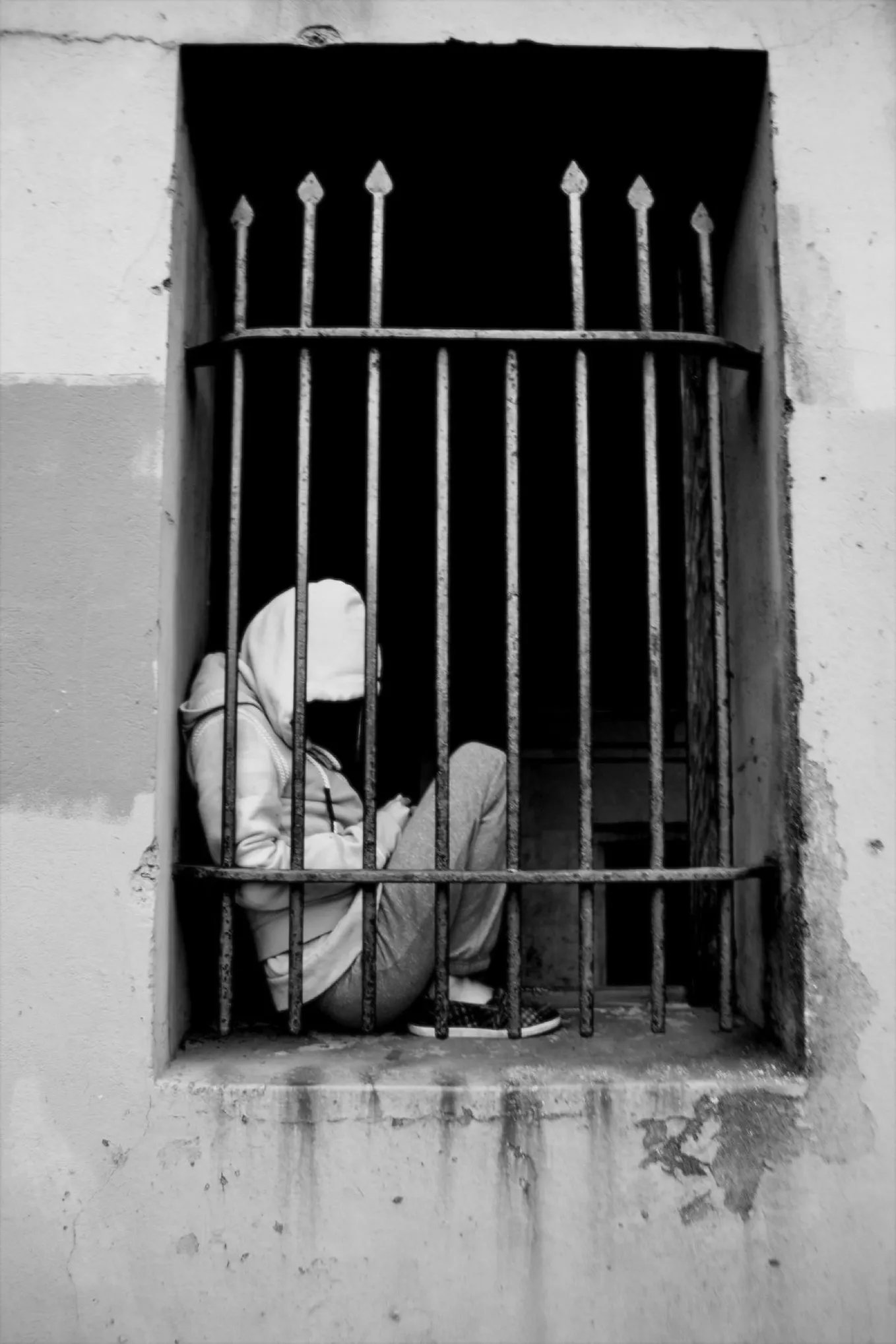
The Psychological Effects of Solitary Confinement
What Happens When the Only Voice You Hear Is Your Own?
Picture this.
You wake up in a room roughly the size of a parking space. The walls are bare. The silence is almost loud enough to hear. There is no morning conversation, no text message waiting on your phone, no familiar face to greet you. Hours pass. Then days. Then weeks.
You begin talking to yourself — not because you’re losing your mind, but because hearing a human voice, even your own, becomes a source of comfort.
For many of us, this scenario sounds unimaginable. We live in a world saturated with connection. We complain about notifications, endless group chats, and crowded schedules, yet few of us ever experience complete social isolation. Human interaction is so woven into our daily lives that we rarely stop to consider what happens when it is taken away.
For thousands of incarcerated individuals, however, this thought experiment is not hypothetical. It is the reality of solitary confinement.
Typically defined as the practice of confining an individual to a cell for 22 to 24 hours a day with little to no meaningful human interaction, solitary confinement has long been used as a disciplinary and security measure within correctional institutions. While supporters argue that it helps maintain order and safety, critics question whether the psychological cost is far too great.
At the center of this debate lies a question that extends beyond prison walls: What happens to the human mind when it is deprived of connection?
The Science of Isolation
The idea that human beings require social connection is not merely philosophical — it is supported by decades of psychological research.
For years, researchers have studied the effects of prolonged isolation on the human brain and found a consistent pattern: when people are deprived of meaningful social interaction, their mental and emotional health often deteriorates.
Psychologist Craig Haney, one of the foremost scholars on solitary confinement, has documented symptoms ranging from anxiety and depression to cognitive impairment, paranoia, and hallucinations. Individuals subjected to extended periods of isolation frequently report difficulty concentrating, heightened sensitivity to sounds, emotional instability, and distorted perceptions of time.
What makes these findings particularly alarming is that many of these symptoms emerge even among individuals with no prior history of mental illness.
The consequences extend beyond psychology and into neuroscience. Studies suggest that social rejection and prolonged isolation activate some of the same neural pathways associated with physical pain. In other words, loneliness is not simply a feeling — it can be experienced by the brain as a form of suffering.
Consider your own life for a moment. Think about how often you engage with family, friends, coworkers, or even strangers throughout the day. Most of these interactions seem insignificant. Yet they serve an important purpose: they continuously reinforce our connection to reality, identity, and community.
When those interactions disappear, the mind begins searching for ways to compensate. Sometimes it succeeds. Sometimes it struggles.
Get Priscilla A.’s stories in your inbox
Join Medium for free to get updates from this writer.
And sometimes it begins to break.
When Punishment Becomes Psychological Harm
Supporters of solitary confinement often argue that it serves a practical purpose. Correctional institutions may use it to separate violent offenders, protect vulnerable inmates, or maintain order within prison facilities.
However, an important question remains: At what point does punishment become psychological harm?
This question has fueled decades of debate among legal scholars, psychologists, and human rights advocates. Critics argue that prolonged isolation does more than restrict movement — it creates conditions that can significantly damage mental health.
Individuals who enter solitary confinement with existing mental illnesses often experience worsening symptoms. Yet even psychologically healthy individuals may develop serious emotional and cognitive difficulties over time. The very environment intended to control behavior may ultimately undermine a person’s psychological stability.
This tension creates a troubling paradox. Modern correctional systems frequently emphasize rehabilitation and successful reintegration into society. Yet prolonged isolation removes individuals from the very social interactions necessary for personal growth, emotional regulation, and healthy relationships.
How can someone be prepared for life in society after being deprived of society itself?
The question has become increasingly relevant as courts, policymakers, and international organizations examine whether extended solitary confinement crosses ethical and legal boundaries. While opinions differ on its necessity, growing evidence suggests that the psychological costs cannot be ignored.
Why Solitary Confinement Matters to All of Us
It is easy to view solitary confinement as an issue that affects only prisoners.
In reality, it reveals something fundamental about human nature.
The psychological effects observed in solitary confinement reflect a broader truth: people need connection. We need conversation. We need relationships. We need to be seen, heard, and understood by others.
The lessons emerging from solitary confinement research extend far beyond prison walls. They offer insight into loneliness, social isolation, mental health, and the importance of community in everyday life.
Recent years have shown how profoundly isolation can affect individuals and communities alike. Many people experienced heightened anxiety, depression, and emotional distress during periods of social separation. While these experiences differ significantly from solitary confinement, they highlight the same underlying principle: human beings are not designed to thrive in isolation.
Perhaps that is why discussions about solitary confinement evoke such strong reactions. They force us to imagine ourselves in circumstances that challenge one of our most basic psychological needs.
The debate is ultimately about more than prison policy. It is about dignity, humanity, and the conditions necessary for psychological well-being.
If connection helps shape who we are, what happens when it is systematically removed?
The answer may explain why solitary confinement remains one of the most controversial practices in modern corrections — and why its implications extend far beyond the prison system itself.