An Open Letter to Andrew McCarthy
Some thoughts on your film that gave this writer an unusual perspective…and one I didn’t know I needed.

Hey, Man.
I turned 10 in 1980. My teen years collided head-on with Reagan’s America and John Lennon’s assassination. My entire adolescence, from bow to stern, happened in the 80s. I had no idea (because I was 10) how steep of a culture shift I’d witness as I made the fumbling, awkward-as-fuck transition from child to woman.
TV throughout the 1970s (not all of it, but a lot of it) was infused with healthy doses of glam and camp thanks to the remnants of the variety format. Cher, let’s remember, was one of the most successful TV entertainers at that time, and Bob Mackie designed everything she wore.
Cher wasn’t the only badass woman I grew up watching. Carol Burnett had the nation’s most-watched primetime TV show, and Mary Tyler Moore was easily one of the most famous women in America. TV wasn’t perfect, but at least a lot of it was female-driven. And those women? They were smart.
The 70s aesthetic was imbued with original, funny women. SNL, SCTV, and even the glorious and super weird camp of shows like Charlie’s Angels and the Bionic Woman showed me a world where women were supposed to be smart.
It was all so fun and so terribly, unmistakably female.
Then, there was a notable backlash to all of that, and it played out on the small and big screens.
By the time I turned 10, TV and broadcasting were massive businesses beholden to their advertisers. Primetime TV became increasingly anodyne. Those smart, funny women gave way to the bubbly dumb dumbs that represented a return to form for American 1950s culture. If we’re using a popular sitcom as a metaphor, I was a Janet in a world of Chrissys. Hollywood entered its blockbuster franchise phase, and one that was decidedly male.
Inside of those films and TV shows were equally insipid children and roles for them. 80s sitcom children were overly precocious. They spoke in catchphrases. Their lives (even if they were chirpy, quippy Black children who were inexplicably adopted by wealthy white ones, serious WTF was up with that?) were fantastically unrelatable. I watched them, but nothing about them helped me in what was becoming a hard, trauma-filled adolescence.
I’m an only child and I spent way too much time alone. Isolation is a common symptom of growing up with an alcoholic custodial parent (my mother). Thankfully, there was at least some reprieve from a new, burgeoning home entertainment technology. Alongside the increasingly commercialized, flat broadcast TV universe was a new business model brewing that would define the existence of GenXers like me: Cable television
Before Blockbuster (and in the short window before VHS players became ubiquitous), GenX kids got cable. And with it, a bridge to a more colorful and inspiring world. MTV kept a brand of feminism alive, especially early videos from great post-punk women of the 70s like Grace Jones, Chrissie Hynde, Debbie Harry, the Go Go’s, Kate Bush…you get it. You were there.
Cable also gave girls who grew up deep in the heart of the Midwest (St. Louis, in my case) an image of a culture that we otherwise wouldn’t have had. To say the least, it wasn’t the greatest of lifelines, but in my case, it made all the difference.
In the early days of cable (I think we got our first box in early 1982), there were a bunch of films I watched dozens of times, many of which were filled with your immediate peers, films like: The Outsiders, Ladies and Gentlemen, the Fabulous Stains, Bad Boys, Meatballs, Rumble Fish, Little Darlings, Tex, Taps, and, eventually (and not long after) Fast Times at Ridgemont High.
Many of those films are about one of two things: Sex and/or violence. The Outsiders: fighting. Taps: toxic masculinity and the military. Little Darlings: Sex.
In your documentary Brats, the first retrospective of its kind, you take a lot of time exploring what makes those stories so unusual; put simply, the perspectives. Teen characters told their own stories in a way that they hadn’t before. Most of those films were critically and commercially successful. If they weren’t hits at the time, many, like Stains, became cult classics. Yes, Brats is about “that article”, a watershed moment in pop culture history. But it’s also about so, so much more.
I’m not sure I’ve seen anyone discuss that crucial narrative shift so succinctly. Timothy Hutton is a great presence in your doc. He and his Academy Award gave a certain heft to the films he would later appear in, and that, in turn, helped boost the careers of actors like Matt Dillon, Sean Penn, and Tom Cruise.
By the time John Hughes made the film Sixteen Candles, I was sitting squarely in its rifle sights. I can’t tell you if that film (as problematic as it is today, no question) was made for me or if I was made for it.

Molly Ringwald’s Samantha is as remarkable for what she wasn’t as what she was. What she wasn’t. Blonde. Voluptuous. Wearing a swimsuit or naked. Dumb. Conniving.
What she was: Awkward. Smart. Dorky. Artsy. An outsider.
Funny. Smart. That film reclaimed a tone (that movie is nothing if it isn’t super campy) and a leading female role the rest of Hollywood abandoned or ignored.
Teen girl characters up to that point were hyper-sexualized (even if in the best of circumstances, like Kristy McNichol’s character in Little Darlings, awkwardly so) or sidekicks. Ringwald’s Sam was none of those things. She was the somewhat neglected, forgotten-about daughter of an unremarkable, dysfunctional, loud, silly family.
Us.
She was us.
Had I ever seen a girl in baggy clothes, let alone clothes I could envision myself wearing? Had I ever seen a girl who commanded the screen who wasn’t conventionally hot?
ON FILM?
No. No, I hadn’t.
If Sixteen Candles was a spark, The Breakfast Club, for girls my age, was a bomb. There were not one, but two, girls (played by gifted and smart actresses) who felt like they at least had some adjacency to my experience. Was I as popular as Molly’s Claire? No, but that’s what made the character great. Molly playing Claire (and not quirky Allison, we’ll get to her in a second) felt real because she looks like an actual person.
A conventional director (if we can conjure an alternative universe where a conventional director could have ever made a film like that in the mid-80s) would have cast an actor who looked a whole lot more like Brooke Shields or Tatum O’Neal to play the “popular” girl. (Not that Molly isn’t lovely.) Ringwald was a bold twist on a girl next door type. It was a casting coup-de-gras.
Get Rachel Parker’s stories in your inbox
Join Medium for free to get updates from this writer.
Ally’s Allison, though, was like the early days of MTV came to life in a character. If there is a moment that I deeply loved in the doc, it’s the archival interview with Sheedy when she talks about how Hughes let her take control of how her Breakfast Club character looked and dressed. Ally brought out her inner darkness in the form of oversized clothes, shaggy brown hair, and heavy eyeliner.
Dude. Ally was a goth before goth was a thing.

What made you all, the so-called Brat Pack, so fascinating was the sheer number of you. Instead of one or two “young actors” who crossed over into critical success (James Dean is the perfect example) you were all part of what felt like a tribe. So much so that the press took notice.
Were it just you boys, would we care today? No, no we would not. You’re all talented in your own rights (you really are), but if I have one small critique of your doc (which I loved) it was a small failure to comment on the actual aesthetic of the women who connect all of you.
You guys were good. Sometimes, great even. It’s the girls who made this period so pivotal. Molly, Demi, and Ally are the literal connective tissue of your body of work. They’re not alone: Laura Dern, Sarah Jessica Parker, Diane Lane, Jennifer Jason Leigh, Jennifer Connoly, Mia Sara, and Jennifer Gray. And that list gets longer.
I still wonder what could have happened for Molly and Ally if that article had never come out.
Sure, Demi hit paydirt with Ghost. She also redefined what it meant to be a woman in Hollywood. The women—not a part of the article but indelibly associated with it—all but vanished from the business post “Brat Pack” moniker. Especially Ally. (I know she battled personal demons, and that alone could have stalled her ascendency in Hollywood, but so did a good amount of men from her era, some of whom are megastars to this very day.)
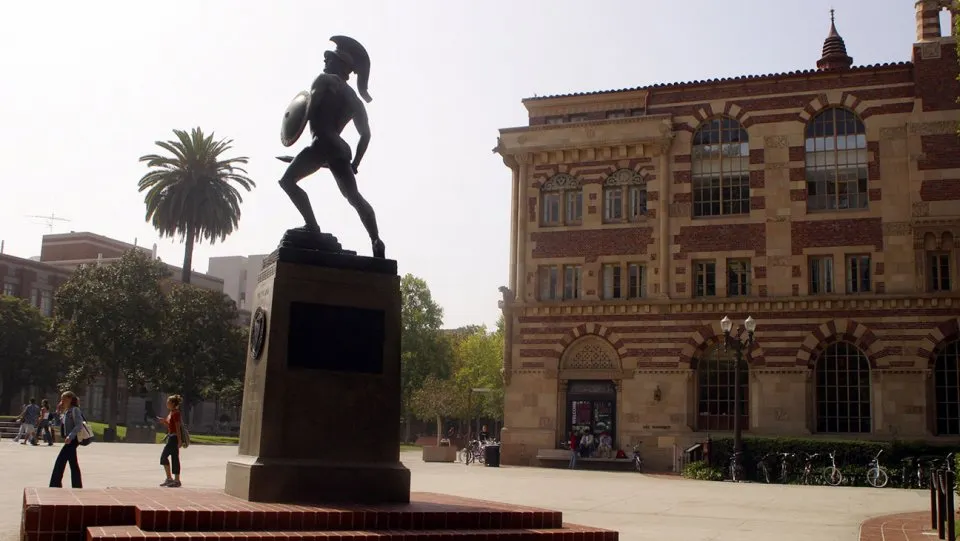
Ally was a real lighthouse for young girls like me who were creative but didn’t quite know how to channel it. When I found out that Ally went to USC in Los Angeles to study drama, that kind of sealed the deal. That’s where I went. That’s what I studied. Would that I had an accurate estimate of what % of the young women I studied acting with were there solely because of her? Here’s my guess: A fuck ton. Most.
“Ally went here!” was a bit of a gospel because she represented what we imagined we could be. Stars? Of course. But stars without the baggage of glamour? Yes, please.
And all of that is childish and impractical, but at least there was something to push me.
Like you, I survived a rough childhood. My mother was a cynical, deeply angry drunk. I needed a dream and a reason to survive. Acting, as ridiculous and narcissistic as it was, became that dream.
Ally was the dream. Molly was the dream. I’m resourceful and smart, and because they existed, their very presence on screen assured me that, somehow, I could take my place in a world of smart, goofy, weird, nerdy women.
But this isn’t an open letter to them.
It’s to you.
It took me all of five minutes to realize after I enrolled at USC that I was no actor. It was a bit of a relief. Acting is hard. You need an army to do it. You need someone to run a light board, box office, front of house, stage managers, prop people, stagehands. And that’s just to do some shitty black box, Equity-waiver production that no one will even see.
It’s an undertaking just to perform for an audience, let alone make any money at it.
Being in L.A. is a cold slap of reality for everyone. That business is especially cruel to women. At the time, if I had to pick my favorite role of yours, it was “Less Than Zero”; the film is of its time, but it got something right. L.A. was a brutal place to be young.
So, acting wasn’t the thing. I let that dream go almost as soon as I had it. But it got me out. What to do? I had many teachers and mentors at USC who assured me that I was a good writer. Maybe I could make a go of that?
Writing can be done anywhere, at any time, with a pen and a piece of paper. That’s it. You don’t need a team. You just need time, patience, and a little drive. That’s it.
I don’t think that you, of all people, would argue that you had the benefit of being white, male, and straight. That unquestionably gave you a leg up in this world, but no one has the kind of writing career you’ve had (as a travel writer, no less) without drive and talent.
You’re one of many people who, completely unbeknownst to you, showed me that anyone can write. I still make a living writing. It’s a humble one, but for a girl who grew up where I did, when I did, and how I did, the mere fact that I survived at all, let alone with a marketable skill? It’s a fucking miracle.
Travel writing is a weird gig in that it’s journalism with a hint of aspirational living. It has to leave the reader with the desire to visit somewhere and also give them the impression that they did. When you started out as a travel writer, it was a whole different gig (no influencers in those days!) and a lonely one. I knew a couple of ex-travel writers when I lived in L.A. They completely burned out on it. I just want folks to know who are reading this that travel writing only looks glamorous. It’s a grind. (Truth? All writing is a grind.)
Anyway, about 20 years ago (I think?), I was reading an article about a trip to Paris. Its author mastered a tone that’s so hard to achieve for good travel writing. It was personal and conversational. This piece was delicately written, with instinctively economical language that was equally evocative. I was so impressed that I flipped back to read the byline.
You talented bastard. It was you. I’d known for a long, long time you were a writer. That’s the moment when I learned that you were born for it.
Isn’t it amazing we both made it this far?
The business of show (I lived in L.A. for 20 years, and made a film in my 20s; I do know something about it) ruins more people than it saves. I completely get why you were knocked off course by a silly and dumb article 30 years ago.
Making Brats was a clearly personal experience. It obviously offered you some closure. I’m still stunned by how much it meant to me. And it wasn’t a jolt of nostalgia that made me like it so much. It was the breadth and tone of the retrospective it offers.
GenX never achieved any political power, not at least while we were young. Certainly, we don’t get discussed the way Boomers or Millennials do. But Xers have this special thing that you’re a part of. It may be all we got, but it mattered. At the very least, it mattered to me. That? That’s one hell of a legacy.
The older I get, the more I realize that our era was completely ignored, and the women who were central to it even more so. Documentaries are a stake in the ground. You planted a flag. Our flag. My flag. It’s there now. No one can take it away.
You created an opportunity for me to reflect on some things I needed to think about. I hope this eventually finds its way to you so you’re at least vaguely aware of how helpful it was to me.
Thanks for planting our flag.
Rachel Parker is a writer and podcaster who calls St. Louis home. She also lived in Los Angeles, CA where she studied acting in the late 20th century. She made a go of filmmaking in the 90s, and eventually did solo work in front of dozens of people across various stages in Los Angeles and San Francisco. Today, she likes to talk to small business leaders and founders about everything they’re doing wrong with their content calendars and then help them fix it.