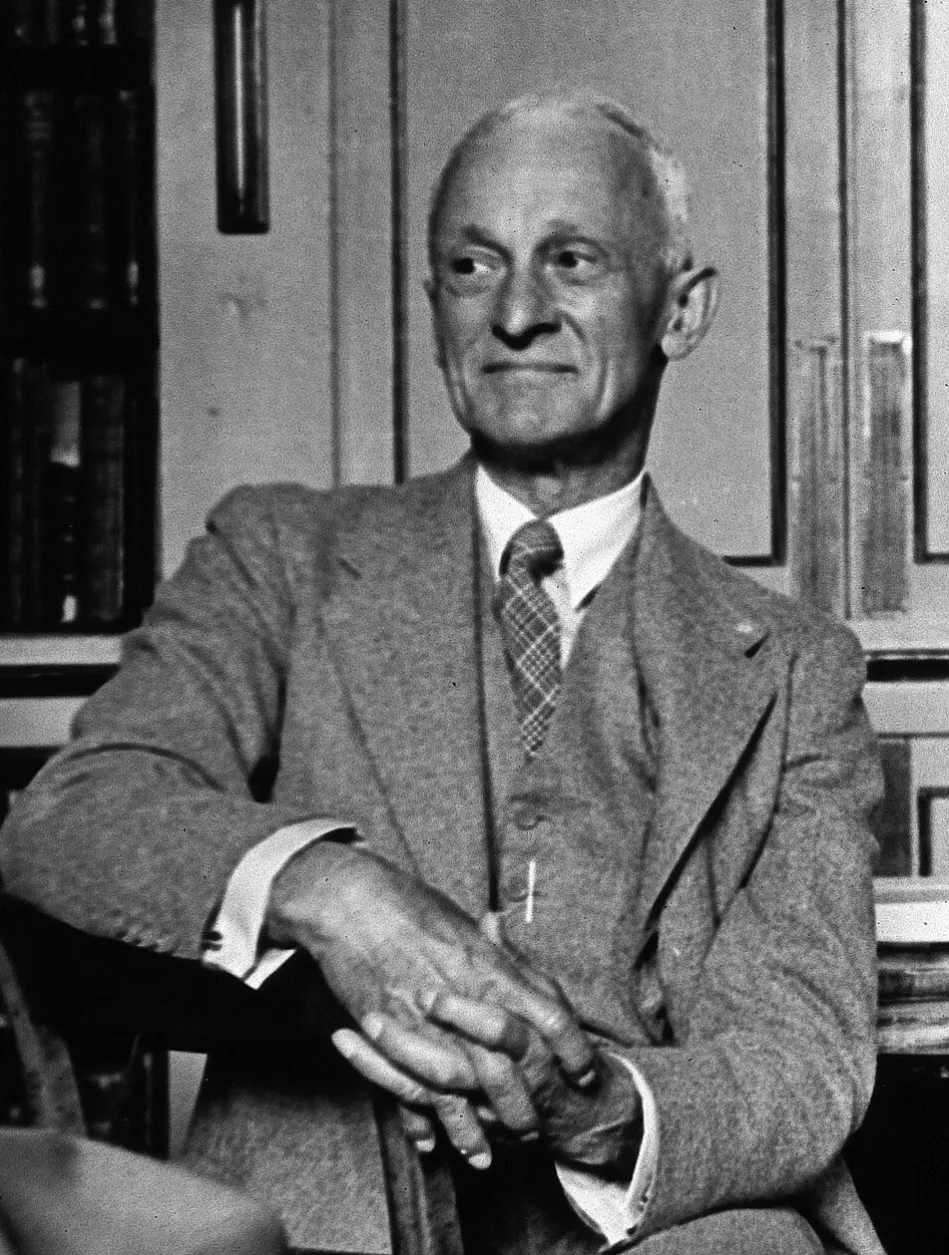
Dr. Julius Lempert — A Titan of Ear Surgery
The fascinating story of a brilliant, flamboyant and controversial trailblazer

Dr. Julius Lempert, who went on to become one of the most well-known ENT Surgeons in the world, was born in Lublin, Poland, then a part of Czarist Russia, on July 4, 1890 to Mischa and Anna Lempert. He was one of four children. Very little is known about his childhood.
As a student, he is known to have taken part in an anti-government student demonstration against the Czar of Russia. The demonstrators were chased by the Czar’s mounted police and little Lempert fled from the scene and tried to escape by hiding in a neighbour’s house. But, he was caught and jailed. His distraught father decided against staying on in Czarist Russia and migrated to the United States in 1905.
To earn a livelihood, his lower middle class parents started a small Yiddish
newspaper in New York. Soon, his father passed away and the burden of feeding the family fell solely on his mother’s frail shoulders. Julius contributed his mite by doing odd jobs to supplement his immigrant family’s meagre income.
Medical education, ENT training and early ENT practice
Battling poverty, Lempert joined the Long Island Medical College in New York (now known as the Down State Medical Center of the State University of New York) to study Medicine. However, this used to be
officially graded a ‘C Grade’ Medical College. (Medical Colleges in the US were graded based on the facilities provided for the students as well as their faculty strength). The implication of studying in a ‘C Grade’ medical
college those days in the US was that, on passing out from such an institution, the graduates would not be permitted to do internship and would never be allowed to do Residency/Post-graduation. Hence, after he graduated in 1913, Lempert could never join for post-graduate studies anywhere.
But, this did not deter the tenacious Lempert. He decided to get trained in ENT (the speciality of Ear, Nose and Throat or ‘Oto-Rhino-Laryngology’) on his own. As he could not join any residency program for training as an ENT Surgeon, he joined as an observer in some ENT Departments where he could go and watch ENT Surgeons at work, both in their clinics as well as in the operation theatres. He attended Mount Sinai Eye and Ear Infirmary and Manhattan Eye and Ear Infirmary, both in New York. But, after a while, the authorities frowned on his visits and, soon, he was asked to leave.
Bitter and frustrated, Lempert started a clinic on his own at Greenwich village in New York, the locality where he had spent his teenage years. He did general practice initially before turning to ENT. He started offering
commission (‘fee splitting’) to those doctors who would send him patients with ENT diseases, an unethical practice. Half his fee used to be offered to the referring physicians. Nevertheless, his practice started booming and he became the busiest ENT Specialist in town.
Lempert establishes himself
Lempert’s surgical practice became so busy that he resorted to “assembly line surgery” wherein he would line up dozens of patients for Tonsillectomy, Adenoidectomy (an operation for removal of the adenoids, a tissue similar to the tonsils, located at the back of the nose), SMR (Sub Mucous Resection, an operation used to straighten the bent ‘nasal septum’, the midline partition of the nose), Mastoidectomy (an operation done on the mastoid bone located behind the ear, usually for certain ear infections) etc. in a large operating room.
He used to move from patient to patient removing their tonsils, adenoids etc., while assistants following him would complete the operation!

Although a supremely skilled surgeon, punctuality was not his
forte. He was a late riser and often used to come late to the operation theatre.
Lempert, thanks to his extremely busy practice, became enormously wealthy. With his fabulous wealth, the flamboyant Lempert procured expensive limousines, original paintings of famous artists and other pieces of art. Numerous paintings (including those of nudes!) adorned his consultation rooms. He dined in the finest restaurants and, reportedly, used to tip lavishly. He was a chain smoker and smoked only the finest Cuban cigars. He enjoyed his whiskey but never took more than a small. He even produced Broadway plays and musicals.
In the meantime, in 1930, he fell in love and got married. His Irish wife, Florence Kennedy (whom he married against his mother’s wishes), was a
dancer with the famous Rockettes of New York. He had met her as his patient and he had done a tonsillectomy on her. Florence was a six-footer, while Lempert himself was diminutive at five feet four inches.
Endaural Approach and Early Surgical Innovations
Lempert created a stir in American Otolaryngology (ENT) circles by famously adopting the ‘Endaural’ approach, discarding the conventional and widely used ‘Postaural’ approach for operations on the ear (these are medical terms used to describe two different types of incisions and surgical approaches used to gain access to the ear for operations). Overcoming bitter opposition from his peers, Lempert succeeded in publishing his report on his ‘Endaural approach’ (originally described by Heermann and Theis in Germany) as the lead article in the August 1928 issue of the journal, Archives of Otolaryngology, thanks to the support of George Shambaugh Sr., a famous American ENT Surgeon.
Meanwhile, Manhattan Eye and Ear Infirmary had permitted Lempert to operate his patients there, at a time when all other hospitals had banned him. One day, Lempert had posted a patient there for mastoidectomy.
Instead of using a mallet and gouge, which were the instruments in vogue for doing this surgery then (used to hammer and cut open and remove parts of the hard mastoid bone), Lempert hit upon the brilliantly simple idea of using a dental drill to drill open the mastoid in a more elegant and controlled manner.
And, he proceeded to do this on his patient. When the operating room nurse saw this, she was horrified and reported the matter immediately to the hospital authorities who summarily threw him out of the operation theatre without even allowing him to complete the operation! And, thus was born the otologic drill without which no sane ENT surgeon today would dare contemplate doing ear surgery and thanks to which numerous advances became possible in Otological surgery.

Disillusioned with the unhelpful attitude of hospital authorities, Lempert started his own ENT Hospital, the Lempert Institute of Endaural Surgery. This went on to become, at one stage, ‘the Mecca of Ear Surgery’.
Meanwhile, Lempert also made another contribution that was to greatly benefit ENT Surgery and the spin-off of which was to benefit many other surgical fields as well. He, commonsensically, devised and started using the head light during ENT operations, unlike other ENT surgeons who foolishly stuck to fossilised tradition and clumsily used the head mirror and reflected light to perform ENT operations. He was also the person who introduced the use of magnifying operating loupes in Surgery.

The Turning Point
But, the feat for which Lempert was soon to be venerated as an Otolaryngology demi-God the world over was yet to come. And that was his seizing the opportunity to begin surgical treatment for Otosclerosis, a fairly common ear disorder which rendered several hundred thousands all over the world deaf. (This is a disease where the tiny stapes bone, the smallest bone in the human body shaped like a stirrup that is located inside the middle ear, becomes immobile and fixed. Normally, it transmits sound from the exterior into the innermost part of the ear, the bony labyrinth, by its extremely fine vibrations. Once fixed, it results in sound transmission into the inner ear becoming blocked, thus rendering the patient deaf; see figure below).

It was realised that the obstruction to the entry of sound waves to the inner ear (where the ear senses sound) caused by the immobility of the stapes in otosclerosis can be bypassed by surgically creating a tiny opening (‘fenestra’) in the hard, snail-shaped bony case encasing the inner ear known as the ‘bony labyrinth’. Such a fenestra is referred to in ENT jargon as a ‘third labyrinthine window’. (Interestingly, the bony labyrinth is the hardest bone in the human body and has been described as ‘the only bone which does not get crushed in shark attacks’! Moreover, because of its extreme density and rock-like hardness, it resists degeneration exceptionally well and is the preferred source for recovering ancient DNA in forensic and archaeological studies).
Get Ranjit Rajan’s stories in your inbox
Join Medium for free to get updates from this writer.
Surgical attempts to improve hearing in otosclerosis by making such a ‘third labyrinthine window’ had already been made by others, most notably in 1911 by the great Austrian Otologist, Robert Barany, a Nobel laureate, in the posterior semicircular canal and the Swedish Otologist, Gunnar Holmgren, in 1917, initially in the superior semicircular canal. (The ‘semicircular canals’, three in number — lateral, superior and posterior - are loop-shaped parts of the bony labyrinth; see figure above).


Subsequently, in the 1920s, Holmgren described his “Fenestration Surgery” for Otosclerosis wherein a fenestra (a tiny opening) was created in the lateral semicircular canal (a part of the bony labyrinth) in order to provide an alternate pathway for the entry of sound waves into the inner ear, bypassing the fixed stapes. Lempert got an opportunity to listen to a presentation of this operation by a well-known French Ear Surgeon, Maurice Sourdille, to the New York Academy of Medicine in October 1937. Sourdille’s was a three-stage operation done over a protracted period of a few months.

Lempert, who was in the audience, was impressed by this procedure. However, Sourdille was unwilling to let observers come and watch him operate at his place in Nantes, France. Undaunted by his unhelpful attitude, Lempert tactfully took Sourdille out for dinner and intensively interrogated him and extracted the details of his surgical technique (despite Sourdille knowing very little English!).
He, then, spent several arduous weeks dissecting cadaveric temporal bones to develop his version of this operation. The surgical genius that he was, Lempert developed a simplified, one-stage version of the fenestration operation for otosclerosis in less than three months.
And then, through a hugely controversial move marked by intrigue, in which he influenced Samuel J. Kopetzky, a leading figure in the American Otological Society (AOS), Lempert, who was not an AOS member, wangled permission to present his new operation to the AOS in May 1938. Infuriated, the AOS expelled Kopetzky and expunged Lempert’s presentation from its records!
It was a landmark operation, one the AOS later described as “a boon to mankind”. This proved to be the proverbial turning point in Lempert’s career that propelled him from obscurity into an exalted surgical orbit which very few had attained till then.
Lempert promised the gift of hearing to thousands deafened by otosclerosis — and succeeded resoundingly. In 1946, he published the results of his renowned ‘One-stage Fenestration Operation’ (‘Fenestration Nov Ovalis’; A New Oval Window) on one thousand patients of clinical otosclerosis done over a period of seven years. By the end of World War II, he had done more than three thousand of these operations. His ‘Fenestration Operation’ was to play a catalytic role in the development of microsurgery of the ear and the temporal bone.
His name and fame spread far and wide and he started attracting patients — as well as ENT Surgeons! — from all over the world.
ENT Surgeons from various parts of the world, including fierce critics and those who had earlier slighted and turned him away, started queuing up at Lempert’s hospital requesting to be allowed in as observers. The wheel had, indeed, come full circle! To his credit, Lempert graciously let them in and allowed them to watch him operate. He also conducted temporal bone dissection courses, arguably the earliest in the world, to teach the extremely complex anatomy of the temporal bone and the technique of ear surgery.
Lempert rapidly rose to become a celebrity ENT Surgeon. Newspapers and magazines all over the world, including TIME, Newsweek and Reader’s Digest, wrote about and eulogised him. Governments of many countries honoured him. Waiting at his doorstep were millionaires, amongst others, for treatment.
The fascinating Firestone Story
One among these millionaires was Leonard Firestone of the Firestone Tyre company. When he approached Lempert, he agreed to operate on his ear. Lempert had an interesting system to decide how much fees to charge a patient. He would decide the charges depending on the patient’s income.
Firestone was offended when Lempert’s secretary asked him about his income but was pacified when he came to know the reason. And Lempert charged him an astounding one hundred thousand US dollars, a quarter of it to be paid initially and the remaining amount to be paid only if the operation proved successful! The operation was successful and the charges were paid in full. With this money (which would be equivalent to approximately two million USD today!), Lempert started his Deafness Research Foundation.
Skull Base Surgery
What is less widely known, as compared to his famous Fenestration Operation, is Lempert’s pioneering contribution to the development of Skull Base Surgery (operations on the difficult-to-access undersurface of the skull) which, in fact, predated his development of the former. He studied and described in detail the extremely complex surgical anatomy of the petrous temporal bone (the rock hard bone in the base/undersurface of the skull in which the delicate innermost part of the ear is protectively encased), including surgical access to the internal carotid artery (the main artery that supplies blood to the brain; it passes through this bone in close proximity to the ear to enter the brain). He published his surgical approach to the petrous apex and his technique for surgical treatment of suppurative petrous apicitis (pus-forming infection in this hard bone) in 1936 and 1937.

Belated Recognition
Lempert, an untrained ENT Surgeon who had been ostracised by the ENT fraternity, went on to train a whole generation of ENT Surgeons, many of whom were frontline ENT Surgeons in the United States who evoke awe and respect all over the Otolaryngology world — like George Shambaugh Jr., Howard House, and others.
The American Otological Society never gave him membership on the grounds that he had no formal ENT training but, belatedly, honoured him with an honorary membership and a gold medal for his contributions to Otology.
Lempert was also responsible for creating some of the earliest teaching operative videos. It is remarkable that one of the earliest teaching videos he made was on Sub Mucous Resection of the nasal septum (as mentioned earlier, this is an operation done to straighten the bent ‘nasal septum’, the midline partition of the nose), an operation notoriously difficult to be clearly shown to or be observed by even an assistant. Lempert utilised his connections with the movie industry to make these videos. This was at a time when even photography was not permitted inside operating rooms!
The Tragic End
Lempert faced a huge personal tragedy. His only son, Mischa, died of leukemia in 1942, devastating him. More setbacks, professional, were in store. The hearing of his Fenestration Operation patients deteriorated over time as the fenestrae (openings) gradually got closed.
In the 1950s, Samuel Rosen, an ENT Surgeon for whom Lempert had an intense personal dislike, started doing ‘Stapes Mobilisation’ for treating otosclerosis (surgically mobilising the tiny, fixed stapes bone. Stapes is the smallest bone in the human body, roughly the size of a mustard seed). Lempert refused to accept it or learn it.
Then, in 1956, the legendary John Shea of Memphis, US, daringly did the world’s first Stapedectomy for otosclerosis (in this operation, the fixed stapes bone was removed and, in its place, a tiny prosthesis fixed as a replacement) with excellent results, revolutionising its treatment and permanently eclipsing Fenestration Surgery.

But, Lempert vehemently opposed Stapedectomy. (He had also refused to adopt the operating microscope and stuck to his operating loupe!). He stubbornly held on to his outmoded Fenestration Operation, refused to accept the reality of its failure and, hence, sadly got left behind. Patients began to desert him in droves for better treatment options. He was, ultimately, forced to sell his hospital for sustenance. How fickle and evanescent are fame, fortune and glory!
The final blow came in the form of an income tax raid in 1962. Lempert, soon, developed depression and dementia and was institutionalised. His stated desire to die operating was not to be. He lingered and died in an asylum on December 14, 1968, an extremely tragic end for a giant of modern Otology and one of Otolaryngology’s, nay, Modern Medicine’s, all-time greats.