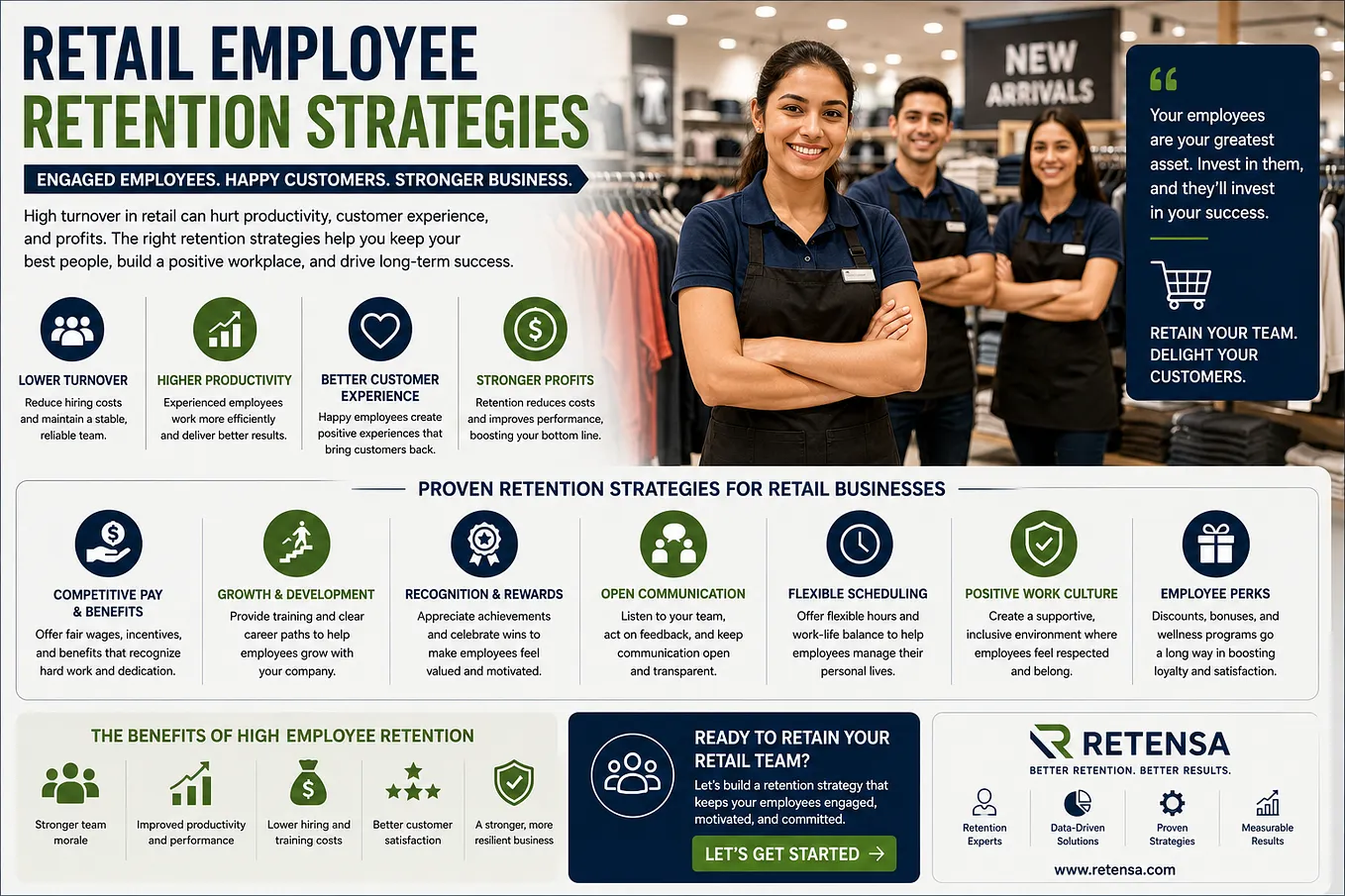
Why Losing Good Employees Isn’t a Mystery — It’s a Data Problem

Every HR leader has lived through the same gut-punch: a top performer walks in, closes the door, and says they’re leaving. By the time that conversation happens, it’s already too late. The decision was made weeks or months earlier, and most companies never saw it coming because they weren’t looking in the right places. This is exactly the gap that employee retention software was built to close — turning turnover from a surprise into something you can see, measure, and act on before it happens.

Turnover isn’t just an HR headache; it’s a line item that quietly drains company performance. Recruiting, onboarding, lost productivity, and the institutional knowledge that walks out the door with a departing employee all add up fast. Yet research consistently shows that the vast majority of turnover is preventable — which means most companies are paying a tax they don’t have to pay. The organizations that get ahead of it aren’t the ones with the biggest perks budget. They’re the ones treating retention as a discipline, backed by data, not guesswork.
What Actually Moves the Needle on Retention
For decades, retention strategy meant reacting after the fact — running an annual engagement survey, tallying exit interview notes, and hoping a new wellness program would stop the bleeding. That approach made sense when companies had no better option. It doesn’t hold up anymore, because the tools now exist to predict who’s likely to leave, not just count who already has.
Prediction Beats Reaction
The single biggest shift in workforce retention over the past several years is the move from lagging indicators to leading ones. Instead of finding out why someone left after they’re gone, modern approaches identify the warning signs while there’s still time to intervene. That’s the core value of a purpose-built retention platform: it pulls together engagement data, performance signals, tenure patterns, and survey feedback into a single view that flags flight risk before it becomes a resignation letter.
An effective employee retention platform does more than generate a dashboard full of numbers. It should translate data into a clear picture of why people are considering leaving — compensation, management quality, lack of growth opportunity, burnout, or culture mismatch — so leadership can address the actual cause instead of throwing a generic fix at a specific problem. A manager who’s driving away their whole team needs coaching, not a company-wide raise. A department with unclear advancement paths needs a career framework, not a pizza party.
Diagnosis Comes Before Treatment
It’s tempting to jump straight to solutions — better pay, more flexibility, new perks — but without knowing what’s actually driving attrition, those investments are guesses. This is where structured employee retention consulting earns its keep. A proper diagnostic process digs into the real drivers of turnover at a specific company, in a specific industry, often down to the department or role level, because the reasons a nurse leaves a hospital look nothing like the reasons a software engineer leaves a tech startup.
This is also where industry context matters enormously. Retail turnover is driven by scheduling and frontline management. Manufacturing turnover often traces back to safety concerns and shift conditions. Financial services turnover tends to hinge on advancement clarity and compensation structure. A generic retention program applied uniformly across industries will always underperform one that’s been calibrated to the specific pressures of that workforce.
The Human Layer: Why Expertise Still Matters
Software and dashboards are powerful, but numbers alone don’t build trust with a skeptical VP of Operations or convince a CFO to fund a retention initiative. That’s the role of an experienced employee retention consultant: someone who can sit with leadership, interpret the data in the context of company culture, and translate insight into an action plan people will actually follow through on.
Get Retensa’s stories in your inbox
Join Medium for free to get updates from this writer.
A good consultant doesn’t just hand over a report and walk away. They help train managers on how to have better stay conversations, coach leadership on the soft skills that keep people engaged, and hold the organization accountable to the plan over time. Retention isn’t a one-time project — it’s an ongoing discipline, and having an outside expert in the room tends to keep that discipline from quietly fading after the first quarter.
Building a Retention Program That Actually Sticks
The companies that see real, lasting reductions in turnover tend to follow a similar pattern, regardless of industry:
- They measure before they act. Surveys, exit interviews, and predictive analytics come first, so any investment targets a real cause.
- They segment by risk. Not every employee needs the same intervention — high-risk, high-value employees deserve focused attention before they start job hunting.
- They train managers, not just HR. Most people don’t quit companies; they quit managers. Equipping frontline leaders with better coaching and communication skills tends to move the needle faster than almost anything else.
- They treat retention as continuous, not seasonal. An annual survey followed by silence for eleven months isn’t a retention strategy — it’s a report card nobody reads.
- They measure ROI in dollars, not just percentages. Turnover reduction should be tied back to hard savings: fewer open requisitions, lower training costs, less lost productivity, and stronger customer continuity.
This is where full-service employee retention services tend to outperform a piecemeal approach of surveys here, a training session there, and a new benefit rolled out in isolation. When diagnostics, coaching, manager training, and predictive analytics work together as one connected system, the results compound. A risk flag from the analytics platform triggers a targeted manager conversation. That conversation gets logged and tracked. The next survey cycle measures whether the intervention worked. Over time, the organization isn’t just reacting to turnover — it’s building institutional muscle memory for keeping good people.
Industries Face Retention Differently
It’s worth underscoring that retention isn’t one-size-fits-all. Healthcare organizations are fighting burnout and staffing shortages that put patient care at risk. Construction and manufacturing companies are battling skilled-labor shortages where a single departure can stall a project. Hospitality and retail deal with high seasonal churn and frontline scheduling friction. Law firms and accounting practices lose their most billable, most trained people to competitors offering marginally better advancement paths. Each of these situations calls for a tailored diagnosis and a tailored response — which is precisely why generic HR advice so often falls flat.
Turning Insight Into Action
None of this works if the insight stops at a dashboard. The organizations that actually cut turnover are the ones that close the loop — data leads to a diagnosis, the diagnosis leads to a specific plan, and the plan gets executed by trained managers who are held accountable for outcomes, not just activity. That loop is what separates a company that talks about culture from one that actually retains its best people.
It’s also worth remembering that retention and recruiting are two sides of the same coin, but they get very different levels of investment at most companies. Recruiting budgets are large and visible. Retention budgets are often an afterthought — a survey tool here, an exit interview template there. Yet keeping an existing high performer is almost always cheaper and faster than replacing them, and it protects the customer relationships, institutional knowledge, and team cohesion that a new hire can’t replicate on day one.
There’s also a leadership visibility problem worth naming directly. Turnover data often lives in HR systems that executives rarely open, which means the true cost of attrition — lost deals, delayed projects, strained teams covering vacant roles — stays hidden from the people with the authority to fund a fix. Bringing that data into a format leadership actually sees and understands, tied to revenue and productivity rather than abstract percentages, tends to be what finally gets a retention initiative funded and taken seriously at the executive level.
The Bottom Line
Turnover isn’t inevitable, and it isn’t random. It follows patterns that data can surface and that trained, motivated managers can address — if the organization is set up to actually see those patterns in time. Companies that combine predictive technology with real diagnostic work and hands-on coaching consistently see fewer surprise resignations, stronger engagement scores, and meaningful savings on hiring and training costs. The gap between companies that struggle with turnover and companies that don’t usually isn’t effort — it’s whether they’re working from data or from guesswork.
If your organization is still finding out why people left after they’re already gone, it’s worth asking what a more proactive approach could look like. The tools, the diagnostics, and the expertise to get ahead of turnover already exist — the only question is whether you’re using them.
Ready to see what’s actually driving turnover at your organization? A proper diagnostic is the fastest way to move from guessing to knowing. Talk to a retention expert and get a clear, data-backed picture of where you stand — and what it would take to change it.
Frequently Asked Questions
How can employee retention software reduce turnover before it happens? It tracks engagement, performance, and survey data over time to flag employees showing early signs of disengagement or flight risk, giving managers a window to intervene with targeted support before a resignation is submitted.
How can employee retention consulting help identify why people are actually quitting? Consultants run structured diagnostics — surveys, interviews, and data analysis — to uncover the true drivers of attrition at a company or department level, rather than relying on assumptions or generic industry benchmarks.
How can a company measure the ROI of a retention program? By comparing turnover rates, hiring costs, and productivity losses before and after implementation, and translating the reduction in departures into concrete savings on recruiting, training, and lost institutional knowledge.
How can managers be trained to improve retention on their own teams? Through coaching that builds communication, feedback, and recognition skills, since most departures trace back to the employee-manager relationship rather than pay or benefits alone.
How can smaller companies afford professional retention support? Many providers offer scaled diagnostics and guarantee-backed programs tied to measurable results, meaning the investment is designed to pay for itself through the turnover costs it prevents.