Bullitt: The Chase That Redefined Cinema.

Exploring the Legacy of Steve McQueen’s Iconic Film and Its Groundbreaking Car Chase: The premiere of a movie in 1968 would go on to define the action thriller genre and alter moviegoers’ perceptions for all time. In addition to solidifying Steve McQueen’s status as one of the most recognisable performers of his generation, Bullitt, which starred the effortlessly cool McQueen, also included a car chase that is still regarded as one of the most exciting and significant sequences in movie history. Bullitt, which was directed by Peter Yates and is based on Robert L. Fish’s book Mute Witness, is a masterwork of suspense, realism, and subtle drama.
Fundamentally, Bullitt is a detective narrative, a crime thriller about Frank Bullitt, a tough, no-nonsense police officer from San Francisco, who becomes involved in a case that is far riskier than he had imagined. Bullitt's calm exterior is consistently challenged as a simple witness protection assignment transforms into a deadly pursuit. Even though the narrative is interesting and full of mystery, Bullitt’s execution, especially the iconic car chase, is what has made it a classic of American cinema.
The World of Frank Bullitt: Audiences were becoming used to brutal realism in movies by the late 1960s. In the 1960s, a new generation of flawed, ethically nuanced, and intensely human heroes emerged, replacing the slick, romanticised heroes of the 1950s. McQueen’s portrayal of Frank Bullitt was the quintessential example of this new kind of hero. Rather than being a stylish, well-dressed playboy or an unstoppable action hero, he was a quiet, weathered guy who was ruthlessly determined to complete a task and had a laser-like concentration on justice.
Bullitt lives in a world of uncertainty and darkness. San Francisco, his city, becomes more than simply a setting; it takes on a life of its own. Like Bullitt himself, the city’s twisting streets, high hills, and recognisable fog create an air of uncertainty. Even if he doesn’t talk much, what he says matters. One of the film’s distinguishing features is its sparse use of dialogue, since McQueen’s performance is mostly conveyed via his body language, eyes, and facial emotions rather than words.

In a suspenseful opening scene, Bullitt is tasked with protecting a crucial witness in a case involving the mafia. A vicious assault on the witness in the hospital leaves Bullitt frantically trying to identify the perpetrator of the assassination attempt. Bullitt's involvement in the case escalates the situation, turning what initially appears to be a simple duty into a battle for survival. The film has a timeless aspect that still resonates today because it explores issues of justice, loyalty, and corruption.
Steve McQueen: The Cool Factor: Steve McQueen’s acting is what sets Bullitt apart from other detective thrillers of the day. McQueen, who is well-known for his recognisable “cool” attitude, personified the fierce, lone wolf persona in a manner that was both genuine and new. Instead of displaying ostentatious bravado or heroism, he portrays Frank Bullitt as somebody who maintains his composure and resolve in the face of disaster. McQueen’s role was rendered all the more captivating by his ability to convey inner conflict via subtle movements like his tightened jaw or firm hold on the driving wheel.

McQueen’s coolness was an essential aspect of his personality and not merely a question of taste. Bullitt works in a world full of risk and uncertainty, and his ability to remain composed in the face of danger provides him a clear advantage. McQueen made Bullitt someone the viewer could trust, believe in, and support, whether it was by his methodical, measured movements or the way he quietly moved through stressful circumstances. Frank Bullitt was more than just another stereotypical police officer because of the actor’s innate charm and nuance. He transformed into an iconic figure, demonstrating unwavering heroism through his actions rather than words.
Get Rino Ingenito’s stories in your inbox
Join Medium for free to get updates from this writer.
A Cinematic Revolution: The Car Chase: Although Bullitt is a masterfully made movie in many ways, its most famous scene is perhaps the car pursuit, which revolutionised action cinema and broke new ground. Many people consider the chase, in which Bullitt pursues two hitmen through the winding streets of San Francisco, to be among the best and most significant moments in movie history. It continues to be a standard for carrying out a high-stakes action scene.

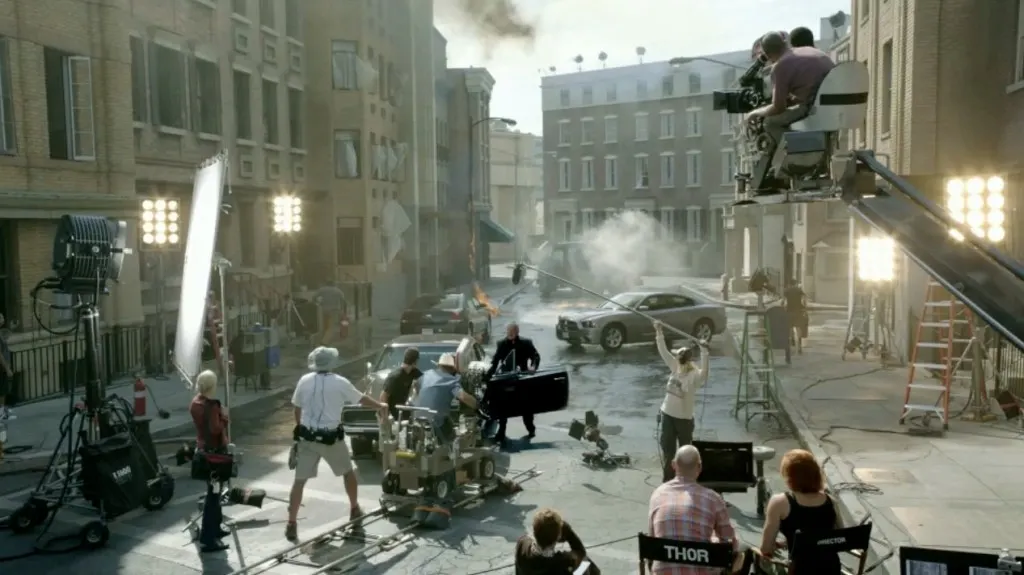
Bullitt’s pursuit scene was revolutionary for several reasons. Unlike other automobile chases of the day, which sometimes relied on intricate stunts and extensive editing, Bullitt provided an unvarnished, visceral experience. Together with stunt coordinator Carey Loftin and McQueen, who was a huge automobile fan himself, director Peter Yates produced an exciting and realistic scenario. Bullitt’s automobile chases were filmed with lengthy takes and few cuts, giving the viewer the impression that they were in the driver’s seat alongside Bullitt. Every bend and jump seemed risky since the cameras appeared to swoop and whirl with the vehicle.
The sound is another important component in Bullitt’s automobile pursuit. The pursuit seems more like a symphony of chaos than a straightforward action scene because of the crucial elements of the engines’ noise, the tires’ squealing, and the automobiles’ revving. Few movies have previously succeeded in creating an immersive experience that immerses the viewer amid the action, thanks to the effective use of sound design and editing.
The car chase proved so popular that it would go on to inspire other filmmakers, from Michael Mann (whose Heat featured a similarly frantic chase) to modern-day directors like Christopher Nolan, who would identify it as a crucial inspiration for his action scenes. Bullitt essentially set the standard for future generations of filmmakers by revolutionising the way action was depicted in cinema.
The Influence on Cinema: In addition to its immediate influence on the action genre, Bullitt had a long-lasting impact on filmmaking, especially regarding realism and the representation of urban settings. San Francisco’s selection as a setting for the movie was essential to the plot and not only a stylistic decision. The streets themselves turned into a kind of labyrinth, mirroring Bullitt’s battle to survive in a dangerous and corrupt environment. Yates gave the movie a realism that few movies had previously achieved by filming on location. The picture has an unrivaled richness and immediacy because of the city’s sense of life, complete with fog, hills, and famous bridges.

Bullitt also contributed to the development of the cliché of the lone, anti-hero police officer, a figure who is not part of the system yet is nonetheless closely associated with it. Similar themes would later be explored in films like Dirty Harry (1971) and The French Connection (1971), but Bullitt was the first to fully convey the feeling of alienation and disengagement that characterised this new generation of cinematic heroes. Bullitt was a rare individual who stood in sharp contrast to the ethically dubious environment around him because of his capacity to navigate the world without sacrificing his moral principles.
The fact that Bullitt has endured throughout time is maybe the best indication of its impact. The movie’s themes of moral ambiguity, corruption, and justice are still relevant to viewers today. Since then, several films have imitated its visual aesthetic, especially the utilisation of actual stunts and location filming. Additionally, the vehicle pursuit is still regarded as a pivotal scene in movies, and filmmakers continue to try to imitate it today.
The Legacy of Bullitt: Since its premiere, Bullitt has evolved into more than simply a movie; it has become a cultural icon. From its ongoing appeal among auto enthusiasts to its effect on the evolution of the action genre, its influence on popular culture is incalculable. The automobile pursuit scene is often used as the benchmark by which all other action scenes are evaluated, and McQueen’s character, the Ford Mustang GT390, has become a symbol in and of itself. Steve McQueen's portrayal of Frank Bullitt, known as the "King of Cool," remains one of the most renowned roles in movie history. Because of McQueen’s seamless charm and quiet ferocity, Bullitt has endured and continues to captivate both fans and filmmakers.
Bullitt is a timeless movie. Yes, it’s an exciting action movie, but it’s also a reflection on the nature of justice, bravery, and humanity. The film is a timeless masterpiece that still inspires and influences movies today because of its flawless fusion of style, content, and authenticity. If you haven’t seen Bullitt in its entirety, now is the ideal moment to do so and discover why it is still regarded as one of the most significant motion pictures ever made.
Bullitt is a testimony to what occurs when skill, vision, and imagination join together to produce something really unique because of its iconic scenes, memorable performances, and impact on filmmaking.
“If this article stirred something in you, follow for more deep dives into film, culture, and the unseen forces shaping our world.” https://medium.com/@rinoingenito04