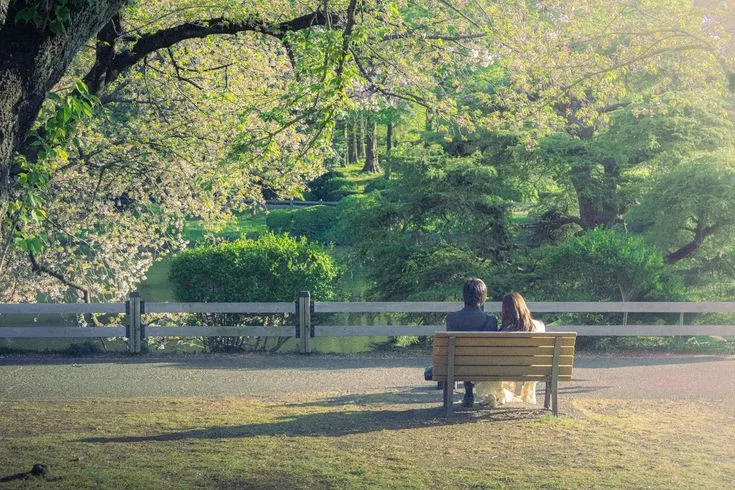
The Quiet Between Two Countries

Moon and Abhinav, Season Two: a midnight conversation about God, silence, rituals and the soul
Setting: Diwali night, one year after the offer letter. Moon is now in Chicago, in a small apartment with the first snow tapping the window and one last jar of her mother’s pickle on the shelf. Abhinav is in Austin, on his couch, with chai at four in the morning of his own mind. A video call, of course.
The Conversation
Moon: You told me once that panic is expensive and preparation is cheap. Nobody warned me that homesickness is priceless and arrives without an invoice.
Abhinav: Welcome to the club, Moon. Membership is free, the fee is paid in voice notes. How was the first Diwali away from Mummy’s kitchen?
Moon: I lit one diya. It stood on my windowsill like a tiny brave employee working a night shift. And then I did something strange. I opened the last pickle jar at midnight, exactly like you predicted, and I sat on the floor, and I cried. Abhi, I do not know who I was praying to. I only know I was praying.
Abhinav: That is the most honest prayer I have heard this year. Sit down, get your chai, and ask me everything. Tonight I will answer without my usual armour.
Inside the conversation, this is when the jokes stop working as decoration and start working as doors.

Moon: Question one. When you pray, are you talking, negotiating, or leaving a voicemail?
Abhinav: I used to negotiate. During exams I offered the universe coconuts and dramatic promises. Now I mostly listen. I think prayer is a phone call where you finally stop talking. The answer never comes as a voice. It comes as a quieter mind, and that is usually all I was asking for.
Moon: Question two. If God had a customer care number, what would be your first complaint?
Abhinav: Wait time. Also, the automated menu. Press one for suffering, press two for growth through suffering, press three to be transferred to a chapter of your life you have not read yet. But if I am honest, my complaint is not about the answers.
It is about the hospital corridor where Papa was in surgery and I was eleven thousand kilometres away. I did not want an explanation that day. I wanted a hand on my shoulder. And weirdly, a stranger in a Texas coffee shop, who saw me crying into my phone, slid a napkin across the table and said nothing. That was the closest thing to divinity I have personally met.
Moon: (softly) A napkin.
Abhinav: A napkin. Grace does not always arrive in temples. Sometimes it arrives in paper, for free.
Moon: Question three. What is the most sacred thing you own that has no religious value?
Abhinav: Papa’s old steel watch, which stopped working in 2011. It tells the wrong time and the right story. I wear it on the days I feel unmoored. Sacred, to me, is anything that reminds you who loved you before you were impressive.

Moon: Question four. Where does your silence live?
Abhinav: In my car, in the parking lot, before I walk into the office. Nine minutes, engine off. Nobody sees it, and it holds me up more than any meeting that day. I think everyone needs a small chapel with no walls. Mine happens to have a cup holder.
Moon: Question five. Are loneliness and solitude the same address with different rent?
Abhinav: Beautiful. Almost. Loneliness is when the silence has nobody in it. Solitude is when the silence has you in it, fully. My first winter I paid loneliness rent. Somewhere in the second year, without a ceremony, I moved next door. Solitude is loneliness that learned to hold its own hand.
Inside the conversation, Moon has pulled her knees up to her chest, the way she used to on the terrace of their old college hostel.
Moon: Question six, and be careful. If you had to delete every belief but keep one ritual, which would you keep?
Abhinav: The Sunday call home. No incense, no priest, no scripture. Two voices crossing an ocean to say, you are still mine and I am still yours. If there is a God, I suspect that is the only worship that needs no interpreter.
Moon: Question seven. You have been very loud about not trusting institutions. Do you trust the sky?
Abhinav: I trust the sky, and I distrust the queue in front of it. I have never liked rooms where the doorkeepers all look and think alike, and where the people who cooked the prasad, wiped the floors and raised the children were asked to stay quiet at the back. I do not need a middleman for the sky.
I need a quiet window and an honest heart. But I also refuse to throw away the ritual because I dislike the gatekeeper. Keep what makes you gentler. Doubt what makes you smaller.

Moon: Question eight. If your soul kept a browsing history, what would embarrass you?
Abhinav: Searching how to sound more spiritual than I am. Also, every late night I typed, am I a good person, and then clicked away before the results loaded. My soul has a very long cache of unfinished questions.
Moon: Question nine. What frightens you more: that nothing is watching, or that something is?
Abhinav: Nothing watching frightens me less than it used to. If nothing is watching, then every kindness I do is a pure act with no audience. I find that oddly holy. And if something is watching, I hope it has a sense of humour, because I have said some very dramatic things at three in the morning.
Moon: Question ten. Who taught you to forgive, and who did you practise on?
Abhinav: Mummy taught me, by never announcing it. I practised on myself first, for not being on that hospital chair. It took a year. Forgiveness turned out to be less like a grand gesture and more like putting down luggage you have been carrying in a very long airport. You do not get lighter all at once. You just notice one day that your arm no longer aches.

Inside the conversation, neither of them speaks for a while, and the silence is no longer empty. It has both of them in it.
Moon: Last question. What would you tell the boy who bargained coconuts for marks?
Abhinav: I would tell him that faith is not knowing. It is showing up kindly while not knowing. And that the coconuts were unnecessary, but the trying was not. I would also tell him to call home more, but that would just be nagging from the future.
Moon: Abhi, I think I stopped crying about being away tonight. I think I started being grateful I had somewhere to be homesick for.
Abhinav: That sentence, Moon, is the whole of spirituality. Someone taught you to miss them. That is the most sacred education of all.
Moon: Now go to sleep. And light a diya for Papa’s watch.
Abhinav: Already burning. The wrong time, the right flame.
Get Abhinav Jain’s stories in your inbox
Join Medium for free to get updates from this writer.
Spirituality is not a building you visit or a queue you stand in. It is the quality of your attention while you are alive. Moon and Abhinav did not settle the great arguments about God, and they did not need to. They found something more useful: that prayer can be listening, that a ritual can survive without its dogma, that grace may arrive as a napkin, and that homesickness is proof someone loved you well.
The sacred is rarely loud. It usually sits in a parking lot with the engine off, or on a windowsill with one small flame.
Believe in whatever makes you gentler, and doubt whatever makes you smaller. Keep the rituals that carry love, question the rules that carry fear, and never let distance from home become distance from your own soul. Faith is not knowing. It is showing up kindly while not knowing.

Ten Answers at My Own Midnight
A witty, honest reckoning with prayer, silence, ritual and grace, written in my own voice
Before the answers, a disclaimer to the universe: I am not here to win an argument with God, the sky, or the man at the back of the room who always asks the question that is really a speech. I am here to be honest, which is harder than being right and considerably less flattering.
1. When you pray or reflect, are you talking, negotiating, or listening?
I have done all three, in that order, like a shopper at a wholesale market. First I talked, at length, with excellent grammar. Then I negotiated, offering the universe sweets, vows and a personality upgrade in exchange for good marks and better luck. The universe, to its credit, never haggled back.
Now I mostly listen. My prayer is a long pause with occasional sarcasm. If anything answers, it arrives as a quieter mind or as the exact right song at the exact wrong moment. I do not call that a miracle. I call it very good editing, and I will accept the credit on behalf of whoever is directing.

2. What is the most sacred object you own that a temple, church or mosque would never bless?
A chipped ceramic mug with a stain older than some of my opinions. No priest would touch it. It has a crack, a questionable history and zero scriptural value. But it has been on my desk through every decision I regretted and every one I was too proud to admit was brilliant, and it has never leaked a word.
Sacred, in my dictionary, means anything that has witnessed you being unimpressive and stayed. By that definition, this mug outranks several of my relationships.
3. Where does your silence live, and when did you last visit?
In the ten minutes between opening my eyes and picking up my phone. That is my chapel, my cathedral and my mosque, and it has excellent acoustics because nobody is speaking in it.
I last visited this morning, briefly, before the notifications staged a coup. The silence forgave me, as it always does. It is the only landlord I know who never raises the rent.

4. Which ritual would you keep if every belief were deleted tomorrow?
The question, did you eat? Four words, no scripture, and yet it has carried more love across more kitchens than any sermon I have sat through. It asks nothing about your caste, your creed or your credit score. It only wants to know if you are fed.
I would also keep the evening lamp, purely on aesthetic grounds. Soft light is flattering to everyone’s face, and I believe in spirituality that photographs well.
5. What are you still carrying that forgiveness could put down?
A suitcase of arguments I won in my head years ago and never delivered. They are beautifully written, brutally logical and completely useless, because the people they were meant for have long since moved on to new arguments.
I also carry the irritation of being politely told, in soft voices, how much space I am allowed to take up, in rooms, in conversations and in the universe. Forgiveness will not make me agree. It will only let me put the suitcase down and walk lighter through the airport.

6. Who is your napkin stranger, the person whose small kindness felt like grace?
A woman at a crowded railway station who watched my luggage for ten minutes while I ran after a ticket. I never learned her name. She waved away my thanks like it was a fly at a wedding.
She did not know she was being the entire moral philosophy of my adult life. Grace, I have learned, rarely wears a halo. It usually wears a slightly crumpled cotton saree and carries a steel tiffin.
7. Which of your beliefs make you gentler, and which make you smaller?
Gentler: that everyone is doing their best with the map they were handed, even when the map is upside down. That kindness needs no audience. That questioning something is a form of respect, not rebellion.
Smaller, and I say this with my hand on my sarcasm: the belief that I have already figured out everyone’s motive. Scepticism is a fine tool, but left unattended it turns into contempt wearing a clever jacket. I am working on it. The jacket is very well tailored, which is the problem.

8. What would you say to the younger version of you who bargained with the universe?
You were not being dramatic. You were being early. The exams will pass, the fear will pass, and the coconuts were unnecessary, though I admire your negotiation skills and your commitment to a fixed budget.
Stop asking to be chosen and start choosing yourself. Also, drink water, sleep on time, and call home a little more. That last part is not advice from the universe. It is nagging from the future, and it comes with love.
9. Whom are you missing, and what does that longing say about how you were loved?
I am missing the people whose voices used to arrive without an appointment. The ones who knew how I take my tea, my silence and my lies, and who never charged me for any of it.
The longing says I was loved in small, unglamorous, daily ways, the kind that never make it into poetry because they are too ordinary. Someone remembered. Someone waited. Someone noticed when I stopped talking. If missing is the price of having been loved that well, I will keep paying it happily.

10. If nothing were watching, what kindness would you still do?
I would still feed the stray at the corner. I would still tip generously and quietly. I would still stand up for the person in the room who has gone silent, and forgive the waiter who forgot my order, because I have also forgotten things that mattered far more.
I would simply skip the humble social media post about it. Kindness that photographs itself is only a very nice costume. The real thing works best in poor lighting and without applause, and, I suspect, it is the only thing that has ever actually been holy.
My spirituality is not a building, a queue or a costume. It is a quiet window, a chipped mug, a question about whether you have eaten, and the willingness to be kind when nobody is keeping score. I distrust the gatekeepers, I respect the ritual, and I keep an open door for the sky to walk through without an introduction.

Keep what makes you gentler and doubt what makes you smaller. Forgive what you are tired of carrying, honour the people who loved you in small ways, and be kind in poor lighting. The sacred was never far away. It was on the desk the whole time, slightly chipped and perfectly fine.
Note to self: the personal details in these answers, the mug, the railway station, the stray at the corner, are stand-ins. Swap in your own real objects, faces and places, and the piece will become entirely yours.