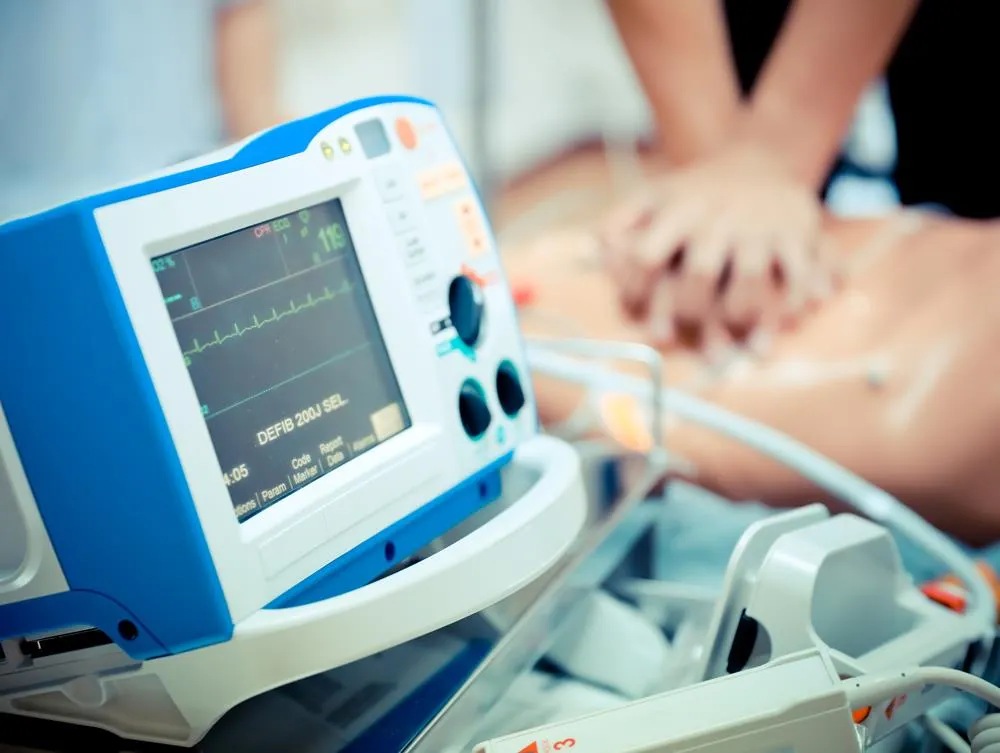
Advanced Cardiovascular Life Support (ACLS) algorithm


Yousef Khouli: The Advanced Cardiovascular Life Support (ACLS) algorithm is a standardized, evidence-based approach used by healthcare professionals to manage cardiac emergencies. ACLS protocols include specific medications and doses tailored to different cardiac rhythms. Here’s a detailed breakdown of the ACLS algorithm, including medication doses:
- Initial Assessment:
- Begin with a rapid assessment to determine responsiveness, establish an airway, and assess breathing and circulation.
- Check for a pulse. If absent, initiate Basic Life Support (BLS) with chest compressions and ventilation.
2. Cardiac Rhythms:
A) Identify the cardiac rhythm using continuous monitoring and electrocardiogram (ECG) interpretation.
B) ACLS provides specific algorithms for managing different rhythms:
C) Ventricular Fibrillation (VF) and Pulseless Ventricular Tachycardia (VT):
- Administer a single shock using a defibrillator.
- If VF/VT persists, follow with CPR for 2 minutes, then reassess and provide another shock.
- Administer epinephrine 1 mg every 3–5 minutes during CPR.
D) Asystole and Pulseless Electrical Activity (PEA):
- Focus on high-quality CPR.
- Administer epinephrine 1 mg every 3–5 minutes.
3. Defibrillation:
- For shockable rhythms (VF, pulseless VT), use an Automated External Defibrillator (AED) or manual defibrillator.
- Biphasic shocks are typically used, with energy levels ranging from 120–200 Joules.
4. Medication Administration:
- Epinephrine:
Initial dose: 1 mg IV/IO every 3–5 minutes. - Amiodarone:
For VF/pulseless VT resistant to shocks and epinephrine.
First dose: 300 mg IV/IO. Follow with a second dose of 150 mg if needed. - Lidocaine (Alternative to Amiodarone):
1–1.5 mg/kg IV bolus, repeat at 0.5–0.75 mg/kg every 5–10 minutes, max total dose 3 mg/kg. - Magnesium Sulfate:
For torsades de pointes or suspected hypomagnesemia: 1–2 g IV/IO.
5. Advanced Airway Management:
Consider advanced airway interventions (endotracheal intubation, supraglottic airways) as needed for airway control.
Get Yousef Khouli’s stories in your inbox
Join Medium for free to get updates from this writer.
6. Post-Cardiac Arrest Care:
After return of spontaneous circulation (ROSC), focus on post-cardiac arrest care:
- Optimize ventilation and oxygenation.
- Identify and treat the underlying cause.
- Consider targeted temperature management for selected patients.
It’s crucial for healthcare providers to be well-versed in ACLS algorithms, including the specific indications and doses of medications. Regular training and updates ensure that professionals remain proficient in delivering high-quality care during cardiac emergencies. For the most up-to-date information, healthcare providers should refer to the latest guidelines from the American Heart Association.


Other Articles by Yousef Khouli:
@Yousef_Khouli