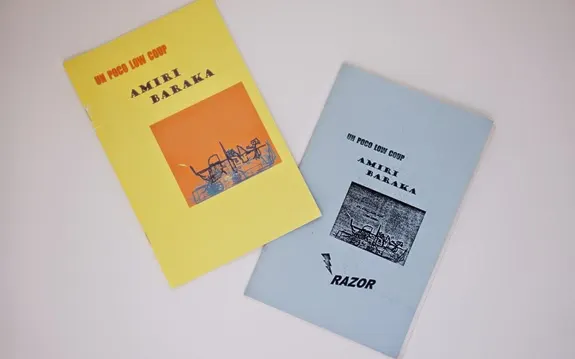
Process Notes Assignment

Where are you in your sound writing process?
- I am in the final stage of writing my script. I currently have about thirteen minutes of spoken content.
What’s been done, and what’s still left to do?
- I have all of my segments drafted and mostly finalized. What I still need to do is go back through the script to make it sound more personal and natural, closer to how I would actually speak out loud. I also want to revise some areas for clarity, especially when explaining concepts like imagery and motif.
What are your biggest accomplishments and failures so far?
- One of my biggest accomplishments has been organizing the structure and flow of my script. I think the order of my analysis makes sense and helps guide the audience through the information. My biggest struggle has been my delivery; I want to bring more of my personality into the script so it feels less formal and more engaging.
How do you feel about that?
- I feel okay about it because I know delivery improves with practice, and this is something I can continue to work on.
What have you learned so far?
- I have learned how to build a script that combines literary analysis with soundwriting. I’ve gained a deeper understanding of how to analyze a poem using tools such as imagery, political and historical context, and other techniques that help uncover deeper meaning in the piece.
What ideas did you grapple with?
- I explored the Low Coup and haiku poetic forms, and I grappled with the question of how they are structurally similar yet serve different purposes and deliver different messages.
Which problems have you solved, and which are you continuing to grapple with?
- I’ve solved the problem of understanding how the two poetic forms differ and what each one attempts to convey. However, I am still working on incorporating my own opinion into my analysis. I am used to keeping my personal perspective out of academic writing, so this remains challenging.
How might you overcome the challenges and struggles?
- Talking through confusing ideas with my professor or classmates helps me clarify my thoughts. With more practice, both writing and speaking, I think it will become easier to express my own voice and opinions.
What decisions have emerged lately as you plan and work on your project?
- As I have worked more deeply on the project, I’ve discovered additional ideas that I want to incorporate, especially connections between Baraka’s work, contemporary political issues, and my own studies in political science.
What is the next step in your composing process?
- My next step is to add final touches to the script and practice my delivery as much as possible.
What do you need to do, know, and write?
- I need to refine my explanations of key concepts, strengthen my transitions, and make sure my voice and personality, as well as perspective, come through. I also need to continue practicing reading the script aloud so that the pacing and tone feel natural.
Walk through the four elements of the rhetorical situation
How are you feeling about your progress toward achieving your purpose?
- I feel confident that my script is moving toward its purpose, which is to guide my audience through a clear, insightful analysis of Amiri Baraka’s low coup form and poem “Monday in B Flat”. The content is strong, and with a bit more polishing and personalization, it will communicate my ideas effectively.
How are you feeling about your progress toward affecting your audience?
- I think I am making solid progress, especially in terms of organization and clarity. As I add more of my own voice and refine my explanations, I think the final version will engage the audience more successfully.
How are you feeling about your progress toward situating your work in the time and place of your context?
- I feel good about how I’ve connected the poem’s historical and political roots to today’s political environment. Bringing in my political science background has helped me situate the analysis within a meaningful contemporary context.
How are you feeling about your progress toward following the expectations of your genre?
- I am meeting most of the expectations of the soundwriting genre, especially in terms of structure and analytical depth. The last step is ensuring that my delivery and tone feel appropriate for an audio format, which I will continue to work on through practice.
MLA Citation:
Get Sophia Maddalone’s stories in your inbox
Join Medium for free to get updates from this writer.
“Amiri Baraka.” Poetry Foundation, https://www.poetryfoundation.org/poets/amiri-baraka.
Azouz, Samy. “The New Tendencies of Black Theatre: Amiri Baraka’s Critique of the Liberal Worldview of Art and Advocacy of Subversive Aesthetics.” Literature & Aesthetics: The Journal of the Sydney Society of Literature and Aesthetics, vol. 31, no. 1, Jan. 2021, pp. 78–98. EBSCOhost, https://research-ebsco-com.ezproxy.siena.edu/linkprocessor/plink?id=06b70eeb-c5f9-3731-8f8f-b3263fcdad7c.
Baraka, Amiri. “The Low Coup as a Contemporary Afro-American Verse Form.” An Exaltation of Forms: Contemporary Poets Celebrate the Diversity of Their Art, University of Michigan Press, 2002.
Kumar, Vinay. “Out of the Ordinary: The Artistic Rebellion and Resistance in Amiri Baraka’s Tales.” The Creative Launcher, vol. 9, no. 3, June 2024, pp. 15–21. EBSCOhost, https://doi.org/10.53032/tcl.2024.9.3.03.
“Writing on Poetry: Image.” ENGL 259 Canvas Page, Siena University, curated by Dr. Belflower.