No 6. 101 Applied Motifs to Scarves


I have a side interest in designing textiles. I have long thought this was a way to carry motifs of good luck or promise, closer to you…rather than making works just for a limited stay on a gallery wall. Textiles is a way that people can interact with the plant world, the topic of this ‘Chapter Six.’ I have added some notes from a Powerpoint entitled ‘Preparing the Sagacious Scarves’.
I will share methods that can be used by any interested artist to prepare designs for digital textile design or print on demand.

Some wildflowers grow in hidden valleys, that have never been farmed. People now oversee them and fence them off from hungry local animals. Fieldwork requires instincts so partial knowledge can be pushed past, yarns followed that flow back through history, so outreach from the natural world can be represented metaphors (and also non-metaphors), and urges followed for the artist to emphasize, organize and magnify information. The above black sprigs were drawn o the backs of hand painted papaer and cut with scissors. The black shapes were arranged on the grey paper.

This scarf (above) depicts a Morning Iris, whose flowers wither by the afternoon, or with a hint of too much heat. It is okay to be like a delicate morning iris, preferring shade and moisture. We all do not need to be in the blazing spotlight. This design was made using scraps of coloured paper, glued to a board, later to be rotated and flipped on the computer.

How are plants adapting? These sprigs (above) were found in Central Australia where it reaches 50C-120F and 0C-20F on winter nights. These plants have my respect for their survival capacity. They look ancient and you sense their difficult world. Waxy coverings, limited evaporation through their shape and surface areas, the directions of the leaf pointing, flowers without petals… just stamens, water storage within…there is a lot that has been overlooked by designers. There is a richness to be found beyond sitting at a computer an imagining the usual stereotypic leaves for textile design. I gathered a bag of fallen sprigs and drew them later in the cooler evening, then painted with watercolour.

On regular Friday walks, two ladies walk along a wetland path. A sprig of dropped leaves was picked up and has been traced and painted as the basis for this design. Unwanted, it lives on and has been given significance. Gum trees are common here, but each has its distinctions. The artist can archive a gum tree from a meaningful place to stay with someone ‘stuck’ indoors, like those in a health care setting. Small merciful reminders of an outdoor place, can be made, in this case, painting gouache on coloured paper.

Weeds, discrete herbs, car park plants, how can they, too, be used ? Regional artists can secure their own ideas about place, even when using tiny shards of locally enhanced papers. I create paste papers using thick cornflour paste and paint, then drag twigs and so forth through them to achieve texture. Small pieces were then cut and pasted into a design.

These graphite pencil drawings were done on location and later painted when there is more time to think. They may appear as portraits, though I suggest it is easy to humanize the plant world when we should avoid doing so. Still, personality and gesture can be seen in their forms. They were drawn on location, and later coloured with my hand-made watercolours.
Freshen your ways of looking at the real world. Find souvenirs from the natural world that you have already brought home…special visitors to your home…harvests. How can these objects still convey messages to you over time? Could you wear images of your souvenirs?
Get Sue Michael’s stories in your inbox
Join Medium for free to get updates from this writer.
Uncommon days, disaster, climate challenges…it is the artists’ gift that they can represent such days. Who is documenting the aftermath? How does the plant world cope and return? The tornado trees bend, but some may not snap. The trees may host the snakes during hurricane / cyclone season when the ground is flooded. Have you seen a snake hosting scarf before?

A friend invited me to her backyard to document its treasures. Again, there may be more inspiration to find in the real world (above). Tune into the feelings you are experiencing when exploring new gardens…let joy be your compass when designing. I sat at the kitchen table with coloured pencils to create the design made from graphite sketches. This shares the studio scales of my predecessors, with modest supplies of tracing paper, cartridge paper, pencils and a ruler…hopefully, not an eraser.

I have amassed images of hundreds of sprigs from my places of greatest interest. I have drawn shapes onto old manilla folders and cut out the shapes in one careful line. I have a resulting mask and stencil of plants, now, and I am still free to play with all their shapes. Sometiimes I have made stamps from craft foam, to make repeat patterns. Contemporary art has enjoyed large spectacles and poking the viewer, but there may be something more gracious and gently comforting with inputs from the plant world.

There is a domestic scale to this scarf (above), for the designs were made on A4 paper that was then joined and flipped on the computer.


I found a Youtube channel where a man strolls through South Korea, over long hours. I was struck by the beauty of the winter branches on an urban hill top…with their promise of a green canopy over a gilded walkway for the summer afternoons. I painted gouache on black paper whist watching this ‘slow tv’. This could be considered armchair travel.

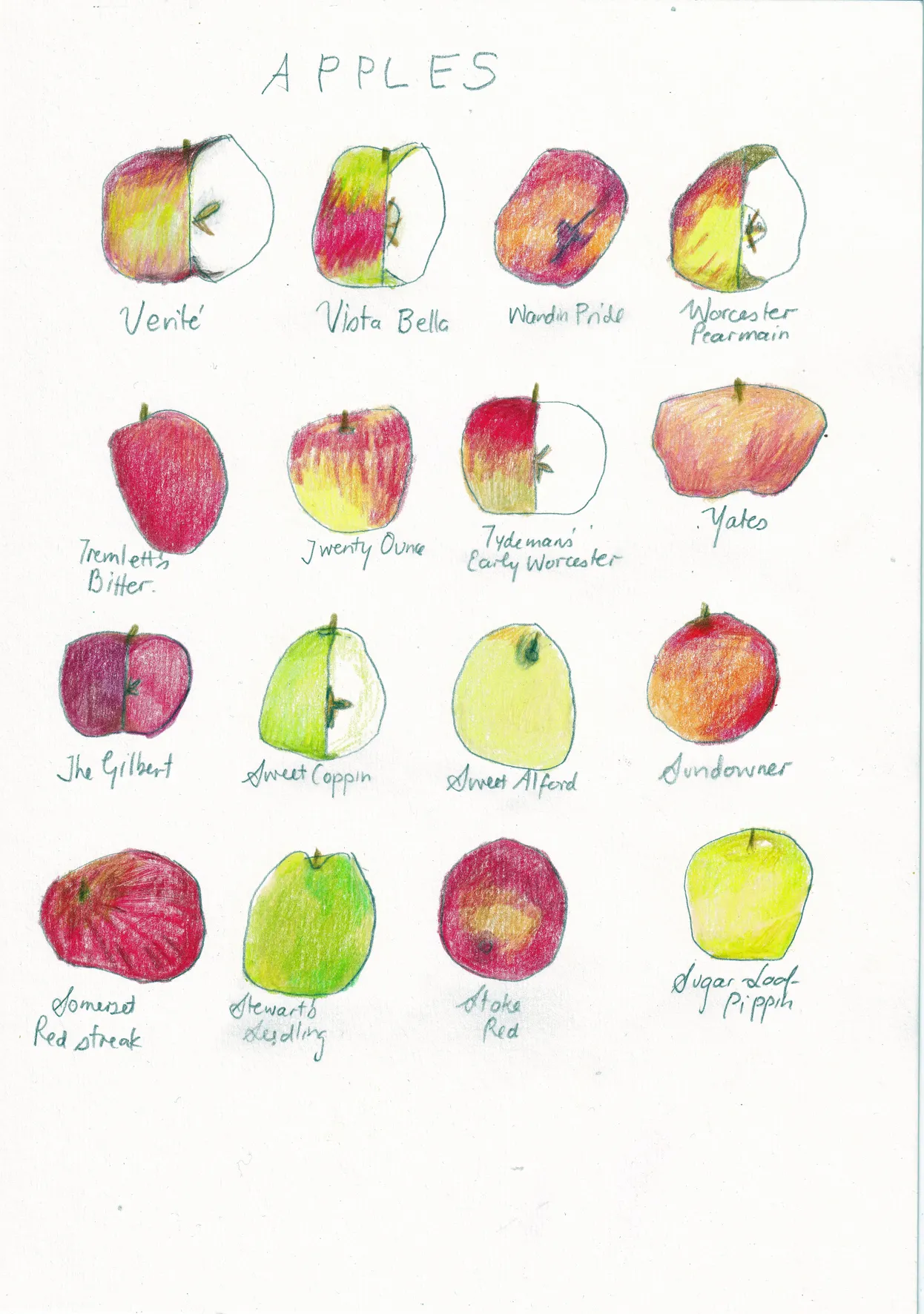
There are ways for plants to have actual participation in your designs. Paint can be sprinkled from a bunch of dried straw-like foilage. Marks can be made into thick paint by the actual plant. Leaf surfaces can be coated and printed. Vegetables and fruit can be inked up and printed, as shown above. It can be messy process, but the artist’s careful placements of prepared shapes can be transformative for those plants.

I feel the energy of those natural objects is greater than craft shop stencils, or bubble wrap from the bin. The perfectly imperfect marks oppose computer generated graphics. The muted colours are made by the use of natural pigments, soils, ochres , crushed shells, and this may tie in with designs made from direct contact from sticks, shells and rocks and so forth.

The women in my ancestral line used to make petal arrangements for the kitchen table, often at the end of summer when there were few flowers left to gather into a vase. You, too, can gather even just six blooms, separating the petals and arranging them into a loose circular design. Craft groups, such as those found as part of the Country Women’s Association in Australia still have displays and more durable results can be obtained by placing petals in saucers of wet sand. The small daily practices can be given a new life upon a scarf. Transient flowers can live on in their time specific combinations.


I am caretaker of my Great Aunty Lucy Armstrong’s pressed flowers, made in the Middle East whilst a nurse in the Australian Army during World War One. They are, of course, over 100 years old, but are in beautiful condition. We can help plants reach us over great stretches of time. We can then reexamine discrete connections others have had with nature.
I have been making my own gelatine plates for 25 years, but there is a great burst of creativity within the wider arts community with them, at this time. The soft printmaking plates, allow quick and intuitive scenes to be represented, with a scrape of a sprig or a cut paper shape used to enhance the scenes. Layers can be built up and mixes of colours, perhaps uncommon to that plant world, can be trialed. These processes are non-toxic and, thus, suitable for all ages. In that fast and instinctive immediacy, the poetic can come alive within the smallest of details.

There is also opportunity to make block prints using linoleum or the modern Ezy-cut/Speedball synthetic rubbers (above).

Huge lists can be made of the ways plants have helped us over the centuries. Sensitivities to that may be a way to give thanks to the plant world. Collaged papers (above) have been cut and pasted to share wooden tools, camping equipment and basketry in these scarf designs, above.

Simple paper cutting has long traditions all across the world. One colour of cut paper is placed against a contrasting colour of paper. Simple scenes can be made…scenes that we often pass by quickly, but are none-the-less meaningful. It may take some trial and error to find patterns that suit your new choices; I cannot choose Austrian pines, nor Chinese lotus blossoms. The local plants may delight in being made into a cut paper design.

Gestural drawing is done quickly, such as whilst in a moving car. There is little time to think, you just have to put down on paper. Only essential knowing of what you see in front of you is wrapped within those drawings. It can be intense and calls for refined eye to hand co-ordination. You can build up solid personal libraries of shapes, though. I have been known to draw movies, space craft launches, the Tour de France and just people in the local park in this same way. It is not an easy process, but you will be rewarded with surprising insights. The colouring is, for me, done later in the evening.
Drawing skills are not needed. Fallen sprigs were placed on my paper , then traced for the exact shape of the leaves and stems, using graphite pencil. The darkened nodules and candy striped leaves were added in a later moment, as a way to distinguish the playful nature of that tree. This is a way for me to blend scientific , analytical knowledge (traced leaves) with the more imaginative (giving the dead dried khaki coloured leaves some new stripes).

Many flowers and herbs have been given specific metaphysical and philosophical meanings over the centuries. A quote from A Modern Herbal, a book written by Mrs M Grieve, first published in 1931, suggests “It was once the custom to suspend a rose over the dinner table, as a sign that all confidences were to be held sacred. Even now, the plaster ornament in the centre of the ceiling is known as the rose .”
On the day of Queen Elizabeth’s funeral, I drew the processions and rituals in real time. Flowers have always been messengers of love, with their perfume, beautiful colours and markings, perfection within shapes, and promise of new life…or new cycles in life.
We are all capable of finding symbols to wear close to the body.