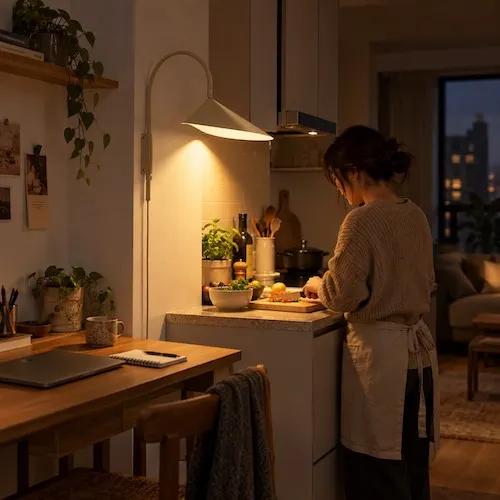
The Orange-Peel Debate at My Dinner Table

A dinner-table argument about orange peels became an unexpectedly sensible way to judge a kitchen light.
A Cutting-Board Argument
The conversation began with orange peels on a cutting board. One friend argued that almost anything could become a material if marketing language worked hard enough. Another pointed at the compost bowl and asked what usefulness actually meant after an object left the kitchen. I had no intention of settling materials science over pasta, but the debate exposed a habit: I liked unusual materials in theory and chose very conventional objects in practice. The empty shelf beside the fruit bowl became our test case. It needed light and character, but not another object pretending to save the world.
Get Snowflake’s stories in your inbox
Join Medium for free to get updates from this writer.
A Material With a Second Job
That is how the Ohmie the Orange Lamp from Kikilighting entered the story. The listed material is made from recycled orange peels, and the lamp comes in bright color choices. I treated those as design facts rather than permission for sweeping environmental claims. On the kitchen shelf, its material has a satisfying relationship with the fruit bowl without becoming a joke. The lamp is small ambient lighting, useful for atmosphere during dinner and for softening the shelf after the main cooking lights are off. It is not my only light for chopping or reading recipes.
Bright Color, Honest Limits
Bright color needs restraint around it. I removed two tins and kept the wall behind the lamp plain. Kikilighting supplied the curious material and color; ordinary kitchen life supplied everything else: grocery lists, crumbs, a tea towel that never hangs straight, and people reaching past the shelf for glasses. The lamp works because the room does not behave like an exhibit. I also learned that explaining the material once is interesting; explaining it to every visitor turns dinner into a product presentation. Most evenings, it is simply the cheerful object beside the oranges. Color behaved differently throughout the day. In morning sun it looked energetic beside lemons and a blue mug; after dinner it became a smaller, warmer punctuation mark. I moved the fruit bowl twice before admitting that the first location had been fine. The only real conflict was a patterned tea tin, whose determination to attract attention exceeded its importance. It moved into a cupboard and has suffered no visible emotional damage. Guests can still reach the glasses without shifting anything. Cleaning is straightforward, though the kitchen setting means I do it more often than I would in a bedroom. Flour, steam, and curious materials should not be asked to share a shelf indefinitely without maintenance.
After the Plates
After the plates were cleared, the original debate returned. Nobody reached a grand conclusion. We ate the last orange, dropped its peel into the compost bowl, and switched off the main lights. The small pool of color remained on the shelf while someone searched for a missing container lid. I would browse Kikilighting again, while keeping claims as modest as the lamp’s role. Materials can have a second job without carrying an entire moral argument. The compost bowl went outside the next morning; the shelf stayed bright enough to make breakfast feel less gray.