A Melody of Hues
What is colour of love? of grief? of hope?


1 | When Rain Sang Blue Light
October 2025. The storm is the same as it always is.
The rain hammers the corrugated iron roof overhead. I am sitting at the same desk in the same room in Enugu that I sat at five years ago. The desk still has the chipped paint, still has the ink blots I made before I knew what I was doing with ink.
I am twenty-five years old, and I am still afraid of blank pages.
I close my eyes. The wet earth smell comes through the open window. Enugu at the end of the rains. I breathe it in, and for a second, I am twenty again, and everything that happened between then and now belongs to someone else.
It doesn’t.
I open my eyes. I write the word serene. It still paints a wash of baby blue in my mind, lavender at the edges. Something still tastes faintly under it, like a name I almost remember. Not everything left with her. I used to think it would.
Some things came back slowly. Some things I am still waiting on.
Down the road, a neighbour’s generator starts up. My father had solar panels installed years ago, so we are past all that. But the sound still finds you. Every Nigerian knows what a generator sounds like. It sounds like a question nobody has answered in sixty years.
Tonight I’m not writing about that.
Tonight I’m writing about a coral dress. About a name that tasted like dark chocolate and orange peel. About a phone call that ended badly and never got to end better. I am writing it all down because five years is long enough to carry something in your head and short enough that you still get the details right.
I’m writing because I promised I would.
2 | Words and the Girl Who Asked What They Tasted Like
I should explain the way I work. Without it, none of this makes sense.
Words are not, for me, just words. When I was small, my mother thought something was wrong with me. She would find me in the kitchen, standing still, eyes closed, tasting a word. She told my father. He took me to two doctors and a pastor, and when none of them satisfied him, he bought me notebooks and left me alone.
My mother had a different approach. She sat with me sometimes and asked what specific words tasted like. She wrote them down. She was making data of her child’s strangeness, which, in retrospect, was love.
I am what is called a synaesthete. My senses cross. Words have colours and textures and tastes. Freedom fizzes on my tongue like sea salt from the Atlantic. Justice bites as bitterly as a kola nut. The K in my name crunches. The Z hums low, like an engine on a good road. When I pick up a pen, all of that comes out.
My sister Uloma tested this constantly.
“Mr. Rainbow-Mouth,” she said one afternoon, in the tatty bedroom slippers she wore everywhere, “describe rice and beans.”
I thought about it. “Brown and warm,” I said. “Like a Saturday.”
She looked at me. Then her dimples appeared. There is always trouble behind Uloma’s eyes, the enjoyable kind. She grabbed a pillow and lobbed it at me.
“You and your colourful nonsense,” she said.
My brother Okwudili, fourteen and already given over entirely to PlayStation, looked up long enough to roll his eyes. Across the sitting room, my parents exchanged a glance. I knew that glance. They had already decided what mattered.
That was their way.
I met Ibukun in my first year at the University of Lagos, in Introduction to Philosophy, on a sweltering Tuesday.
Professor Umolu was explaining existentialism to a room that wanted him to stop. My notebook was open. I was drawing what the word dusk tasted like in the margin — something slow and blue-purple — when the door opened, and she came in.
She was wearing a dress the colour of coral, with patterns that moved when she walked. She came to my row and sat beside me without asking permission. People who are sure of themselves don’t ask.
“Hi, I’m Ibukun,” she said. Her voice was low and unhurried.
Her name landed on my tongue: dark chocolate, rich, and at the very back, something bright and sharp like the inside of an orange peel. I kept this to myself. I had learned not to say it immediately.
After class, she stopped me in the corridor. There was somewhere she wanted to show me. She led me across campus to the lagoon side, where the water came right up to the concrete edge. The sky had gone deep amber at the horizon, the way Lagos October skies do when the rains are giving their last push.
She turned to me. “What does my name taste like to you?”
Someone in the department had told her. Of course, they had.
I held her name in my mouth and let it settle. “Dark chocolate,” I said. “And something bright at the back. Like the inside of orange peel.”
She clapped once. Her delight was unguarded. She did not consider whether it was appropriate.
“And what colour is love?” she asked.
I actually thought about it. “It’s not one colour,” I said. “It’s a melody of shades. Red. Yellow-brown. Deep blue. Each one doing something different.”
She hummed. Something in my chest shifted.
I didn’t know, then, that I was looking at the person who would destroy my gift and give it back to me.

3 | Brother in the Silence
By the end of the first month, we were reading Achebe under flamboyant trees, arguing about Ayọ̀bámi Adébáyọ̀ versus Teju Cole over stolen fried yams from the woman near the faculty gate. She read with her whole body. She marked pages with her thumb and went back to argue with sentences she’d already read twice. I had never met anyone who read that way. We matched in that.
But she carried something I kept catching glimpses of. It showed differently depending on the day. Some days she was all motion and wit, her presence so loud I stopped thinking about anything else. Other days, she would stop mid-sentence, and her face would do something that wasn’t grief exactly. What I was looking at had been lived with for a long time. It had settled into her posture.
One night by the lagoon, the two of us sitting at the water’s edge, she told me about Tayo.
Her elder brother. He had been twenty-six. Two days from a flight. He’d built a tech hub for young developers in Yaba and won a placement abroad to pitch it. The night before the flight, he was driving back from a meeting on the FESTAC link road when the police stopped him. They demanded to search his phone. He refused. He knew his rights. Ibukun said this with something close to pride, that he knew them like he’d written them himself.
One of them fired.
He collapsed in the gutter. Blood went into the drain. An ambulance came slowly. At the hospital, the nurses asked for a police report before they would treat him. He died waiting for the paperwork. Not from the bullet. The system refused to treat him without the correct form.
Ibukun told me all of this. She was crying. She didn’t stop talking. I learned, later, that this was how she handled the hardest things: she let the tears come and kept going through them. She could do that. I never could. When I cry, my voice goes first.
“He was going to change things,” she said. “That was the thing. He really believed it.”
She wasn’t looking at the water.
“I won’t let the system keep eating dreams.”
After that, you could see it in her. Not in what she said. In what she stopped tolerating.
4 | Colours of Weekend Sun
The year I turned nineteen was the fullest year of my life.
We organised a campus book drive, sorting titles under a mango tree in the late morning heat. We visited orphanages. Ibukun had contacts, lists, follow-up schedules, all of it in a battered notebook she carried everywhere. We talked about what we wanted from our lives: her NGO, my public readings, her legal aid work, my poetry nights. And made plans the way young people do, without thinking seriously about what could stop them.
One Friday, after hand-washing clothes at the hostel borehole, our palms wrinkled from the cold water, she turned to me.
“Kaizu. Promise me you’ll never bury your gift under fear.”
She had named the thing I never said out loud. I nodded. She leaned forward and kissed me. Her lips tasted of Ovaltine and sudden courage. Somewhere across campus, thunder rolled, which felt like the universe deciding to have a sense of humour.
At the end of that semester, I asked her to come home with me to Enugu. She said yes before I’d finished the question.
That weekend, Uloma greeted us with extra jollof. Ibukun sat on the front veranda with little Amuche from next door, who talked fast and without pausing to check if anyone was listening. Ibukun sat there and took it all in. Okwudili later pulled out his rap lyrics. He’d been mixing Pidgin and English, and there was something real underneath the awkward lines. We worked through them together. I mostly listened while he found the right thing himself, and told him when he had it.
I fell asleep that night before midnight, which had not happened in months.
Then October came.
The protests broke out in every city. Lagos. Abuja. Port Harcourt. Enugu. Calabar. Ibadan. End SARS. End SARS. The chants went from phones into the actual streets. On our street in Enugu, you could hear them: distant at first, then on the next street, then everywhere. Ibukun was in Lagos, where it was loudest, where Lekki was. She posted from the front: We are not leaving. #EndSARS!
I had been watching her posts since the beginning. My phone was always in my hand.
I was in Enugu. The protests were happening on my own street, and I was inside the house.
I wrote poems and posted them online. People shared them. But I knew — sitting in my father’s house while she was in Lagos at the centre of it all, while people were marching past my gate — that a poem posted online is not the same as a body present. I knew it, and I stayed inside anyway.
I had reasons. The roads were not safe. My senses get flooded. My mother would worry. The poems were reaching people. I believed every one of these reasons.
She called on video one evening. Her face was wet. She was outside, moving. “Are you out there, Kaizu? Enugu is marching.”
I said I was home. I said I was writing.
She looked at me for a moment.
“You have this gift and you’re at home, posting for people who already agree with you.”
She ended the call.
I sat with the dead phone for a long time. Then I opened my notebook, wrote another poem, and posted it, as if that helped.
She didn’t call back that night. She never did.

5 | Night of Red Notes
October 20, 2020.
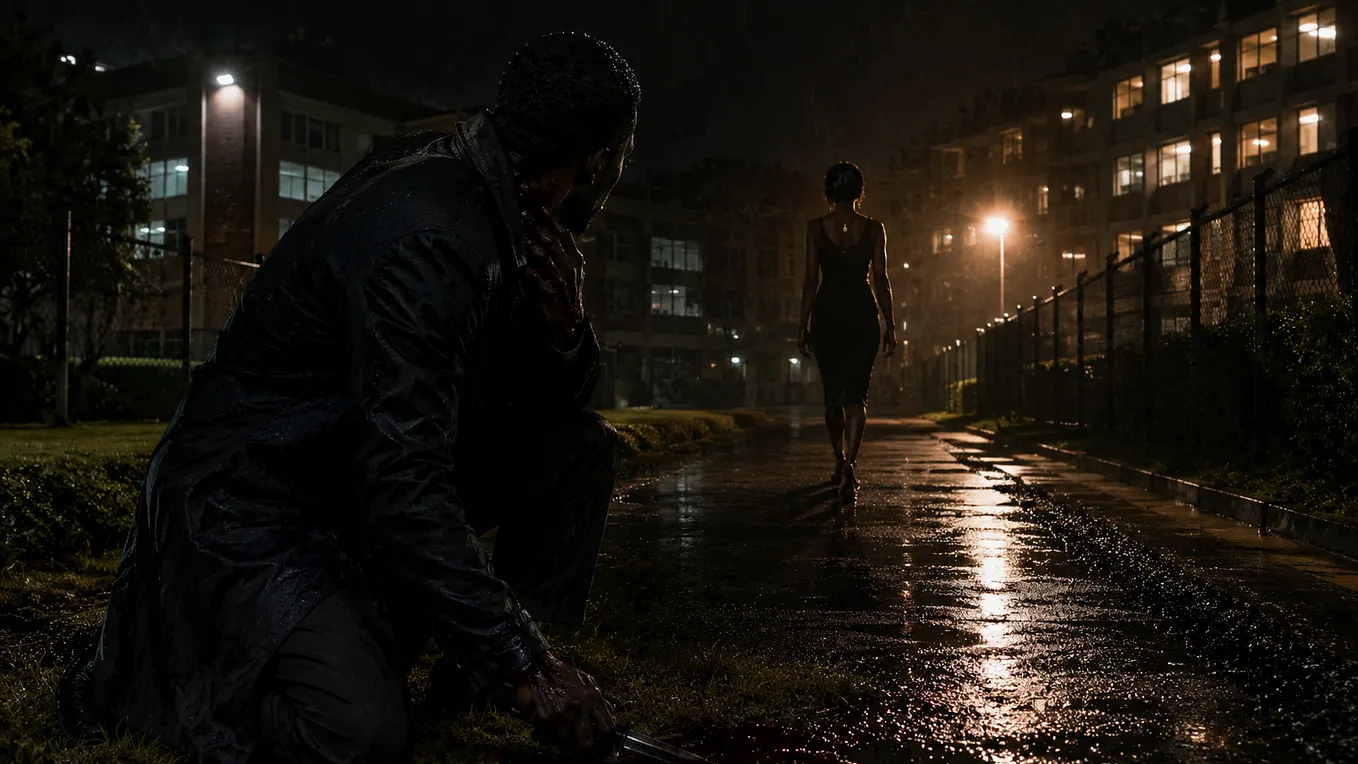
At 8:43 PM, the power cut in Lagos. In the dark, phones lit up with videos. Lekki Toll Gate. The lights had been deliberately cut there. Soldiers. One terrible thing becoming clear.
I called Ibukun. The phone rang into nothing. I called again. Nothing. Four more times. Each ring was a small and specific horror.
Outside, it started to drizzle.
My father found me pacing the sitting room. He is a big man, my father. When he walked in, I stopped. That night, his voice trembled, though his body didn’t.
“Pray,” he said.
We knelt on the cold tile floor. My mother came. Then Uloma. Then Okwudili. We made a circle and said words that felt too small for what was happening outside. I kept one eye on my phone.
Hours moved like something injured.
At dawn, Ade called. Ibukun’s roommate. The words came one at a time.
“She was shot,” Ade said. “In the chest.” A silence. Then: “She didn’t make it, Kaizu.”
Get Somtoo Celestine Ezioha’s stories in your inbox
Join Medium for free to get updates from this writer.
I will not describe what happened to my body when she said that. Some things deserve the privacy of not being described.
I will say this: I sat on the floor afterward and tried to taste her name. Ibukun. I held it in my mouth.
Nothing came.
Flat. No chocolate. No orange peel. No warmth.
Her name tasted like tap water, and then of nothing at all.
6 | Grey Season
Days blurred. I stopped checking the time in the mornings. It didn’t seem to matter.
I stopped tasting words. They lay in my mouth like unripe paw-paw, dense and flavourless, refusing to give anything up. My pen sat on the desk with dried ink in the nib. I kept meaning to clean it. I didn’t.
My mother moved around me with bowls of pepper soup. She sat with me some evenings without speaking, which was the right thing to do, and she knew it. My father’s torchlight passed my door twice each night. He has never been a sound sleeper.
Aunt Chika came from Onitsha and held me for longer than was comfortable. Uncle Emeka kept opening his mouth and closing it again. He gave up on words and patted my arm instead, repeatedly. The right thing, and not enough.
Their care arrived in the wrong shape. A cloth pressed to a different wound. They were trying. The wound was still open.
Uloma slipped jokes under my door on torn notebook paper:
Why did the mango refuse a marriage proposal? Too much a-peel.
I held that piece of paper for a long time. Almost smiled. Couldn’t get there.
Okwudili knocked on the fourth or fifth day, headset half-off, controller in hand. “Bro, want to play?” I shook my head. He stood in the doorway for a moment and then left. That was the right thing. Nothing else.
Little Amuche from next door came with a plate of ukwa, its yellow pods steaming. She was twelve, and her eyes were swollen. “She was like a big sister to me,” Amuche said. Her voice barely came out.
I thought: even Amuche. Even the children on this street.
I could hear girls playing down the road. Their laughter reached me from a distance. I remembered how Ibukun’s laugh had always been the loudest, the most unashamed. She had always taken up exactly the space she needed and apologised to no one.
One afternoon, Uloma sat on the edge of my bed. Not teasing. Just sitting.
“She knew you were proud of her,” she said.
She meant it as comfort. She was being kind.
It landed before I could brace for it. Because the truth was, I didn’t know if Ibukun knew. The last time we spoke, she had ended the call tired and frustrated, and I had stayed home and posted poems for people who already agreed with me. And now I couldn’t ask her. And she couldn’t tell me. And Uloma was sitting there offering something she had no way of knowing was true, and there was nothing to do with that. Nothing at all.
I turned toward the wall.
Uloma sat for a while longer, then left.
Weeks later, a package arrived from Ibadan. Ibukun’s mother. I had met her once before, during a campus visit. She had Ibukun’s eyes.
Inside the package, I found a photograph I hadn’t known existed, of our first evening at the lagoon side of campus, the sky going deep amber behind us. Someone had taken it without asking. There was also Ibukun’s battered contact notebook, the one she carried everywhere. It was full of women’s names, phone numbers, and follow-up notes, her handwriting packed tight on every page. And at the bottom, a sealed envelope with my name on it in her handwriting.
The letter was short, written on the back of a receipt. She wrote that she had been meaning to lend me her copy of Americanah, but I would have to find one on my own because she couldn’t bear to part with hers. She wrote about a documentary on the women who led the Aba Women’s Riot that she had been meaning to show me. Ordinary things, written plainly. And at the very bottom, the writing was smaller, as if she’d nearly run out of paper:
Don’t be afraid of your own voice, Kaizu. Other people need it.
The ink smudged under my tears.
Then I cleaned the nib of my pen. I was not going to waste it.

7 | Winged Words
Campus reopened in November. People greeted each other in lower voices in the hallways, cautiously, as if sound could break something. Posters of the fallen lined the walls. I walked past them every day. I never got used to it. I don’t think you’re supposed to.
Dr. Akande had heard about the poems I’d been posting during the break; one had circulated in the department. She stopped me on the path after class.
“Come to my office. I want to hear more.”
In her office, I read “Crimson Silence” to her alone. I had written it in the grey weeks when nothing tasted of anything. My hands had known what to do before the rest of me did. She sat very still throughout. When I finished, the room was quiet. She closed her eyes for a moment, then opened them.
“Do you believe poetry can change anything?” she asked. Then: “I’m asking seriously.”
I said yes.
She nodded slowly. “There’s a law student, Joseph Eze. He lost his father two years ago. The man died from injuries in a police cell, and the case went nowhere. Joseph has been organising a night vigil at the Lekki toll gate. He needs a poet. I’m going to send him to you.”
I left her office that afternoon.
Joseph found me on the path a few days later. He said, “She told me about you.” He asked if I’d come to the vigil and read. I said yes.
We gathered at the gate after dark. Candles were already burning along the memorial wall, new ones placed where others had melted. Each photograph was a face that had gone into that night and not come back out. I stood at the back for a while before they called my name. I was not sure I deserved to be there.
When they called it, I went to the mic.
My voice shook on the first line. By the fourth, it steadied.
I put into the poem the red and green and white, all the colours that were supposed to protect us. I put in Ibukun’s coral dress without naming her. She was in every line, but that part was still mine.
The crowd went quiet.
When I finished, a man in a faded Ankara shirt gripped my hand. He was crying without trying to stop. “Your words can heal, bro,” he said. I thanked him. I didn’t know what else to say.
I turned. The first light was coming up over the gate, pale and slow, the way October light rises over Lagos, uncertain before it commits. One colour. Present.
It was the first colour I had seen clearly since the night Ade called.
I stood there until the sun was fully up.
In the months that followed, Joseph asked me to read at a second vigil. I wrote “Spectrum of the Fallen” in three nights. It was angrier than “Crimson Silence,” less patient. When I read it, my knees wobbled at the start, the same way they had the first time. Afterward, a woman pressed my hand without saying anything and walked away. Two days later, a newspaper quoted two lines from the poem and printed my name next to them. I read the article three times.
Over the following year, I ran workshops. I worked with secondary school students mostly and some community groups. I showed up and read things, asked people to write things, tried to make a space where words didn’t need defending before they could be spoken.
After one session, a woman — she introduced herself as Mrs Ikemefuna — waited until everyone else had gone.
She was not tall, and age had made her smaller. Her handshake was firm. She had a brown scar that curved above her left eyebrow. Her hands, when she took mine, were dry and cool.
“Your words,” she said. Her voice was thin, but it didn’t waver. “They reminded me of my grandson.”
She paused.
“His name was Chukwuemeka. He was twenty-two.”
She held my hands for a long moment. Then she pressed them once, released them, and walked away.
I stood in that empty room for a while.
Chukwuemeka. Twenty-two.
That night, for the first time since October, I slept without dreaming of red.

8 | A Melody of Hues
October 2025. The rain on the zinc roof has slowed. Down the road, the neighbour’s generator coughs and finally goes quiet.
I set down the pen and look at what I’ve been writing for the past two hours. Five years in ink on paper.
Earlier this week, I was at Lekki for the anniversary. The memorial wall near the gate has fresh paint now, the photographs renewed each year by families and volunteers who come without being asked. I stood in front of Ibukun’s photo for a long time. I had brought a printout of the poem “A Melody of Hues,” accepted by a literary journal last month, alongside two others. This poem named her. Finally. I placed it at the base of the wall. The wind lifted the corner of the page. I let the wind have it.
I thought about what she said on that last call.
You have this gift, and you’re at home, posting for people who already agree with you.
She was right. I knew it before I went to sleep that night. I have known it every day since. I never got to tell her she was right, and that is the piece I will carry. It doesn’t go away. It doesn’t get lighter either.
Behind me at the memorial, some protesters were rehearsing a new chant, steadier than the ones from five years ago. The difference between people who are burning and people who have decided to burn for a long time.
I closed my eyes.
A child nearby — seven, maybe eight — was standing with her mother at the wall. She squinted as she pointed at the Soro Soke graffiti in faded red paint. “Mummy, what colour is that word?”
Her mother said, “Red, baby.”
And I heard it. Colour. It landed on my tongue.
Not chocolate. Not orange peel. Not the full arrival of Ibukun’s name back then. Just something. A faint warmth. The ghost of a taste, like blood returning to a limb.
I opened my eyes.
It is now 2:00 AM, and the storm has gone quiet.
Uloma sent a voice note an hour ago. She is in Abuja now, in law school, still the same voice: Brother, your birthday is in three weeks, and I am already planning to embarrass you publicly, just so you know. I sent a laughing emoji back and did not tell her I was crying.
Okwudili released a new track last Friday, “Colours of Silence.” His voice in it, the Pidgin and English, the way we used to talk, has now been built into something entirely his. Forty thousand streams. He called when he saw the number, trying to be cool about it, failing. “That was … mad o,” he said.
My mother is always moving. She calls when she can.
My father came to my last reading in Enugu. He sat in the front row. Afterward, when the room had mostly emptied, he came and took a chair from me and stacked it against the wall himself, without asking. We stacked chairs in silence for a while. Then he said, “That poem. The one about the girl at the gate.” He didn’t finish the sentence. On the way out, he gripped my arm with both hands, and that was the rest of what he meant to say.
Mrs Ikemefuna now comes to my Lagos readings. She sits in the front and doesn’t say much. Sometimes she brings chin-chin in a small wrapper and sets it on the table. She told me once, briefly, that Chukwuemeka had wanted to be a doctor.
I cannot promise this country will heal. I cannot even promise the next five years will be better than the last. Nigeria’s streets still crack under old boots. Sirens still cut through midnight in places where they shouldn’t have to. The killing didn’t stop when I started writing. People I will never know are dying in places I may never visit, and most of them won’t make the news, and I will move on from some of them, too. I am Nigerian, and we have all been made this way. I know that about myself.
But when the man in the Ankara shirt said your words can heal, bro, he was right. Just not about me. Ibukun. Chukwuemeka. Tayo. Every person who died with something in them that the bullet didn’t know it was also killing. They are what heals. I am just the one still holding the pen.
I pick up the pen.
Outside, the rain has stopped. The red earth smells of itself.
I write.
Hello. Thank you for reading my story. It means so much to me. What did you think about the work? Do tell me in the comments. Also, you can clap 50 times for the story. This helps me get more views and engagements.
Finally, why not give me a follow and subscribe to my email list so you’ll be notified immediately when I drop a story?