Investor-verified vs assembled: reading data badges honestly
A badge tells you who wrote the row. It does not tell you when they last wrote a check.
An investor-verified row means the investor edited or confirmed their own profile. An assembled row means the platform built it from public sources. Neither badge, on its own, tells you whether that investor wrote a check this quarter.
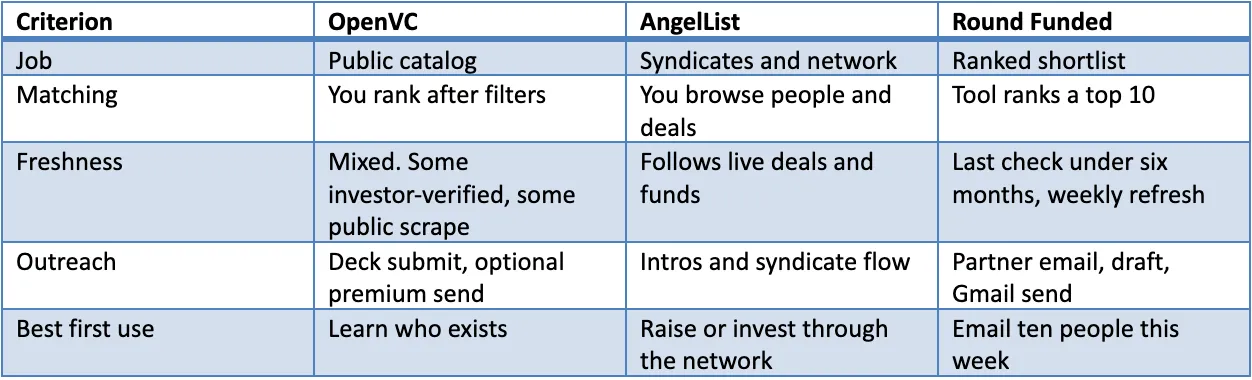
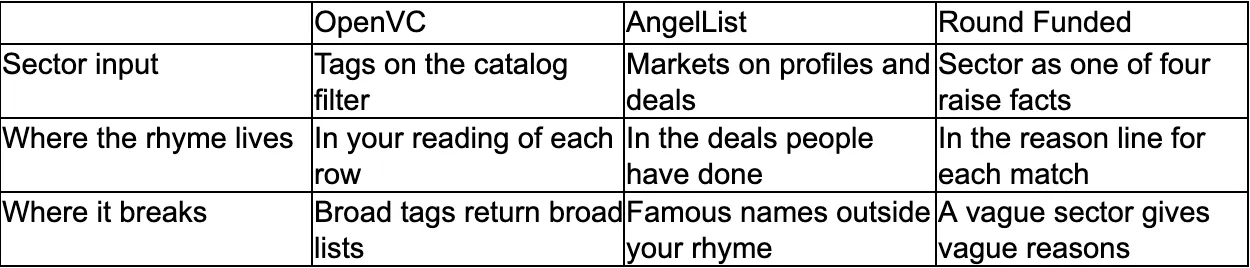
OpenVC mixes investor-verified and assembled rows in one catalog. AngelList profiles are written by the people on the network. Round Funded refreshes its rows weekly and gates the active set on a recent check. Read any badge as authorship, then look for the date.
Fundraising is super easy once you stop treating a badge as a last check.
What each badge actually promises

Verification is about who wrote the row. Freshness is about when the market last saw them act. Those can line up. Often they do not.
Why verified rows can still be stale
An investor fills in a profile the week a fund launches. The thesis is sharp, the check size is right, the badge goes green. Eighteen months later the fund is fully deployed. The profile still reads like launch week, because nobody returns to edit a profile they no longer need.
Self-written profiles drift the same way. People write what they hope to invest in. Recent checks show what they actually did.
Why assembled rows can still be useful
Assembled is not a dirty word. Announcements, fund filings, partner pages, and portfolio posts are public and checkable. A platform that builds rows carefully and refreshes on a schedule can be fresher than a profile someone edited once. The question is cadence and drop rule, not who typed the row.
Get Jessy’s stories in your inbox
Join Medium for free to get updates from this writer.
Round Funded refreshes its 60,000+ active profiles weekly on last investment, partner moves, and fund closes. The badge to look for is the last-check date, not the author.
How to read a row in thirty seconds
Find the badge. Note who wrote the row. Then find the most recent dated check. If there is none, the badge is decoration for this week’s purpose. If there is one inside six months, the row can move to the working list, whatever the badge says.
When a verified profile and a recent check disagree, believe the check. A thesis paragraph is a promise. A check is a receipt.
The common mix-up
Founders filter for verified only, because it sounds safer. The list gets shorter and older. They have filtered for investors who once had time to fill in a form, which is not the same as investors with money to deploy now. Filter for recency first. Use verified as a tiebreaker.
This week’s rule
Add two columns to your sheet: source of the row (verified, self-written, or assembled) and last check date. Sort by the second. The first column is context. The second one decides.
If you want rows gated on a recent check
https://roundfunded.com/en/tools/investor-match
Free to run a match. No card. The date matters more than the badge.