Human Agency Must Not Be Lost


Four years ago, the eight-hour day paid for doing the work.
The deal in knowledge work was simple. An employer paid for eight hours, and in return people built, checked, and delivered. Time and effort were the units, because effort produced the result.
Today the working day holds two kinds of work: doing and directing.
Doing the work did not change.
Directing the work is new for many people, and it comes down to making decisions: choosing what is worth doing, setting the goal, connecting it to what the company, the team, and the project are trying to achieve, and judging when the result is good enough. AI agents are built to serve, so an agent works toward whatever direction it is given.
Many people avoid directing, because it means taking responsibility, risking mistakes, and sometimes placing risky bets. People were judged for bad calls, and some were fired, so the natural reaction was to avoid it.
AI agents leave less room for that, because they need someone willing to decide what they work on.
People who work with agents can’t avoid deciding for long. They need to step up and start making decisions, and companies have to shift their perspective from the negativity of failure to the quick learning it offers.
Get Stefan Iarca’s stories in your inbox
Join Medium for free to get updates from this writer.
That is why the hours people spend directing matter more as agents take on the doing. They hold creativity and judgment, with human agency at their core.
Much of what I read about AI agents measures productivity. I believe the bigger change is cultural, and it happens inside each person.
In my CEO years, I often heard “I don’t want to make this decision; make it for me” or “I am not that creative; I can’t make this decision.” Many people prefer to be led, yet I saw how much it held them back. AI agents are changing this: as they take on more of the work, leaders can steer fewer of the choices across their projects. Small decisions now sit between a person and their agents: how much time and how many tokens to spend, which output is good enough, and whether it was worth the cost.
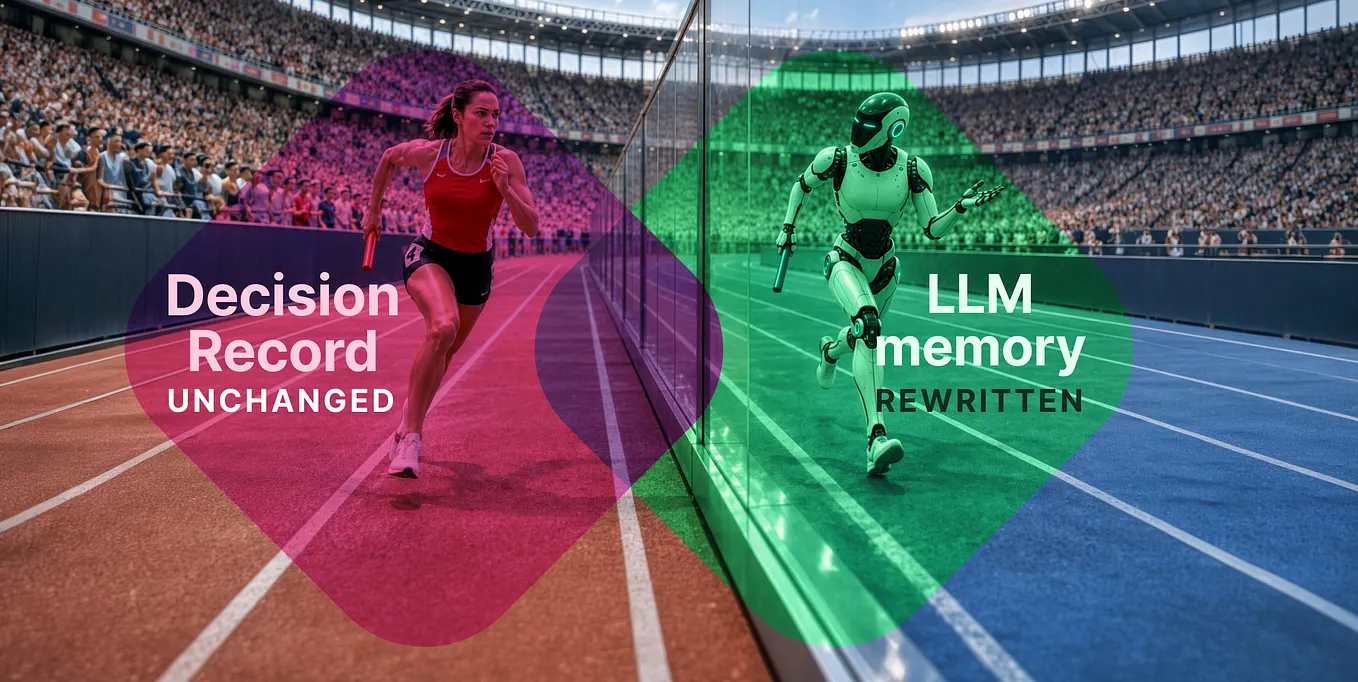
In my conversations with Bogdan Stăncescu, my friend and co-founder, we recognized early that, to succeed with Memolok, the Decision Record Platform, cultural change is one of the most important success factors.
I believe decision-making has to open up to everyone, and people need the room to be bold, stay creative, see the bigger picture, and bring emotion.
When everyone decides, decisions no longer sit with a few leaders. They are spread across many people and teams, and agents act on all of them, so each person needs to know what the others chose and why. That works best when a decision travels with its reasons: who decided, why, what they expected, and whether it is still in force.
It is easy to fear that writing decisions down slows people down. I believe the opposite holds over time, because recording a decision once takes less time than reopening it, explaining it again to each new person, and correcting work that went in the wrong direction.
This changes how I would read the eight hours. The hour spent writing down why a decision was made used to look like overhead next to the doing. When the work is spread across people, teams, and agents, that hour lets every other hour point the same way.
Companies get more of what they reward. I would reward the people who decide well and leave their reasons behind, because that is how direction reaches the people and agents who were not part of the decision.
A decision moves the person who made it. Its reasons move everyone else.