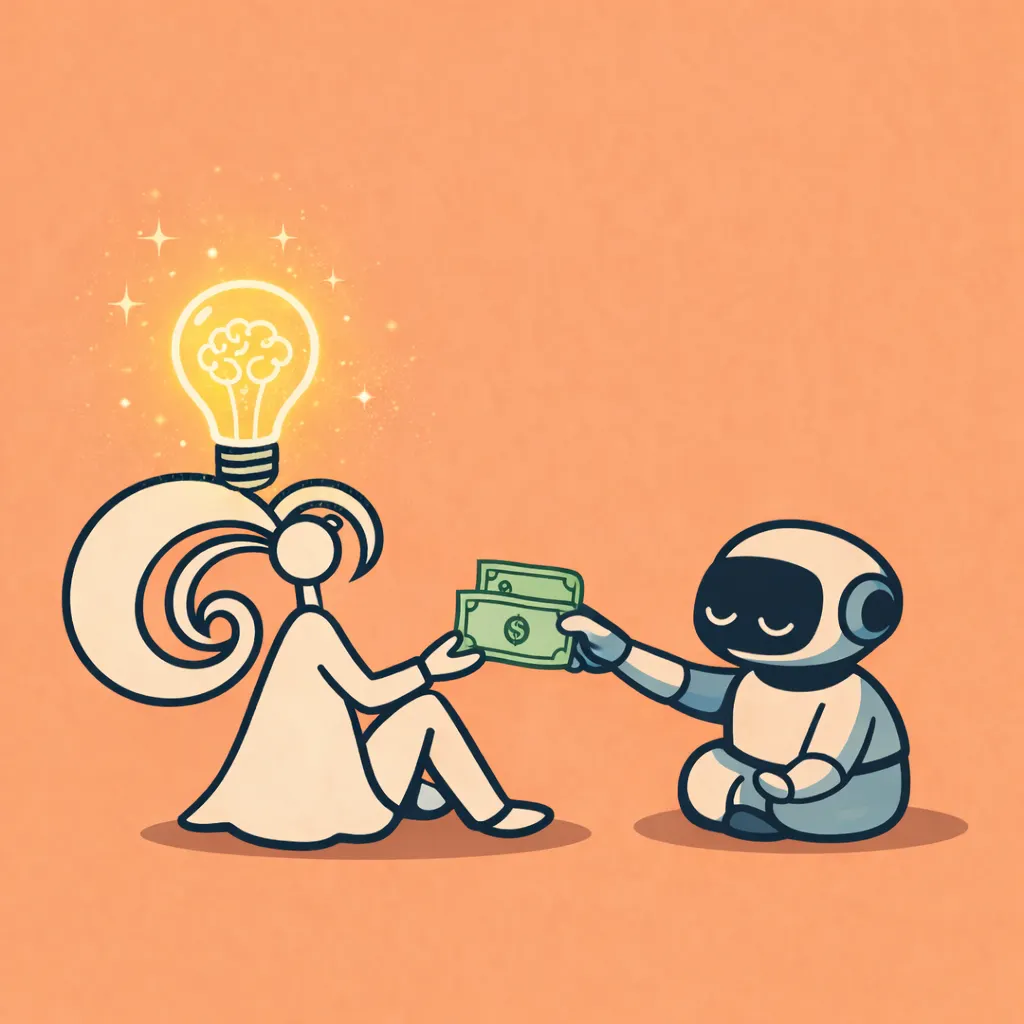
AI as Thought Amplifier — “Polite vs Casual” is a derailing frame

There’s still a persistent narrative:
“Don’t be too polite with AI. Be more casual.”
Even Sam Altman has contributed to this framing.
But this entire discussion is built on a flawed assumption.
“Polite vs Casual” is not a meaningful variable.
It distracts from where precision actually comes from.
As a heavy LLM user working with precision-based tuning,
I see what’s actually going on.
This is not a tone problem.
This is a causality problem.
Many experiments around “polite vs casual” prompts report inconsistent or even contradictory results.
Why?
Because they mistake correlation for causation.
What they observe:
→ Polite prompts often perform differently from casual ones
What they conclude:
→ Tone affects accuracy
But that’s the wrong causal model.
Tone itself is not the driver.
Tone is a surface-level composite of deeper variables.
What people are actually observing is this:
polite → longer phrasing → more padding → lower signal density
casual → shorter phrasing → more direct → higher signal density
But that difference is not tone.
Tone is simply co-varying with surface patterns.
The real mechanism is this:
Structural precision determines outcomes.
Get Rhythmic Being’s stories in your inbox
Join Medium for free to get updates from this writer.
You can be polite and extremely precise.
You can be casual and completely incoherent.
Tone doesn’t determine accuracy.
Cognitive structure does.
The contradiction across studies comes from this:
They isolate “tone” as a variable,
but fail to control for the underlying structural factors that tone co-varies with.
Here’s the real issue:
People don’t meta-analyze their own language behavior.
Common failure patterns:
→ Criticism without pinpointing the exact problem
→ No explicit request for improvement
→ Emotional reactions replacing structured intent
→ Contradictory instructions packed into one prompt
And then they blame “tone.”
If your input is structurally weak, no tone will fix it.
Precision tuning begins here:
→ Define the problem clearly
→ Isolate the exact error
→ Specify the desired change
→ Keep intent logically consistent
This is the real control layer.
So the question is not:
“Should I be polite or casual?”
That question itself is a distraction.
The real question is:
“Is my thinking structured enough to be understood by a machine?”
AI does not respond to manners.
It reflects cognition.
And if you optimize the wrong variable,
you will never reach precision.