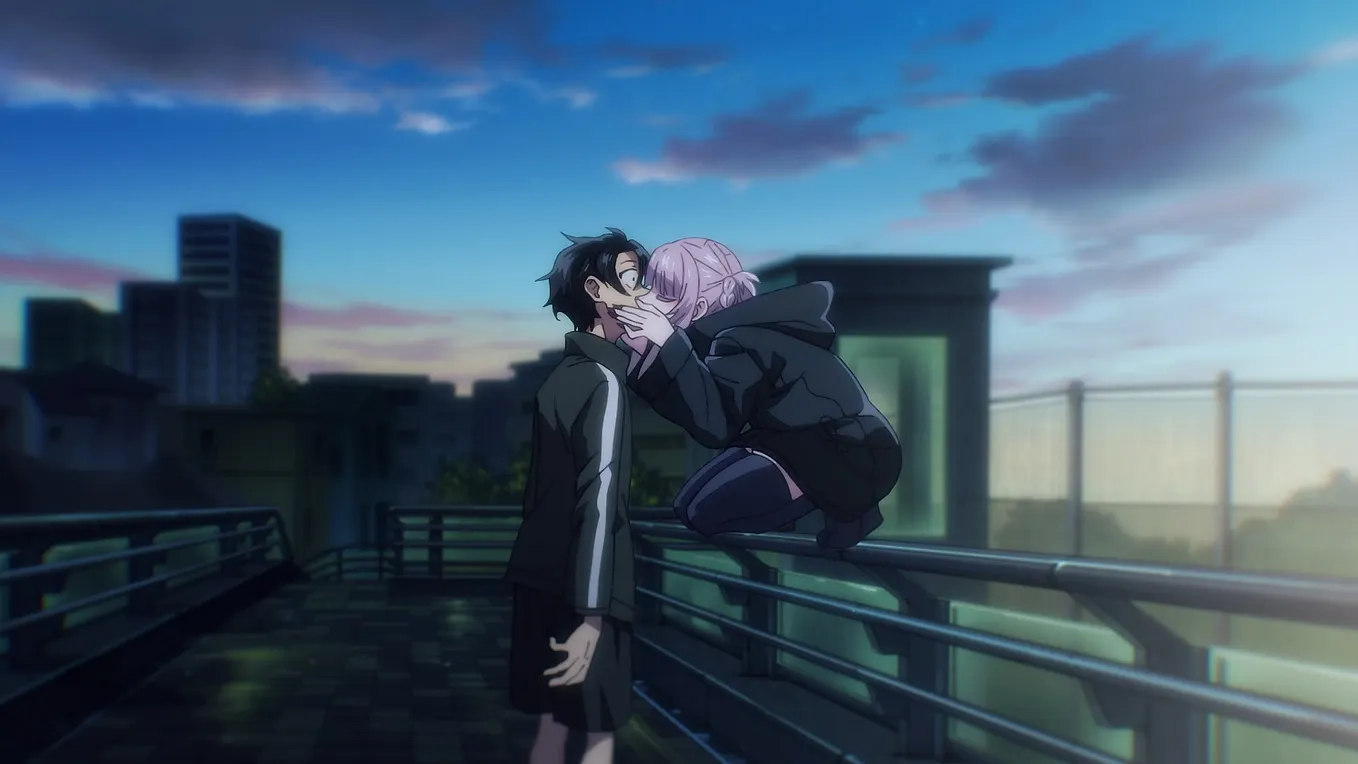
Makeine Understands Rejection Better Than Most Rom-Coms

A loser stumbles into other people’s love stories. Every single one of them is already falling apart. And somehow it’s both hilarious and devastating.

Here’s the problem with romance anime in the 2020s.
They’re fine. Genuinely fine — cute, warm, easy to watch. But somewhere along the way the genre collectively decided that drama was the enemy. That heartbreak was too risky. That the intense emotional moments that make a great romance actually stick with you were too cliché to attempt.
So instead you get feel-good. Wall-to-wall feel-good. Pleasant and forgettable in equal measure.
And then Makeine showed up and said forget all of that.
The opening scene sets everything up perfectly
Nukumizu is a loner. Not the dangerous brooding kind — just a regular guy who keeps to himself and actively tries to avoid getting involved in other people’s situations. He’s sitting in a diner, minding his business, when he overhears something he wasn’t supposed to hear.
A blue-haired girl is confessing to someone. Getting rejected. Being told gently, devastatingly, to move on. It’s someone else’s climactic romantic moment — the kind of scene that would normally be the centrepiece of its own anime. Nukumizu watches from a distance. So do we. It’s dramatic, it’s interesting, but we’re not emotionally involved. We’re just bystanders.
Then she picks up a straw. A chewed up straw. His straw.
And she just — puts it in her mouth.

What a terrible day to have eyes.
Nukumizu cannot escape this situation fast enough. Neither can we. And just like that, completely against his will, he gets dragged into the aftermath of someone else’s love story. That’s the whole show. That’s Makeine.
The premise is genuinely brilliant
The series is about the losing side. The girls who didn’t get chosen. The stories that ended before they began. The people left standing after someone else’s love story reached its conclusion.
Nukumizu keeps stumbling into these moments — these climaxes of other people’s narratives — and slowly, reluctantly, against his will and arguably against ours, he starts to care about what happens to them.
Get The Midnight Rewatch’s stories in your inbox
Join Medium for free to get updates from this writer.
It’s kind of like Gintama in that it’s a parody of its genre but ends up having better writing and better serious moments than most of the things it’s making fun of. Every cliché is cranked to an almost absurd level of self-awareness. And then — crucially — the show still delivers on the emotional beats when they matter.
You’re laughing constantly. And then episode eight happens and you are not laughing anymore.

Episode eight
I’ll say nothing about what happens except that it is not what you expect from a show that spends most of its time being genuinely funny.
It’s quiet. Sobering. The kind of moment that lands hard specifically because the show has spent eight episodes making you comfortable — making you think you know exactly what kind of show this is — and then it reminds you that these are real characters with real losses and the comedy was never the whole story.
I wasn’t ready. You won’t be either. That’s entirely the point.
The girls carry everything

The male characters are deliberately bland — Nukumizu included, at least at first. Every guy in this show is basically a generic romcom protagonist blank slate, which is funny because the show knows it and leans into the joke.
But the girls. Every single one of them is fully alive — distinct, expressive, carrying their losses in completely different ways. A1 Pictures animated them with so much personality that you feel it in every small gesture, every background expression that doesn’t even matter to the plot but somehow makes you love them more.
The real achievement is that you end up rooting for all of them simultaneously. You’re not supposed to be able to do that in a love triangle. Makeine somehow makes you do it anyway and then makes you feel genuinely bad when someone doesn’t get what they want.

What it’s actually doing
Makeine is a throwback to Toradora, Golden Time — romances that understood drama wasn’t the enemy of entertainment, it was the point. Shows that made you feel things rather than just made you comfortable.
It was made for today but it remembered what made the classics work. The comedy is sharp enough that it never feels heavy. The drama lands hard enough that it never feels hollow. And the blue-haired girl in that opening scene — the one having the worst day of her life while accidentally sharing a chewed straw with a stranger — is just the beginning of a cast of characters you will care about far more than you planned to.
After season one I genuinely don’t know where it’s going. That uncertainty is part of what makes it so good.
Watch it for the comedy. Survive episode eight. Come back for whoever wins in the end — if anyone does.