Fiber Optic Connector Selection Guide


Under the circumstance of ever increasing number of internet users and rapid development of telecommunication industry, more devices are required to connect together to cater for high-performance fiber optic system. Fiber optic connector is one of the indispensable components adopted to upgrade optic systems in the modern fiber networks.
What Is Fiber Optic Connector?
Optical fiber connector terminates the end of the fiber and can connect or disconnect at a faster speed than splicing. Considering the significance of the fiber optic connector in fiber networks, it comes to the following reasons. First, it has a large impact on the reliability and performance of the system’s transmission. Second, a high-quality fiber optic connector will allow little lose of light owing to reflection or misalignment of the fiber.
What to Consider While Choosing Fiber Optic Connector?
Types
According to different classification categories, optical fiber connector can be classified into various types. By polish type, there are PC, UPC, APC. By fiber types, there are single mode and multimode. By fiber count, there are simplex and duplex. The commonly used optical fiber connectors are LC, MPO/MTP, SC, FC, ST, MT-RJ and etc.
1. LC Connector
This is a very popular fiber connector in the market, which has a 1.25 mm ferrule. Both SM (single mode) and MM (multimode) are available. With a small size in design, it is highly performed and easy to use, which makes it a perfect choice for congested environment.
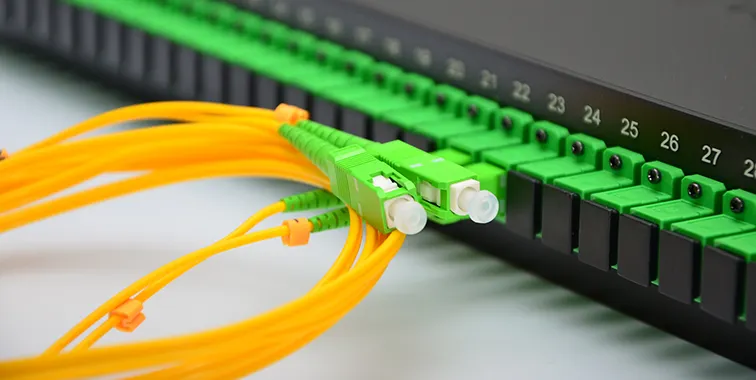
2. SC Connector
This is a SM duplex fiber optic connector. The duplex configuration offers superior performance.
3. MPO/MTP Connector
This connector has the advantages of small footprint, high reliability, quick transmission, which is a better choice for high Gigabit data transmission, such as 40 Gbps or 100Gbps.
4. FC/PC Connector
This connector is somehow being replaced by SC and LC, though it has the good property of low back reflection value.
5. ST Connector
Get Sylvie Liu’s stories in your inbox
Join Medium for free to get updates from this writer.
This is one of the most frequently used connector in fiber network due to its high reliability and durability. It supports both SM and MM system. In universities and specialist institutes, ST connectors are commonly used.
6. MT-RJ Connector
This is a MM duplex connector, which is obtainable both in male and female form.
Specifications
Before taking into this question, we must know that there are two primary specifications of all fiber connectors: insertion loss and return loss. To pick up a good optical connector, customers should take the following features into consideration.
1. High Reliability
In actual application, optical fiber connectors can be used in hostile environment, like underground, underwater and outdoor. Under this circumstance, a good connector must be reliable so as to well adapt to severe surroundings.
2. Low Insertion Loss
Lower the insertion loss, better the performance. Make sure the loss value is no more than 0.5db.
3. High Return Loss
Higher the return loss, better the performance, which also means less insertion loss.
4. Usage Convenience
Quality connectors not only offer excellent properties, but also simplicity of usage. A user-friendly connector simplifies the installation process, saves time, and improves working efficiency.
Personal Requirements
Apart from the above factors, you also take your own needs into consideration. For example, here are some questions you may ask yourself while choosing an optical fiber connector? Where to apply this connector? How much can I offer for a cost-effective connector? Is there any extra functional performance need for my fiber optic network system?
Conclusion
This article touches on the concept of fiber optic cable connector and lies emphasis on its selection. You decide on which to choose after a comprehensive consideration of two aspects. One is the connector itself, such as the connector type and specifications, since each connector has its own features, pros and cons. The other is your own demands, such as cost and field in application. For more information, please visit our official website FS.COM.