Twice Unlucky, Twice as Strong…

Intersectionality and sprinkle of Feminism
I have been thinking about ideas I learned from a feminist essay and how they explain some children's life. Intersectionality is a term that comes up. It means that different parts of who I am can combine to make life harder. For example, being a girl and being poor at the same time is not just two problems, it is a combined problem. Scholars explain that systems of oppression like poverty, gender and other identities overlap and can make someone’s life very tough. In other words, if society is stacked against girls or against the poor, a poor girl carries both.

Chimamanda Ngozi Adichie, a Nigerian writer, attempts to say it in plain words, she said "We teach girls to shrink themselves, to make themselves smaller. You should be successful, but not too successful. Otherwise you will threaten the man”. Her voice made people and especially girls feel understood. It was like the words I had heard from some neighbors: that girls should be quiet and not dream too big. Adichie taught me that these ideas are not strange…they are part of a realistic unfair picture. She called it feminism, believing and making believe that men and women should be equal. Reading her a little, I felt something that resist being silenced or made small.
I also learned from bell hooks, a writer who explains that race, class and gender all work together as interlocking power structures. In a simple way, she meant that being poor and being a girl can trap someone in a web of problems. When I understood that, it gave me words for feelings of many. I realized girls aren't just unlucky, they face problems from different directions at once. But I also saw that many women had fought those battles too in the history. Knowing this gave me courage.
These ideas sound heavy, but I’ve seen them in my world. I have observed a lot of underprivileged children around me who do not get to attend school because they must work or because others believe that they are not worthy of being educated. I saw how talented girls are being told to shut up or to withdraw, while others risked it. Reading about feminist ideas and intersectionality helped me name what I was seeing. It made me realize that a section of people is facing bigger struggles than all of us… a struggle that taught me to stand up and learn no matter how dark things got, we have to speak up for them.
I remember trying to tell my mother about these things. I mentioned Adichie's words and how girls everywhere were being taught to stay small. My mother just laughed softly and said, “We face these things, but we keep going.” Hearing my own life and those big ideas mixed together was strange and comforting. It made me realize that feminism was not just a distant word… it was our story too. At home we never spoke of gender fairness, but that night I did and it felt powerful.
Later on, I used to discuss what experiences I had with friends who are also aware of these worldly miseries. They both lived two streets away. They found those ideas true in their lives too. I saw that our different backgrounds – some city-bred, some new in town – did not matter as much as our common dreams of learning and respect.

Lessons Under the Street Lamp
In the narrow lanes near my college, education often happened under the faint glow of street lamps. When the children's homes had no electricity, they would carry books and pencil outside. Under a dim lamp, learned lessons by counting the cracks on the pavement. Around me, a small group of children gathered. There were children younger than me, all trying to catch up. Notebook papers were rough and they had no real desks.
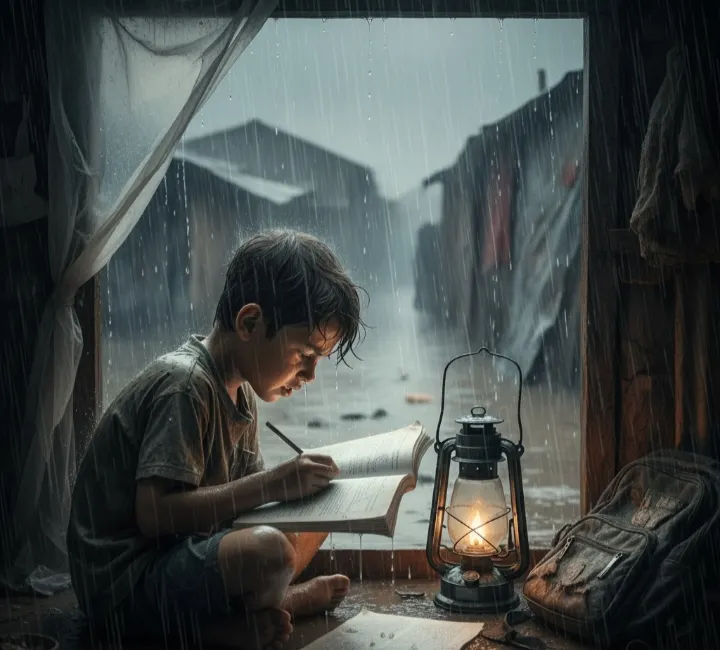
For example, one rain-soaked evening when all houses had no power for days, we still met by the lamp with candle stubs, reading worn pages by that meager light. The ripe mango leaves overhead rustled and crickets snapped in the darkness as if they were aware that this was the classroom. We even whispered so quietly at times that when a stranger walked past, he would believe we were reading poetry rather than reciting and making recite the alphabet. I realized in that instant that the lamp was not just a bulb…it was hope burning in the darkness.
I remember once hearing about a place called Pehchaan The Street School. It didn't sound usual, because it did not fit in the fancy cities I had read about. I felt a burst of something – maybe shock or excitement. Here were people who believed they mattered. They sat down on an empty bench. They smiled at me and asked my name. It turned out that I started to believe that this is where I belong, amidst all these smiles. I still had my own things to do at college but I wanted to learn more. So I went there for like four weeks but unfortunately the schedule of classes weren't aligned so I couldn't continue to go to the place which gave me this perspective. Those four weeks gave me enough experience that I cannot stop mentioning the same stuff on repeat…
Get Tanya Singh’s stories in your inbox
Join Medium for free to get updates from this writer.
At first, going alone felt scary. I remember standing one evening, listening to the lessons from the alley that what other volunteers were teaching. My heart pounded as I had never been so nervous to go to a classroom which was basically a pavement. When I finally joined, it all felt quiet, but then one volunteer whispered, “It’s okay, come sit.” I will never forget the relief I felt. Those strangers treated me like family.
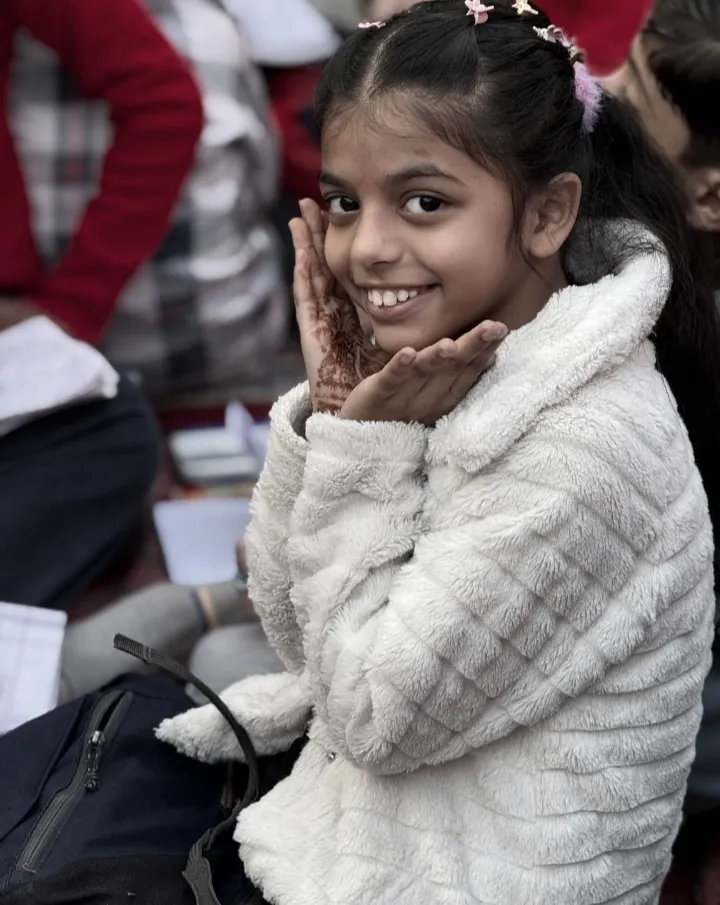
At Pehchaan The Street School, I started to learn things I had never been taught. I saw that I could speak up for others, that mistakes were okay and that my questions were important. Walking there at dim evening I was anxious. The roads seemed emptier than in daylight. But then I would remember the lamp near the pavement shining bright. It felt like it was leading me to something good. Under that lamp, I found community. Girls my age were teaching kids. We encouraged them – me, a city girl, with girls who came from other parts of the city or even from villages outside Delhi. We helped children solve puzzles, read stories and even paint pictures using whatever we had.
Outside class hours, I tried to share what I learned and taught with my younger brothers, they always seemed to be excited to hear stories from me. For a young girl, I would write letters on the ground. She got some right and brightened every time.
Adichie’s words about ambition came to mind: I decided I would not let children shrink or hide. Bell hooks’ lesson that different struggles connect made me think they aren't alone. And each time I taught even under a flickering lamp, I knew this’ll pay someday.

Becoming Twice as Strong
Now I can see that being twice unlucky – poor and female – cannot break the underprivileged. I still remember the flicker of each lamp at night, and I see how each challenge under that light made us all tough. I carry those stories with me: of the boys who wanted to write poems, the girls who insisted on math and the volunteers at Pehchaan The Street School who insisted on our worth. For example, there was Raj, who wrote poetry on the edges of worn-out textbooks even when everyone would tell the son of a rickshaw-puller shouldn't have dreams. And Rekha, figuring out algebra questions like logic problems, the glow of every right answer illuminating her face. Their courage stuck with me. It reminded me of what Adichie said: we could do anything if we were given the chance.
It feels like a series of lamps guides me in life. Each one shows that underprivileged children have bright minds and big hearts. By speaking up and helping others, I learned that empathy is powerful. Now I make sure to listen if a younger girl needs help with her homework. I share books with friends who cannot afford them. I sometimes (kind of rarely) help in a small weekend class for underprivileged children, where the lessons under the lamp continue for someone else. But for now I just write about them while reminding them. Each time someone shares a book or lights a lantern when there is a power cut, I see the lesson living on.
I think of all the lessons I learned by Delhi’s street lamps: lessons about grit, friendship and hope. Those nights trained me to dream without fear. They taught me that even the smallest light can drive away a lot of darkness. They taught me that our world – even an unfair world – can change if enough of us find our light and share it. Whenever I walk those same lanes or see a new street lamp glowing, I feel a little lighter. I remember saying quietly to myself, “You did it.” I tell younger girls I meet: you don’t have to shrink or hide. Studying under an open sky will make you brave. Those evenings made me a teacher of kindness without even knowing it.
Each time I faced a setback, I turned it into learning. I also learned and taught that failing was never the end.
Feminism in a way became our own lamp. It taught me that a personal victory can light up the path for many. I will keep passing that strength on, to light the way for others behind me. I will keep passing that strength on, to light the way for others behind me. In the end, I am thankful for the darkness I got to know through these children. This all helped me to find strength I didn't know I had and as far as I believe others too..like those little flower buds…
References:
Feminist literature -
Chimamanda Ngozi Adichie - "We Should All Be Feminists"
Bell hooks - Theory of power and identity.