What I Learned Comparing GE and Whirlpool Refrigerators Side-by-Side

I stood in the middle of a big-box appliance aisle last autumn, staring at two massive slabs of stainless steel. To my left was a GE side-by-side refrigerator. To my right was a Whirlpool.
They looked almost identical. Both had polished doors, sleek handles, external ice dispensers, and price tags hovering around the same $1,200 mark. When I asked the sales representative to explain why I should pick one over the other, he rattled off cubic footage numbers, ENERGY STAR certifications, and a list of tech buzzwords that sounded impressive but meant absolutely nothing for my daily life.
I realized then that most people end up flipping a coin or just buying whichever brand their parents owned because the spec sheets make these two industry giants look like mirror images.
It wasn’t until I started talking with appliance technicians and digging into real repair histories that I learned something surprising: the features that matter between GE and Whirlpool aren’t the ones highlighted on the glossy floor signs. In fact, the most important differences come down to how each brand handles frozen pizza boxes and long-term repair costs.
Here is what I learned after looking past the marketing shine.
The Great Ice Maker Realization
When you look at a typical side-by-side refrigerator, the freezer side always feels a little cramped. For years, I assumed that was just the price you paid for having a narrow, vertical freezer layout.
What I didn’t expect to learn was how much of that lost space is consumed by a single component: the ice maker.
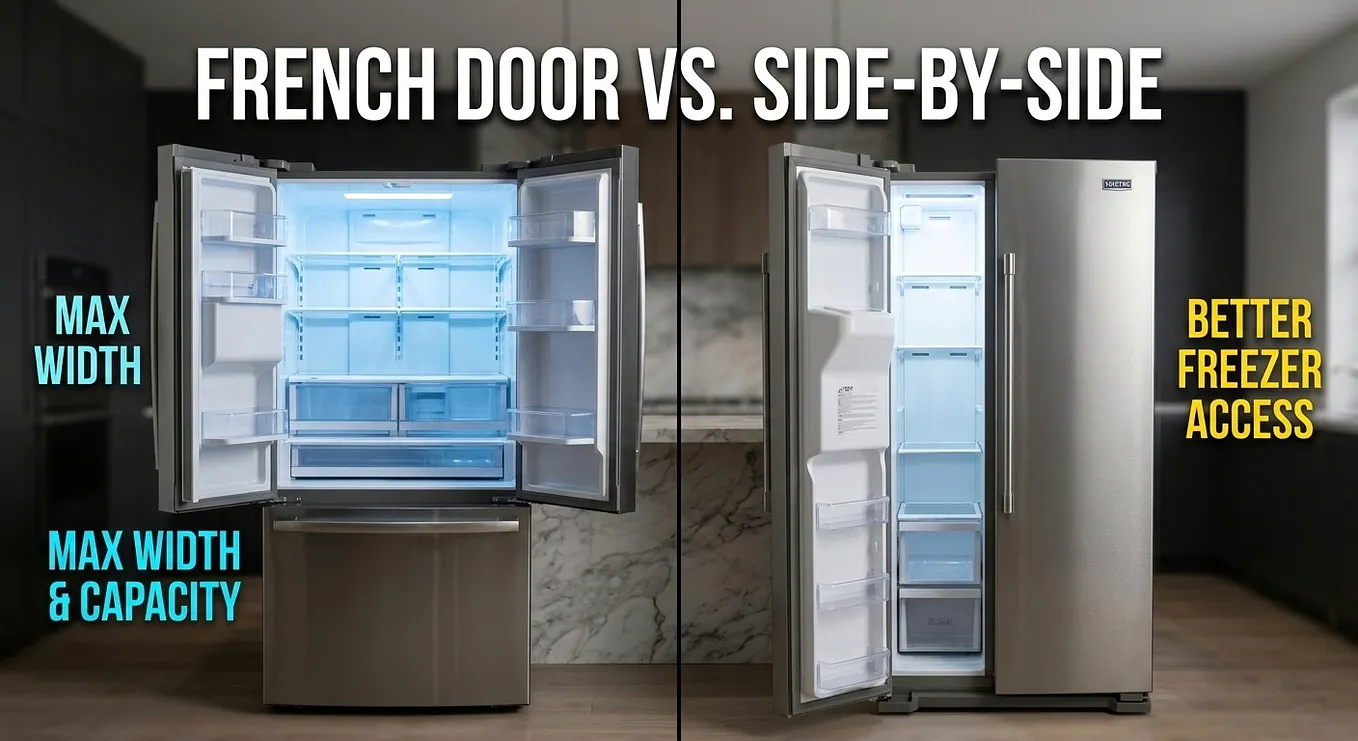
In a standard GE side-by-side, the ice maker sits right on the top shelf inside the freezer. It’s a solid, reliable setup, but it eats up nearly four cubic feet of prime real estate. If you like buying frozen items in bulk or stacking large pizza boxes upright, that top-shelf block becomes a daily annoyance.
Whirlpool took a completely different approach with its In-Door Ice design. By moving the ice bin directly onto the freezer door, they opened up the entire upper cavity. Standing in front of both, the difference in usable room is night and day. It’s one of those practical design choices you don’t think about until you’re trying to squeeze a Thanksgiving turkey into your freezer on a Tuesday night.
High Tech vs. High Utility
As I looked deeper into their mid-tier and premium models, the design philosophies of both companies diverged even further.
Get Techelectroniclive’s stories in your inbox
Join Medium for free to get updates from this writer.
GE leans heavily into modern convenience and smart tech. On their Profile line, for instance, they offer a feature called Hands-Free AutoFill. You place your glass or water pitcher under the dispenser, press a button, and walk away while sensors automatically fill it to the brim without spilling a drop. It feels like magic when you’re making morning coffee or filling a large pot for pasta.
Whirlpool, on the other hand, rarely chases those high-tech highlights. They focus instead on quieter, behind-the-scenes engineering, like adaptive defrost. Instead of running a defrost cycle on a strict timer, which warms up the freezer unnecessarily, Whirlpool’s system monitors compressor runtime and door openings, running defrost cycles only when actual frost buildup requires it.
It’s less flashy than a self-filling water dispenser, but over a decade of continuous running, that subtle efficiency saves energy and keeps temperature swings from burning your ice cream.
The Hidden Warranty Difference
The most crucial detail I uncovered had nothing to do with interior lights or shelf layouts; it was hidden in the fine print of their warranty documents.
Almost every major brand offers a basic one-year full warranty covering parts and labor. Both GE and Whirlpool do this. But when you look at the sealed system, the critical loop containing the compressor, condenser, and evaporator coils, the coverage splits dramatically.
GE covers the sealed system parts for five years, but its labor coverage drops off after the first year or two, depending on the model tier. Whirlpool covers both parts and labor on the sealed system for a full five years across its side-by-side models.
If a compressor fails in year four, paying for the replacement labor out of pocket can easily cost several hundred dollars. Having five years of labor protection on the most expensive part of the appliance provides a genuine safety net that many buyers completely overlook.
If you’re currently shopping and want the complete step-by-step breakdown, including exact model numbers, energy cost estimations, and specific owner repair data, I put together a full guide on my website, GE vs. Whirlpool Side-by-Side Refrigerator Comparison.
What I Took Away from the Choice
Standing in that aisle, I realized we often get caught up comparing raw numbers, 25 cubic feet versus 25.4 or $1,149 versus $1,199. But appliances aren’t lived with on spec sheets; they are lived with in kitchens.
If you value smart home features, slick auto-filling dispensers, and refined interior layout options, stepping up to a GE Profile model feels genuinely luxurious. But if your main goal is getting the maximum amount of usable freezer storage and strong warranty protection for around twelve hundred dollars, Whirlpool’s practical design choices quietly take the win.
Ultimately, the best appliance isn’t the one with the longest list of features; it’s the one whose everyday design aligns with how you actually live in your kitchen.