The Nancy Grace Roman Space Telescope ([The] Roman)
“The Webb can have a new neighbor as a treat” — N.G.Roman (kidding)

A Quick Preface:
As of the writing/posting of this one, NASA’s Roman underwent a successful launch aboard a SpaceX Falcon Heavy launch vehicle right around ~1 month ago (end of August 2026). Space events like these don’t occur often, it’s exciting to talk about something fresh — and by fresh, we’re talking the fact that the Roman is not even 50% fully deployed. As such, we’ll go over the ‘theory’ of Roman until we’ve got some actual tangible data collected & made available to the public. In simpler terms: the scope of Roman’s science mission(s), the tools that will allow it to perform in a stacked arena, how it fits in with its peers & what gaps it fills, and more.
TLDR;
We’ve all (presumably) seen the difference between a 1x photo & a .5x or ‘wide’ photo taken on a cell phone, perhaps an over-exaggerated ‘fisheye’ picture from one of those external add-on lenses. Now, imagine doing that to Hubble, THEN imagine putting Hubble at Sun-Earth L2 (Lagrange Point 2). In a nutshell, this is what the Nancy Grace Roman Space Telescope, dubbed “Hubble’s cousin”, is. There is indeed more to this: with an instrumentation suite similar to The HST, The Roman has eyes that are almost the same as its older cousin. However, as noted with the differences in photo zoom, the main differences between Hubble & Roman revolve around functionality. If using Hubble were to equate to using a microscope for zoomed-in, pinpoint viewing, then we’d pivot to Roman & say that using this new observatory is like using a pair of binoculars for large-scale viewing of a wide area. So, a very low-resolution description would note that Roman is essentially a wide-eyed Hubble sent 1 million miles away to be neighbors with the Webb. Not the neatest wrap-job or bow on that present, but it’ll do.
If you haven’t heard of &/or don’t know what Lagrange points are, The Cosmic Brief discusses this very briefly in our JWST writeup. The writeup also contains a very helpful link which will be provided here, in case one is interested in some extra reading:
- Lagrange Points — A fantastic write-up by NASA explaining Lagrange Points

What Is Roman?
We just established that The Nancy Grace Roman Space Telescope is fairly similar to Hubble. BTW, we’ll just say “Roman” or “The Roman” from here on out… NGRST is a lot of words.
“I already read The Cosmic Brief’s post about Hubble. Plus, why bother expending resources on Roman?”, one might ask. Never fear, TCB’s got answers for ya right here.
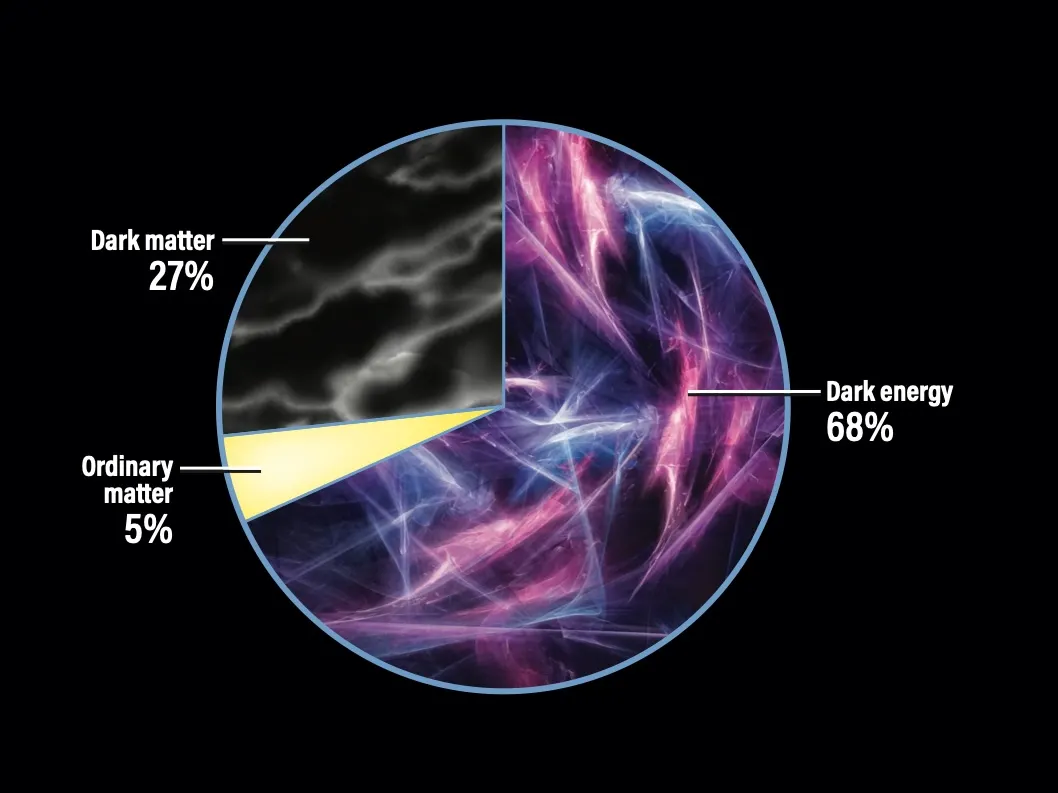
More similar to Webb in this sense, Roman is mainly equipped to see the infrared universe while Hubble has this plus more access to the optical & ultraviolet universe (The Cosmic Brief never misses a chance to reference its Light Spectrum Writeup & Telescope Imaging Writeup). Instead of being a Hubble-esque jack-of-all-trades, Roman is equipped to be a master of one two; only carrying a wide field instrument & a coronagraph. Roman will combine use instruments to aid in dark energy/dark matter research, observe deep space, large structures like galaxies, nebulae & stars, as well as join the hunt for more exoplanets. This makes the Roman a shiny new weapon in many sub-fields of astronomy, from cosmology down to exoplanetary studies (guess what: TCB wrote about these fields!).
With a mission lifetime of 5 years, the metaphor we’d use here is that the Roman has been designed as an intense match — burning twice as bright for half as long (someone please catch that film reference). Don’t take that too literally; Hubble has been operational for nearly 40 years after an original operational lifetime of 15 years. In contrast, Roman has 5 years plus a potential additional 5 years tacked on towards the end; that’s about 1/4 as long as Hubble. Given NASA’s track record, the potential to extend beyond that certainly exists, but there is no magic seeing glass to get a status update from the future, & L2 is unfortunately much too close to use time dilation to our advantage.

What Makes Roman Special
As has already been mentioned, Roman is equipped to see wide. But what does this mean, exactly? This probably goes without saying, but in this expansive cosmic forest that is our Universe, some objects are pretty big (to say the least). Let’s say Hubble is designed to take a really detailed image of one singular tree; Roman has been placed up on the overlook, using the wide field instrument to image the entire forest.
Example: the Pillars of Creation are ‘towers’ of space dust seemingly suspended in the middle of a larger structure, what astronomers call the Eagle Nebula. The Pillars stretch to nearly 5 lightyears, which may seem like a lot until you consider that the Eagle Nebula is somewhere around 70 lightyears across. For more scale comparison, Proxima Centauri is currently the nearest star to our solar system at 4.25 lightyears away.
Drawing from the example we just used above, the ‘overlook’ in question is the Sun-Earth Lagrange Point 2, L2, just under 1 million miles/1.5 million kilometers away (JWST’s newest neighbor!). At this L2 vantage point, Romans’s image of the Pillars of Creation may appear ‘zoomed out’, but the benefit of this position in space plus the wide field imager yields the entire nebula, not just showing the Pillars but also their relative position within the Eagle Nebula.

If unfamiliar with Lagrange [La-grahnj] points, don’t let them scare you — it’s just a really science-y term that essentially means ‘gravity well’.
A quick & semi-accurate way to picture a gravity well: Imagine a group holding a stretched bedsheet & then placing a solid marble on the sheet, that little ‘hole’ that the marble sits in is a decent representation.
If you’re more scientifically inclined, this page from Orbital Radar gets a little more physics/mathematical about it: Orbital Radar hyperlink
Roman’s other specialty is thanks to its other instrument, a powerful coronagraph. The inner workings of tech like this are really a marvel of engineering, but all the reader needs to know is that this instrument is built to focus on a star and block out the light coming from it. Why focus on a star if we’re just going to block out its light? That’s because the target here is not the star itself, but rather the potential exoplanets orbiting around it. Starlight is incredibly bright, and at such vast distances can ‘wash out’ any orbiting planets with the ease at which a cat curls up for a midday nap. By using methods to block the starlight, the likelihood of exoplanet detection goes up significantly as well as astronomers’ ability to individually study exoplanets of interest.
Including Roman in a field of superstars might look something like this:
Roman uses the wide field instrument to look at a large swathe of space. Through various astronomical methods, a research team finds a few points of interest in this ‘forest’. One point of interest calls for the coronagraph, and some exoplanets are confirmed orbiting around the star in focus. A paper may be published about this research; later on the same team, or another team that read this paper proposes to use Hubble or Webb to specifically focus on these exoplanets. Fast forward a bit, and now the public has information on new planets that sound similar to Earth (or perhaps something could fit into the Star Wars universe).

To Conclude
Even for a Cosmic Brief, this one was brief. The Roman was only launched at the beginning of August, and as we speak (start of October, 2026) NASA has only begun spinning up the coronagraph instrument as the telescope travels to L2. A million miles is a long way to travel, so we can’t expect that Roman will be reporting back any time in the immediate term.
Get The Cosmic Brief’s stories in your inbox
Join Medium for free to get updates from this writer.
Considering the theoretical scenario posed above, the prospects of having a fresh set of eyes in the sky is incredibly exciting. Exoplanets have always been this TCB author’s favorite category of astronomy, & the idea that a powerful new observatory will be scanning the sky to supercharge this sub-field of astronomical research does indeed tickle the fancy.
The freshness of this project means that Roman will certainly receive an updated write-up at some point once fully deployed & actively contributing science to Earth-side research teams. Meantime, The Cosmic Brief eagerly awaits updates with a proverbial mouse over the refresh button & bated breath.

Thanks for tuning in & hope the reader enjoyed some fresh(er) news. ’Til next time,
A, TCB
Enjoy This Topic? Appreciate Our Work?
Links Referenced & Further Reading:
- NGRST Main Page (NASA)
- Roman-Hubble Comparison (NASA)
- Roman-Webb Comparison (NASA)
- About Roman (NASA)
- Why Roman? (Roman’s capabilities) (NASA)
- The Observatory, its instruments (NASA)
- Mission/Science Objectives (NASA)