A call for a philosophical approach to chronic pain

By Mira Hirtz

Is it possible to talk about pain?
It certainly is necessary to talk about pain in many moments.
But, is it possible to talk about pain?
What I encountered and learned through the process of getting to know my chronic pain is that the language used to describe pain is often medicalized. Medicalized language is shaped by top-down expert logic, assuming that all can be translated and reduced to analytical language. Yet, for several reasons, this language does not often transport the reality of living with pain. The experience of pain is deeply personal, and everyone has a different approach to grasping pain within their own body, yet they alone are voicing it to others. Also, chronic pain might be durational and reappearing or continuous, yet it can change its specific feeling or impact with every flare-up, day or minute.
Get The Language Of Pain’s stories in your inbox
Join Medium for free to get updates from this writer.
Another reason why medicalized analytical language does not grasp the reality of living with chronic pain, is that chronic pain quickly becomes chronic illness: it affects so many aspects of body and life that it becomes very difficult for me to differentiate between the sensation of pain in a particular part of my body, a general exhaustion and ache, the way it messes with my ability to focus, digest or sleep, and the fear, frustration and anti-sociability it causes.
So, I wanted to find a new language for understanding and talking about pain. How would this language work differently?
It would have to find a way to express that body, mind and environment are deeply and subjectively interconnected. Physical pain, its emotional impact, changing weather, the interaction with friends, all these play a role in the experience of chronic pain. The language would have to be able to reflect deep personal experiences. We probably all know that with any subjective experience, be it love, grief or simple everyday thoughts, there is a limit to how precisely we can share it with others. As these untranslatable bits play an important role when it comes to communicating the reality of living with chronic pain, an alternative language of pain would need to have a philosophical dimension.

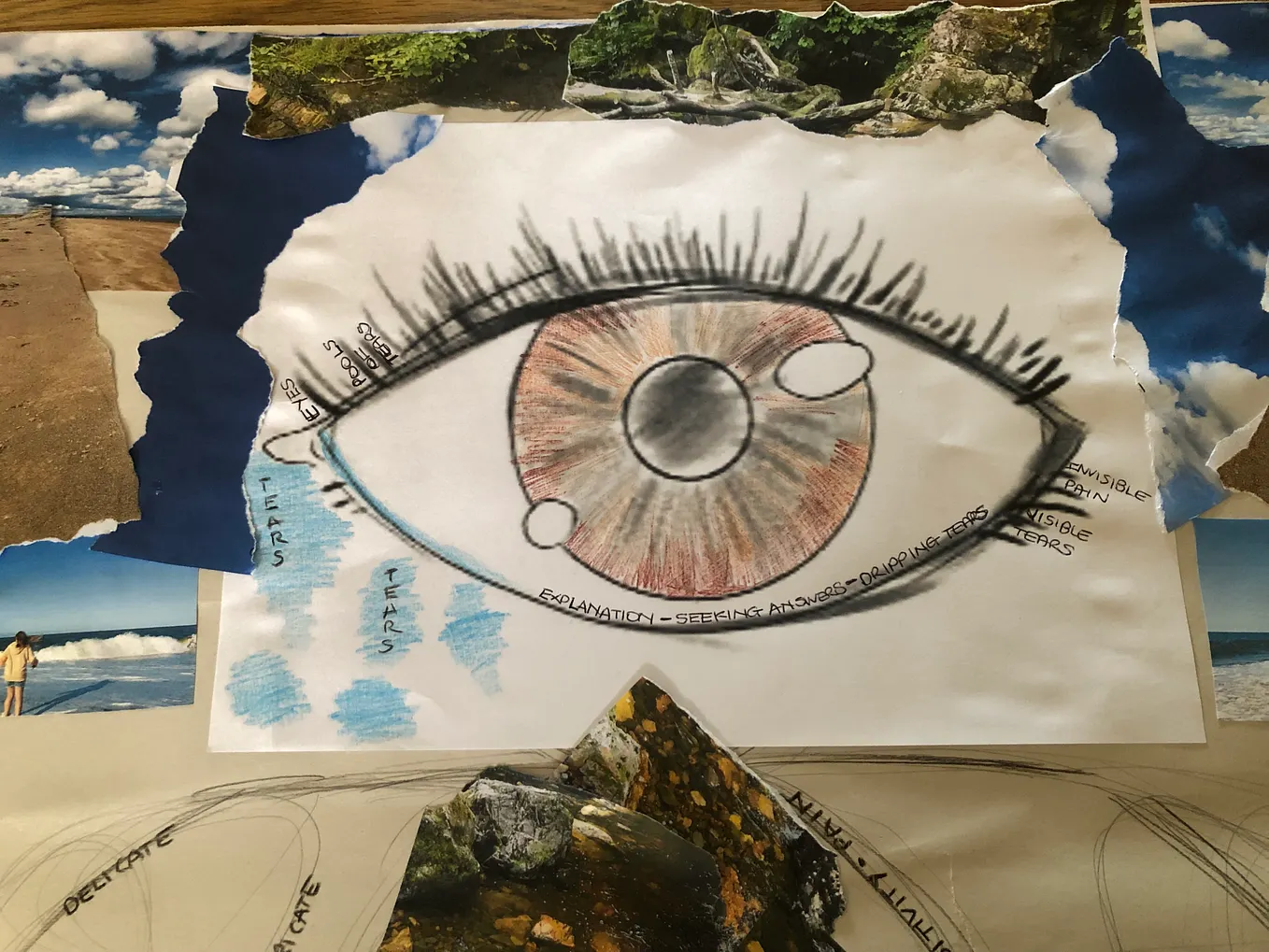
I joined The Language of Pain project because it aimed to offer this dimension through artistic and poetic means, and also by working collectively in a group of many individuals with lived experience of chronic pain. To me, the project often felt like ‘doing’ philosophy, trying to translate the untranslatable, yet reaching out to each other to express our realities. We practiced what it means to not approach voicing pain through a top-down logic, but through a process of sharing horizontal expertise, co-learning and solidarity with each other.
I am deeply touched by this process. I felt heard in new ways and got to know myself and my pain better. I even feel hope that such projects could actually have an impact on how other people living with chronic pain are seen — not only within the medical system but also more generally within our societies. An effective project such as The Language of Pain is not meaningless to society just because it is small, especially when the problem it tries to tackle (a medicalised language that disregards diverse and subjective perspectives on health and life) demands time and space to reflect on very personal experiences.
Could such a community project like The Language of Pain serve as a blueprint for others?
Just imagine small co-creative groups popping up everywhere, working across disciplines like medicine, social work, and arts. What a large but diverse amount of knowledge would be accumulated — around what living with pain needs, what pain does, maybe about what bodies are and what life is. Many philosophical acts, shaping many languages, not just one.
The Language of Pain is an arts and health research project that gives ‘voice’ to the invisible and often denied experience of chronic illness and pain. Join Mira and the rest of the collective to hear more about The Language of Pain at our online event on Tuesday 15 September 2026, 2–5pm. Click here for more information.