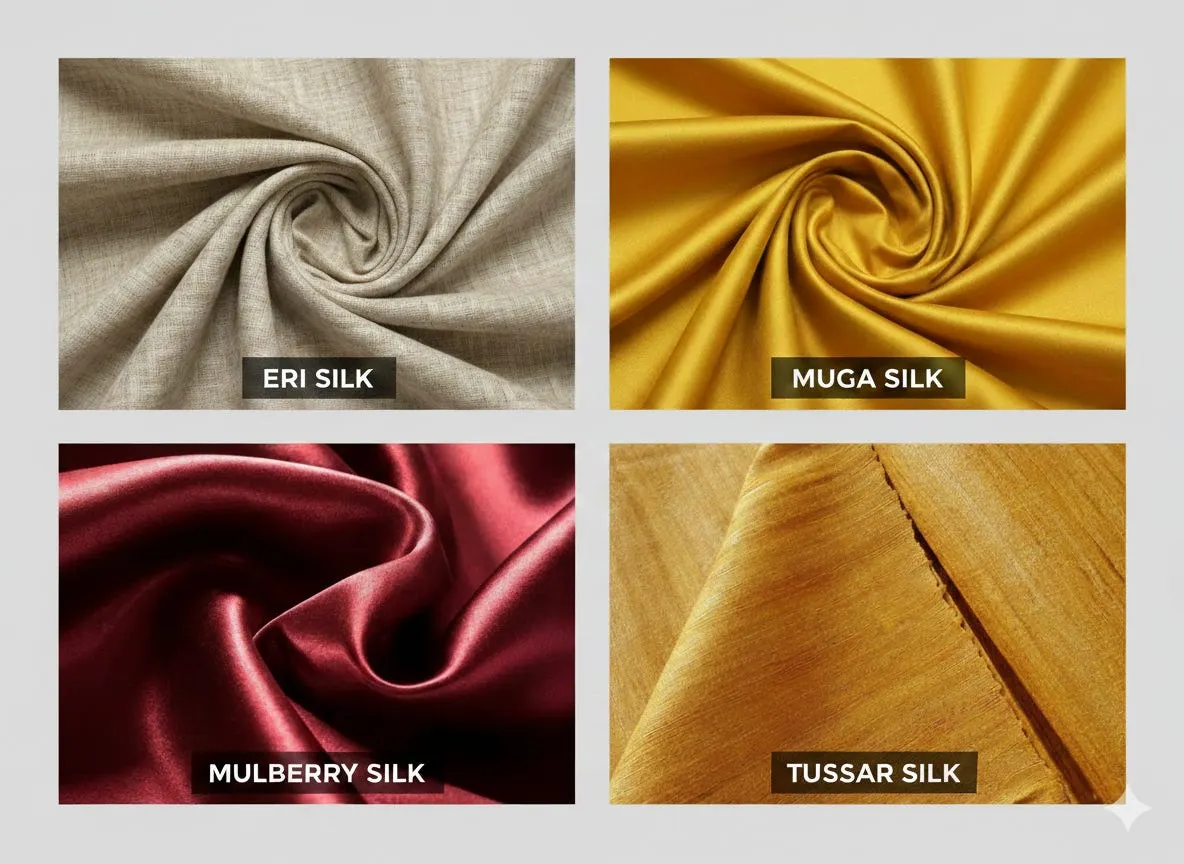
The GI Tag is Not a Heritage Label - It’s a Technical Data Sheet

Why we need to stop romanticising Indian Silk and start decoding its structural data.
For decades, the conversation around Indian handloom has been draped in the language of nostalgia. We talk about the “soul of the weaver” and the “magic of the loom.” But as an engineer looking at the Global Silk Spectrum, I believe this romanticism is actually doing the industry a disservice.
By framing silk purely as “art,” we strip it of its most valuable asset in the modern economy: Technical Verifiability.
If we want to position Indian silk on the global stage, we must look past the aesthetics and focus on the Geographical Indication (GI) Tag — not as a cultural certificate, but as a sophisticated Provenance Architecture.
1. The GI Tag as a “Smart Contract”
In the tech world, a smart contract is a self-executing agreement with the terms written into lines of code. In the world of heritage textiles, a GI Tag functions similarly.
It is a legal guarantee that a product belongs to a specific ecosystem. When a saree carries a Kancheepuram or Muga GI, it is a data-backed claim that the product is inextricably linked to a precise geographic cluster. It ensures that the “weaving logic,” the micro-climate influences, and the communal expertise are authentic.
2. Beyond Aesthetics: The Metallurgical Blueprint
As The Silk Analyst, I am less interested in the colour of a saree and more interested in its Material Integrity.
A GI-protected silk variety is governed by a Legal Specification Document that acts as a technical blueprint. It doesn’t just suggest quality; it mandates it:
- Metallurgical Standards: A genuine Kancheepuram GI requires a specific ratio of silver and gold in the zari (e.g., 57% silver and 0.6% gold).
- Fiber Density: It dictates the ply-count and the denier of the silk, ensuring the structural longevity that “style-only” imitations lack.
When we view a GI tag this way, we realise it is the original Digital Product Passport (DPP).
Get The Silk Analyst’s stories in your inbox
Join Medium for free to get updates from this writer.
3. The Future: From Commodity to High-Value Asset
The global market is currently pivoting toward radical transparency. Consumers and regulators are no longer satisfied with “Made in India.” They want to know how and exactly where.
Our GI Registry is a goldmine of pre-existing provenance data. By digitising these technical standards, we move silk from being a “vague commodity” to a “high-value verifiable asset.”
Authenticity isn’t an opinion. It’s a measurable, technical standard. It’s time we started treating it like one.

About the Author
I am Ramya, the creator of The Silk Analyst. With a background in Engineering and a passion for India’s textile heritage, I analyse the Global Silk Spectrum to bring you data-backed insights and stories of our weaves.
Connect with the journey:
🧵 Substack: https://substack.com/@thesilkanalyst
💼 LinkedIn: https://www.linkedin.com/in/ramya-thesilkanalyst/
📸 Instagram: https://www.instagram.com/thesilkanalyst/
📝 Medium: https://medium.com/@thesilkanalyst
© 2026 The Silk Analyst by Ramya. All rights reserved. Please reach out for content licensing or collaboration.