What Makes a Life Perfect?

Lately, I have been thinking about what a perfect life really is.
Or perhaps the deeper question is: how do we perceive a perfect life?
Is a life perfect because we perceive it that way ourselves, or because it appears perfect through the eyes of our peers, our families, and society?
The more I thought about it, the more I began to feel that perhaps a perfect life is not a life without flaws, mistakes, disappointments, or detours. Perhaps it is a life in which we are free from fear — or at least, a life in which our decisions are not dictated by the fears we carry.
Maybe that is where we need to begin peeling the layers of what we call a “perfect life.”
A perfect life cannot be an absolute thing. What is perfect for one person may be completely imperfect for another.
Take Sachin Tendulkar and Ratan Tata. Both were extraordinarily successful at what they chose to do. Sachin found his perfection on a cricket field, while Ratan Tata found his in the world of business and nation-building. One was brilliant at facing a ball; the other was brilliant at steering an organisation.
Neither life needs to be compared with the other to determine which one was more perfect.
And perhaps that is where we make our first mistake.
We keep looking at someone else’s life through our own definition of perfection.
We see a person walking and another person crawling, and instinctively assume that walking is superior. But look at a toddler crawling. For that toddler, crawling is not an inferior version of walking. It is simply the best way they currently know to move forward.
And perhaps that is all life asks of us.
To move forward with whatever we have.
The child who crawls is not failing at walking. The child is simply at a different stage of becoming.
So perhaps the perception of a perfect life must come from within.
Our life becomes perfect not because it fits someone else’s definition of perfection, but because we have the courage to recognise its uniqueness.
Every life has its own twists, turns, delays, mistakes, strange coincidences, unexpected beginnings and unfinished chapters. Perhaps accepting these things is itself a form of perfection.
But society makes this difficult.
Society gives us certain norms, expectations and definitions so that social order can be maintained. Some of these norms are necessary. Without any shared understanding, collective life would become chaotic.
But somewhere along the way, order can turn into uniformity.
And when everyone is expected to live according to the same blueprint, something beautiful gets lost: individuality.
Imagine a city inhabited only by lions. No other animals. No vegetation. No diversity. And, for some reason, not even a single lioness. It may sound funny, but such a city would eventually become fragile. A single disruption could threaten the entire system because there is no diversity to sustain it.
Human life is not very different.
We cannot all be lions.
We cannot all want the same career, the same relationships, the same lifestyle, the same definition of success, or even the same kind of happiness.
People need the freedom to choose differently.
Get Apoorva’s stories in your inbox
Join Medium for free to get updates from this writer.
Perhaps that is why comparing lives is such a strange exercise. We compare our chapter two with someone else’s chapter twenty and then wonder why our lives don’t look as beautiful.
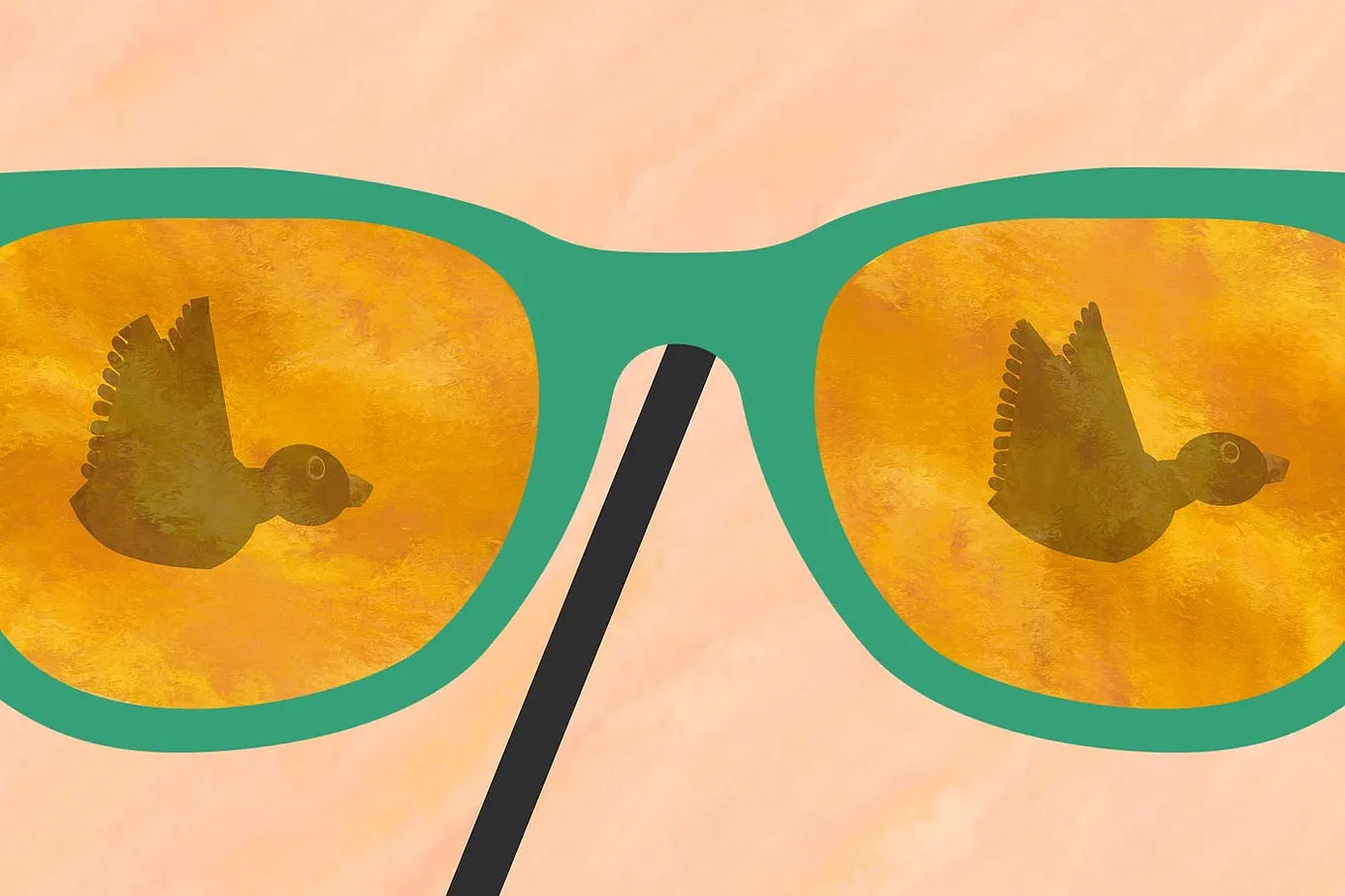
We look through someone else’s glass and decide that our own view is imperfect.
But what if perfection was never supposed to be seen through someone else’s glass?
Maybe a perfect life is simply a life we have the courage to call our own.
A life where we can accept our flaws without constantly trying to hide them.
A life where we can take a different route without feeling that we have fallen behind.
A life where our choices are not constantly being negotiated with fear.
Because fear is interesting.
Fear often disguises itself as wisdom.
Sometimes we call something “practical” when what we really mean is that we are afraid.
Sometimes we call something “socially acceptable” when what we really mean is that we are afraid of being judged.
Sometimes we say, “This is how life is supposed to be,” when perhaps what we are really saying is, “I am afraid to imagine another way.”
And perhaps courage begins when we become honest enough to notice this difference.
A perfect life, then, may not be a life without fear.
Perhaps it is a life where fear does not get the final vote.
This does not mean blindly following every impulse or romanticising rebellion. It means having enough courage to ask ourselves: If I were not afraid, would I still choose this?
Maybe sometimes the answer will be yes.
And sometimes, surprisingly, it will be no.
But at least the choice will finally be ours.
Perhaps this is where the paradox of a perfect life lies.
We spend our lives trying to become perfect, while perfection may actually begin with accepting that our lives were never meant to look perfect.
Maybe the perfect life is not the life without mistakes.
Maybe it is the life in which we are brave enough to make our own mistakes.
Not because we are certain that our choices will lead somewhere extraordinary, but because we are willing to live a life that is authentically ours.
Perhaps we need a little bit of what society might call delusion — the courage to believe that our path does not have to resemble everyone else’s.
Because sometimes, the most imperfect-looking life from the outside may be the most perfectly lived life from within.
Perhaps a perfect life isn’t a life without mistakes, but a life where fear doesn’t dictate our choices.