They Couldn’t Stop Him, So We Stopped Him For Them (Part 1)


To me, the most frustrating thing to watch in sports is watching a team find something that an opponent can’t stop, and then voluntarily stop doing it. I’m not talking about forcing the ball to a star player on every possession. I’m not talking about abandoning the rest of the offense. And I’m definitely not suggesting that every successful play should be repeated until the defense inevitably figures it out. I’m talking about something much more maddening:
When you establish an advantage, and the opponent can’t do anything to take that advantage away, why would you give it back?
I have seen this happen with star players all over sports countless times, and it drives me crazy every time. But there’s something uniquely agonizing about watching it happen with your own team. As a Dallas Cowboys fan, I’ve been watching some version of this for decades. I watched it happen with Emmitt Smith, especially in his rookie season and in the post-Super Bowl years. I have also watched it happen with other elite players. And now, I have watched it happen repeatedly with CeeDee Lamb since he became a Cowboy in 2020. And that’s what brought me to the title of this article.
They couldn’t stop him, so we stopped him for them.
The most recent example came against the Washington Commanders in Week 2 of the 2026 NFL season. CeeDee Lamb wasn’t just having a good game. He was dominating. By the end of the 1st quarter, he had already caught 5 passes for 89 yards and a touchdown. The Commanders were having trouble dealing with him, and the Cowboys had every reason to keep making them deal with that problem. Instead, CeeDee’s involvement largely disappeared. He caught only 1 pass in the 2nd quarter — a 5-yard reception with 5:56 left. The Cowboys didn’t get the ball again before halftime, so CeeDee went into the locker room stuck at 6 catches for 94 yards. And he stayed there for most of the 2nd half. His next reception didn’t come until 6:16 was left in the 4th quarter.
Let me put it to you this way: The whole 1st quarter was basically a 15-minute demonstration that the Commanders had absolutely no answer for CeeDee Lamb. He was putting on a clinic. When CeeDee caught 3 passes for 41 yards and a touchdown on the opening drive alone, the blueprint was right there. Then, for a staggering stretch of the afternoon, the Cowboys offense voluntarily did what Commanders’ secondary never could: they contained CeeDee Lamb. In other words, instead of putting their foot on the Commanders’ throats, the Cowboys spent the rest of the half actively taking the weapon out of their own hands.
That’s the part that drives me crazy. Because there’s a difference between the defense taking your best player away and you taking your best player away from yourself. Those ARE NOT the same thing. When a wide receiver is capable of taking over games the way CeeDee does, watching a coaching staff actively pull the emergency brake on the offense is extremely tough to stomach. As we saw that day, you don’t necessarily lose the game because of that. Football is too complicated to make that kind of simplistic claim. But when an offense goes away from a dominating playmaker voluntarily, it breathes life back into the opposing team. Here’s what also happens:
*You might be surrendering an advantage you didn’t have to surrender.
*You might be allowing them to make adjustments without immediately paying a price for those adjustments.
*You might be making the game much harder than it needed to be.
That’s exactly what made this game so frustrating. The Cowboys eventually won 37–20. So this is not a story about a team that refused to go back to its best player and paid for it with a loss. It’s a story about something almost as frustrating: The Cowboys had the game in their hands, made things harder than necessary, allowed the Commanders to hang around, and then finally went back to the player who had been causing problems all along. When they finally started getting CeeDee Lamb involved again late in the game, he caught his 2nd touchdown with 3:07 left. The player the Commanders couldn’t stop in the 1st quarter was still the player the Commanders couldn’t stop in the 4th.
That raises a question that goes far beyond one Cowboys game:
What happens when the biggest obstacle to exploiting a star player’s dominance is not the opposing team — but the team that employs him?
The Difference Between Not Forcing & Giving It Away
Let’s be clear: I am NOT arguing for recklessly force-feeding a star player. I don’t believe the Cowboys should force the ball to CeeDee Lamb on every single snap. Football is a game of adjustments. Coverages dictate progressions, game situations evolve, good offenses adapt, defenses adjust, and secondary matchups often dictate going somewhere else. Sometimes the best way to keep an elite playmaker effective is to avoid forcing the issue and use him as a decoy. But don’t confuse patience with passivity. There’s a world of difference between refusing to force an advantage and completely surrendering it. On paper, a quiet quarter looks the same with either one of those concepts. On film, they’re 2 entirely different coaching philosophies. One is smart football and the other is an unforced error.
If CeeDee Lamb is drawing double coverage and another receiver is running free, you throw it to the open man. That’s letting his presence create the play and weaponizing the defense’s fear against them. If an opponent alters their whole game plan to specifically take CeeDee away, that’s different too. The defense forced a counter move. But what happens when the defense hasn’t solved the problem? What if CeeDee is still running free, still winning his routes, and still dictating the game — and the offense voluntarily decides to stop looking his way? That’s not taking what the defense gives you. That’s a self-inflicted freeze-out. That’s giving the game away. That’s when I start having a problem.
At that point, you’re not responding to the defense. You’re overthinking yourself. Those are 2 different things. When an opponent forces you away from your primary weapon, that’s just the natural chess match of the game. But when you voluntarily abandon that weapon while the opponent is still clueless on how to stop him, you’re willingly surrendering that advantage and possibly giving away the game. We have to be careful with hypotheticals because football doesn’t give us the luxury of alternate timelines. Maybe the next target to CeeDee is incomplete. Maybe the defense breaks. Maybe the defense adjusts. Maybe another receiver steps up. But there’s a world of difference between being forced to pivot and choosing to surrender.
We can’t rewrite the game, but we can definitely learn from what it showed us. When a single player is tearing the secondary apart and creating a systematic nightmare for the defense, you have to exploit that leverage. You don’t have to target him every play, but you do have to make the defense account for his gravity and force them to live in constant fear of him. That’s the nuance that completely gets lost in the lazy narrative surrounding offensive “balance”. As important as balance is, it DOES NOT mean turning a dominant alpha performance into an artificial committee where everybody gets equal opportunities. It’s about leveraging what works until the opponent forces you to stop.
A competent offense should be capable of distributing the football, but a championship offense has to know when to stop distributing and start exploiting. Football is not an algorithm, and the goal IS NOT to give equal touches or a predetermined amount of them to every offensive player. It’s to score more points than the other team. When a matchup advantage is completely dominating the game, feeding it is not lazy playcalling — it’s predatory football. Don’t mistake predictability for a flaw. If an opponent has no answer for CeeDee Lamb, the burden of adjustment falls entirely on them. Your job is to keep going to him until they prove they can stop it.
It’s extremely frustrating to watch an offense stall when they move away from what’s working. Forcing a defense to respect a hot start and then intentionally taking the air out of the ball completely disrupts a team’s offensive flow. Again, it’s not about force-feeding or being reckless. It’s about riding the hot hand and making the defense prove they can stop it. When a player like CeeDee Lamb is in a zone, forcing the opponent to adjust before you change your own game plan is just smart football. But in Week 2 against the Commanders, the Cowboys didn’t wait for the defense to adjust. Instead, what I saw was how an offense can derail its own momentum. As soon as the 2nd quarter started, they started playing against themselves.
When You Give The Defense A Chance To Breathe
One of the most damaging consequences of voluntarily moving away from a dominant playmaker is completely invisible on a stat sheet: You give the defense a chance to breathe, along with psychological relief. You’re letting the opponent off the hook. Icing out your own hot hand is unforgivable in the sports world. Imagine being the Commanders’ defensive coordinator and watching CeeDee Lamb put on a clinic in the 1st quarter, exploding for 5 catches and 89 yards. Panic has set in. Your players know they’re being cooked, and everybody in the stadium knows it. You and the rest of the defensive staff is scrambling for answers. Also, you’re fully aware that the Cowboys have all the cards.
When a receiver is that dialed in, the whole defensive coaching staff is living in a nightmare. Not only are they out of answers, the psychological pressure on the secondary is suffocating, and the players are losing confidence with momentum being entirely stacked against them. But then the 2nd quarter starts, and all of a sudden, you realize you don’t have to account for CeeDee Lamb anymore. The Cowboys just stopped looking his way, the Commanders were given an unearned lifeline, and the pressure vanished. That shift from utter panic to pure relief completely changes the energy of a football game. That’s exactly how struggling teams find their second wind.
Voluntarily scaling back the involvement of a player that’s dominating the game allows the game to slow down for a defense that’s spinning out of control. It buys the opposing coaching staff time to dissect the film and diagnose what went wrong. Players can communicate on the sideline and adjustments can be made in a vacuum without having to survive another wave of that player destroying you in real time. To put it another way, the opponent is given the ability to fix their mistakes in safety instead of trying to solve the problem while that star player is embarrassing you on the field. Most importantly, it allows a defeated opponent to regain their confidence. This is not about my favorite player missing out on targets and chances to make his numbers bigger. It’s about actively choosing to take your foot off the gas and surrendering the psychological leverage that wins football games.
When an elite playmaker is cooking, the defense is forced to confront the same agonizing dilemma over and over again. Every completion and positive gain increases the urgency to find an answer and the answer harder to find. But when the offense voluntarily stops feeding that player, the defense is completely let off the hook. They get a free pass to reset and focus their energy somewhere else and regain control of the game flow. That pivot shifts the entirely alters the feel of a football game, and it’s twice as dangerous when it happens to a superstar that’s in the zone. Unfortunately, the Cowboys chose to actively break CeeDee Lamb’s rhythm before the Commanders ever figured out how to slow it down.
A receiver that’s cooking early is seeing the ball like a beach ball and has a feel for how the defense is playing him. He sees the coverage in slow motion and adjusts his stems based on his defender’s panic. The quarterback has a feel for how he’s winning his routes and reads the defense through the lens of that mismatch. The entire passing game is synced up. And at that point, the defensive back feels totally helpless. When everything is clicking like that and the offense suddenly cuts the wire, they break a vital mental chain. It’s a fragile chemistry that can completely evaporate the moment the connection disappears.
This is not about a basic correlation between targets and effectiveness; a quiet quarter happens to everybody. A receiver won’t just get rusty if he goes 2 or 3 series without a target. That’s too simplistic a claim and football is way more nuanced than that. What I’m talking about is a psychological element. Rhythm, confidence, mental edge, and momentum matter. They’re delicate forces in sports. Most importantly, defensive fear matters. There’s a huge psychological weight on a secondary that knows an offense will ruthlessly attack them with the same player until they stop it. Forcing a defense to live in constant fear of a single, unstoppable force dictates how they play every other blade of grass. When you voluntarily take away that pressure, you surrender that leverage and give the defense the relief that they couldn’t earn on their own.
To me, that’s what makes that Week 2 win over the Commanders equal parts fascinating and infuriating. The Cowboys had an undeniable advantage with CeeDee Lamb torching their secondary for the whole 1st quarter. The Commanders didn’t need to be reminded of how dangerous CeeDee is. They had just experienced it firsthand. But instead of keeping their foot on the gas and forcing the Commanders to keep dealing with that nightmare, the Cowboys largely stopped making CeeDee the focal point, which closed the playbook on their biggest advantage. That unearned breathing room allowed the Commanders to get back in the game. The Cowboys had stopped playing against the Commanders and started playing against themselves.
The Cowboys looked to be in control early in the 2nd quarter after scoring another touchdown to take a 17–3 lead. But then the Commanders flipped the script. They responded with a touchdown of their own to make it 17–10. After almost tying the game right before halftime, the Commanders eventually cut the deficit to 17–13. This sequence is not absolute proof that cutting back on CeeDee’s targets directly sparked a comeback by the Commanders. Football is rarely that linear. The Commanders still had to execute, the Cowboys left other opportunities on the field, and a lot of other moving parts influenced the momentum. In fact, the Commanders ‘offense didn’t miss a beat even after Jayden Daniels’ elbow injury, with Marcus Mariota coming off the bench to instantly stabilize the unit.
But that’s exactly the point. The Cowboys had a golden opportunity to make the deficit insurmountable and put the Commanders away early. Instead, they let the Commanders hang around. Once you let an opponent stay within striking distance, you give them something they couldn’t generate on their own: belief. This doesn’t mean a defense suddenly can’t stop anybody just because a star receiver had a monster 1st quarter. It also doesn’t mean that every incomplete pass guarantees a momentum swing. But it does mean that when you take the pressure away from a struggling team, you give them permission to hope.
There’s a huge difference between making an opponent spend a whole game suffocating under your biggest mismatch and allowing that problem to fade away. Sustained utilization keeps the pressure firmly on them. A voluntary freeze-out buys them time. And in the NFL, that pocket of time is more often than not all a resilient team needs to reset and put together a counter attack. That reality is why the phrase “They couldn’t stop him, so we stopped him for them” is more than just a clever title. It’s the literal agonizing truth of seeing a situation like this play out. It also represents the very core of the Cowboys’ systemic issue. It’s the opponent’s job to figure out how to stop your best player. You should NEVER, under any circumstances, make that job easier for them.
Not All Points Are Created Equal
There’s another part of that Commanders game that bothered me even more than just watching CeeDee Lamb disappear from the offense. It happened on the very first play of the Cowboys’ first possession of the 2nd quarter. Dak Prescott completed a short pass to George Pickens for 12 yards. Ordinarily, there’s nothing wrong with that. Move the chains. Keep the drive alive. Take what the defense gives you. Except that while Dak was throwing that pass, CeeDee was wide open down the field. Wide open. He had completely beaten the secondary on a deep post, and if Dak had found him, CeeDee would have walked in for a 65-yard touchdown.
Instead, the Cowboys gained 12 and got a new set of downs. They still scored a touchdown on that drive, eventually capping it with a 10-yard scoring pass. So, technically, what is there to complain about? The Cowboys got 7 points. But that’s the exact problem with looking at football entirely through a final box score. It’s true that 7 points is 7 points, but the way you get them matters. I’m not suggesting that the missed throw to CeeDee somehow cost the Cowboys 7 points on the scoreboard; they got their touchdown anyway. I’m saying that they had an opportunity to deliver a knockout blow to the Commanders’ psyche right there, and they passed it up.
A 10-yard touchdown puts 7 points on the board. A 65-yard touchdown does the exact same thing. But those 2 plays create completely different environments on the field. The longer touchdown would have meant that the Commanders just watched CeeDee Lamb torch them for a massive, explosive play almost immediately after he already humiliated them in the 1st quarter. It would have forced the defense to immediately confront reality on the sideline: We still haven’t figured this guy out, and he’s going to ruin our day. Instead, the Commanders got to watch the Cowboys take the scenic route and finish the drive another way. Again, we can’t quantify exactly what happens in an alternate timeline.
Maybe the Commanders still respond. Maybe the Cowboys still run into the exact same execution problems later. Maybe the final score looks identical. That’s why I’m not going to tell you that one missed deep ball completely changed the final outcome of the game. But I will say this: It was a massive opportunity to make the game different. And that’s what gets lost when we evaluate everything strictly by the final statistics. The Cowboys scored a touchdown on the drive, so the possession goes down as a success. But football is not just about asking whether you got something; sometimes you have to ask whether you got everything that was actually available to you.
That shift becomes crucial when you’re playing an opponent that’s actively drowning against one particular player. If you have already exposed a glaring weakness, a home run play does a lot more than just add points to the scoreboard. It reinforces to the defense that their flaw is still wide open for the world to see. It forces panic-driven adjustments. It changes how aggressively cornerbacks jump routes, it makes a defensive coordinator second guess his coverages, and it makes a safety hesitate for just a split second before dropping into his zone. When a superstar has already demonstrated that he can break your game plan, repeatedly putting him in position to do it again keeps the defense entirely on their heels.
That’s why I don’t buy the lazy argument that the only thing that matters is whether the offense eventually crossed the goal line. Sometimes the psychological weight of a play is much bigger than the literal points it produces. And sometimes the most devastating opportunity you miss is the one that never shows up in the newspaper the next morning. That 65-yard touchdown never happened, so statistically, it doesn’t exist. But as a football moment, it mattered a lot, because it was another chance for the Cowboys to tell the Commanders: You haven’t solved this yet, and we’re not going to stop. Instead, the Cowboys scored their touchdown another way, went up 17–3, and let the Commanders catch their breath. Predictably, the Commanders answered right back, and a team that had been in complete control early suddenly found themselves stuck in a dogfight.
Get Tom-Tom’s stories in your inbox
Join Medium for free to get updates from this writer.
That’s the bigger lesson here. Don’t confuse scoring with maximizing. An offense can score and still leave opportunities on the field. A team can win and still make the game infinitely harder than it ever needed to be. And when you have got a superstar that’s already proven that the defense can’t handle him, the biggest mistake is not failing to find him early. Sometimes it’s finding him, watching him dominate, and then deciding you don’t need to keep looking his way. It’s a stubborn refusal to press your foot on the gas and keep it there, and until this team breaks that habit, they will keep letting inferior teams hang around.
When It Stops Being Frustrating And Starts Being Costly
That Commanders game didn’t cost the Cowboys a win. That’s an important detail to establish, because if I’m going to make this argument, I don’t want to fall into the lazy trap of declaring that more targets for CeeDee Lamb always guarantees a win. Sometimes football is just more complicated than that. But the reason that Week 2 game felt so agonizing is because Cowboys fans have seen this exact movie before, and we know how tragically it usually ends. There are other games where this pattern goes beyond a minor irritation. There are games where you watch this exact self-inflicted freeze-out unfold and it directly costs you the game. One of those games came in Miami back in 2023.
The Cowboys lost that game to the Dolphins 22–20. And once again, CeeDee Lamb started the afternoon looking absolutely unstoppable. In the 1st quarter alone, he caught 4 passes for 93 yards and a touchdown. 4 catches. 93 yards. A touchdown. And then? He only had 2 more catches for the rest of the game. CeeDee finished the day with 6 catches for 118 yards and a touchdown, which looks good when you just see the final stat line. But that’s exactly why looking strictly at the box score is so misleading. Somebody looking at the box score the next day might say, “What’s the problem? CeeDee had 118 yards.”
The real problem is that those 118 yards weren’t distributed evenly throughout the game. He had already accounted for 93 of them in the first 15 minutes. The question is not whether CeeDee ultimately put up productive numbers; the question is what might have happened if the Cowboys had kept making the Dolphins deal with him. We’ll never know for sure, and I’m not going to pretend we do. Maybe the Dolphins would have adjusted, maybe the cowboys would have found other ways to move the ball, or maybe CeeDee’s additional opportunities wouldn’t have resulted in any extra points. That’s the unpredictable nature of football.
But there’s still something completely baffling about watching a player produce that much that quickly and then suddenly become a footnote in the offense for the next 3 quarters, especially when the game was only decided by 2 points. This is where the difference between raw production and actual game impact becomes so critical. CeeDee’s final stat line was productive, but the timing of that production matters. If your best receiver torches a defense for 93 yards and a score in the 1st quarter, you have just received valuable information. You know the matchup is there, you know the quarterback can find him, and you know the defense is completely helpless to stop it. You don’t have to force-feed him blindly for the rest of the game, but you probably shouldn’t stop looking his way, either.
CeeDee himself openly shared that frustration. After the game, he described the sudden lack of involvement as “very weird” and said that if the offense is going to use him to open up the game, they need to keep him involved. That sentiment gets right to the heart of the issue. Keep me involved. CeeDee wasn’t demanding the ball on every single snap, and he wasn’t asking the quarterback to ignore the rest of the offense. He was just asking the team not to let a massive, proven advantage disappear for no reason. Because once you’ve demonstrated that something works, abandoning it is not a neutral decision; it completely changes the momentum of the game. And in Miami, the Cowboys ultimately came up short by 2 points.
That doesn’t definitively prove that feeding CeeDee more would have flipped the result, but it makes the question much harder to dismiss. In this case, we’re not talking about a hypothetical scenario where the Cowboys won the game anyway. We’re talking about a razor-thin, 2-point loss where the team’s best playmaker proved almost immediately that he could tear the opposing defense apart. That’s the kind of game that sticks with a fan for years. Not because you know exactly what would have happened in an alternate reality, but because you know exactly what happened in this one.
The Cowboys found a winning formula, and then they voluntarily stopped using it. When the clock hit 0:00, the Cowboys were on the wrong side of a 2-point margin. That’s when the frustration changes. It stops being: “Why did we stop doing what works?” And it becomes: “What if we hadn’t?” It leaves you wondering how many historical milestones and actual victories have been left on the table because of this phobia of staying aggressive. It’s a recurring nightmare that turns potential championships into empty what-ifs.
When The Cowboys Finally Listened To CeeDee
The most compelling part of the CeeDee Lamb situation is that we don’t have to guess what happens when the Cowboys actually commit to getting him involved. We already saw the blueprint unfold in 2023 when he went nuclear after the bye week. That season didn’t necessarily start out bad for CeeDee. He racked up 475 receiving yards on 32 catches through the first 6 weeks. Those are respectable numbers for a wide receiver, but they weren’t reflective of his true capabilities. Heading into the Cowboys’ Week 7 bye, CeeDee had been targeted just 42 times. After the bye? The coaching staff finally woke up and targeted him a staggering 139 times over the last 11 games.
That’s not a small tweak to a game plan; it’s a completely different offensive identity. With that volume came historic production. After averaging a modest 79 yards per game and scoring just 1 touchdown before the bye week, CeeDee exploded for 1,274 yards and 11 touchdowns over that last 11-game stretch, skyrocketing his average to 115.8 yards per game. This wasn’t a case of a receiver just catching a random hot streak, either. The Cowboys fundamentally changed how they used him. They stopped playing it safe, got aggressive down the field, and shifted the entire solar system of the offense to revolve around #88. During a blistering 6-game stretch after the bye, CeeDee led the entire NFL in targets, receptions, yards, touchdowns, and 1st downs, entirely because the coaching staff dialed up deeper route concepts designed to let him embarrass defensive backs.
In other words, the Cowboys didn’t suddenly discover that CeeDee Lamb was a special talent. They just found out what happened when they stopped being hesitant about treating him like one. And there was a crucial human element to this turnaround. Just weeks earlier, after getting the best from the 49ers, a visibly frustrated CeeDee made his voice heard. He wasn’t demanding targets to line his own pockets or chase individual accolades; he just wanted to give his team a chance to fight. His wide receivers coach, Robert Prince, later explained that CeeDee’s frustration was rooted in a competitive fire. He wanted the ball because he genuinely believed he was the team’s best path to winning games. The very next week against the Chargers, the Cowboys finally fed him, and CeeDee responded by catching all 7 of his targets for 117 yards.
That shift matters a lot because it defines the true nature of a superstar’s frustration. It wasn’t about giving him the ball because he’s a superstar. It was a competitive plea: “give me the ball because I know I can help us win games.” Once the Cowboys embraced that reality consistently, CeeDee backed up his words by delivering on a historic scale. The production wasn’t a theory or a projection on a whiteboard; the Cowboys gave him the volume, and he gave them elite results. That’s why watching a game like the Commanders’ game in 2026 is so exhausting. When I see CeeDee explode for 89 yards in the first 15 minutes and then watch the offense just freeze him out for multiple quarters, I’m not left wondering if he’s capable of sustaining that dominance. I already know he can. I’ve seen the tape, I’ve seen the history, and that’s exactly what makes the team’s recurring amnesia so maddening.
The 2,000-Yard What-If
I usually don’t do hypothetical “what ifs”, but in this case, I wanted to show you exactly where my selfishness as a Cowboys fan comes into play. I’m not going to pretend this is anything more than a thought experiment, because that’s all it can be. CeeDee Lamb finished that legendary 2023 season with 135 catches for 1,749 yards and 12 touchdowns. That’s an amzing, All-Pro season by any definition. But every single time I look at how that year unfolded, I can’t help but wonder what might have happened if the Cowboys had treated CeeDee like the undisputed focal point of the offense from the very first snap of Week 1. It’s the ultimate “what-if” for a franchise that consistently gets in its own way just as greatness is within reach.
Through the first 6 games of 2023, CeeDee was restricted to 475 receiving yards, but over the last 11 games, he exploded for 1,274. That post-bye week tear put him on a blazing pace of roughly 116 yards per game. If you just mathematically extend that exact pace over a full 17-game schedule, you get a number right around 1,969 yards, which would break Calvin Johnson’s single-season record and be extremely close to the 2,000-yard milestone that’s been elusive for receivers. Now, I won’t foolishly claim that CeeDee was guaranteed to clear 2,000 yards; that’s not how the cold reality of football works.
If the Cowboys had force-fed CeeDee at that post-bye rate from the season opener, opposing defenses would have adjusted their coverages much sooner, game scripts would have flipped, and other playmakers’ roles would have shifted. Maybe CeeDee would have lost some efficiency, maybe the increased physical toll might have led to an injury, or maybe he would have faced a wall of constant safety brackets. There are just too many chaotic variables to know for sure. But here is what we do know: the raw production was never hypothetical. The Cowboys eventually gave CeeDee the keys to the kingdom, and he responded with one of the most dominant receiving stretches in NFL history.
The fan in me wished CeeDee could have gotten a legitimate shot at 2,000 yards in 2023. It’s not because I believe that number was a mathematical certainty. It’s because the coaching staff sat on enough glaring evidence to make the possibility entirely legitimate. Also, I just want to see what happens if the Cowboys get a red-hot CeeDee Lamb and just refuse to take their foot off the gas. It’s not because I’m obsessed with individual records, and it’s not because I want the offense to ignore George Pickens or the rest of the unit. It’s because there’s something extremely satisfying about watching a football team fully exploit an advantage that they discovered, instead of overthinking themselves out of it.
If CeeDee catches 5 passes for 89 yards in the 1st quarter, I want to see what happens if the defense is forced to spend the next 3 quarters suffocating under the fear of what the next 5 catches might look like. That’s the tactical experiment I desperately want to see play out on a football field. And selfishly? Yeah, I would love to see him get another true, uninhibited run at 2,000 yards. If this coaching staff can finally learn to trust their best player for a full 60 minutes, history is not just possible — it’s inevitable. But until they stop hitting the brakes on their own momentum, that 2,000-yard milestone will just be a phantom, forever out of reach because we chose to stop him ourselves.
A Different Way To Handle A Star: CeeDee Lamb vs. Ja’Marr Chase
There’s another Cowboys game that perfectly illustrates what I’m talking about, because it gives us something Cowboys fans rarely get to see: a direct, head-to-head comparison. In December 2024, the Cowboys hosted the Cincinnati Bengals. The Cowboys had CeeDee Lamb. The Bengals had Ja’Marr Chase. You had 2 truly elite, game-breaking wideouts sharing the exact same field, but they were weaponized under completely opposite football philosophies. CeeDee finished his night with a respectable 6 catches for 93 yards and a touchdown. Ja’Marr? A monstrous 14 catches, 177 yards, and 2 touchdowns. Joe Burrow targeted him a whopping 18 times, and the most critical of those looks came with just over a minute left on the clock, when he found Ja’Marr for a 40-yard, game-winning touchdown.
Now, I’m not going to sit here and make the lazy argument that the Cowboys would have won if CeeDee got 18 targets. That’s bad analysis. The Cowboys had plenty of other fatal flaws that night, including a bizarre, late-game blocked punt sequence that gave the Bengals a free possession and ultimately set up the game-winning touchdown. But the philosophical contrast is still staggering. The Bengals had a superstar wide receiver who was being heavily involved and cooking, and when the game reached its most important moment, they didn’t overthink it. They went right back to him. The Cowboys had a superstar who was also producing, but the offense completely refused to treat him like that same kind of overwhelming focal point.
That doesn’t automatically mean the Bengals’ hyper-targeted approach is the universal answer for every single game script, but it vividly demonstrates a completely different mental posture. When you have a premier talent executing at a high level, you can keep giving him opportunities without pretending like the rest of your roster has to be completely frozen out. Ja’Marr Chase didn’t catch 14 passes because the Bengals forgot they had other eligible receivers on the field. He caught 14 balls because the Bengals continuously schemed up creative, deliberate ways to keep their biggest weapon involved. And when the game was on the line, they didn’t apologize for doing it again.
That’s the part I want to emphasize. “Balance” should never be manipulated into an excuse for voluntarily abandoning an obvious advantage. You can build a balanced offense, you can involve multiple complementary pieces, and you can keep a secondary honest — all while recognizing that your best player deserves to remain the undisputed center of the universe. If the defense hasn’t proven they can stop him, why are you so eager to stop using him? Willingly walking away from a hot hand IS NOT creative coaching. It’s doing the opposing defense a favor they didn’t earn, and it’s a habit the Cowboys have to break if they ever want to be taken seriously as championship contenders.
I’ve Seen This Movie Before: Emmitt Smith
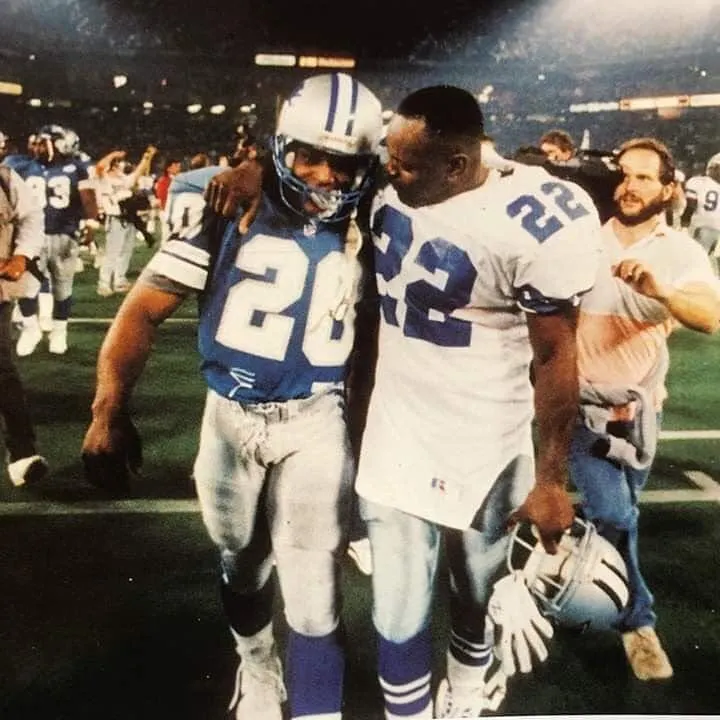
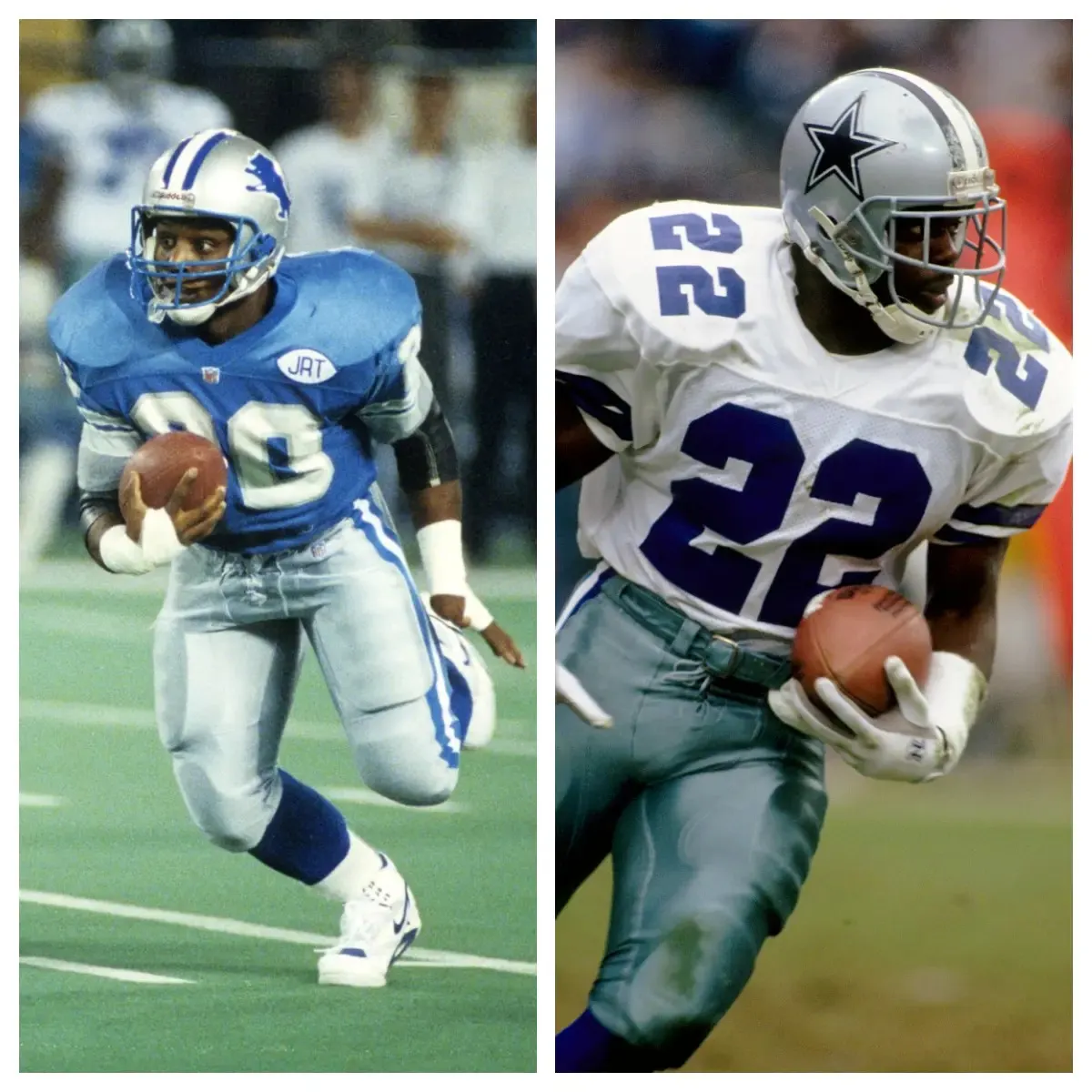
Maybe this is why the CeeDee Lamb situation eats at me more than it might bother a younger fan who has only been following the Cowboys for the last few seasons. I’ve seen this exact movie before. I spent my formative years watching Emmitt Smith, and when you go back and look at his legendary career, the most glaring takeaway is how completely his sheer volume dictated the rhythm of the whole offense. Emmitt wasn’t just a running back who accumulated empty stats; he was the structural engine of the team. During the peak of the Cowboys’ 90’s dynasty, his workload was absolutely staggering. He carried the rock 365 times in 1991, 373 times in 1992, 283 times in 1993 (despite missing 2 games), 368 times in 1994, and 377 times in 1995.
Those historic numbers were not an accident. Jimmy Johnson and the coaching staff understood a fundamental truth: When Emmitt was rolling, he could suffocate an opponent’s spirit and control the game entirely. We even have historical evidence of what happened the moment the Cowboys finally decided to stop capping his potential. In 1990, Emmitt’s rookie season, the staff was strangely hesitant, averaging just 12.3 carries per game through the first 10 games. The low point came in a frustrating loss to the 49ers where he was limited to just 6 carries for 40 yards. After the game, a young Emmitt pointed out the glaringly obvious problem, noting that it was extremely tough to average 100 yards a game when you simply don’t get the opportunities.
The coaching staff actually listened. The following week against the Rams, Emmitt touched the ball 25 times for 171 scrimmage yards to lead the Cowboys to a 24–21 victory that sparked a 4-game winning streak. Now, that’s not to say that feeding Emmitt was a magical cheat code that guaranteed a win every single Sunday, but it proved a vital concept: opportunity is the ultimate currency in football. Sometimes an offense stalls not because your best player failed, but because you starved him of the touches required to break the game open. The 1993 season is still the ultimate testament to his gravity; The Cowboys looked completely broken and lost their first 2 games while Emmitt was out, only to string together 7 straight wins the second he returned, finishing the year 12–2 with him in the lineup. The 2 losses came in November when he was limited by injury.
Again, football is not one-man theater, and Emmitt wasn’t single-handedly playing 11-on-11. But that’s exactly why this history lesson matters so much for the modern team. Football is a collaborative, team sport, but collaboration should never be twisted to mean that everybody shares an equal responsibility for creating your leverage. Sometimes one player is the engine. Sometimes one supreme talent is a walking matchup nightmare that the defense has absolutely no structural answer for. When that reality stares you in the face, a coordinator’s job isn’t to engineer an artificially balanced spreadsheet of touches; your job is to keep applying pressure until the opponent proves they can stop it.
That’s the missing ingredient that has plagued the Cowboys for 3 decades. I’ve watched this team possess generationally gifted players who are fully capable of taking over a football game, only to watch a succession of coaching staffs get timid and willingly wander away from their biggest strengths. It’s a different era, a different offensive scheme, and a completely different position on the field. But underneath the modern aesthetics, it’s the exact same institutional flaw and the exact same maddening frustration. We’re still watching a multi-million dollar offense overthink itself into stagnation by voluntarily taking the hands off its own best weapon. It’s an organizational curse passed down through generations of Cowboys football, and until a coach finally comes along with the courage to press the advantage, we’ll keep suffering the same fate.
There Are Times When You Should Stop
Before anybody reads this and jumps to the conclusion that my solution is to blindly force-feed your superstar until the wheels fall off, let me clarify: absolutely not. There are plenty of completely valid, tactical reasons to pivot and change course during a game. If a defensive coordinator successfully adjusts his coverage packages and takes away the initial matchup, you have to respond. If a receiver is banged up, you have to protect him. If the game script completely flips, your priorities naturally flip with it. When the running game suddenly catches fire and becomes the most efficient tool to bleed the clock and ice a win, you lean into it. If the defense starts selling out to bracket your alpha weapon and leaves another playmaker isolated in single coverage, you ruthlessly exploit that secondary target instead. You can’t just keep dialing up the exact same play in a vacuum while pretending like the pocket is not collapsing around your quarterback.
That’s not being stubborn; that’s just basic football survival. It’s a crucial shift to make because pressing a proven advantage should never be confused with a flat refusal to adapt. Real adaptation means reacting directly to what the opponent is actually doing, not what you think they might do. If the opponent dedicates the resources to completely lock down CeeDee Lamb, then congratulations to them. Now force them to stop George Pickens or find another answer. But if they haven’t solved him yet? Why on earth would you do their dirty work for them? That’s exactly where I draw the line. There’s a massive difference between a defense executing a great game plan to say, “We’re taking CeeDee away,” and an offensive coordinator overthinking a lead and deciding, “We’re going to stop using CeeDee.” The first scenario is a defense winning a hard-fought battle. The second is an offense voluntarily surrendering one, and I refuse to pretend like those 2 things are the same.
The Box Score Doesn’t Tell You Everything
This is exactly why I’ve become increasingly skeptical of evaluating football strictly by final statistics. A box score will tell you that CeeDee Lamb hit 153 yards against the Commanders, that he caught 6 passes in Miami, or that he matched that catch total against the Bengals. It will show you that he finished the 2023 season with 1,749 receiving yards. All of that data is useful, but none of those numbers tell you when that production actually happened. The timing of those yards changes everything. A superstar who explodes for 5 catches and 89 yards in the opening 15 minutes and then disappears for the next 2-and-a-half quarters is playing a fundamentally different game than a receiver that catches 8 passes for 95 yards evenly distributed throughout the game.
The final numbers might make those 2 realities look similar on paper, but the games themselves share almost nothing in common. That’s why I keep coming back to the psychological reality of what the opponent is forced to endure while the clock is running. If CeeDee Lamb shreds a secondary for almost 100 yards in the 1st quarter, the defensive coordinator has to spend the rest of his day in a state of absolute panic trying to adjust. But if the Cowboys voluntarily stop throwing him the ball, that coordinator gets to stop worrying about him entirely. That massive shift in defensive comfort doesn’t leave a footprint in the box score, but it dictates every single snap on the field.
A final stat line is only the beginning of the conversation. If you want to understand what actually happened on Sunday, you have to dig into the context surrounding the numbers. You have to analyze how that production was distributed, track what the defense was executing, and dissect exactly how the offensive play caller responded. Most importantly, you have to look at the massive chunk plays that were drawing open on film but were never pursued. Otherwise, you can stare at a perfectly polished stat sheet and completely miss the real story the game was telling you. A box score can easily mask a coaching staff’s absolute failure to press an advantage, turning a night of stagnant, unforced errors into what looks like a routine day at the office.
Don’t Stop Making Them Stop Him
That’s ultimately what this whole thing comes down to for me. I’m not asking coaches to throw caution to the wind and get reckless, nor am I asking quarterbacks to blindly throw into triple coverage or turn the offense into a predictable, one-track machine. I’m just asking them to recognize an advantage when they have one and make the opponent prove they have the talent to take it away. If CeeDee Lamb is consistently winning his routes, keep making the secondary account for his gravity. If they sell out to double-team him, ruthlessly exploit the open space he just created for somebody else. If they change their coverage, attack the new weakness they just exposed. If they finally draw up a legitimate answer, then fine, move on to the next phase of the playbook. But DO NOT under any circumstances voluntarily solve the problem for them. That’s the ultimate sin, and it’s what frustrates me the most.
The opponent’s sole responsibility on defense is to figure out a way to neutralize your best player, and you should never do their heavy lifting for them. I’ve seen this bizarre trend play out with superstar athletes across all of sports, but it hits closest to home with the Cowboys. I watched it happen to Emmitt Smith, I’ve watched it happen repeatedly to CeeDee Lamb, and it has become the definitive trait of this franchise. That’s why this is not an isolated critique of one specific wide receiver, one offensive coordinator, one quarterback, or one Sunday afternoon in September. It’s an indictment of an entire organizational philosophy. There’s a world of difference between a team that’s physically unable to sustain an advantage and a coaching staff choosing to abandon one. There’s also a huge difference between getting stopped by a better team and actively stopping yourself, just like there’s a big difference between true offensive balance and outright underuse.
Sometimes your star player is not demanding the ball because he’s chasing individual accolades or trying to pad his stats for a contract extension. Sometimes he’s screaming for the ball because he recognizes a reality that his own coaches should have noticed 3 series ago: They can’t stop me. So let them try. Force them to adjust, make them scramble on the sideline, and make them prove to the whole stadium that they can actually handle the matchup. If they can’t? Don’t make their lives easier by tucking your best weapon away in a drawer. Don’t grant them unearned relief, don’t gift them defensive confidence, and don’t give them a single second to catch their breath. And whatever you do… don’t stop him for them. Until the Cowboys internalize this simple truth, they will continue to be their own toughest opponent, leaving fans to wonder how many games and possible Super Bowl opportunities were lost not because the enemy was better, but because we beat ourselves.