Every Great Trading Plan Dies Without Discipline


A trader can have a great strategy, a clean chart, good indicators, proper risk management, and even a well-written trading plan, and still lose money. Not because the strategy was bad, not because the market was unfair, but because, at the most important moment, the trader did not follow his own plan.
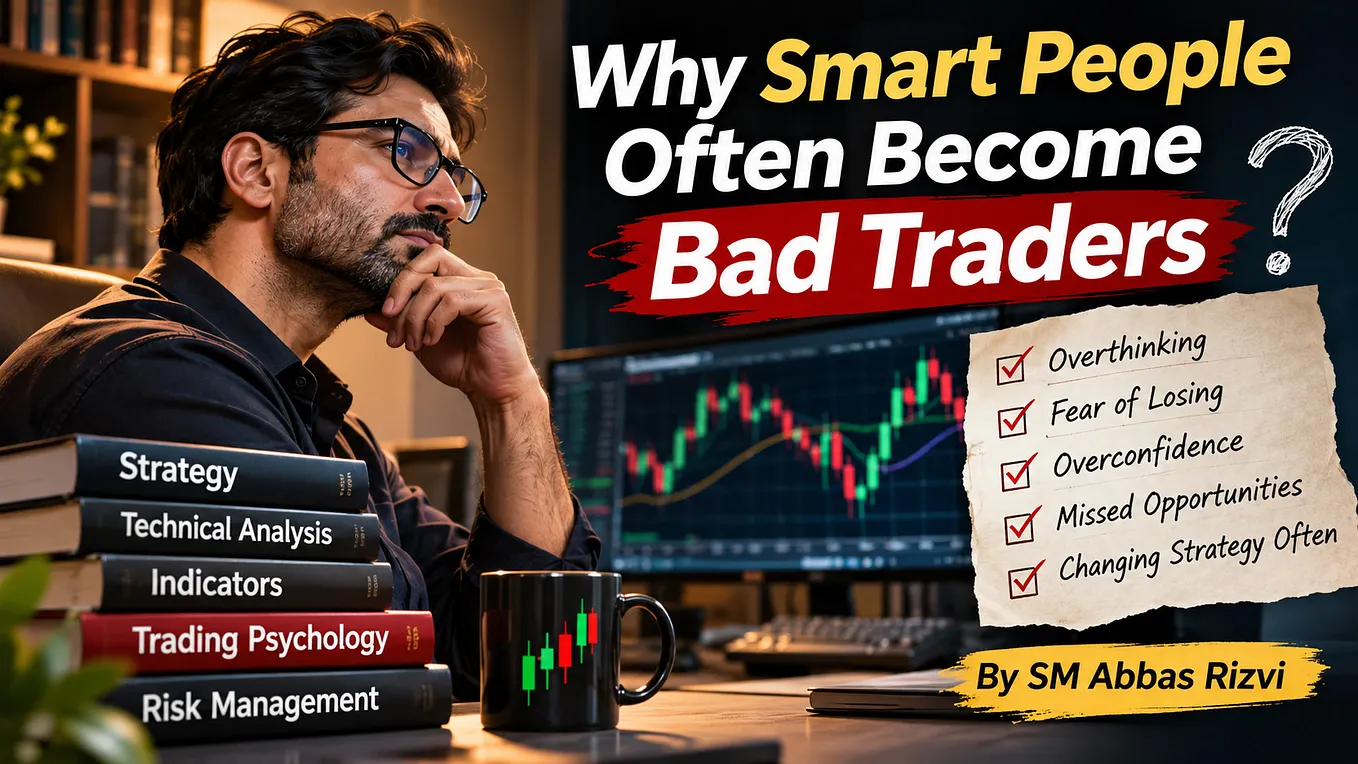
This is one of the hardest lessons I have learned from trading. We often think that becoming a better trader means finding a better strategy, so we keep looking for a better indicator, a better setup, a better entry, or a better system. But after spending enough time in the market, you start to see something different.
The real problem is often not the trading plan. It is the person trying to execute it.
A Plan Looks Easy Before the Trade
Writing a trading plan is easy when there is no money on the line. You can write, “I will risk only 1%,” “I will not take revenge trades,” “I will wait for confirmation,” “I will exit when my stop-loss is hit,” and “I will not trade out of fear or greed.” Everything looks simple on paper.
Then the market starts moving. Your position is in a small loss, the candle is moving against you, and you start thinking, “Maybe it will come back.” So you move your stop-loss. Then the loss becomes bigger, and now you think, “I cannot close here. I have already lost so much.” Suddenly, the small planned loss becomes a large unplanned loss.
The interesting part is that your strategy did not fail.
You stopped following it.
That difference is extremely important.
I Have Seen This Pattern Again and Again
One thing the market teaches you slowly is that the same mistake can appear in different forms. Sometimes it is overtrading, sometimes it is moving a stop-loss, sometimes it is entering too early, sometimes it is taking a trade because you just had a losing trade, and sometimes it is booking profit too quickly because you are afraid that the market will take it back.
The reasons look different, but underneath, the problem is often the same.
We react to what is happening instead of following what we decided before it happened.
That is where discipline becomes more important than prediction. A disciplined trader does not need to predict every move. He needs to know what he will do if the market goes up, down, or does nothing. That is a completely different way of thinking.
Imagine Two Traders With the Same Strategy
Let us take a simple example. Two traders use exactly the same setup, both buy when their conditions are met, both risk ₹1,000 per trade, and both have the same stop-loss and the same target.
On Monday, both lose. Trader A accepts the loss, closes the trade, and moves on. Trader B becomes frustrated and thinks, “I was wrong. I need to recover this.” So he takes another trade, even though that trade is not part of his plan. He loses again, then increases his position size, and another loss follows.
By the end of the day, the two traders are in completely different situations. Trader A lost ₹1,000, while Trader B may have lost ₹4,000 or ₹5,000.
Same strategy. Same market. Different discipline.
This is why I believe trading performance cannot be judged only by the quality of a strategy.
Execution matters just as much as the strategy itself.
The Most Dangerous Trade Is Often the One After the Loss
A losing trade can do something strange to your mind. Before the loss, you are analyzing the market. After the loss, you start analyzing your money. That is a big difference.
You stop asking, “Is there a good setup?” and start asking, “How can I recover my loss?” That question can destroy discipline very quickly.
Suppose your daily risk limit is ₹2,000 and you lose ₹1,500. There is another setup in the market, but it is not very clear. A disciplined trader may say, “This is not good enough. I will wait.” An emotional trader may say, “I only need one good trade to recover.”
The second thought sounds reasonable, but it is dangerous, because now the trade is no longer being taken because of the market opportunity. It is being taken because of the previous loss.
The market does not know that you lost money five minutes ago.
It has no responsibility to give it back. This is one of the most useful things a trader can understand.
Discipline Is Not About Being Perfect
There is another misunderstanding about discipline. Some people think a disciplined trader never makes mistakes. That is not true. A disciplined trader can also enter early, miss a trade, close a trade too soon, or even break his rules occasionally.
The difference is that he notices the mistake and does not allow one mistake to become five more. That is real discipline.
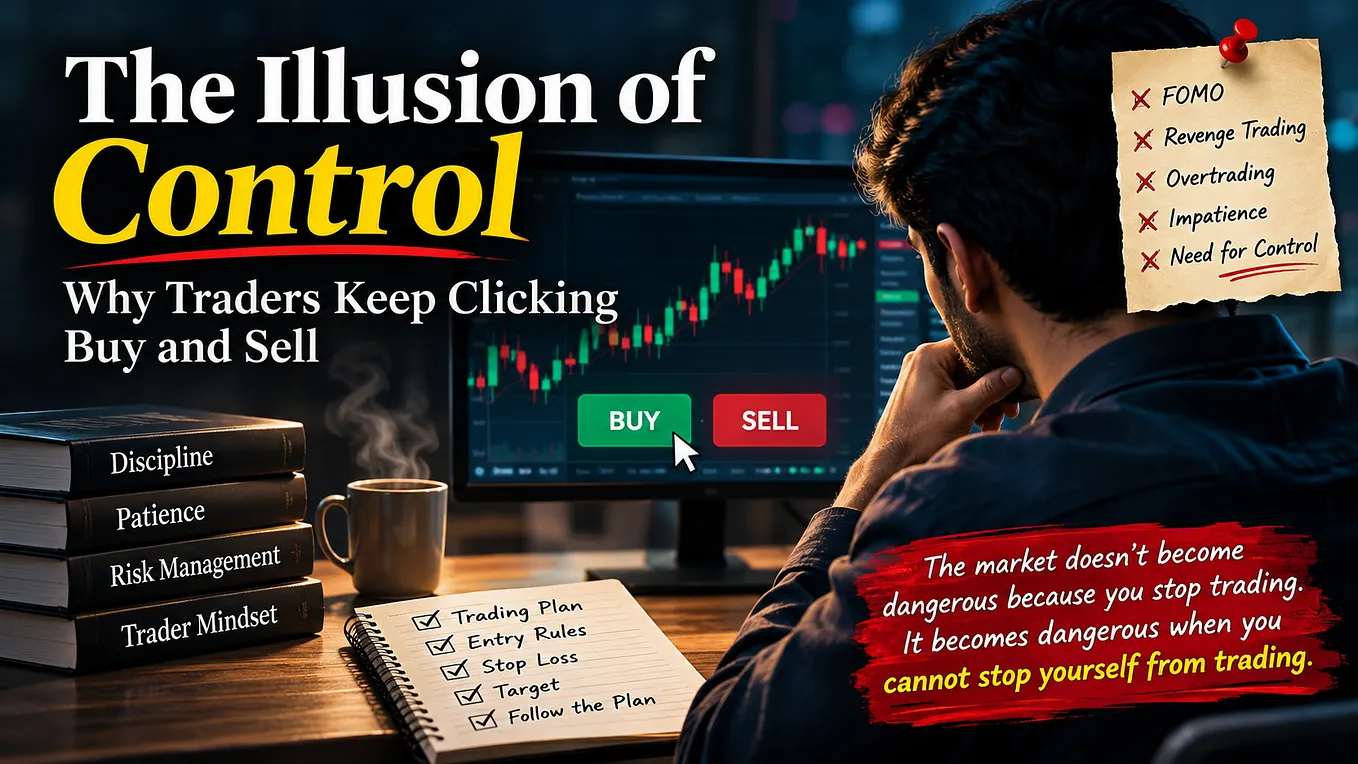
For me, discipline is less about controlling the market and more about controlling the size of my reaction to the market. You cannot control a losing trade, you cannot control the next candle, and you cannot control whether your target will be hit. But you can control how much you risk, where you enter, where you exit, how many trades you take, and what you do after a loss.
That is where your actual power lies.
A Stop-Loss Is Not Your Enemy
Many traders move their stop-loss because they do not want to accept being wrong. But a stop-loss is not proof that your analysis was useless. It is simply the price you agreed to pay if your idea does not work.
Think about it like a business expense. A shop owner does not expect every product to sell. A business has rent, salaries, electricity, transport, damaged goods, and other costs. Trading is similar. Losses are part of the business.
The problem starts when you refuse to pay a small business expense and allow it to become a much larger one. A ₹1,000 planned loss can become a ₹5,000 loss simply because you did not want to accept ₹1,000.
That is not better trading.
That is emotional accounting.
Sometimes Doing Nothing Is a Trading Decision
This is something that took me time to understand. There are days when the best trade is no trade. The market may be moving fast, there may be hundreds of candles on your screen, there may be news, and there may be strong movement, but movement does not automatically mean opportunity.
A trader can lose money simply because he feels he needs to participate.
This is where a trading plan becomes useful. A good plan should tell you not only when to trade, but also when not to trade.
If your setup is not there, you do not need to create one. You do not get paid for being active. You get paid for making good decisions when your edge is present.
The Mind Creates Stories
One of the biggest problems in trading is that the mind is very good at creating stories. You enter a trade, it goes slightly against you, and your mind says, “It will reverse.” Then it falls more, and your mind says, “The market is just shaking weak hands.” Then it falls even more, and now you say, “I have seen this before. It will definitely come back.”
Notice what happened.
You started with analysis.
Then you moved into hope.
That transition can happen without you even noticing it.
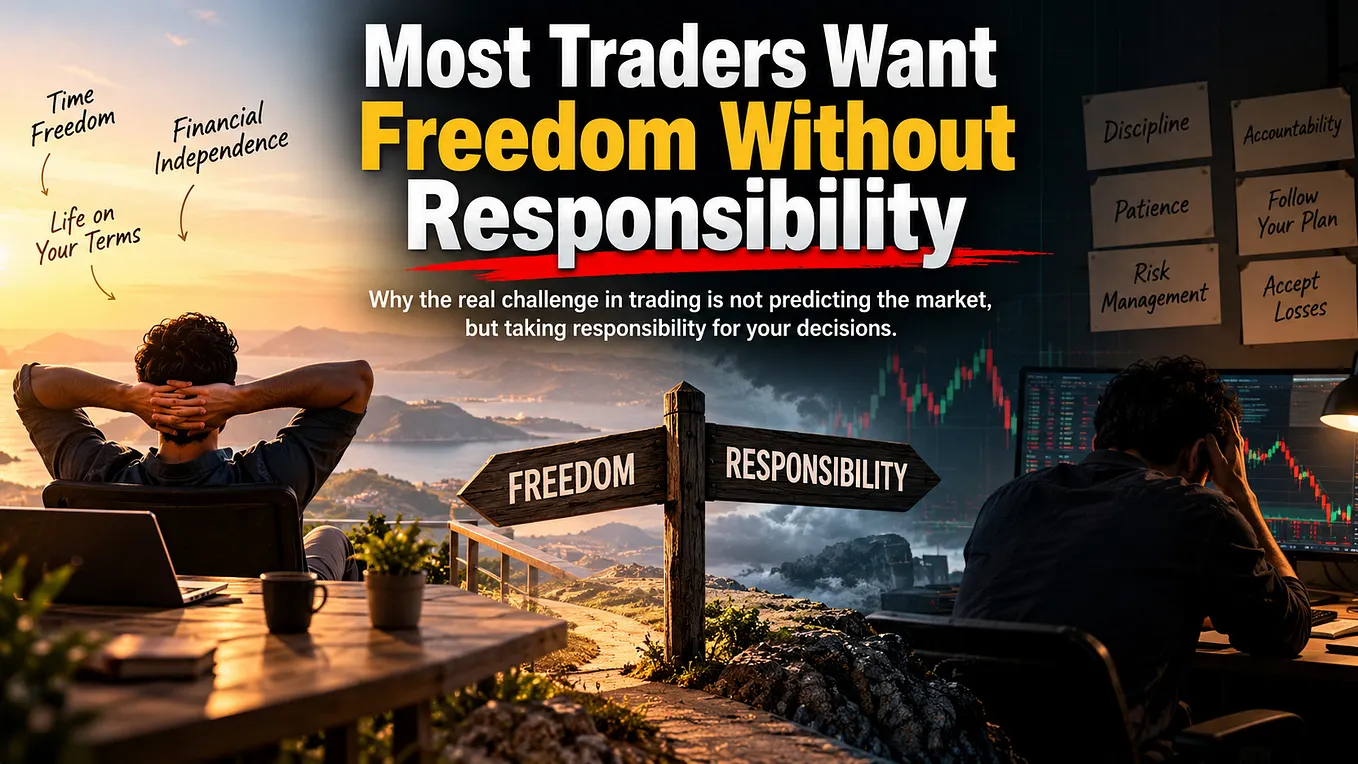
This is why I believe the biggest battle in trading is not between the trader and the market. It is between the trader and his own thoughts.
That idea became central to my book “बाज़ार आपका दुश्मन नहीं, आपका मन है”. The market is simply doing what the market does. It moves, it changes, it surprises, and it gives opportunities and takes them away. But the meaning we attach to those movements comes from our own mind.
Fear makes a normal pullback look dangerous, greed makes a good profit look too small, hope makes a bad trade look recoverable, ego makes being wrong feel unacceptable, and impatience makes waiting feel like wasting time.
The chart may be neutral.
Get SM Abbas Rizvi’s stories in your inbox
Join Medium for free to get updates from this writer.
Our mind is not.
Your Trading Plan Should Protect You From Yourself
I think this is one of the most important ways to look at a trading plan. Most traders create a plan to find trades. A better approach is to create a plan that also protects you from your own behavior.
Before the trade, ask yourself: What is my setup? Where is my entry? Where is my stop-loss? Where is my target? How much am I risking?
During the trade, ask: What will make my original idea invalid? Will I change anything because of fear? Will I move my stop-loss? Will I add to the position without a planned reason?
After the trade, ask: Did I follow my plan? Was the trade good even if it lost? Was the trade bad even if it made money?
That last question is particularly important.
A bad trade can make money. A good trade can lose money. If you judge your trading only by the result, you can learn the wrong lesson.
A Winning Trade Can Also Be a Bad Trade
Suppose you take a trade without your setup, risk more than planned, and have no proper stop-loss, but the market moves in your direction and you make ₹5,000. You feel great. You may even think, “My instinct was right.”
The next time, you do it again, but this time the market moves against you. The same behavior that made ₹5,000 yesterday may lose ₹10,000 today.
This is why the result of one trade tells you very little about the quality of the decision.
Judge the decision first. Judge the money second.
If you followed your plan and lost, that can still be a good trade. If you broke your rules and won, that can still be a bad trade.
This mindset changes everything.
Discipline Becomes Easier When Your Risk Is Small
There is another practical point that is often ignored. Sometimes traders think they have a psychology problem when they actually have a position-size problem.
If you are risking an amount that you cannot emotionally accept losing, following your plan becomes extremely difficult. Imagine risking ₹500 on a trade. A ₹500 loss may be uncomfortable, but manageable.
Now imagine risking ₹20,000. Suddenly every candle feels important, every small movement creates fear, you start watching the trade continuously, you want to move the stop, you want to book profit early, and you want to recover quickly.
Your psychology has changed because the money has become too important.
Good risk management makes discipline easier.
It gives your strategy room to breathe.
The Goal Is Not to Avoid Losses
A serious trader eventually understands something uncomfortable: you cannot build a trading career by trying to avoid every loss.
The goal is to make sure that losses remain controlled while good trades have enough room to work. That means thinking in probabilities.
You can have five losing trades and still have a profitable month. You can have three winning trades and still lose money overall if your losses are badly managed.
So the question should not always be, “Will this trade win?”
A better question is:
“If this trade loses, will I still be completely fine following my plan tomorrow?”
If the answer is yes, your risk is probably under control. If the answer is no, something needs to change.
Discipline Is Built Trade by Trade
You do not suddenly become disciplined one morning. It is built through small decisions. You take the setup instead of chasing the market, you accept the stop-loss instead of moving it, you skip the trade when the conditions are not right, you stop trading after reaching your daily loss limit, you do not increase your size because of frustration, and you review your trades instead of blaming the market.
These decisions may look boring, but trading success is often built from boring decisions repeated consistently.
The market does not reward excitement. It rewards good risk management and consistency over a large number of trades.
What I Would Tell a Trader Starting From Zero
If I had to give one piece of advice to someone starting trading from zero, I would not tell them to spend all their time searching for the perfect strategy.
First learn how to survive. Learn risk management, learn how to take a loss, learn how to wait, learn how to stop trading, and learn how your own emotions change after a winning trade and after a losing trade.
Only then does strategy become much more useful.
This is also the reason I wrote “Zero Se Trader” -to approach trading from the practical side rather than making it look like an easy shortcut to money.
Trading is not about finding a secret formula. It is about developing a process that you can follow when the market is doing exactly what you did not expect.
The Real Test of a Trading Plan
The real test of a trading plan is not how it performs on a perfect chart. The real test comes when you are sitting in front of a live position and everything inside you is telling you to break the rules.
That is the moment your plan either becomes real or remains just a document.
Anyone can say, “I will follow my stop-loss.” The real test is following it when the loss is happening.
Anyone can say, “I will wait for confirmation.” The real test is waiting when the market suddenly moves without you.
Anyone can say, “I will not revenge trade.” The real test is what you do five minutes after a painful loss.
That is where discipline is built.
What Trading Finally Taught Me
A great trading plan gives you a roadmap, risk management keeps you alive, but discipline is what makes you follow the roadmap when the market becomes uncomfortable.
You do not need to win every trade. You do not need to predict every move. You do not even need the perfect strategy.
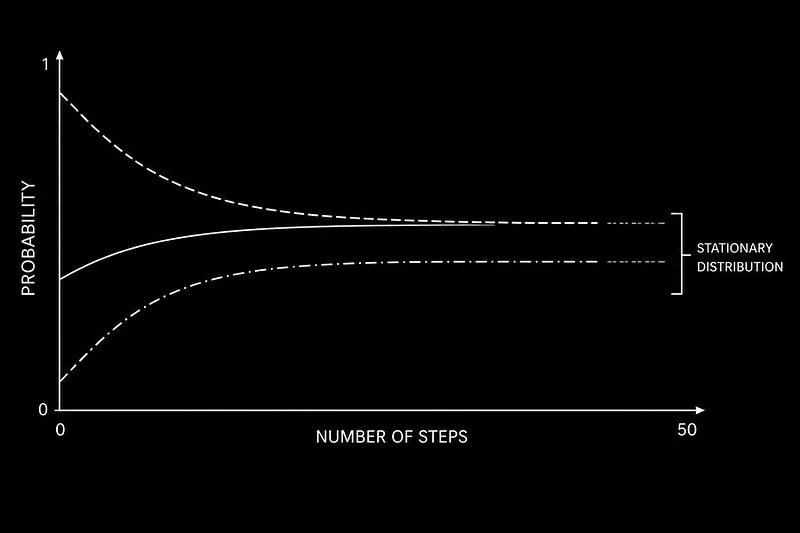
What you need is the ability to follow a tested process long enough for probability to work in your favor.
Because in trading, your biggest loss may not come from a bad setup. It may come from one moment when you decided that your rules were no longer necessary.
And perhaps that is the simplest way to remember it:
The market does not destroy a good trading plan. The trader who stops following it does.
About Me
I am a trader and writer, and much of what I write comes from my own experience, mistakes, observation, and years of learning from the market. Through my books “Zero Se Trader” and “बाज़ार आपका दुश्मन नहीं, आपका मन है”, I try to share trading in a practical way -not as a shortcut to money, but as a journey of understanding markets, risk, discipline, and most importantly, yourself.