Why the 80s Mullet Refuses to Die

Every few years, menswear circles back to a haircut it once mocked. Right now, that haircut is the mullet specifically, the loud, teased, unapologetically maximalist version that dominated the 1980s.
The 80s mullet wasn’t just “short front, long back.” It was volume built with cold wave perms and aerosol hairspray, crown height that needed backcombing to hold, and a silhouette designed to read from the back row of an arena. David Bowie wore a version of it.
The Real Difference Between an 80s Mullet and a Modern One
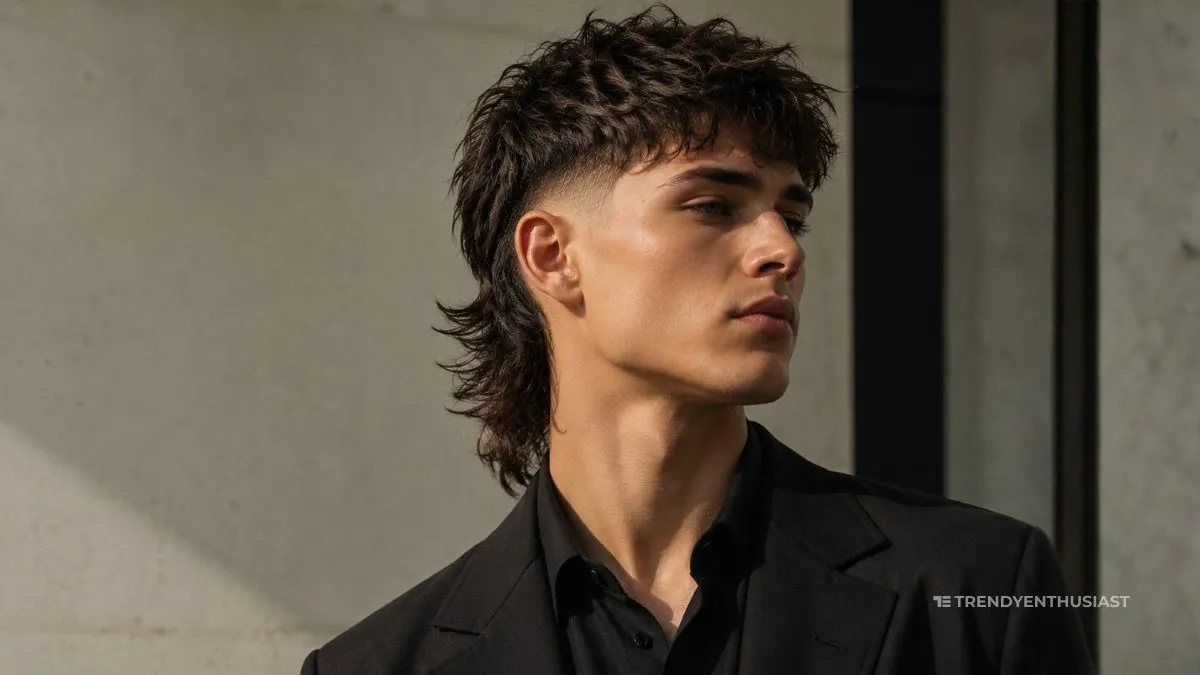
Today’s mullet is a haircut. The 80s mullet was a process. Modern versions lean on natural texture and a wolf-cut-style shag minimal product, no perm, low maintenance.
The 80s original depended on chemical processing and daily styling labour: mousse worked into damp roots, a round brush lifting against the grain, and enough hairspray to survive an arena show.
Get Trendyenthusiast’s stories in your inbox
Join Medium for free to get updates from this writer.
That’s the real litmus test if you’re trying to replicate the look authentically rather than approximate it.
Thirty Variations, One Decade
What’s striking going back through 80s style archives is how much range existed inside what people now flatten into a single joke haircut.
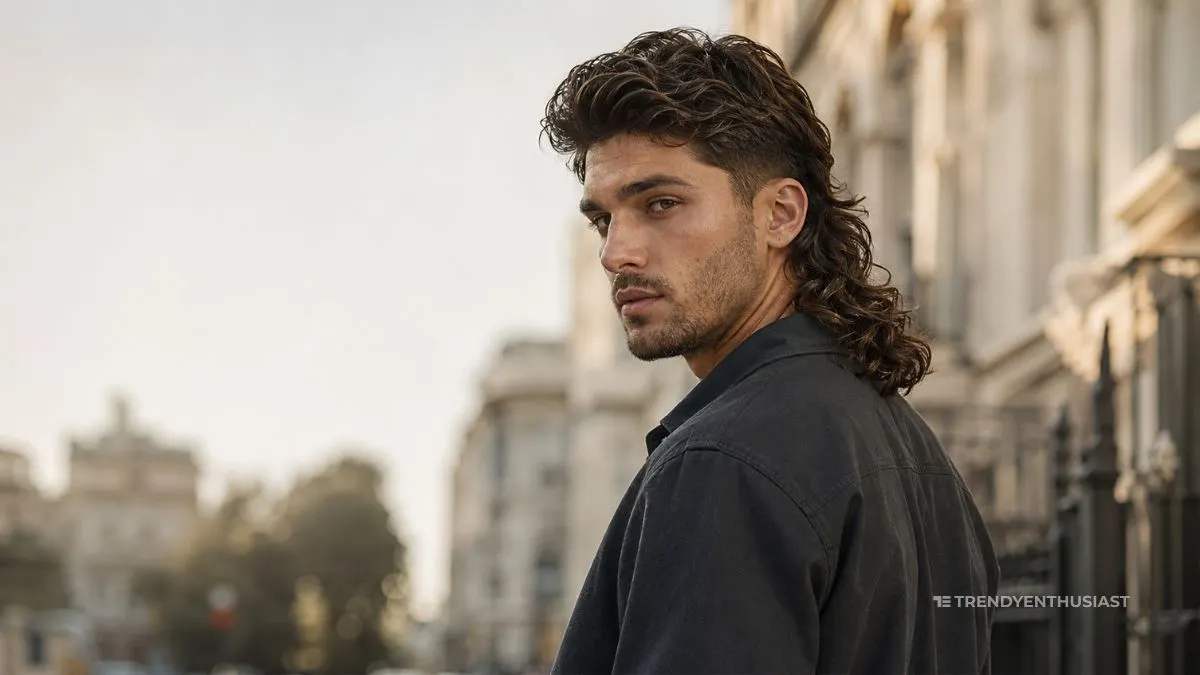
There’s the classic rocker version worn by glam and hair metal acts. There’s the fully permed take tight, springy curls through the back, popularised loosely by Billy Ray Cyrus and more aggressively by the glam metal scene.
Teen idols like Rob Lowe, John Stamos, and Kiefer Sutherland softened it into something closer to a feathered fringe. Even musicians outside the metal scene Paul McCartney, George Michael, Bono adapted it to their own genres.
The full breakdown of all 30 variants is in the original piece linked above.
Should You Actually Try This in 2026?
If you’ve got coarse or naturally wavy hair, several of these variants require almost no chemical processing to pull off — the texture does the work a perm used to. If your hair is fine and straight, the slicked-back or precision-cut variants translate more cleanly than the big-volume rock star versions, which tend to need product most straight hair won’t hold past midday.
Either way, the 80s mullet isn’t really back because it’s ironic. It’s back because, unlike a lot of 80s trends, it was never actually boring.
Full styling guide, product recommendations, and all 30 variations with face-shape matching at trendyenthusiast.com.