Why Boundaries Matter Biologically
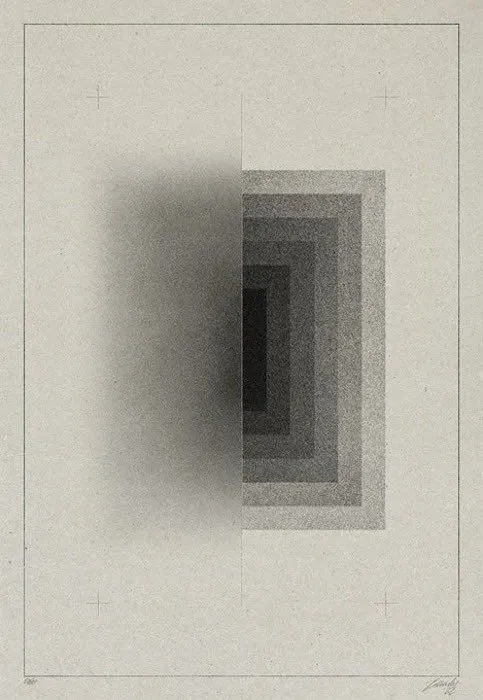
A boundary is not separation. It is a condition that allows regulation to occur.


Why Boundaries Matter Biologically
Modern culture often views boundaries through a psychological lens.
An act of interpersonal refusal.
A tool for emotional protection.
A defense mechanism built to keep the world out.
But biology operates on a different principle.
A cell membrane does not exist to isolate the cell.
Skin does not exist to disconnect the body from its environment.
A sleep cycle does not exist to reject the day.
These are not barriers.
They are containers.
They do not prevent life.
They preserve the internal organization that makes life possible.
The Leak of the Unbounded
Without a clear boundary, the nervous system faces a fundamental problem:
Signals do not know where to stop.
The notification at midnight.
The laptop left open on the bed.
The conversation that never fully closes.
Each event appears insignificant on its own.
Together, they erase the distinction between engagement and recovery.
To the conscious mind, this feels like staying connected.
To biology, it is a state of continuous orientation.
When everything remains active, nothing is allowed to transition.
The organism spends its metabolic budget maintaining readiness rather than restoring balance.
Reducing Regulatory Labor
We often respond to this exhaustion by demanding greater resilience.
We ask the mind to remain calm in increasingly chaotic environments.
But a boundary changes where the labor is placed.
It is not about forcing the nervous system to become stronger.
It is about allowing the environment to perform part of the work.
Get OROCOR Axis’s stories in your inbox
Join Medium for free to get updates from this writer.
A closed door.
A phone placed in another room.
A clearly defined end to the working day.
These physical conditions quietly remove thousands of unnecessary decisions.
The nervous system no longer has to determine, moment by moment, what deserves attention and what should be ignored.
When the container is secure, background monitoring begins to fade.
We do not lack the willpower to focus.
We lack the boundaries that make focus biologically sustainable.
A System Needs Something to Lean Against
Energy without structure does not disappear.
It diffuses.
It spreads across unfinished tasks, open loops, constant notifications, and undefined expectations.
The result is not movement.
It is continuous expenditure.
A living system cannot organize itself around a condition that never settles.
It needs something stable enough to lean against.
A limit.
A rhythm.
A perimeter.
Only when a boundary is established does energy stop leaking into every possible direction.
The system begins to stabilize.
Not because more effort has been applied — but because there is finally a condition stable enough to organize around.
The Possibility of Return
Human systems rarely recover by trying to process everything.
They recover when they no longer need to.
A boundary is not merely a line that separates the self from the world.
It is the condition that tells the organism when vigilance is no longer required.
Only when there is a recognizable perimeter can the nervous system lower its guard.
Only then can regulation replace constant orientation.
Stability does not begin with managing stress.
It begins by noticing where the container has disappeared.
The question is no longer:
How can I protect myself from the world?The question becomes:
Where has the boundary dissolved, allowing my system to remain continuously active?