A Day Hike and an 800-Mile Journey


This story was originally published in the Traverse City Record-Eagle.
Tucson has a special place in my heart.
It’s where I met my wife, Johanna. It’s where our older son, Carter, was born. It’s where I made lifelong friends after moving to the Old Pueblo for my first job after college. It’s also where I first fell in love with the outdoors in a deeper way — long days hiking, mountain biking, backpacking, camping, and wandering through the Sonoran Desert. Those adventures, more than twenty years later, still shape how I move, think, explore, and see the world — whether in Arizona or back home in Traverse City.
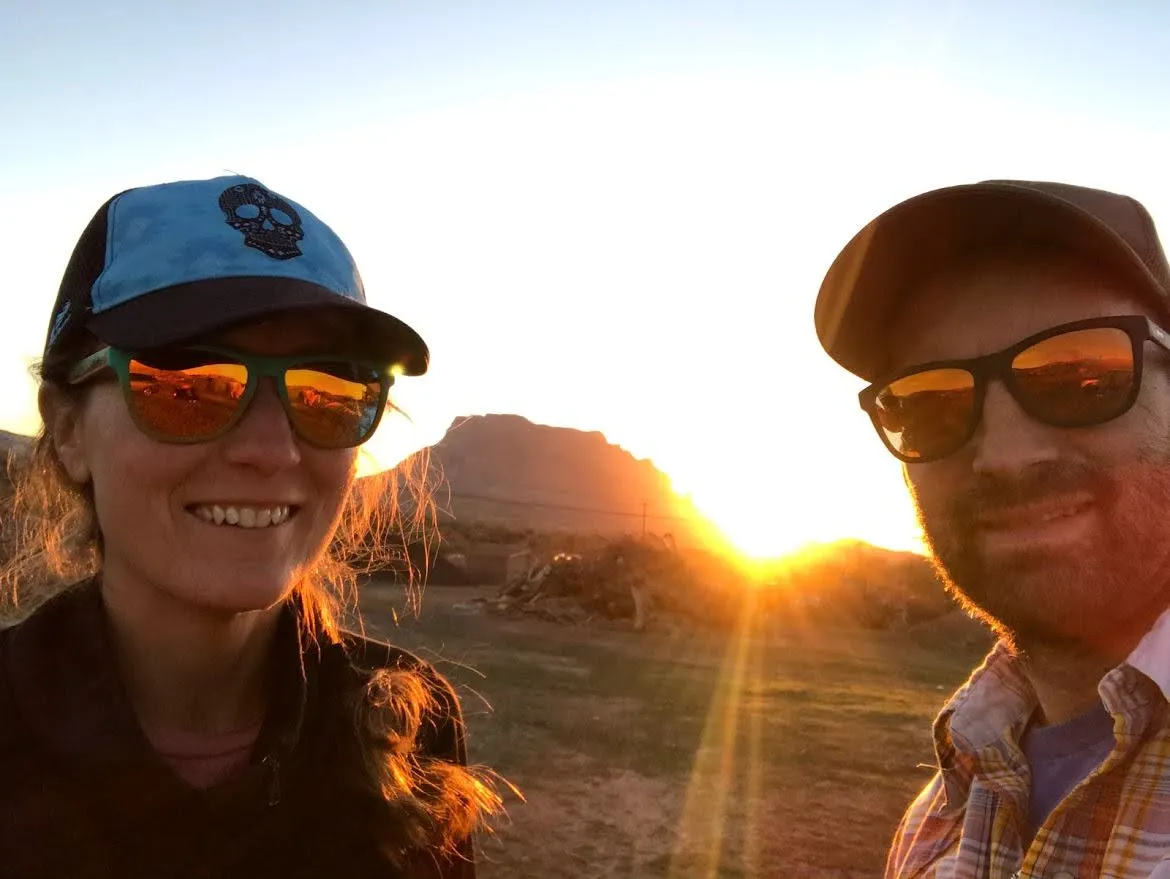
Last weekend, Johanna and I returned to one of our favorite places in Tucson — the saguaro-dotted Santa Catalina Mountains. We started up Sabino Canyon, climbed toward the East Fork Trail, and eventually looped around Thimble Peak into Bear Canyon and past Seven Falls — a long, beautiful day in the mountains.
March in the Catalinas can be surprisingly lush. Snowmelt trickles down the canyon walls, cottonwoods, willows, and sycamores glow bright green along the creek, and the desert feels more like a riparian oasis than the dry landscape many people imagine when they think of southern Arizona.
The East Fork Trail is part of the Arizona Trail, an 800-mile route stretching from the Mexican border to Utah through deserts, mountains, forests, and the Grand Canyon itself.
But as we hiked East Fork Trail, I found myself thinking about my Traverse City neighbor, Hans.
Almost exactly a year earlier, Hans had walked this same stretch of trail as part of a much bigger journey.
Not just this canyon near Tucson. All of it. The entire Arizona Trail. Johanna and I were out for the day. Hans was crossing a state. Eight hundred miles of desert, mountains, and canyon country.
Hans had just wrapped up nearly 30 years working at the Michigan Land Use Institute — now Groundwork Center — helping protect the landscapes and waters of northern Michigan. When that chapter of his life closed, he knew he wanted a new adventure in nature.
At first, he imagined something far away — maybe the Himalayas or the Andes. But then a simpler idea surfaced.
“Hiking across Arizona was as exciting as any option I could think of,” he said, noting that he went to see the Grand Canyon for the first time with friends on his 50th birthday. “It’s about as far from what I knew as anything.”
If northern Michigan is forests, lakes, farmland, and cool shade, the Arizona Trail is something entirely different: cacti, dry riverbeds, wide-open desert basins, and mountain ranges that rise abruptly out of the desert floor like sky islands.
“Well, it might sound strange,” he said with a laugh, “but I loved every bit of it.”
Still, a few places stand out. The southern start near Patagonia. The stretch from Tucson north toward the Grand Canyon. And Saguaro National Park, where towering cactus forests stretch across the Rincon Mountains.
“I did not expect the mountains to be so rugged and challenging,” he said. “And I had no idea the extent and scale of the wilderness.”
Get Ty Schmidt’s stories in your inbox
Join Medium for free to get updates from this writer.
But if the scenery was unforgettable, the logistics were relentless.
Water rules everything on the Arizona Trail.
Out here, hydration isn’t just a comfort — it’s survival. Hikers spend hours studying maps and planning the next water source. Sometimes volunteers known as “trail angels” stash jugs of water in bear-proof metal boxes along remote stretches of trail.
“That was the number one priority,” Hans said. “You had to dial in, make a plan, and execute. There’s no room for error. The folks who supply those water jugs are absolute heroes.”
Like many long-distance trails, the Arizona Trail, one of just eleven National Scenic Trails (our own North Country Trail is another), also has its own quiet community. Hikers cross paths, share campsites, trade stories in small trail towns.
But ultimately, Hans hiked the trail solo.
“There were almost always other hikers around, and that was awesome,” he said. “But ultimately, I was alone. Plenty of time to ponder. Open my brain.”
That solitude became one of the most powerful parts of the experience.
“It changed everything,” he said. “That sounds cliché, but my mind was totally blown.”
The trail also pushed him further than anything he had done before.
“I like endurance stuff, and I’m pretty good at suffering,” he told me. “But the Arizona Trail was hands down the hardest thing I’ve ever done.”
When he finally reached the northern end after 44 days, the realization hit all at once.
“I cried,” he said. “I didn’t realize how challenging it was until I finished.”
Walking through the Santa Catalina Mountains last weekend, I understand a little more of what he meant. The trails climb steeply through canyon walls and over rocky ridges before opening to views that stretch across miles of desert.
It’s beautiful country, it really is — but it asks a lot of you.
And maybe that’s the thread connecting places that seem worlds apart. Tucson and Traverse City may sit two thousand miles from each other — saguaros and white pines, dry washes and freshwater lakes — but the pull is surprisingly similar.
Sometimes it’s a walk along the Ottaway River, a trek on the North Country Trail, skiing at Hickory Meadows, or a ride on the Vasa singletrack.
Sometimes it’s a day hike in Sabino Canyon or walking 800 miles across Arizona.
Either way, the trail has a way of opening your mind — and reminding you that no matter how far you wander, home has a way of shaping how you move, think, explore, and see the world.