Troubleshooting and Enhancing IAM in Enterprise Environments

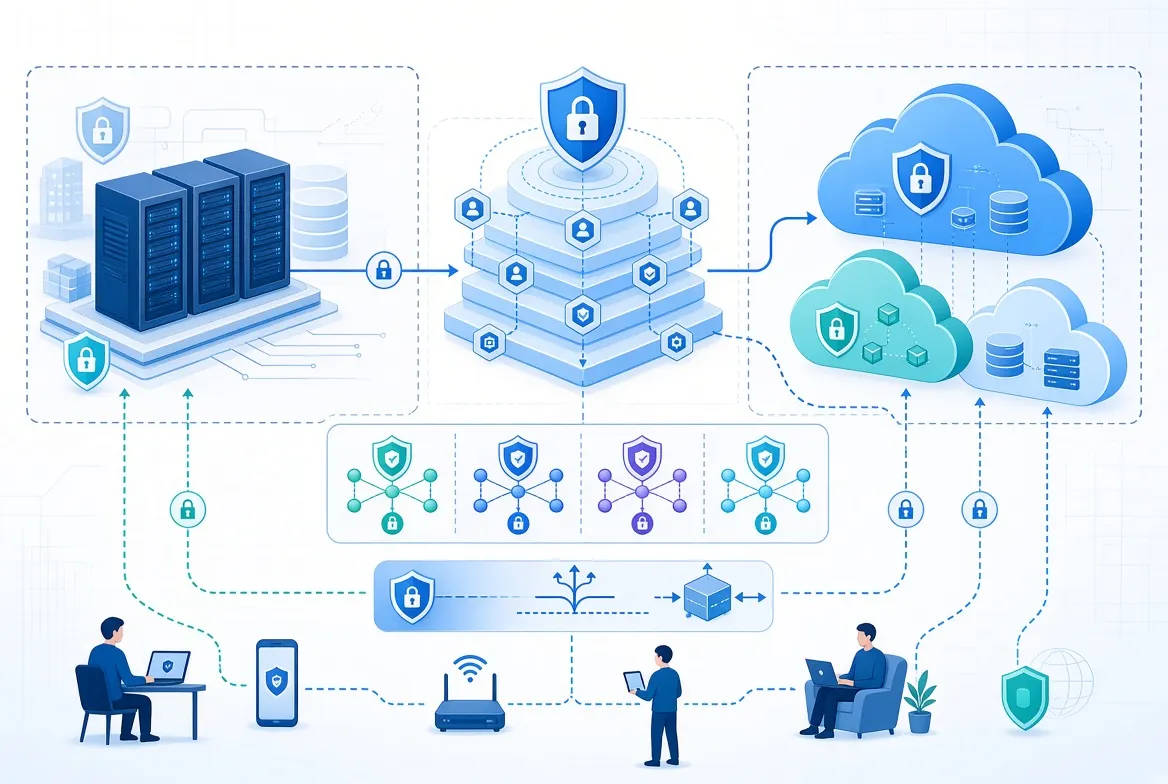
Identity and access management failures are among the most common root causes of security incidents. Compromised credentials, excessive privileges, and inconsistent enforcement across on-premises and cloud systems allow attackers to move with legitimate access rather than exploiting technical vulnerabilities. Effective IAM engineering focuses on reducing standing access, improving visibility into how identities are used, and applying consistent controls regardless of where the resource resides.
Secrets management is a frequent weak point. Long-lived passwords, API keys, and certificates stored in code repositories, configuration files, or shared drives create unnecessary risk. Centralized secrets stores with automatic rotation, short-lived credentials, and strict access logging reduce exposure. Workload identities should use short-lived tokens wherever possible rather than static secrets. Conditional access policies that evaluate device posture, location, risk signals, and resource sensitivity further limit the value of any single compromised credential.
Cloud IAM introduces additional complexity through trust policies, cross-account roles, and service principals. Overly permissive roles and unused permissions accumulate quickly. Regular access reviews, permission boundaries, and tools that identify unused privileges help maintain least privilege. Federation through SAML, OpenID Connect, and single sign-on reduces password sprawl, but only when the identity provider itself is well protected and session controls are enforced. Multi-factor authentication should be phishing-resistant for high-value accounts rather than relying solely on push notifications or SMS.
Get Nijah Porter’s stories in your inbox
Join Medium for free to get updates from this writer.
Privileged identity management and privileged access management tools address the highest-risk accounts. Just-in-time elevation, session recording, and approval workflows limit the window during which administrative credentials can be abused. These controls are most effective when they cover both human administrators and service accounts used by automation.
Troubleshooting IAM issues often involves correlating authentication logs, conditional access decisions, and resource access events. Failures in federation, certificate expiration, or misconfigured trust relationships can lock out legitimate users or create unexpected access paths. Maintaining clear ownership of identity systems and testing changes in non-production environments reduces the likelihood of widespread outages during improvements.
Organizations that treat IAM as an engineering discipline rather than a one-time configuration project see fewer credential-based incidents and spend less time recovering from them. The combination of strong secrets handling, continuous evaluation of access, and tightly controlled privileged access creates a more resilient foundation across hybrid environments.