Global Influence Is Earned, Not Assigned: Vipin Sondhi

Interview By Savi Khanna | Assistant Editor, BW Businessworld
The former Ashok Leyland MD & CEO and NBQP chairperson on why India’s manufacturing sector is ready to build its own version of the GCC model
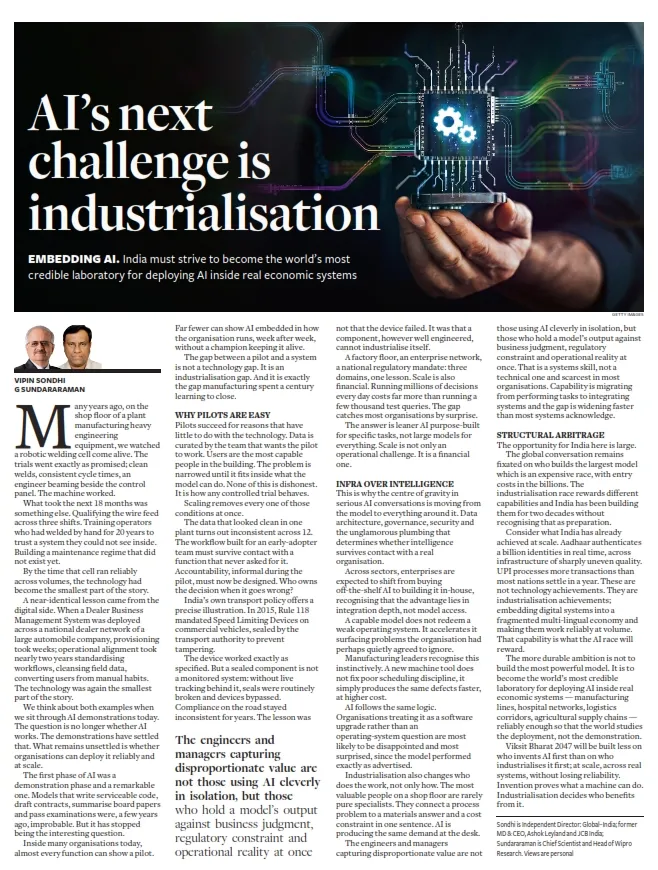
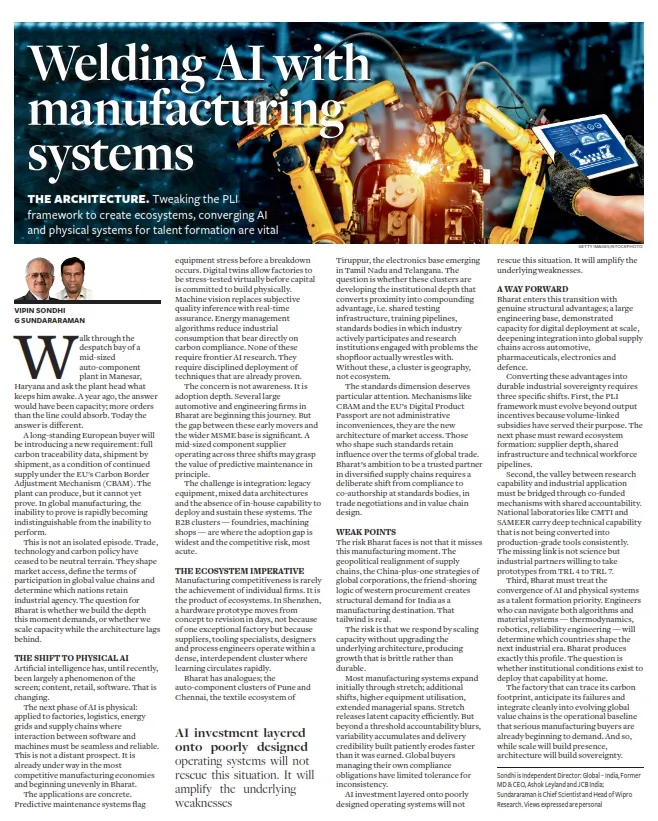
As India’s GCC conversation remains dominated by IT services and back-office delivery, Vipin Sondhi — Chairperson of the National Board for Quality Promotion and former MD & CEO of Ashok Leyland — makes the case for a parallel track the industry has largely overlooked: manufacturing-led global hubs. Drawing on his years building JCB India into a global engineering and manufacturing base for its UK parent, Sondhi argues that India’s next opportunity lies not in competing with traditional GCCs, but in creating what he calls “Global Manufacturing Capability Centres” — operations that don’t just export knowledge, but conceive, engineer, and manufacture products end to end. In this conversation, Sondhi unpacks the discipline that separates execution centres from trusted global decision-makers, why quality is a matter of ownership rather than compliance, and where India’s green mobility ambitions still need to move from reporting exercise to shop-floor reality.
Get Vipin Sondhi’s stories in your inbox
Join Medium for free to get updates from this writer.
You built JCB India into a global manufacturing and technology hub for its parent, well before “GCC” became the industry’s favourite word. What’s the real difference between building a manufacturing-led global hub and the services-and-engineering GCCs most of this conversation is currently about?
The vision of the chairman with a very talented team, which I was fortunate to lead for an extended period, built JCB in India. Returning to your question, the distinction is larger than the acronym suggests. A conventional GCC largely exports knowledge. A manufacturing-led hub integrates knowledge and converts it into products people use every day; i.e. integrating design, engineering, supply chains, factories, suppliers, quality systems and after-sales support into one efficient operating ecosystem.
At JCB India, our aspiration was to make India integral to JCB’s global value chain; developing products, building capability, nurturing a world-class supplier base and exporting machines to over a hundred countries. The factory became the physical expression of engineering excellence. Manufacturing also imposes a different discipline. A software error can often be patched. A defect in a machine affects safety and trust. That difference shapes an organisation’s culture in ways a services model rarely has to confront. As products increasingly blend software, electronics and mechanical engineering, the line between GCCs and manufacturing hubs will blur. Countries and global organisations that integrate both, will capture the greatest value. I hope more and more Indian manufacturing companies take this path to becoming global MNCs.
India’s GCC narrative is dominated by IT services, R&D and back-office functions. Having run large manufacturing and engineering operations at Ashok Leyland and JCB, do you think India’s manufacturing sector is positioned to build its own version of the GCC model — or is that opportunity being left to the tech and services industry?
I believe the opportunity is not only real, but also inevitable. India has already proven itself as the world’s preferred destination for engineering talent. The next step is combining that with advanced manufacturing. Several trends are converging; diversifying global supply chains, mainstream digital manufacturing, software-defined products, AI moving onto the factory floor and a manufacturing base strengthened by infrastructure and PLI investment. Together, they create room for what I would call ‘Global Manufacturing Capability Centres’. These GMCC’s would integrate product engineering, industrialisation, digital twins, AI-enabled production, supplier development and lifecycle support. These will not ‘compete’ with traditional GCCs. On the contrary, they will ‘complete’ them. The challenge for India is to move from being a place where product design is supported, to one where they are conceived, engineered, manufactured and continually improved.
As Chairperson of the National Board for Quality Promotion, what’s the one quality-and-governance discipline you think most GCCs still haven’t earned the right to claim?
Ownership rather than execution. Many GCCs deliver efficiently; far fewer own outcomes.
Real quality isn’t compliance with a documented process. It is the confidence that lets headquarters ask, ‘Can this team define the standard and take responsibility for the result?’, rather than simply execute instructions. That requires technical excellence, governance discipline and intellectual honesty; the willingness to surface risk early and challenge assumptions respectfully. When an overseas parent begins trusting an Indian centre to make critical calls independently, quality stops being a process metric and becomes a strategic asset.
You’ve sat on JCB’s Global Group Executive, overseeing India alongside Southeast Asia and the Pacific. What actually earns an India-based operation a seat in global decision-making — versus staying a well-run execution centre headquarters doesn’t fully trust with the big calls?
Global influence is earned, not assigned and is rarely by size alone. It follows a fairly predictable arc; deliver consistently, improve process, innovate and only then begin shaping strategy. India earns a seat when it contributes ideas that lift the entire enterprise, not just local performance, e.g. a new product platform, a manufacturing breakthrough, a globally competitive supplier ecosystem. Leadership credibility matters just as much. Global organisations reward leaders who pair operational excellence with humility and the ability to build consensus across cultures. The test is simple. Does headquarters see India as a market, a cost centre, or a source of enterprise-wide leadership? The answer defines the next chapter.
As Chairperson of CII’s Green Mobility Council, where do you see India’s GCC ecosystem actually contributing to the green transition — versus where it’s borrowing the language of sustainability without the substance?
The greatest contribution sits where digital capability meets physical systems; battery management, power electronics, software-defined vehicles, AI-enabled energy optimisation, predictive maintenance and lifecycle carbon measurement. But sustainability cannot remain a reporting exercise. ESG disclosures matter, but real sustainability shows up on the shop floor through lower energy consumption, higher resource productivity, less waste, cleaner supply chains. Competitive advantage will belong to organisations that build sustainability into product and process from the outset, not bolt it on as compliance. India has the digital talent and the manufacturing base to do this. The task now is integrating both, so we move from participating in the global green transition to helping shape it.